What You’ll Need
Keeping stone surfaces clear of dirt and grime requires gentle tools that won’t scratch or strip away protective sealants. Most of these supplies are already available in typical home pantries:
-
Warm water
-
Gentle, pH-neutral dish soap
-
Soft microfiber cloths or terrycloth towels
-
70% isopropyl rubbing alcohol (for sanitizing)
-
Baking soda (for lifting organic spots)
-
Hydrogen peroxide (3% concentration for light-colored stone)
-
Acetone or mineral spirits (for stubborn oil spots on dark stone)
-
Clean spray bottle
Best Way to Clean Granite Countertops
Cleaning granite countertops doesn’t have to be difficult, but using the right methods and products is crucial to preserving their beauty. Below are some essential tips to follow to ensure your countertops remain spotless and undamaged.
1. Sealant
Granite is naturally porous, which means it can absorb liquids and oils. To prevent staining and damage, it’s important to apply a granite sealant regularly. This creates a protective barrier that makes cleaning granite countertops easier and helps prevent stains from penetrating the surface. Apply sealant once a year or as recommended by the manufacturer to keep your countertops protected.
2. Heat Protection
While granite is heat resistant, it’s always a good idea to use trivets or hot pads when placing hot pots or pans on the surface. Extreme temperature changes can weaken the sealant, leading to damage over time. Prevent heat damage by using heat-resistant mats or trivets.
3. Avoid Sharp Objects
Granite is durable, but using sharp objects directly on its surface can cause scratches and dull the finish. Always use a cutting board or a mat to protect your countertops from knife marks. This simple practice will preserve the shine and integrity of your granite.
4. Regular Dusting
Dust and debris can build up on granite countertops, leaving them looking dull. Regularly dust your countertops with a soft cloth to remove particles that can scratch the surface. This step will keep your granite clean and maintain its polished look.
5. Stain Prevention
To prevent stains on granite countertops, be quick to wipe up spills, especially from oils, wine, coffee, and acidic substances like lemon juice. These materials can seep into the stone and cause discoloration if left unattended. Having a proactive approach to cleaning can help you avoid the hassle of dealing with stubborn stains later.
How to Clean Granite Countertops Daily
Maintaining clean surfaces takes less than five minutes each day when using the proper technique.
Step 1: Clear the Surface
Remove appliances, mail, and dishware from the area. Sweep away dry crumbs using a dry microfiber towel or a soft brush so food particles don’t scrape the polished finish while wiping.
Step 2: Wipe with Soapy Water
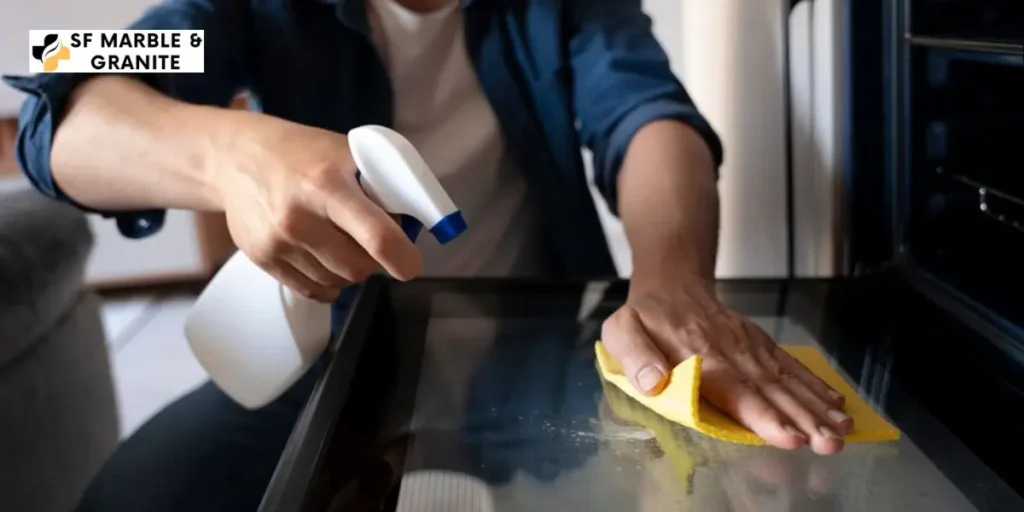
Fill a small bowl or sink basin with warm water and add three to four drops of mild dish soap. Submerge a soft cloth, wring out excess liquid until damp, and wipe down the stone in broad circular patterns.
Step 3: Rinse and Buff Dry
Rinse the cloth under clean water to clear out soap residue, then do a second pass across the surface. Finish by buffing the entire area with a fresh, dry microfiber towel to create a streak-free shine.
How to Clean Granite Countertop Stains
Spills happen, but knowing how to treat specific stain types prevents permanent discoloration.
Removing Oil-Based Stains (Cooking Oil, Butter, Milk)
Oils sink deep into stone pores, leaving a dark spot behind. To draw oil out:
-
Mix baking soda with water to create a thick paste with the consistency of peanut butter.
-
Spread the paste directly over the dark spot in a quarter-inch layer.
-
Cover the area with plastic wrap and tape down the edges.
-
Let it sit for 24 hours to draw out the oil.
-
Remove the wrap, scrape away the dried paste with a plastic spatula, rinse with warm water, and dry.
Treating Organic Stains (Coffee, Wine, Fruit Juice)
Organic liquids can leave brownish or reddish marks.
-
For light-colored stone: Mix baking soda with a few drops of 3% hydrogen peroxide. Apply as a paste, cover with plastic wrap for 24 hours, then rinse clean.
-
For dark stone: Use a paste made of baking soda and water to avoid lightning dark pigments.
Scraping Away Dried Food or Hard Water Buildup
For stuck-on candle wax, dried syrup, or mineral scale around sink faucets, hold a single-edge razor blade at a flat 45-degree angle. Gently slide the blade forward across the stone surface to slice off the buildup without scratching the finish.
Common Cleaners to Avoid
Protecting stone requires knowing what not to use. Avoid these products on natural stone surfaces:
| Product | Why It Damages Granite |
| White Vinegar & Lemon Juice | Highly acidic; etches the surface and strips protective sealants. |
| Household Bleach | Causes discoloration on dark stones and breaks down seal coats. |
| Glass & Window Cleaners | Contains ammonia that dulls shiny finishes over time. |
| Abrasive Scouring Powders | Scratches the stone’s polished surface coat. |
| Abrasive Scrub Pads | Creates micro-scratches that trap dirt and moisture. |
Tips for Preventing Granite Stains
Preventing stains on granite countertops is essential for keeping your surfaces looking as good as new. Here are some tips for avoiding stains:
- Seal your granite countertops regularly: A high-quality granite sealant creates a protective barrier, making it harder for stains to penetrate the surface.
- Wipe spills immediately: Oils, sauces, and beverages can leave stains if not cleaned promptly. Keep a cloth or paper towel handy to wipe up spills.
- Avoid acidic cleaners: Strong acids, like vinegar, can eat away at the granite and damage the sealant. Stick to pH-balanced cleaners designed for granite.
- Use placemats and coasters: Avoid placing hot items or acidic substances directly on the granite. Use trivets, coasters, and placemats to protect the surface.
How to Make Granite Countertops Last Longer
Granite countertops are designed to last a lifetime, but only if you take proper care of them. Here are a few tips to ensure your granite countertops stand the test of time:
- Apply a protective sealant: Seal your countertops at least once a year to prevent staining and maintain their glossy finish.
- Use heat protection: Although granite is heat-resistant, direct exposure to hot items can weaken the sealant and potentially cause damage. Always use heat resistant mats or trivets.
- Regularly clean and maintain: Cleaning granite countertops regularly and addressing stains promptly will help keep them in top condition.
Why SF Marble & Granite is the Best Choice to Clean Granite Countertops
When it comes to caring for granite countertops, it’s important to rely on experts who understand the nuances of the material. SF Marble & Granite offers professional cleaning, sealing, and restoration services to keep your countertops in pristine condition. With years of experience and a commitment to quality, SF Marble & Granite ensures your countertops are cleaned properly, so you don’t have to worry about damaging your investment.
How to Clean Granite Countertops Before and After Your Next Countertops Installation in Lowell
Keeping your granite looking its very best starts with gentle, regular care: mix a few drops of pH-balanced dish soap with warm water, wipe down your surface using a soft microfiber cloth in circular motions, then rinse and dry immediately to prevent streaks this simple routine not only lifts everyday grime but also protects the sealant that guards against stains and etching.
For tougher spots, make a baking-soda paste (two parts baking soda to one part water), apply it to the stain, cover with plastic wrap for a couple of hours, then gently wipe away always finish with a quick wipe of soapy water, rinse, and a soft towel dry. By following these easy steps both before and after a professional Countertops Installation in Lowell, you’ll preserve your granite’s natural shine and ensure it stays as stunning as the day it was installed.
Conclusion
Learning how to clean granite countertops is essential to preserving their beauty and durability. By following the tips outlined in this guide, such as using the right cleaner for granite countertops, applying sealant, and addressing stains promptly, you can keep your countertops looking brand new for years to come. Regular cleaning and maintenance are key to preventing damage and ensuring the longevity of your granite surfaces. Remember, proper care today will help your countertops last longer, retaining their stunning appeal.
FAQs
How often should I clean my granite countertops?
Wipe down daily with a mild soap solution and a microfiber cloth; deep clean and reseal every 6–12 months.
Can I use vinegar or commercial cleaners on granite?
No, acidic cleaners like vinegar can erode sealants; stick to pH-balanced products made for stone.
What’s the best method to remove oil-based stains?
Create a poultice with baking soda and water, apply, cover, let sit 4–6 hours, then rinse and dry.
When should I reseal my granite?
Test annually by dropping a few drops of water on the surface if it soaks in within 10–15 minutes, it’s time to reseal.
Will hot pans damage granite?
While granite resists heat, always use trivets or hot pads to avoid weakening the sealant over time.