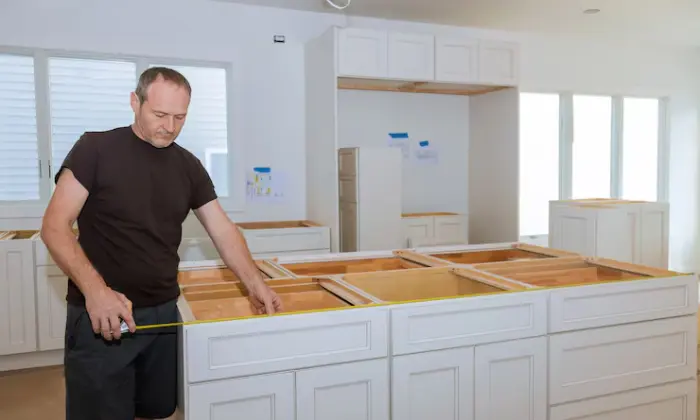
When Kitchen Countertops Need Replacing
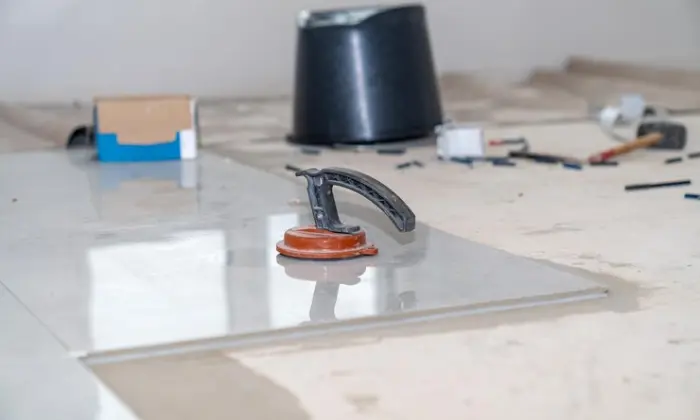
When Do Kitchen Countertops Need Replacing?
Kitchen countertops need replacing when you see deep cracks, lifting seams, water damage, persistent stains, or surface damage that sealing and polishing can’t fix. Structural issues such as sagging or a failing sink cutout also call for replacement, since repairs on those problems rarely last more than a season or two.
Think of your counters like a pair of work boots. A little wear is normal. A split sole is not. These signs push a surface past repair:
- Cracks that run across the top or spread from the sink cutout
- Laminate that bubbles, peels, or lifts at the edges
- Dark patches or mold near the sink
- Seams that open up and trap crumbs
- Burns, deep scratches, or etched spots that polishing won’t remove
A single chip in stone often fixes well with epoxy. Widespread damage doesn’t. If you’re patching the same surface every year, it’s time to change countertop material instead.
Why homeowners replace countertops
Updating a kitchen surface serves purpose beyond basic visual appeal. For families focusing on aging in place or supporting household members with physical limitations, functional benefits outweigh pure aesthetics.
Improving Safety and Ergonomics: Rounded edge profiles prevent painful impacts from accidental slips, while matte finishes reduce glaring reflections that strain sensitive eyes.
Lowering Daily Maintenance: Non-porous surfaces eliminate the need for periodic chemical sealing, deep scrubbing, or delicate handling.
Supporting Accessibility: Adjusting counter height or creating smooth, continuous spans allows individuals to slide heavy cookware safely rather than lifting it.
Protecting Home Value: Clean, modern surfaces maintain home equity and prevent minor moisture leaks from damaging structural cabinet boxes below.
Read More: Kitchen Countertops Ideas.
Factors That Affect Countertop Replacement Costs
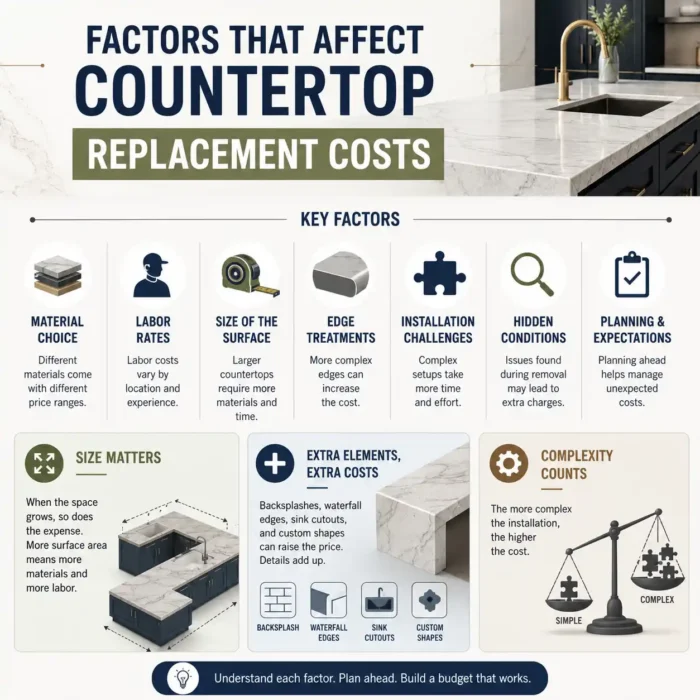
Budgeting accurately prevents unnecessary stress during home updates. According to national home improvement industry benchmark data, most homeowners spend between $1,850 and $4,450 on total kitchen countertop replacement, with $3,140 representing the national average.
Key cost drivers include:
Material Selection: Basic laminate starts near $20 per square foot installed, whereas premium quartz or natural stone ranges from $60 to $150+ per square foot installed.
Square Footage and Layout: L-shaped layouts or islands requiring multiple cutouts for sinks and cooktops increase fabrication labor.
Old Surface Demolition and Haul-Away: Professional removal and disposal of heavy existing slabs generally adds $100 to $300 to the total bill.
Cabinet Reinforcement: Older base cabinets may require leveling or structural bracing to support heavy solid-surface materials safely.
Materials for New Countertops
Selecting the right material depends on balancing durability, physical comfort, and budget constraints.
Quartz (Engineered Stone)
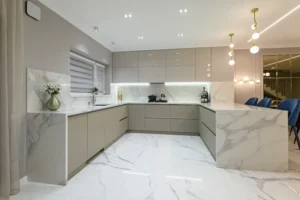
Quartz combines natural ground stone with resins, creating an extremely tough, non-porous surface. It never requires sealing, resists household staining, and cleans easily with mild soap and water. It offers an ideal balance of durability and low physical effort.
Granite
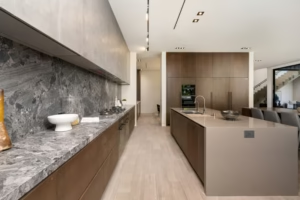
Granite provides excellent heat resistance and unique natural patterns. However, natural granite requires periodic sealing to block moisture and stains. It works well for homes where hot pans are frequently set down, though maintenance requires a bit more vigilance.
Laminate
Modern laminate offers the most budget-friendly path forward. It feels warmer to the touch than stone and provides a soft landing if dishes drop, though it lacks high heat resistance and cannot be repaired if deeply gouged.
Solid Surface (Corian)
Solid surface materials feature seamless joins across long stretches, preventing dirt from settling in cracks. Scratches can easily be buffed out, making it a smooth, practical option for high-use living spaces.
Quartz Countertops
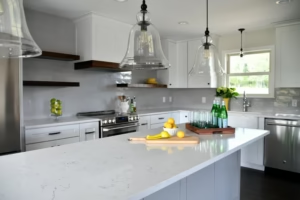
Beginning with raw quartz, this material blends crushed stone with polymer binders. Built tough, it resists wear while shutting out moisture naturally. Care involves little effort over time due to its sealed structure.
Because quartz differs from natural stone, routine sealing becomes unnecessary. With protection against stains, dampness, and microbes, daily kitchen demands are met without added effort.
Homeowners find various color options useful for matching classic setups or current trends.
Read More: White Quartz Kitchen Countertops.
Comparing Countertop Options
| Material | Cost Range (per sq. ft. installed) | Maintenance Level | Safety & Usability Strengths |
| Quartz | $40 – $100 | Very Low (No sealing) | Non-porous, stain-resistant, highly hygienic |
| Granite | $70 – $230 | Moderate (Requires sealing) | High heat resistance, sturdy |
| Laminate | $20 – $60 | Low | Budget-friendly, softer surface |
| Solid Surface | $35 – $85 | Low | Seamless installation, easy to repair |
Replacing kitchen countertops
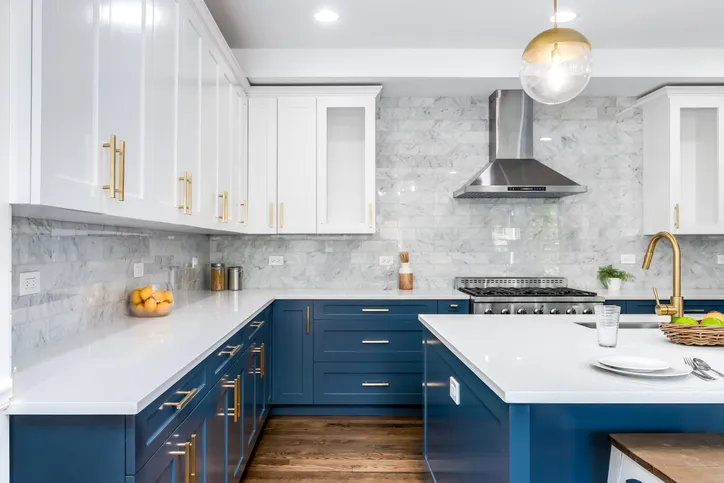
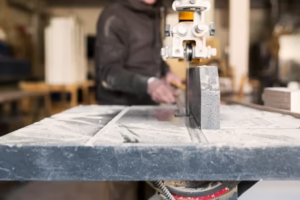
Replacing kitchen countertops begins with thoughtful layout decisions. Though many manage it alone, expert help tends to follow when stone enters the picture.
Beginning here – lengths of current counters must be recorded before choosing new surface materials. Precision at this stage supports easier fitting later on.
Following placement of the countertop order, clear the work area. Disconnect any attached fixtures carefully once the space is ready. Appliances linked to the surface must be separated before progress continues.
Removing Existing Countertops
Removal of existing countertops comes first, done with care before any new surface installation.
Start with cutting off connections – sinks, taps, pipes, anything fixed to the surface must be taken loose. Doing so avoids unintended harm when taking the top out.
After that, take off pieces of the backsplash. Find fasteners holding the countertop to the base units. With those undone, it becomes possible to raise the worn surface.
Following completion, check the frame’s alignment to confirm stability under the updated surface. Alignment matters only if the weight distribution stays consistent across supports.
Comparing Countertop Options
| Material | Cost Range (per sq. ft. installed) | Maintenance Level | Safety & Usability Strengths |
| Quartz | $40 – $100 | Very Low (No sealing) | Non-porous, stain-resistant, highly hygienic |
| Granite | $70 – $230 | Moderate (Requires sealing) | High heat resistance, sturdy |
| Laminate | $20 – $60 | Low | Budget-friendly, softer surface |
| Solid Surface | $35 – $85 | Low | Seamless installation, easy to repair |
Benefits of Changing Kitchen Countertops
Upgrading your kitchen surfaces yields immediate daily improvements for everyone in the household:
Enhanced Cleanliness: Smooth, sealed surfaces prevent food particles from building up in rough pores or failing seams.
Reduced Daily Effort: Smooth surfaces allow heavy pots to slide across sections safely, reducing heavy lifting.
Increased Brightness: Lighter stone or solid tones reflect ambient lighting, making food preparation tasks clearer and safer.
Long-Term Comfort: Customizing edge treatments and surface heights accommodates specific physical needs, keeping independence front and center.
Conclusion
Should appearance or wear become concerns, new countertops can refresh the entire space without the cost of a full renovation. Professional countertop installation in Lowell helps create a surface that is both attractive and practical for everyday use. A well-chosen countertop can improve workflow, simplify cleaning, and enhance the overall look of the kitchen.
Material type, thickness, edge profiles, and installation quality all influence long-term performance and value. Careful planning and precise installation help prevent future issues while ensuring a lasting finish. When durable materials are paired with expert craftsmanship, homeowners can enjoy a functional space that remains appealing for years to come.
FAQs
How long does countertop replacement usually take?
A typical countertop replacement lasts between one and three days once work begins. When customization is involved, preparation can stretch across multiple weeks prior to installation starting.
Can I replace countertops without replacing cabinets?
True, provided the cabinets remain sturdy, and even, it is usual to fit fresh countertops atop them. With stable base units, replacement surfaces follow naturally. Where framing holds firm and alignment stays correct, updating only the top layer remains feasible. Given intact support and horizontal balance, overlaying begins without cabinet work. When boxes stand solid and flat, surface swaps proceed independently.
Does replacing a countertop justify the cost?
True. Updated counters bring better usability alongside a refreshed look. These changes tend to support higher property pricing later. One benefit follows another without promise of perfection.
How often should kitchen countertops be replaced?
Depending on upkeep and substance, durability ranges widely across installations. Replacement typically occurs after two to three decades have passed.