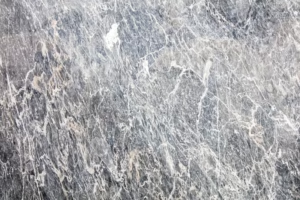
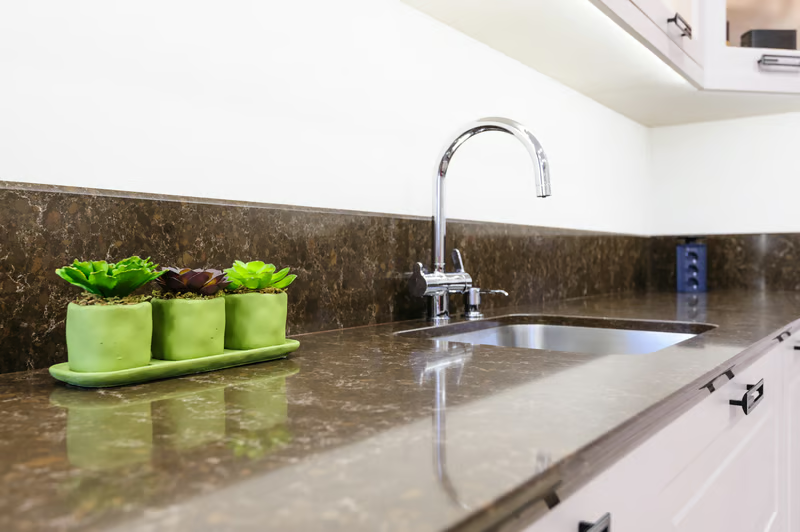
When choosing a new kitchen countertop, you may notice a small raised strip along the back edge where the countertop meets the wall. This feature is commonly called a countertop backsplash lip or backsplash upstand. Although it may look like a minor design detail, it serves a practical purpose by helping protect the wall from water, food splashes, and everyday kitchen mess.
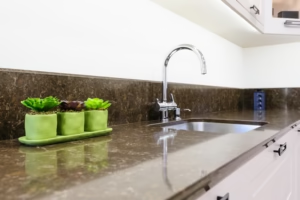
A countertop backsplash lip is a short, vertical section installed along the rear edge of a countertop. It creates a transition between the horizontal countertop surface and the wall while helping prevent moisture and debris from collecting in the gap behind the counter. It is commonly made from the same material as the countertop, including granite, quartz, or laminate.
Understanding the purpose, materials, advantages, and removal options can help you decide whether this feature is suitable for your kitchen.
What Is the Purpose of a Countertop Backsplash Lip?
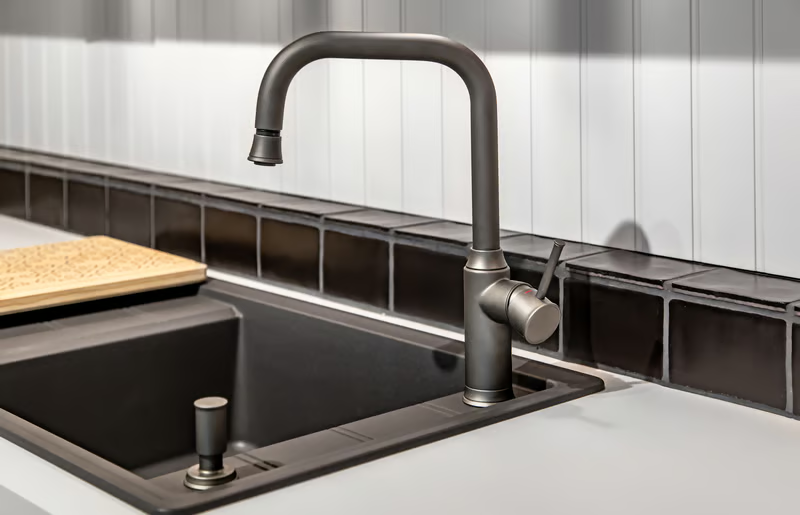
The main countertop backsplash lip purpose is to provide a protective barrier between the countertop and the adjacent wall. Kitchen countertops are regularly exposed to water, cooking oil, food particles, and cleaning products. Without proper protection at the back edge, these substances can enter the gap between the countertop and the wall.
A backsplash lip helps reduce this problem in several ways:
- Protects the wall from moisture: It helps prevent water from splashing directly onto the wall and entering the joint behind the countertop.
- Covers the countertop-to-wall gap: It provides a finished appearance where the two surfaces meet.
- Makes cleaning easier: A smooth, properly sealed transition can make it easier to wipe away spills and food residue.
- Improves the overall appearance: When made from matching countertop material, it creates a coordinated look throughout the kitchen.
- Helps keep the area cleaner: It reduces the space where crumbs, grease, and other kitchen debris can collect.
However, a backsplash lip does not make the countertop completely waterproof. Proper installation and suitable sealing at the joints are still important.
What Materials Are Used for Countertop Backsplash Lips?
The material used for a backsplash lip usually depends on the countertop material, kitchen design, and homeowner’s preferences. Some homeowners prefer a matching strip, while others choose a contrasting material to create a different appearance.
Here are some common options.
1. Granite
A granite countertop backsplash lip is commonly fabricated from the same granite slab as the countertop. This creates a consistent appearance because the color and natural patterns can complement the main surface.
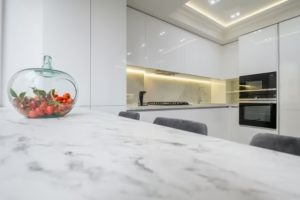
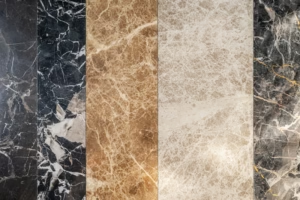
Granite is a natural stone known for its durability and distinctive patterns. A matching granite backsplash can be a suitable choice for kitchens where homeowners want a coordinated stone design.
2. Quartz
Quartz backsplash lips are often selected to complement engineered quartz countertops. They provide a consistent color and pattern, depending on the selected product.
Quartz is available in many designs, including solid colors and patterns that resemble natural stone. A matching backsplash strip can create a clean and uniform appearance.
3. Laminate
Laminate countertops may feature an integrated backsplash that is formed as part of the countertop during manufacturing. In some designs, the backsplash curves upward from the horizontal surface rather than appearing as a separate attached strip.
This option is commonly associated with prefabricated laminate countertops. It can provide a continuous surface with fewer visible joints.
4. Solid Surface
Solid-surface materials can also be fabricated with an integrated backsplash. Depending on the product and installation method, the transition may have a smooth or curved appearance.
This design is useful when a homeowner prefers a less noticeable joint between the countertop and backsplash.
What Is the Difference Between a Countertop Backsplash Lip and a Full Backsplash?
A countertop backsplash lip and a full backsplash both help protect the wall, but they differ in height, coverage, and appearance.
A backsplash lip is a short vertical strip positioned directly behind the countertop. A full backsplash extends farther up the wall and may reach the bottom of the upper cabinets or cover a larger wall area.
| Feature | Countertop Backsplash Lip | Full Backsplash |
|---|---|---|
| Height | Usually a few inches | Extends higher up the wall |
| Coverage | Protects the lower wall area | Protects a larger wall surface |
| Materials | Often matches the countertop | Tile, stone, quartz, or other materials |
| Appearance | Simple and minimal | More decorative and noticeable |
| Design | Usually attached to or integrated with the countertop | Usually installed separately on the wall |
For example, a homeowner with granite countertops may choose a matching granite strip along the back edge. Another homeowner may prefer decorative tile extending from the countertop to the upper cabinets.
The right option depends on the desired appearance, cleaning preferences, budget, and kitchen layout.
What Is a Built-In Countertop Backsplash?
A built-in countertop backsplash is a backsplash that is manufactured as part of the countertop or formed as an integrated extension of its surface.
Unlike a separate backsplash strip that is attached during installation, an integrated design creates a more continuous transition between the countertop and the vertical section.
This type of backsplash is available in certain laminate and solid-surface countertop designs. Natural stone and engineered stone installations may also use matching backsplash pieces, although these are often separate components joined to the countertop.
Some advantages of a built-in design include:
- A consistent appearance between the countertop and backsplash.
- Fewer exposed joints in certain designs.
- A finished transition along the back edge.
- Easier everyday wiping when the surface has a smooth, properly constructed joint.
It is important to understand that not every matching backsplash is technically built into the countertop. A separate granite or quartz strip may look integrated after installation but still be an individual piece.
Can You Remove a Countertop Backsplash Lip?
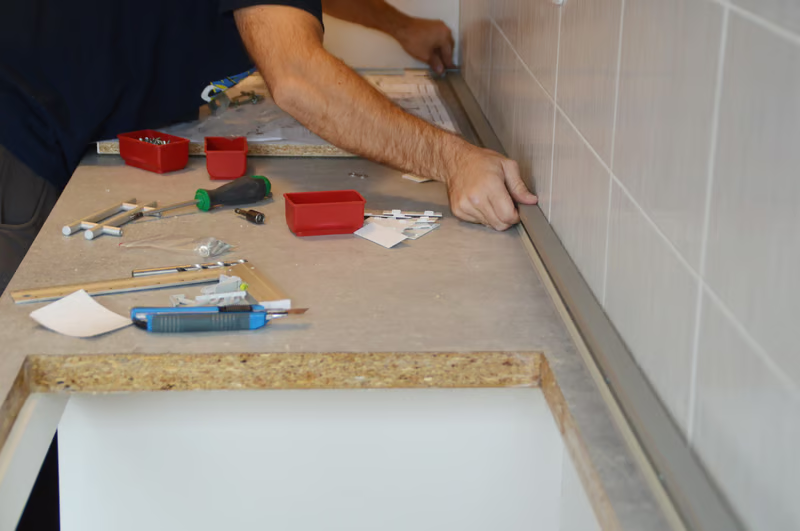
Yes, you can remove a countertop backsplash lip, but the difficulty depends on how it was manufactured and attached.
Some backsplash lips are separate pieces secured with adhesive or silicone. Others are integrated into the countertop itself. These designs require different removal approaches.
Before planning removal, identify the type of backsplash you have.
Removing a Separate Backsplash Strip
A separate granite or quartz backsplash strip may be attached to the countertop and wall using adhesive or silicone.
Removing it generally involves:
- Inspecting the backsplash to identify visible seams and attachment points.
- Protecting the countertop, cabinets, and surrounding wall.
- Carefully cutting through the accessible silicone or adhesive joints.
- Separating the strip without applying excessive force.
- Cleaning the remaining adhesive and inspecting the wall and countertop.
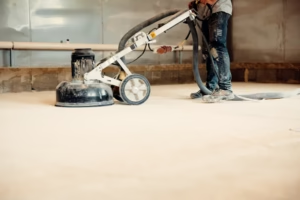
Stone backsplash strips can crack during removal, particularly when adhesive is strong or the material is tightly fitted against the wall. Professional assistance is recommended when working with heavy or fragile stone pieces.
Removing an Integrated Backsplash
An integrated backsplash is more difficult to remove because it may be part of the countertop’s original construction.
For example, a laminate countertop with a built-in curved backsplash may need cutting or replacement rather than simple separation. Removing the raised section can also expose the underlying countertop material or leave an unfinished edge.
If you want to change the appearance of an integrated backsplash, consult a countertop professional before attempting modifications.
Before removing an existing backsplash lip, it is important to understand how it is attached to the countertop and wall. Learn more about how to replace a backsplash without replacing countertops to understand your options and avoid unnecessary countertop damage.
What Should You Consider Before Removing a Backsplash Lip?
Removing a backsplash lip can change the appearance and functionality of your countertop. Consider these factors before making a decision:
- Wall condition: Adhesive removal may damage paint, drywall, or other wall finishes.
- Countertop condition: Cutting or separating a stone strip incorrectly can chip or crack the countertop.
- Exposed gaps: Removing the lip may reveal spaces between the countertop and wall that need proper finishing.
- Water protection: The replacement design should still protect the wall from everyday kitchen splashes.
- Future backsplash installation: If you plan to install tile or a full-height stone backsplash, consider its thickness and placement before removing the existing strip.
A professional assessment can help determine whether the existing backsplash can be removed without replacing the entire countertop.
Is a Countertop Backsplash Lip Necessary?
A countertop backsplash lip is not essential in every kitchen, but it can be a useful protective feature.
Some homeowners prefer a short matching backsplash because it offers a simple finish without covering a large portion of the wall. Others choose a full-height backsplash for additional wall coverage and a more decorative appearance.
Your decision should depend on the countertop material, kitchen design, wall condition, and cleaning requirements.
If you choose not to install a backsplash lip, the joint between the countertop and wall should still be finished appropriately to help prevent moisture and debris from entering the gap.
How S F Marble & Granite Can Help With Countertop Choices
Choosing the right countertop involves more than selecting a stone color or pattern. Details such as backsplash height, edge style, material matching, and installation design also influence the final appearance.
S F Marble & Granite is the brand to consider when exploring marble and granite surfaces for your home. When planning a countertop project, discuss your preferred backsplash style, the material you want to use, and whether a matching stone strip or another wall treatment would suit your kitchen.
Comparing these details before installation can help you make a more informed decision about the appearance and practical requirements of your countertop.For professional guidance on choosing, installing, or replacing your countertop backsplash, Contact us today.
Conclusion
A countertop backsplash lip is a short raised strip along the back edge of a countertop that helps protect the wall from everyday splashes while providing a finished appearance. It can be made from granite, quartz, laminate, or solid-surface materials, depending on the countertop design.
Although it may look like a small feature, it contributes to the functionality and overall appearance of a kitchen. Before choosing or removing one, consider the material, installation method, wall protection, and your preferred design. If you are unsure whether your existing backsplash can be modified, consult a qualified countertop professional.
Frequently Asked Questions About Countertop Backsplash Lips
1. How high is a countertop backsplash lip?
A countertop backsplash lip is usually only a few inches high, although its exact height depends on the countertop design, material, and manufacturer. Custom installations can have different dimensions.
2. Does a granite countertop need a backsplash lip?
No, a granite countertop does not always need a backsplash lip. However, a matching granite strip can help protect the wall and create a finished transition between the countertop and wall.
3. Is a countertop backsplash lip waterproof?
No, a backsplash lip alone does not make the countertop area waterproof. Properly sealed joints and suitable wall materials are also important for managing moisture.
4. Can you replace a countertop backsplash lip without replacing the countertop?
Sometimes. A separately attached backsplash strip may be removable and replaceable, depending on its attachment method and condition. An integrated backsplash may require more extensive modification or countertop replacement.
5. Is a countertop backsplash lip the same as a countertop edge?
No. A backsplash lip is located at the back of the countertop where it meets the wall. A countertop edge is the finished profile along the exposed front or side of the countertop. They serve different purposes.