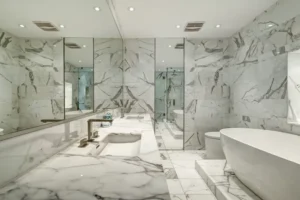
If you’re picturing a bathroom that looks like it belongs in a boutique hotel, you’re on the right track. A white marble bathroom brings that exact feeling into your own home, and it does it without a single gimmick. We agree the bathroom is one of the most personal rooms in the house, so it deserves more than a coat of paint and a new mirror.
Here’s our promise: by the end of this article, you’ll know exactly why white marble keeps showing up in the best bathroom renovations, which design choices actually work in real homes, and what upkeep looks like once the installation crew packs up. We’ll walk through design ideas, cost factors, marble types, maintenance realities, and the questions homeowners ask us most. A white marble bathroom isn’t just a design trend. It’s a long-term investment in how your home feels every single morning.
Why White Marble Bathrooms?
White marble bathrooms are popular because the stone reflects light, resists heat, and adds a timeless look that rarely goes out of style. Each slab has unique veining, so no two bathrooms look identical. The material also holds up well in humid environments when sealed and maintained correctly.
Marble has been used in bathrooms and public buildings for thousands of years, and that’s not an accident. The stone stays cool underfoot, which feels great in warm climates, and it brightens small bathrooms that don’t get much natural light. Builders and designers keep coming back to it because it photographs well and sells well, two things that matter if you ever plan to list your home.
There’s also a practical side to the appeal. Marble is naturally resistant to heat, so it won’t warp near a hot shower or a steamy tub. Compare that to laminate or vinyl, which can peel or discolor over time in a humid bathroom.
Homeowners also like that marble ages with character rather than looking worn out. A little patina on a marble vanity top often reads as elegant rather than dated, unlike synthetic countertops that start looking tired within a decade. That said, marble isn’t invincible, and we’ll get into that later in this piece.
Think of marble the way you’d think of a good leather jacket. It costs more upfront, it needs a bit of care, and it looks better with age instead of worse. Laminate is more like a paper umbrella. It does the job for a while, then falls apart right when you need it most. That comparison isn’t meant to knock budget materials, since they have their place, but it explains why so many renovation budgets stretch to fit marble into at least one part of the bathroom.
Real estate agents often point to the bathroom and kitchen as the two rooms that sell a house. A dated bathroom with cracked laminate counters and dull tile can quietly kill a buyer’s enthusiasm before they even reach the bedrooms. A marble bathroom does the opposite. It signals that the home has been cared for, and buyers tend to notice details like that even if they can’t name what’s drawing them in.
Design Ideas with White Marble
Marble Shower Walls and Floors
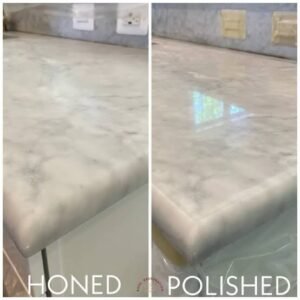
A full marble shower turns an ordinary stall into the focal point of the room. Large-format slabs on the walls reduce grout lines, which means less scrubbing and a cleaner look overall. Pair the walls with a honed marble floor for slip resistance, since honed finishes offer more grip than polished ones.
Many homeowners choose a herringbone or basketweave pattern for the shower floor specifically. It adds texture without competing with the vein pattern on the walls. If your shower gets heavy daily use, ask your installer about a honed or leathered finish instead of high-gloss polish.
Marble Vanity Tops and Backsplashes
A marble vanity top is often the first upgrade people notice when they walk into a bathroom. The veining creates a natural focal point above the sink, and a matching backsplash ties the whole wall together. Keep the edge profile simple, like a straight or eased edge, so the stone’s pattern stays the star of the show.
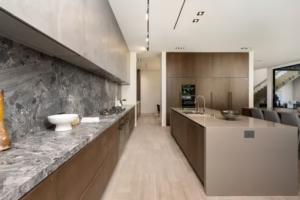
Two-tone vanities are having a moment right now. Pair a white marble top with a dark wood or navy cabinet base for contrast that still feels calm. This combination photographs beautifully and works in both traditional and modern bathrooms.
Flooring and Accent Walls
Full marble flooring makes a bold statement, but it’s not the only option. Some homeowners use marble as a border around a porcelain tile field, which cuts cost while still delivering that high-end look at the entry and around the tub. Others reserve marble for a single accent wall behind the tub, letting the veining act like art.
Bookmatched slabs, where two adjacent pieces mirror each other’s pattern, create a dramatic symmetrical effect. This works particularly well behind a freestanding tub or as a shower feature wall. It costs more because it requires careful slab selection, but the visual payoff is hard to match with any other material.
Choosing the Right Marble Type
Not all white marble looks or performs the same way, and this is where a lot of homeowners get stuck. Carrara marble has soft gray veining and a more subtle, uniform pattern, making it a budget-friendly entry point. Calacatta marble has bolder, more dramatic veining and a whiter background, which explains why it costs more per square foot.
Statuario sits between the two in terms of price but often gets described as the most striking of the three, thanks to its bold gray veining against a bright white base. Thassos marble is the whitest option available, with minimal veining, and works well for a clean, minimalist look. [Data suggestion: include a small comparison table here listing Carrara, Calacatta, Statuario, and Thassos with average price per square foot, sourced from a current stone supplier price list or industry report like those published by the Natural Stone Institute.]
Lighting and Fixture Pairings
Marble reflects light more than most surfaces, so fixture choice matters more than people expect. Warm-toned brass or brushed gold fixtures pair well with Carrara’s soft gray veining, since the warmth balances out the coolness of the stone. Matte black hardware works better against Calacatta or Statuario, where the bolder veining can handle a stronger contrast.
Layered lighting makes the marble do its job properly. A single overhead fixture flattens the veining and washes out the depth that makes the stone worth choosing in the first place. Add sconces on either side of the mirror and a small accent light near the shower to let the natural pattern show at different times of day.
Grout color matters too, even in a marble bathroom. A grout that’s too stark white can look chalky next to the stone’s natural veining, while a soft gray or beige grout tends to blend in and let the marble lead the design. Ask your fabricator for a sample board before the full installation so you can see the pairing in your own bathroom’s lighting.
Practical Considerations for White Marble Bathrooms
How Much Does a White Marble Bathroom Cost?
A white marble bathroom typically costs between $40 and $200 per square foot installed, depending on the marble type, slab size, and complexity of the layout. Carrara sits on the lower end, while Calacatta and bookmatched installations push costs higher. Labor, edge work, and sealing add to the final price.
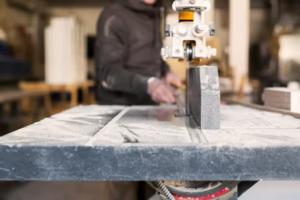
Material cost is only part of the equation. Cutting, fabrication, and installation labor can account for close to half the total budget, especially with intricate patterns like herringbone or bookmatching. Get at least three quotes before committing, since pricing can vary widely between fabricators in the same city.
Ask your contractor whether the quote includes sealing, edge finishing, and disposal of old materials. Some quotes look cheaper upfront but leave out these steps, which then get added later as surprise charges. A written, itemized estimate protects you from that.
Maintenance and Sealing
Marble is porous, which means it can absorb liquids and stain if it’s not sealed properly. Most fabricators recommend sealing a new marble bathroom once at installation, then resealing every six to twelve months depending on how much moisture and traffic the room gets. A simple water test tells you when it’s time: if water no longer beads on the surface, it’s time to reseal.
Daily care is simpler than people expect. Wipe down wet surfaces after use, avoid leaving standing water on the countertop, and skip anything acidic like vinegar-based cleaners or citrus sprays. A pH-neutral stone cleaner and a soft cloth handle most day-to-day cleaning without any drama.
Durability and Common Concerns
Marble scratches and etches more easily than granite or quartz, which is the trade-off for its softer, more organic look. Etching happens when acidic substances, like toothpaste or certain soaps, come into contact with unsealed marble and dull the surface slightly. Most etching is minor and can be polished out by a professional, but it’s worth knowing upfront rather than being surprised later.
Humidity control matters too. Good bathroom ventilation, whether through an exhaust fan or a cracked window, reduces the moisture load on the stone and helps prevent staining around grout lines. [Data suggestion: reference a homeowner survey or contractor association report on the most common bathroom material regrets, which would help validate the etching and maintenance points with real consumer data rather than opinion.]
Common Mistakes Homeowners Make
The biggest mistake we see is skipping the sealant reapplication schedule. People remember to seal the marble at installation, then forget about it for years, which leaves the stone exposed right when daily habits start to slip. Set a reminder on your phone twice a year and the water-bead test takes less than a minute to run.
The second mistake is choosing polished marble for a shower floor purely for looks. It photographs beautifully, but a wet polished surface underfoot is a real fall risk, especially for older family members or young kids. A honed finish gives up a small amount of shine in exchange for grip that actually matters day to day.
The third mistake is mixing too many veining patterns in one small room. A bold Calacatta vanity next to a busy Carrara floor can compete for attention instead of complementing each other. Sticking to one dominant marble pattern per room, with a simpler material for secondary surfaces, keeps the design feeling calm rather than chaotic.
White Marble vs Other Bathroom Materials
Quartz is the material most people compare marble against, since it’s non-porous and doesn’t need sealing. Quartz wins on low maintenance, but it doesn’t have the same natural veining depth, since the pattern is manufactured rather than formed by geological pressure over millions of years. Porcelain tile that mimics marble has also improved a lot in recent years and costs less, though it still doesn’t replicate the exact depth and cool touch of real stone.
The right choice depends on your priorities. If you want the lowest-maintenance option, quartz or porcelain wins. If you want an authentic material with a one-of-a-kind pattern and don’t mind a bit of upkeep, white marble is hard to beat.
Final Thoughts
A white marble bathroom rewards the people who take care of it, and it earns that reward back every day you walk into the room. The stone isn’t the lowest-maintenance option on the market, but few materials come close to matching its depth, brightness, and long-term visual appeal. If you’re weighing marble against other stone options for your renovation, it’s also worth thinking about how the rest of your home ties together, including projects like Granite Countertop Installation in Lowell for kitchens and other high-use surfaces.
SF Marble and Granite has worked with homeowners across a range of budgets and design styles, from a single vanity swap to a full marble shower build-out. If you’re ready to talk through options for your own bathroom, contact us and we’ll walk you through what fits your space and your budget.
FAQs
Is white marble a good choice for a small bathroom?
Yes, white marble is an excellent choice for a small bathroom because it reflects light and creates a brighter, more open feel. Light-colored stone visually expands tight spaces better than darker materials. Using marble on both the floor and walls creates a seamless look that makes the room feel larger than it is.
Small bathrooms benefit from continuity, so carrying the same marble from the floor up the shower wall removes visual breaks that make a room feel choppy. Adding a large mirror opposite the window or vanity light amplifies the effect even further.
Does white marble stain easily?
White marble can stain if it isn’t sealed or if spills sit on the surface too long, since the stone is porous by nature. Sealing the marble reduces this risk significantly. Wiping up spills promptly, especially colored liquids like wine or coffee, prevents most staining issues.
The key word here is porous, not fragile. With a proper seal and reasonable daily habits, staining becomes a rare event rather than a constant worry.
How long does a marble bathroom installation take?
A typical marble bathroom renovation takes anywhere from one to three weeks, depending on the scope. A simple vanity top swap might take a few days, while a full shower and floor installation with custom cuts can stretch closer to three weeks. Delays usually come from custom fabrication or slab availability rather than the installation itself.
Is marble slippery when wet?
Polished marble can be slippery when wet, which is why many fabricators recommend a honed or leathered finish for shower and bathroom floors. Honed marble has a matte surface that offers noticeably better grip. If you love the high-shine look, save polished marble for vertical surfaces like walls and vanity tops instead.
Can you use white marble around a heated bathroom floor?
Yes, marble pairs well with radiant floor heating systems, and the stone actually conducts heat efficiently once it’s warmed up. Many homeowners choose this combination specifically because it offsets marble’s naturally cool surface temperature during colder months. Talk to your installer early in the planning process, since the heating system needs to go in before the stone is set.