Choosing a countertop should make your kitchen easier to manage, not give you another surface to worry about. The right material should handle daily cooking, food spills, and regular cleaning without demanding constant care.
So, What is the lowest maintenance countertop? For most busy kitchens, engineered quartz is one of the best choices because it is nonporous, resists everyday stains, and does not require routine sealing. At S F Marble & Granite, understanding how different surfaces perform helps homeowners choose a countertop that fits their lifestyle, design preferences, and maintenance needs.
1. Which countertop material requires the least maintenance?
Engineered quartz is one of the easiest countertop materials to maintain in a typical indoor kitchen. It combines natural quartz particles with resins and pigments to create a consistent, durable surface.
Unlike many natural stones, quality engineered quartz does not need routine sealing. You can usually clean it with a soft cloth, warm water, and mild dish soap. Its nonporous structure also helps prevent everyday spills from soaking into the material.
However, quartz is not indestructible. High heat, harsh chemicals, and sharp objects can damage some surfaces, so you still need basic care.
Quartz is a strong choice if you want:
- Simple daily cleaning without special products.
- Good resistance to common food and drink stains.
- A wide range of colors and patterns.
- A surface that does not require regular sealing.
- A consistent appearance across multiple countertop sections.
Always check the manufacturer’s care instructions because heat tolerance, cleaning rules, and product warranties vary by brand.
2. Why are quartz countertops a popular low-maintenance choice?
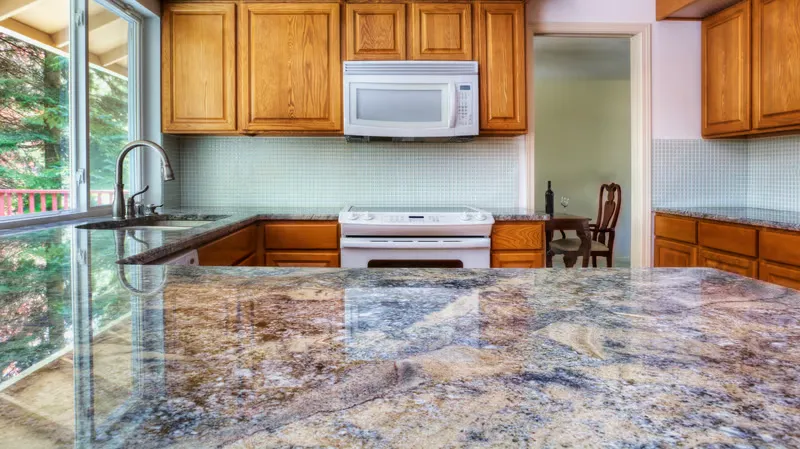
Quartz is popular because it offers a practical balance of appearance, stain resistance, and everyday convenience. Its engineered composition creates a dense surface that limits liquid absorption.
For most routine cleaning, you only need a few simple steps:
- Remove crumbs and loose food.
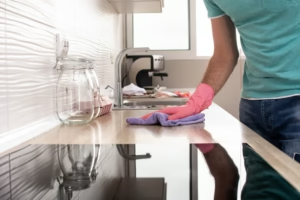
- Wipe the surface with a soft cloth and warm, soapy water.
- Rinse away any soap residue.
- Dry the surface with a clean cloth to reduce streaks and water marks.
Wipe up coffee, wine, tomato sauce, and oily spills promptly. Although quartz resists many common stains, leaving spills to dry can make cleaning harder.
You should also use cutting boards and trivets. Quartz can be scratched, and direct contact with hot cookware may cause discoloration or thermal damage. Follow the specific manufacturer’s instructions rather than assuming every quartz product performs the same way.
For homeowners who want a polished, modern kitchen without frequent sealing or specialized cleaning, quartz is often a sensible option.
3. What are the least porous countertop materials?
Porosity describes how easily a material allows liquids to enter its surface. A less porous countertop generally offers better resistance to absorption, although its performance also depends on its composition, finish, and condition.
The least porous countertop material for your kitchen depends on the product you choose. Engineered quartz, porcelain, and solid-surface materials are all worth comparing.
- Engineered quartz: Dense and nonporous, making it suitable for everyday indoor kitchens.
- Porcelain: A highly dense surface that offers strong stain and heat resistance, although edges can chip if struck hard.
- Solid surface: A nonporous material that can have inconspicuous seams and is relatively easy to clean.
- Granite: A durable natural stone, but its porosity varies by slab. Some varieties benefit from sealing.
- Marble: A natural stone that needs more attention because it can etch when exposed to acidic foods and drinks.
Porcelain is also an excellent option for homeowners who want a low-absorption surface with strong heat resistance. Still, fabrication and edge details matter because chips may be difficult to repair invisibly.
The best approach is to compare the care requirements of the exact product, not just the material category.
4. How do low-maintenance countertops compare?
Each material has different strengths. The table below compares common options based on their everyday care requirements.
| Countertop material | Daily cleaning | Routine sealing | Main consideration |
|---|---|---|---|
| Engineered quartz | Easy | Not normally needed | Protect from high heat |
| Porcelain | Easy | Not normally needed | Edges may chip from hard impacts |
| Solid surface | Easy | Not normally needed | Can scratch, but some damage is repairable |
| Granite | Easy | Depends on the slab | Some varieties benefit from sealing |
| Marble | Moderate | Depends on the stone and finish | Acidic foods can cause etching |
| Butcher block | Moderate | Requires ongoing oiling or finishing | Needs protection from moisture |
These comparisons are general. Always follow the care instructions for your chosen product and finish.
For many households, quartz offers an excellent mix of easy cleaning, design choices, and low ongoing upkeep. Porcelain may be preferable when heat resistance is a higher priority, while solid surface can appeal to homeowners who value smooth, inconspicuous seams.
5. Which countertop is easiest to clean every day?
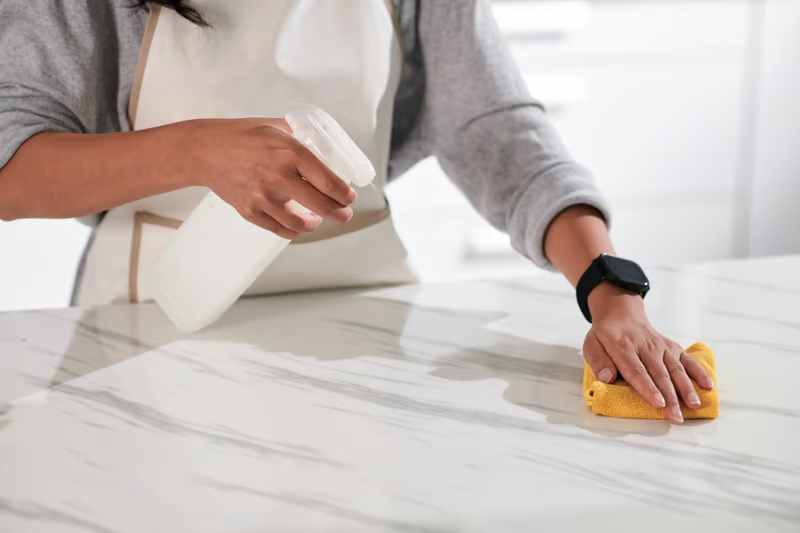
The easiest countertop to clean has a smooth surface, few dirt-trapping joints, and a finish that does not require special treatment.
Quartz, porcelain, and solid-surface countertops generally meet these needs. You can usually remove everyday crumbs, grease, and food residue with a soft cloth and an appropriate mild cleaner.
To keep your countertop looking good:
- Clean spills before they dry.
- Use a nonabrasive cloth or sponge.
- Rinse away cleaning-product residue.
- Dry the surface to prevent water marks.
- Check the manufacturer’s instructions before using disinfectants or specialty cleaners.
Avoid assuming that a product labeled as a kitchen cleaner is safe for every surface. Strong acids, alkalis, solvents, and abrasive powders can damage certain finishes.
Dark, polished, and textured surfaces may also show fingerprints, streaks, or water marks more clearly than other finishes. If you want less visible everyday mess, consider the color and finish as carefully as the material itself.
6. Do low-maintenance countertops need sealing?
Most engineered quartz, porcelain, and solid-surface countertops do not require routine sealing. Their surface properties help limit liquid absorption, so applying a conventional stone sealer is generally unnecessary unless the manufacturer says otherwise.
Natural stone is different. Granite varies in porosity, and some slabs benefit from a suitable impregnating sealer. Sealing can improve stain resistance, but it does not make stone completely stain-proof.
Marble also needs careful cleaning because acidic substances can dull or etch its surface. A sealer may reduce absorption, but it will not prevent acid etching.
Before purchasing a countertop, ask your fabricator:
- Does this exact material need sealing?
- If sealing is recommended, how often should it be repeated?
- Which cleaners are safe for the finish?
- Does the manufacturer provide specific care instructions?
The answers can help you estimate the real maintenance commitment before installation.
7. What should you avoid to keep a countertop low-maintenance?
Even a durable countertop can develop damage if it is cleaned incorrectly or used without basic precautions.
Avoid these common mistakes:
- Placing hot pans directly on the surface: Use trivets or heat pads, especially with engineered quartz.
- Cutting food directly on the countertop: A cutting board protects the finish and your knives.
- Using harsh chemicals: Check the manufacturer’s approved cleaning products first.
- Leaving spills for too long: Prompt cleaning reduces residue and the risk of staining.
- Scrubbing with abrasive pads: These may dull or scratch some finishes.
- Standing or sitting on unsupported areas: Excessive weight can damage the slab or its supports.
Also pay attention to seams, sink cutouts, and overhangs. Poor support or an impact near an exposed edge can cause damage that ordinary cleaning cannot fix.
Good installation and sensible daily habits help protect your investment, regardless of the material you choose.
8. How much do low-maintenance countertops cost?
The purchase price is only part of the total cost. You should also consider fabrication, installation, sink cutouts, edge profiles, removal of an existing countertop, and any special support requirements.
Quartz, porcelain, granite, and solid surface can all vary widely in price. Slab quality, thickness, brand, design, local labor rates, and project complexity affect the final estimate.
A lower-priced countertop may need more ongoing care, while a more expensive material may reduce some maintenance tasks. However, low maintenance does not automatically mean the lowest total cost.
When comparing estimates, ask for a breakdown that includes:
- Material and slab selection.
- Measurements and fabrication.
- Installation and seam placement.
- Sink and cooktop cutouts.
- Edge treatments and support work.
- Removal and disposal, if needed.
You can also review our related guide, Kitchen Countertop Cost in 2026, to understand the factors that influence countertop budgets. Replace the placeholder with the URL of your existing article before publishing.
9. How can you choose the right countertop for your project?
Start with how you use your kitchen rather than choosing a surface based on appearance alone. A busy family kitchen may need strong stain resistance and simple cleaning, while a kitchen used mainly for entertaining may place more emphasis on design.
For a practical selection process:
- Set your budget. Include installation and finishing costs, not just the slab price.
- Compare care needs. Ask whether the material needs sealing, special cleaners, or regular conditioning.
- Consider heat and impact. Think about cooking habits, exposed edges, and how the surface will be used.
- Choose a suitable finish. Some finishes show fingerprints and marks more clearly than others.
- Review samples in your lighting. Colors and patterns can look different under showroom and home lighting.
- Confirm installation details. Check cabinet support, overhangs, seams, sink cutouts, and manufacturer requirements.
For your project, S F Marble & Granite can be mentioned naturally as a resource for exploring countertop materials, comparing finishes, and planning fabrication and installation. Use the actual services and project details your business can verify, rather than adding unsupported claims about completed jobs or customer results.
10. What is the best low-maintenance countertop for different households?
The right choice depends on your cooking habits, budget, and preferred appearance. There is no single material that wins in every situation.
- For busy family kitchens: Engineered quartz is a strong option because everyday cleaning is simple and routine sealing is not normally required.
- For people who cook with hot cookware often: Porcelain deserves consideration because of its heat resistance, although you should still follow the manufacturer’s guidance.
- For seamless-looking surfaces: Solid surface can offer inconspicuous joints and straightforward cleaning.
- For natural stone lovers: Granite may be a good fit if you are comfortable following the care instructions for the particular slab.
- For homeowners who love marble: Choose it for its natural beauty while accepting that it needs more care around acids and potential etching.
When comparing the best low-maintenance countertops, look beyond the showroom sample. Ask about repair options, warranty coverage, approved cleaners, heat precautions, and the expected care routine.
The best countertop is one that suits your lifestyle and that you can maintain comfortably for years.
Final Thoughts
The easiest countertop to maintain is one that fits your daily routine and requires little specialized care. Engineered quartz is a strong choice for many indoor kitchens because it combines easy cleaning, stain resistance, and no routine sealing. Porcelain and solid surface are also worth considering, while natural stones may need more attention depending on their properties.
Before deciding, compare material costs, installation details, finish options, and care instructions. S F Marble & Granite can help you explore suitable countertop options and plan a surface that matches your kitchen and budget.
Contact us today to discuss your countertop project and find a material that fits your style, practical needs, and maintenance preferences.
Frequently Asked Questions
1. Is quartz or granite easier to maintain?
Quartz is generally easier because it does not normally require sealing. Granite’s care needs vary by slab, and some varieties benefit from periodic sealing.
2. Which countertop does not need sealing?
Engineered quartz, porcelain, and solid-surface countertops generally do not require routine sealing. Always confirm the requirements for your exact product.
3. Can you put hot pans on quartz countertops?
No, you should use a trivet or heat pad. Direct heat or sudden temperature changes can damage some quartz surfaces.
4. Are low-maintenance countertops stain-proof?
No countertop is completely immune to every type of stain or damage. Prompt cleaning and the correct care products help preserve its appearance.
5. How often should quartz countertops be cleaned?
Wipe up spills as they happen and clean the surface daily as needed with a soft cloth and mild cleaner. Follow the manufacturer’s care instructions.