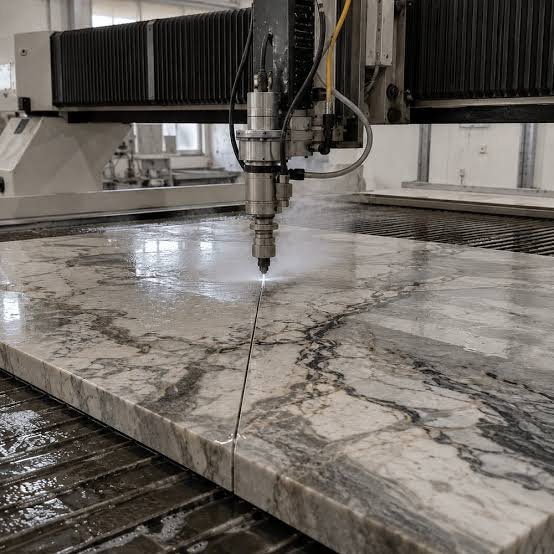
Granite countertops are known for their natural colors, veins, and patterns. However, when a countertop requires multiple pieces of stone, connecting those pieces without making the joints too noticeable can be challenging. This is why careful planning is an important part of granite fabrication.
Fabricators match granite veins and patterns by examining stone slabs, planning the cutting layout, selecting compatible pieces, and positioning countertop sections to create a consistent appearance. They also consider the direction of natural veins, color variations, and the placement of seams.
The goal is not always to make every pattern line up perfectly. Natural granite varies from one section to another, so fabricators work with the stone’s existing characteristics to create a visually balanced countertop.
Understanding this process can help homeowners make better decisions when selecting granite for kitchen countertops, islands, and other surfaces.
What Are Granite Veins and Patterns?
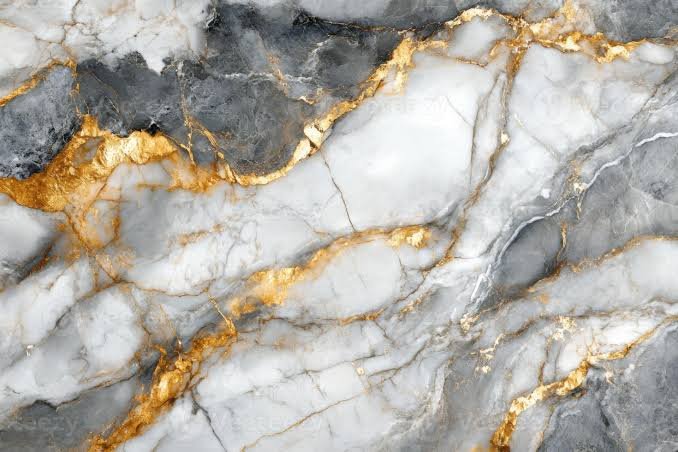
Granite is a natural stone formed through the cooling and crystallization of molten rock beneath the Earth’s surface. Its appearance varies depending on its mineral composition and geological formation.
Granite patterns may include:
-
Veins: Lines or streaks that run through the stone and may vary in thickness, color, and direction.
-
Mineral spots: Small or large mineral deposits that create speckled appearances.
-
Color variations: Differences in shades across the same slab.
-
Movement: The overall visual flow created by the arrangement of minerals, lines, and colors.
Some granite varieties have a consistent, speckled appearance, while others contain noticeable waves, streaks, or flowing patterns.
These natural characteristics influence how fabricators plan and position countertop sections. Stones with prominent veins or strong color movement often require more attention during layout and installation.
How Do Fabricators Match Granite Veins and Patterns?
Fabricators use a combination of visual inspection, slab selection, layout planning, and careful cutting to achieve a consistent appearance. The exact process depends on the granite variety, countertop design, and number of sections required.
1. Inspecting the Granite Slabs
The first step is examining the granite slabs before cutting. Fabricators look at the stone’s overall color, mineral distribution, vein direction, and natural variations.
They also check whether different sections of the slab have similar patterns. This is important because two pieces of granite from the same slab may still have noticeable differences.
During inspection, fabricators consider:
-
The direction and shape of visible veins.
-
Differences in background color.
-
The distribution of mineral spots.
-
Areas with strong or unusual patterns.
-
Natural imperfections that may affect the final layout.
This inspection helps determine which sections should be placed next to each other.
2. Selecting Slabs With Compatible Patterns
When a project requires multiple slabs, fabricators try to select pieces with compatible colors and patterns.
For example, if a kitchen island and surrounding countertops will be installed together, the homeowner may prefer the surfaces to have a similar appearance.
Fabricators compare the available slabs to find pieces that complement one another. They may also consider the stone’s batch or lot because granite from different blocks or production batches can show variations.
Selecting compatible slabs does not mean that every vein will match exactly. It means choosing pieces that work well together visually.
3. Planning the Granite Slab Layout
A granite slab layout is a plan showing how countertop sections will be positioned and cut from the available stone.
Before cutting, fabricators determine which part of the slab will be used for each countertop section. They consider the dimensions of the cabinets, sink openings, cooktop cutouts, edges, and seams.
A well-planned granite slab layout can help maintain a consistent pattern across adjoining sections and reduce unnecessary material waste.
Fabricators may use digital templates or layout software to review the proposed cuts before production. This also gives them an opportunity to discuss the stone’s appearance and possible seam locations with the homeowner.
4. Aligning the Veins Across Sections
After planning the layout, fabricators consider how the patterns will look where two countertop sections meet.
If a slab contains long veins or flowing lines, they may position adjoining pieces so the lines appear to continue across the joint as naturally as possible.
However, perfect alignment is not always possible. The shape of the stone, cutting requirements, and available slab dimensions can limit how closely patterns can be matched.
The objective is to create a visually balanced transition rather than make a natural stone surface look artificially uniform.
5. Choosing Suitable Seam Locations
Granite countertop seams are the joints where two separate pieces of stone connect. Their placement can affect both the appearance and practical use of a countertop.
Fabricators consider several factors when deciding where to position seams:
-
The size and shape of the countertop.
-
Cabinet and support locations.
-
Sink and cooktop openings.
-
The direction of the stone’s natural patterns.
-
Areas where a seam may be less visually noticeable.
Seams should also be planned with structural support and installation requirements in mind. Hiding a seam should never take priority over a safe and properly supported installation.
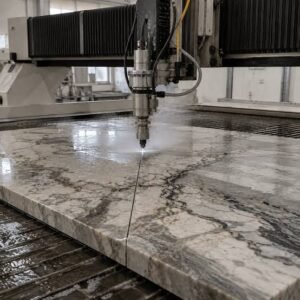
6. Cutting and Preparing the Granite Pieces
Once the layout is approved, fabricators cut the granite according to the project measurements.
They use appropriate stone-cutting equipment to create the required countertop sections. The edges that will meet at a seam are prepared so the pieces can be joined accurately.
Careful cutting is important because even a well-planned pattern can look uneven if the adjoining edges do not fit properly.
7. Joining the Pieces and Finishing the Seams
After the sections are positioned, installers join them using a suitable stone adhesive or seam-setting material. The material is often selected to complement the granite’s background color and pattern.
The pieces are adjusted to achieve a close fit, and excess adhesive is removed during finishing.
A properly finished seam should be as neat and consistent as the stone and installation conditions allow. However, it is important to understand that granite seams may remain visible because natural stone patterns and colors are not perfectly uniform.
8. Understanding Bookmatched Granite
Bookmatching is a special layout technique used to create a mirrored pattern between two adjacent stone surfaces.
The fabricator uses two consecutive slabs or sections from the same stone block and arranges them so their patterns reflect one another, similar to the pages of an open book.
This technique can create a striking symmetrical design, particularly with granite varieties that have noticeable directional patterns.
However, not every granite variety is suitable for bookmatching. The natural pattern must have enough visual movement to produce an appealing mirrored effect.
Bookmatching also requires additional planning and may require more stone than a standard layout. Homeowners should discuss material requirements and costs with their fabricator before choosing this design.
What Factors Affect Granite Vein Matching?
Matching granite patterns is not always straightforward. Several factors influence how closely two sections can be aligned.
|
Factor |
How it affects matching |
|---|---|
| Natural stone variation | Differences in color and mineral distribution can make exact matching difficult. |
| Slab availability | The available slabs determine which patterns can be positioned together. |
| Vein direction | Different vein directions can interrupt the visual flow. |
| Countertop dimensions | Large surfaces may require multiple pieces and additional seams. |
| Cutting requirements | Sink openings, corners, and other cutouts can limit layout choices. |
| Material waste | A pattern-focused layout may require more stone than an efficient standard layout. |
These factors explain why fabricators need to plan the design before cutting the stone. A preferred pattern arrangement may also affect the amount of material required and the overall project cost.
How Can Homeowners Help With Granite Pattern Matching?
Homeowners can participate in the planning process to make sure the finished countertop reflects their preferences.
Here are some useful steps:
-
View the actual slabs: Look at the granite slabs selected for the project rather than relying only on a small sample.
-
Discuss pattern direction: Explain whether you prefer continuous-looking veins, balanced colors, or a more natural variation.
-
Review the slab layout: Ask the fabricator to show how the countertop pieces will be positioned on the slabs.
-
Check seam locations: Review where the joints will appear, especially on kitchen islands and other prominent surfaces.
-
Ask about bookmatching: If you prefer a mirrored design, ask whether the selected granite can achieve that appearance.
-
Approve the plan before cutting: Review the shop drawing or layout with the fabricator before production begins.
The Natural Stone Institute recommends reviewing shop drawings and participating in the actual slab layout when working with highly varied stone. This gives homeowners a better understanding of the proposed design and its limitations.
Why Is Professional Granite Fabrication Important?
Matching granite veins and patterns requires more than simply cutting stone into the correct dimensions.
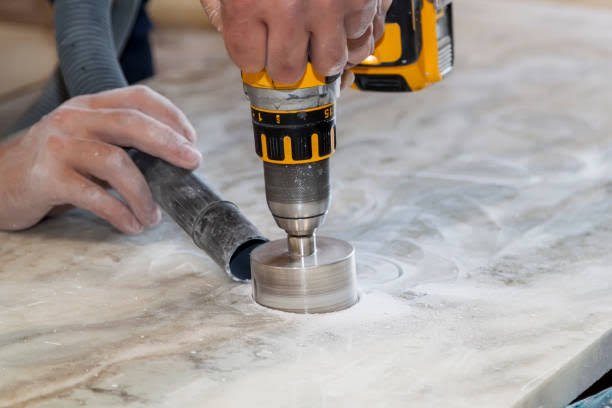
Fabricators must consider the natural appearance of the material, the countertop design, seam positions, and installation requirements.
Professional planning can help achieve:
-
A more consistent appearance: Carefully selected and positioned sections can create a more balanced countertop design.
-
Better seam placement: Planning helps determine where joints will work visually and practically.
-
Efficient material use: A suitable layout can reduce unnecessary waste while meeting the design requirements.
-
A coordinated kitchen design: Countertops, islands, and backsplashes can be planned to complement one another.
For homeowners planning a granite countertop project, working with an experienced fabrication team can make the selection and layout process easier. You can explore our Granite Fabrication Services in Lowell to learn more about granite fabrication.
Common Mistakes to Avoid When Matching Granite Patterns
Some decisions can make granite patterns look less consistent after installation. Homeowners and fabricators should consider the following mistakes during planning.
Choosing slabs based only on small samples: A small sample may not represent the full pattern, color variation, or vein direction of a complete slab.
Ignoring pattern direction: Two pieces may have similar colors but look noticeably different when their veins run in opposite directions.
Planning seams too late: Seam positions should be considered during the layout stage, not after the pieces have already been cut.
Expecting invisible seams: Even carefully matched granite sections can have visible joints. Natural variations, lighting, and pattern differences may make seams noticeable.
Focusing only on appearance: Pattern matching should not compromise suitable support, cutting requirements, or installation quality.
Avoiding these mistakes helps homeowners understand what is achievable before fabrication begins.
Conclusion
Fabricators match granite veins and patterns by inspecting slabs, selecting compatible sections, planning the cutting layout, aligning natural patterns, and carefully positioning countertop seams. Techniques such as bookmatching can also create a mirrored appearance when the selected stone is suitable.
However, exact pattern matching is not always possible because granite is a natural material with variations in color, minerals, and veining. The best results come from discussing the desired appearance, reviewing the actual slab layout, and approving seam positions before fabrication starts.
If you are planning a granite countertop project, contact us today to discuss your fabrication requirements and explore suitable granite options with S F Marble & Granite.
Frequently Asked Questions
1. Can granite veins be matched perfectly?
Not always. Fabricators can often create a close visual match, but natural differences in color, mineral distribution, and vein direction may prevent perfect alignment.
2. What is vein matching in granite fabrication?
Vein matching is the process of positioning and cutting adjoining granite sections so their natural veins appear to continue across the seams.
3. What is bookmatching in granite?
Bookmatching is a technique in which two adjacent stone sections are arranged as mirror images, creating a symmetrical pattern across their joint.
4. Does matching granite patterns increase fabrication costs?
It can. Pattern-focused layouts may require additional material, more planning, and extra fabrication work. The actual cost depends on the stone and project design.
5. Can different granite slabs have matching patterns?
Yes, some slabs may have compatible colors and patterns, particularly when they come from the same block or related production batch. However, an exact match is not guaranteed.
6. When should granite seam locations be decided?
Seam locations should be discussed during the design and layout stage, before the granite is cut. This allows the fabricator and homeowner to consider both appearance and installation requirements.
7. Is bookmatching possible with every granite type?
No. Bookmatching works best when the stone has directional patterns or prominent veins that create an attractive mirrored appearance. Some granite varieties have more uniform or speckled patterns and may not produce a noticeable bookmatched effect.