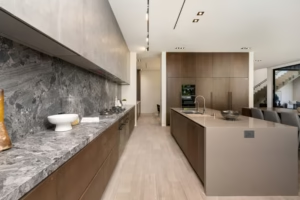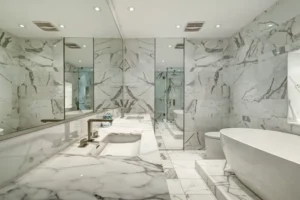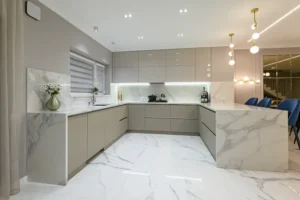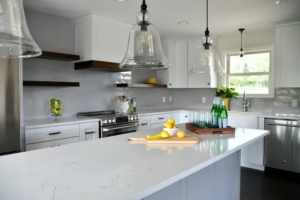
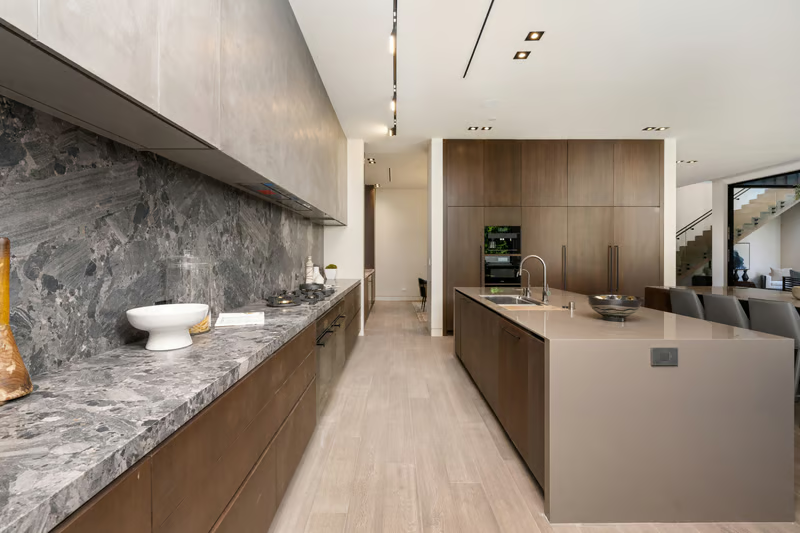
A kitchen island can be more than a place to prepare meals. With the right countertop design, it can become the main feature of your kitchen. One popular choice is a waterfall countertop, known for its clean lines and continuous stone surface.
What is a waterfall countertop? It is a countertop design where the material extends from the top of an island down one or both sides to the floor, creating a flowing, furniture-like appearance. At S F Marble & Granite, choosing the right material, layout, and finish helps homeowners create a kitchen that looks beautiful and works for everyday life.
1. How Does a Waterfall Countertop Work?
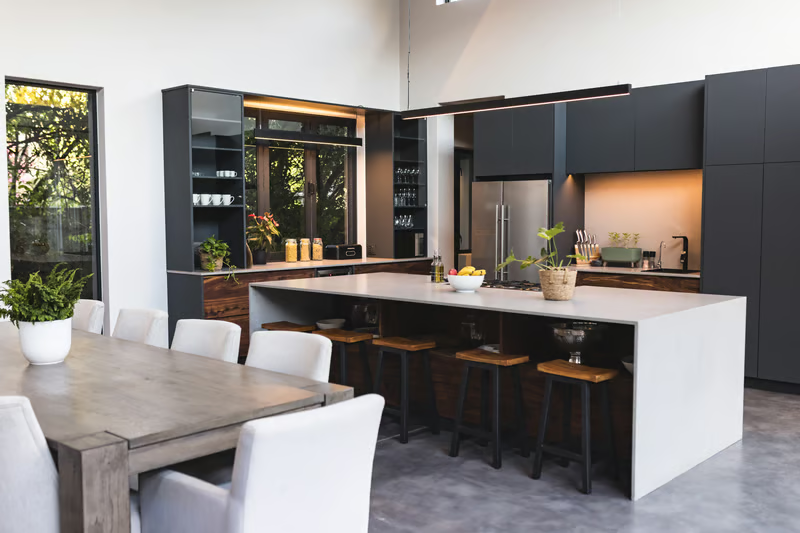
A waterfall countertop continues the horizontal surface of a kitchen island down its vertical side. Unlike a standard island, which often has exposed cabinet doors or panels, this design creates a connected look between the top and the side.
The stone usually meets the vertical panel at a clean corner. Fabricators may use a carefully cut joint called a mitered edge to make the pattern appear continuous around the corner.
Waterfall designs can cover one side or both sides of an island. Some extend to the floor, while others stop above the floor or meet a supporting panel. The best design depends on your cabinet layout, preferred appearance, and budget.
2. Which Materials Work Best for a Waterfall Countertop?
The material affects the appearance, maintenance, cost, and durability of your island. Choose a surface that fits how you cook and use your kitchen.
Quartz
Engineered quartz comes in many colors and patterns, including designs that resemble natural marble. It is nonporous and generally does not need sealing. However, it can be damaged by excessive heat, so use trivets for hot cookware.
Granite
Granite offers natural patterns, mineral details, and color variations. Each slab has a distinct appearance. Depending on the stone, sealing may help reduce staining, and the surface should be handled according to the fabricator’s care instructions.
Marble
Marble creates a classic, elegant appearance with natural veining. It is softer than many granite options and can etch when exposed to acidic substances such as lemon juice or vinegar. It suits homeowners who appreciate natural stone and are willing to provide careful maintenance.
Porcelain and quartzite
Porcelain slabs offer a range of modern designs and can provide good resistance to heat and staining when properly specified. Natural quartzite has distinctive mineral patterns and can be durable, but its properties vary by slab. Confirm the material’s identity and care requirements before purchasing.
3. What Are the Benefits of This Countertop Design?
A waterfall island can provide both visual appeal and practical advantages.
- A modern appearance: The continuous surface creates a clean, coordinated look.
- A strong focal point: The island can become a standout feature in an open-plan kitchen.
- Protection for island sides: Stone panels cover exposed cabinet sides and help protect them from everyday bumps and scuffs.
- Flexible design options: You can coordinate the island with your backsplash, flooring, and surrounding cabinets.
- Potential resale appeal: A well-designed kitchen may appeal to future buyers, although no particular countertop guarantees a higher resale price.
The design works especially well when the stone pattern complements the rest of the kitchen. A bold natural pattern can make a statement, while a subtle color can create a calmer appearance.
4. What Are the Drawbacks of a Waterfall Countertop?
Before choosing this style, consider its cost and practical limitations.
- Higher material costs: Covering the sides requires additional stone compared with a standard island.
- More fabrication work: Matching patterns at the corners takes accurate measurements and careful cutting.
- Heavy construction: Stone panels need suitable cabinet support and professional handling.
- Visible seams: The corner joint may remain visible, especially with strong patterns or contrasting colors.
- Less accessible storage: A full side panel can limit access to cabinet ends or other features, depending on the design.
A waterfall design may not suit every kitchen. If your budget is limited, covering just one side can provide a similar style with less material.
5. How Much Does a Waterfall Countertop Cost?
The total price depends on the material, slab size, island dimensions, edge details, labor, and installation requirements. A simple quartz island and a large natural-stone island with book-matched veining can have very different costs.
| Cost factor | How it affects the price |
|---|---|
| Material choice | Different stones and engineered surfaces have different prices. |
| Island size | Larger tops and side panels require more material. |
| Edge fabrication | Mitered corners and detailed cuts add labor. |
| Pattern matching | Aligning prominent veins can increase fabrication time and waste. |
| Cutouts and features | Sinks, outlets, and other openings require precise work. |
| Installation access | Stairs, narrow entrances, and difficult access may add labor. |
Request a written estimate that explains what is included, such as templating, fabrication, edge work, delivery, installation, and any required support. Comparing estimates with the same specifications makes it easier to understand the actual value.
You Can Read About How Much Does It Cost to Install Countertops in 2026?
6. Which Kitchen Layouts Work Best With a Waterfall Island?
This design often suits kitchens with a central island, open floor plans, and clear sightlines. Because the sides are visible, the island can look finished from several angles.
A waterfall island kitchen can work well in large kitchens where the island separates cooking and dining areas. It can also suit smaller rooms, but the island must leave enough space for people to walk around it, open appliances, and pull out chairs.
Consider these layout tips:
- Measure the available floor space before selecting the island size.
- Keep walkways comfortable and clear around cabinets and appliances.
- Place seating where the stone panel will not interfere with knee room.
- Coordinate the island color with cabinetry, flooring, and lighting.
- Check that the island design leaves access to electrical outlets and storage.
If your kitchen is compact, a shorter island or a single waterfall panel may create a balanced look without making the room feel crowded.
7. What Is the Difference Between Full, Half, and One-Sided Designs?
Waterfall islands come in several configurations. Understanding the differences helps you select a design that suits your budget and kitchen layout.
Full waterfall: The countertop material runs down both visible ends of the island. This creates a symmetrical, finished look from multiple viewpoints and usually requires more material.
Half waterfall: The stone covers part of a side rather than running all the way to the floor or across the full panel. The exact design varies, so confirm the panel height and coverage in the drawing before fabrication.
One-sided waterfall island: Only one end of the island receives the vertical stone panel. This can be a practical choice when the other end sits against a wall or faces a less visible area.
Extended waterfall: The stone panel may continue down to the floor with a carefully planned clearance. Your fabricator should account for the flooring, cabinet height, and installation tolerances.
Ask to see a drawing that shows the top, side panels, seams, and finished edges before approving the design.
8. How Do You Choose the Right Edge and Finish?
The edge detail affects how the countertop looks at its corners. Straight edges suit minimalist kitchens, while rounded edges can soften the overall appearance. For a waterfall design, a mitered corner is common because it can create the impression of a thicker slab.
When comparing waterfall edge countertops, look at how the slab’s veins and colors meet at the corner. Some patterns align naturally, while others need careful matching to achieve a balanced result.
You should also consider the surface finish. Polished stone reflects more light and often shows off color and pattern clearly. Honed finishes have a softer, less reflective appearance, although their maintenance needs depend on the material.
Ask your fabricator to explain the visible seam, edge thickness, and finish options. A sample or full slab viewing can help you make a more confident choice.
9. How Do You Clean and Maintain a Waterfall Countertop?
Daily care depends on the surface you choose. Use a soft cloth, warm water, and a cleaner approved for your material. Wipe spills promptly, especially coffee, wine, oils, and acidic liquids on natural stone.
Follow these care practices:
- Use cutting boards to protect the surface from scratches.
- Place hot pans on trivets instead of directly on the countertop.
- Avoid abrasive pads and harsh cleaners unless the manufacturer approves them.
- Use a stone-safe cleaner on marble and granite.
- Follow the fabricator’s advice about sealing natural stone.
- Clean the vertical panels as carefully as the horizontal surface.
- Check seams and joints periodically for changes or damage.
Quartz generally does not require sealing, but it still needs protection from high heat. Marble may etch from acids, and granite care varies by stone. Always follow the instructions for your specific surface.
10. What Should You Know Before Installation?
Good planning helps prevent expensive changes after fabrication begins. Stone slabs are heavy, and island panels must be measured, cut, transported, and installed with proper support.
Before approving the project, confirm these details with your countertop professional:
- Measurements: Make sure the cabinets are installed and level before final templating.
- Support: Verify that the cabinet structure can support the countertop and vertical panels.
- Seams: Discuss where joints will sit and how visible they may be.
- Pattern direction: Decide how veins and colors should continue from the top to the sides.
- Appliances and utilities: Confirm clearances, outlets, plumbing, and seating requirements.
- Access: Check doorways, stairways, and turning space for safe delivery.
- Final drawings: Approve the dimensions, overhangs, edge profile, and panel layout before cutting.
For further design inspiration, explore our guide, Top Countertop Patterns That Define a Luxurious Kitchen, to compare colors and patterns that may suit your space.
For your S F Marble & Granite project, consider how the countertop will look alongside your cabinets, backsplash, and flooring. Choosing the material and layout together can help you create a coordinated design that suits your daily needs and budget.
Final Thoughts
A waterfall island can give your kitchen a distinctive look by extending the countertop material down one or both sides. The right result depends on selecting a suitable surface, planning the layout, budgeting for fabrication, and ensuring proper support.
What is a waterfall countertop? It is a design choice that combines a continuous stone appearance with a practical kitchen island when it is planned and installed correctly. S F Marble & Granite can help you explore countertop materials and design options for your project. Contact us today to discuss your kitchen countertop plans and find an option that suits your home.
Frequently Asked Questions
1. Are waterfall countertops worth the cost?
They can be worth the cost if you value a continuous stone design and have room in your budget for extra material and fabrication.
2. Is quartz a good choice for a waterfall island?
Yes. Quartz offers many colors and patterns, needs no routine sealing, and should be protected from excessive heat.
3. Can you add a waterfall edge to an existing island?
Sometimes. Your installer must check the cabinet structure, dimensions, side clearance, and whether the existing countertop can be modified safely.
4. Does a waterfall countertop make a kitchen look smaller?
It can feel visually heavy in a small kitchen, but a light color, slim profile, and appropriately sized island can help balance the design.
5. Do waterfall countertops have visible seams?
They can. Seams where the horizontal top meets the vertical panel may be visible, but careful fabrication and pattern matching can make them less noticeable.