
Granite is not ready for your kitchen the moment it leaves the quarry. Before a slab can become a finished countertop, skilled fabricators must measure, cut, shape, polish, and prepare it for installation.
What is granite fabrication? It is the process of turning a raw granite slab into a finished piece that fits a specific space. At S F Marble & Granite, this work involves careful planning and precision at each stage, from the first template to the final edge polish.
What Does Granite Fabrication Include?
Granite fabrication covers the work needed to transform a full slab into a countertop or another custom stone surface. The process is more than simply cutting a slab to size.
A fabricator may handle:
- Measuring and creating a digital or physical template
- Planning slab layout and seam locations
- Cutting the slab to the required dimensions
- Creating openings for sinks, cooktops, faucets, and outlets
- Shaping and polishing countertop edges
- Joining sections when one piece cannot cover the full area
- Inspecting the finished pieces before installation
The goal is a countertop that fits the space accurately and has a clean, finished appearance.
How Does Granite Countertop Fabrication Work?
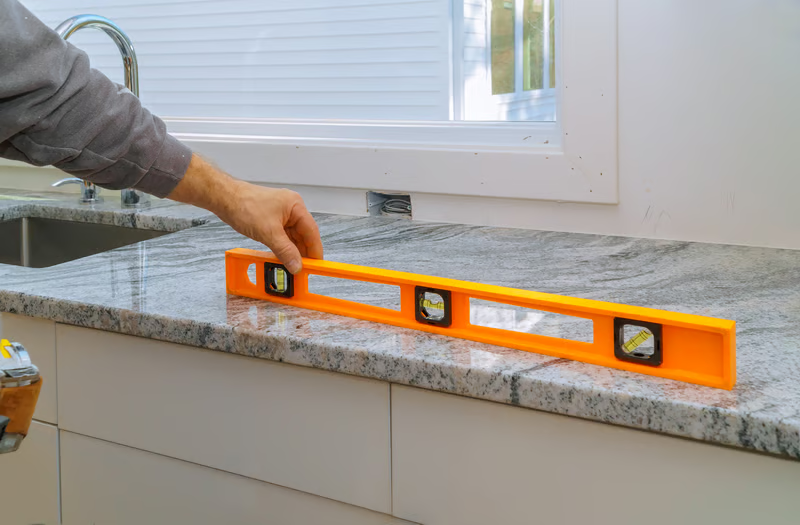
The granite countertop fabrication process usually follows a planned sequence. Each step affects the next, so accurate measurements and careful handling matter.
1. Measuring and templating
The fabricator measures the cabinets, walls, corners, appliances, and sink location. A template records these dimensions and shows where cuts and seams need to go.
2. Slab layout
The team decides how each countertop section will be positioned on the slab. They consider the stone’s pattern, color movement, edges, and seam locations.
3. Cutting
Specialized saws or CNC equipment cut the granite according to the approved template. Cuts must account for the required dimensions and openings.
4. Edge shaping
The exposed edges are shaped into the selected profile. Common options include eased, beveled, bullnose, and more detailed decorative profiles.
5. Polishing
The edges and other exposed surfaces are polished to create the desired finish. The level of polish should match the slab and the design.
6. Inspection and preparation
The completed pieces are checked for dimensions, openings, edges, and finish before they are taken to the job site.
You Can Also Read This Countertop Fabrication Process
What Is the Difference Between Granite Fabrication and Installation?
Fabrication and installation are related, but they are not the same job.
Fabrication happens mainly in the shop. It turns the slab into pieces that are shaped and prepared for a particular project. Installation happens at the property, where the finished pieces are positioned, joined, leveled, and secured.
Because fabrication and installation of granite countertops are closely connected, a small measurement issue can affect the final fit. Good communication between the templating, fabrication, and installation teams helps reduce problems.
| Fabrication | Installation |
|---|---|
| Measures and templates the project | Prepares the cabinets or support area |
| Cuts the stone | Places the finished pieces |
| Creates sink and cooktop openings | Aligns and levels the countertop |
| Shapes and polishes edges | Joins seams on site when needed |
| Prepares finished sections | Secures the countertop and completes final checks |
Which Tools and Techniques Are Used to Fabricate Granite?
Modern fabrication combines specialized machinery with skilled hand finishing. The equipment used depends on the shop, stone, design, and project requirements.
Common stone fabrication techniques and equipment include:
- Bridge saws for accurate straight cuts
- CNC machines for detailed shapes and openings
- Water-fed cutting equipment to control dust and heat
- Diamond tooling for cutting and shaping stone
- Grinding tools for refining edges
- Polishing pads for creating a smooth finished surface
- Manual finishing for detailed areas and final touch-ups
These methods help create accurate cuts and consistent finishes. Skilled workers still play an important role because natural stone can have variations in pattern, thickness, movement, and structure.
How Are Templates Used to Cut Granite?
A template gives the fabricator a clear pattern for the countertop pieces. It records the shape of the cabinets and identifies important features such as walls, corners, sinks, cooktops, and seams.
A template for cutting joints in granite also helps determine where separate pieces will meet. Joint locations should be planned carefully so they fit the room and work with the stone’s pattern.
Before cutting, the fabricator reviews the template against the actual project conditions. This step is important because walls may not be perfectly straight and cabinets may have small variations.
How Are Sink, Cooktop, and Faucet Openings Made?
Granite countertops often need several openings, and each one must be placed accurately.
Sink openings are cut according to the sink type and the approved measurements. Undermount sinks require a finished opening because the granite edge remains visible around the sink.
Cooktop openings must follow the appliance manufacturer’s required dimensions. Faucet and dispenser holes are also positioned based on the sink and plumbing layout.
A fabricator should confirm appliance and sink specifications before making these cuts. Once granite is cut, changing an opening is more difficult than correcting a measurement during templating.
How Are Granite Countertop Edges Finished?
The edge is one of the most visible parts of a countertop. It affects both the appearance and how the stone feels when you touch it.
Popular edge profiles include:
- Eased edge: A simple softened corner
- Beveled edge: A visible angled cut along the top edge
- Bullnose edge: A rounded profile
- Ogee edge: A more decorative profile with curves
The best choice depends on your kitchen or bathroom style, cabinet design, and personal preference. A simpler edge can suit a clean modern room, while a decorative profile can add more traditional detail.
What Causes Problems During Granite Fabrication?
Many fabrication problems begin before the stone is ever cut. Accurate planning is one of the best ways to prevent them.
Common issues include:
- Incorrect measurements
- Appliance or sink specifications that are not confirmed
- Poor seam placement
- Failure to account for walls or corners that are out of square
- Incorrect edge-profile selections
- Damage caused by poor handling
- Weak support under large countertop sections
Natural granite also varies from slab to slab. Fissures, veins, mineral deposits, and changes in color are part of the material’s natural character. A professional fabricator reviews the slab before cutting so the layout can account for these features.
How Should You Choose a Granite Fabricator?
Choosing a fabricator is about more than finding someone who can cut stone. You want a team that understands the complete process and communicates clearly.
Before hiring a fabricator, ask:
- Do you provide professional templating?
- How do you plan seams?
- Can I review the slab layout before cutting?
- Which edge profiles do you offer?
- How are sink and cooktop openings measured?
- Who handles installation?
- How do you inspect finished pieces before delivery?
- What information do you need from my appliance or sink manufacturer?
Ask to see examples of completed work when possible. Pay attention to edge quality, seam alignment, cutout shape, and overall fit.
Why Does Professional Granite Fabrication Matter?
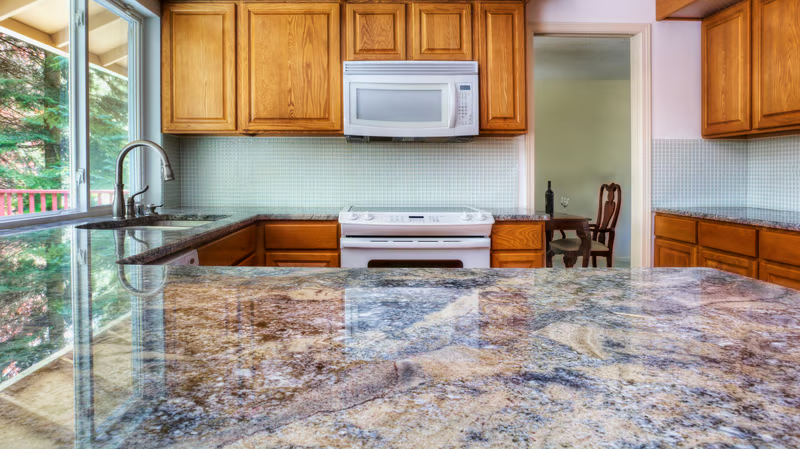
A beautiful granite slab can still produce a poor result if it is measured or fabricated incorrectly. Professional fabrication helps turn the material into a countertop that fits the room and works with the features you need.
For a project like a kitchen remodel, fabrication should be planned alongside cabinet dimensions, appliances, sink selection, and the final countertop design.
For homeowners planning a custom countertop project, S F Marble & Granite can be considered when fabrication and installation need to work together. You can also explore the company’s Stone Fabrication and Installation Services to learn more about the process and available options.
Final Thoughts
Granite fabrication is the skilled process that turns a raw slab into a finished countertop made for your space. Accurate templating, careful cutting, proper edge work, and thoughtful seam planning all affect the final result.
S F Marble & Granite can help you plan the stone work needed for your countertop project. If you are ready to discuss your project, Contact us today to learn more about fabrication and installation options.
FAQs
What is granite fabrication?
Granite fabrication is the process of measuring, cutting, shaping, polishing, and preparing granite for a specific project.
How long does granite fabrication take?
The time varies by project size, design, templates, cutouts, and shop scheduling.
Is granite fabricated before installation?
Yes. Most cutting, edge shaping, and polishing are completed before the finished pieces reach the job site.
Can granite be fabricated for an undermount sink?
Yes. Fabricators can create a finished sink opening sized for an undermount sink.
Can granite seams be hidden completely?
No. Seams can be made less noticeable with careful placement and matching, but a joint normally remains visible on close inspection.