New countertops can transform your kitchen or bathroom. Most homeowners pay between $2,000 and $4,500 for a standard project. This cost usually covers the material, labor, and basic edge finishes for a typical kitchen.
The total price depends on the material you choose and the size of your space. If you want to know How Much Does It Cost to Install Countertops for your specific home, you need to look at both the price of the slab and the complexity of the job. Quality materials like granite or quartz will sit at the higher end of the scale.
Average Countertop Installation Cost
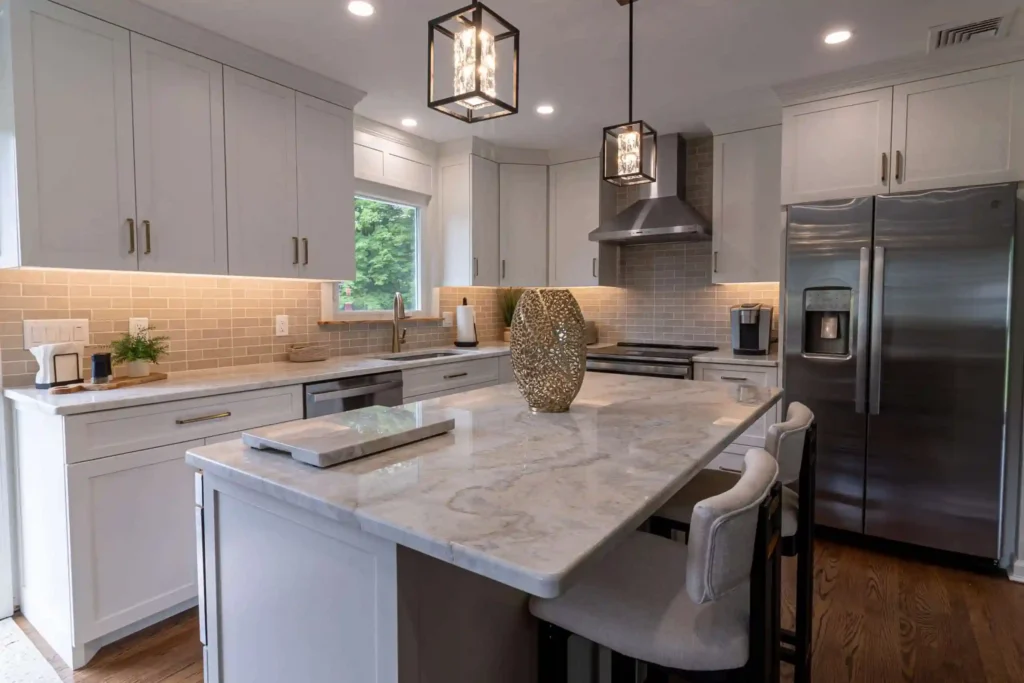
Here’s a quick snapshot of what homeowners typically pay in 2026:
| Cost Level | Price Range |
| Low end (laminate, small area) | $400 – $1,200 |
| Mid range (quartz, granite) | $2,000 – $4,500 |
| High end (marble, large kitchen) | $5,000 – $10,000+ |
| National average | $2,800 – $3,500 |
These figures include both materials and labor. A basic laminate job in a small kitchen can cost under $1,000. A large marble installation in a chef’s kitchen can easily hit $10,000 or more.
The average kitchen has around 30 to 40 square feet of counter space. Use that as your baseline when getting quotes.
Countertop Cost Per Square Foot by Material
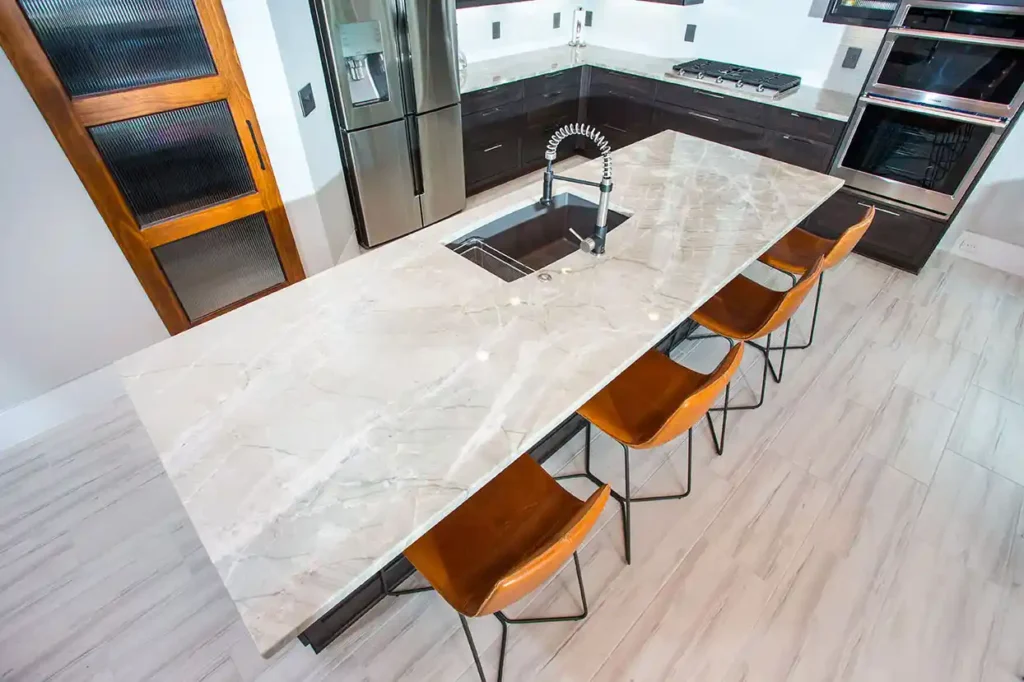
Material choice is the biggest cost driver. Here’s what you’ll pay per square foot installed in 2026:
| Material | Cost Per Square Foot (Installed) |
| Laminate | $15 – $40 |
| Tile | $20 – $50 |
| Butcher Block / Wood | $40 – $100 |
| Concrete | $65 – $135 |
| Quartz | $55 – $150 |
| Granite | $45 – $200 |
| Marble | $75 – $250 |
| Quartzite | $80 – $200 |
| Soapstone | $70 – $180 |
Granite countertop cost per square foot installed in 2026 sits between $45 and $200. That range depends on the grade of stone, edge detail, and your location.
Quartz is often priced similarly to granite but requires less maintenance. Many homeowners pick quartz for that reason alone.
Marble is the most luxurious option but also the most porous and scratch-prone. It’s beautiful — but it requires regular sealing.
Labor Cost for Countertop Installation
Labor is typically $10 to $35 per square foot, or $200 to $1,000 for the full job, depending on complexity.
Factors that push labor costs up include:
- Cutouts for sinks and cooktops ($50–$150 each)
- Backsplash installation (separate labor charge)
- Difficult layouts with lots of corners or angles
- Second-story installation (harder to carry heavy slabs)
- Removal of old countertops ($50–$300 extra)
Labor for natural stone like granite or marble tends to cost more than laminate. Stone slabs are heavy and require specialized tools to cut and install correctly.
Key Factors That Affect Countertop Installation Cost
Several things shift your final price up or down.
- Kitchen or Bathroom Size More square footage means more material and more labor. A small bathroom vanity might use 5 to 8 square feet. A large kitchen island alone can take 20 square feet.
- Material Type Already covered above, but it’s the biggest variable. Laminate costs a fraction of marble.
- Edge Profile A simple eased edge is usually included in the base price. Fancy profiles like ogee, waterfall, or bullnose add $10–$30 per linear foot.
- Number of Cutouts Every sink, faucet hole, or cooktop cutout adds cost. Each one takes extra time and a precise cut.
- Your Location Labor costs are higher in cities like Boston, New York, and San Francisco. If you’re in a smaller market, you’ll likely pay less.
- Removal of Old Countertops Most contractors charge $50 to $300 to remove and dispose of existing countertops. Always ask if this is included in your quote.
- Countertop Thickness Standard countertops are 3/4 inch thick. Thicker slabs (1.25 to 1.5 inches) cost more for both material and labor.
Additional Costs Most Homeowners Miss
When budgeting a kitchen countertop remodel cost, people often forget these extras:
- Plumbing disconnect/reconnect: $100–$300 if you’re replacing around an existing sink
- Backsplash: $400–$1,500 depending on tile and labor
- Cabinet leveling: Old cabinets sometimes need to be leveled before new countertops go in
- New sink: If you’re upgrading the countertop, many people upgrade the sink too — budget $150–$600
- Sealant: Natural stone needs sealing every 1–2 years. First application is usually included; future ones cost $50–$150
- Permits: Rarely needed for countertops, but check your local rules if doing major remodeling
Budget an extra 10–20% buffer on top of your quote for these surprises.
Cost Breakdown by Countertop Types & Usage Areas
Kitchen Countertops
The kitchen is the most common and most expensive area. Average kitchen countertop remodel cost runs $2,000 to $5,000. A full kitchen with an island can reach $8,000 to $12,000 for premium materials.
Bathroom Countertops
Bathrooms use less material. Expect to pay $400 to $1,500 for a standard vanity top. Natural stone vanity tops run $800 to $2,500.
Laundry Room & Utility Areas
Often done in laminate or butcher block. Budget $300 to $900 for these spaces.
Outdoor Kitchen Countertops
Outdoor areas need weather-resistant materials like concrete, granite, or porcelain. These cost $60 to $150 per square foot installed. Durability matters more than looks outdoors.
Bar Countertops
A home bar countertop is typically 8 to 15 linear feet. Budget $500 to $3,000 depending on material and overhang needs.
You can read about: Top Countertop Patterns
DIY vs Professional Countertop Installation Cost
Can you do it yourself?
Laminate countertops are the most DIY-friendly. A prefab laminate kit from a home improvement store costs $200 to $600. You save $200 to $500 in labor. But you need basic carpentry skills and the right tools.
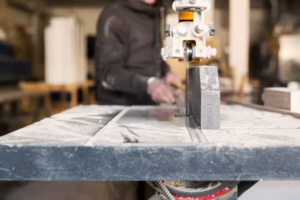
Natural stone granite, quartz, marble is almost always a professional job. Slabs can weigh 400 to 800 pounds. Cutting them requires wet saws and diamond blades. One mistake can crack a $2,000 slab.
DIY cost comparison:
| Task | DIY Cost | Pro Cost | Savings |
| Laminate (prefab) | $200–$600 | $600–$1,200 | $200–$600 |
| Tile countertop | $300–$700 | $800–$1,500 | $500–$800 |
| Butcher block | $400–$900 | $900–$2,000 | $500–$1,100 |
| Granite/Quartz | Not recommended | $2,000–$5,000 | — |
If you’re not experienced, the risk of DIY for heavy stone materials outweighs the savings. A damaged slab or improper installation can void warranties and cost more to fix.
Countertop Replacement vs Repair Cost
Sometimes you don’t need a full replacement. Here are common repair options:
| Repair Type | Average Cost |
| Chip or crack repair (resin fill) | $100–$300 |
| Stain removal (professional) | $50–$200 |
| Resurface/refinish (laminate) | $200–$500 |
| Re-sealing (natural stone) | $50–$150 |
| Full countertop replacement | $1,500–$5,500+ |
If damage is minor, repair is the smart move. If the countertop is more than 15 years old or has widespread damage, replacement usually makes more financial sense especially if you’re planning to sell the home.
The cost to replace countertops is almost always higher than repair. But replacement adds significantly more value.
How to Save Money on Countertop Installation
Here are real, practical ways to lower your countertop renovation cost:
- Choose laminate or tile Both look much better today than they did 20 years ago. High-quality laminate can mimic granite at a fraction of the price.
- Stick with simple edge profiles A basic eased or beveled edge costs nothing extra. Fancy ogee profiles can add hundreds of dollars.
- Limit the number of cutouts Every hole adds cost. If possible, keep the sink in the same location so the plumber has less work.
- Buy remnants Stone fabricators sell leftover pieces from larger jobs at big discounts. A small kitchen or bathroom vanity can often be done with remnants.
- Get three quotes minimum Labor prices vary widely between contractors. Getting three bids takes a few hours but can save you $500 to $1,500.
- Time your project right Winter and early spring are slower seasons for contractors. You may get better pricing between January and March.
- Reuse your existing sink If your sink is in good shape, keep it. New undermount sinks cost $150 to $600 plus installation.
- Ask about factory seconds Some stone suppliers sell slabs with minor imperfections at 20–40% off. Small flaws are often hidden under appliances or on the back edge.
Does Installing New Countertops Increase Home Value?
Yes but not always dollar for dollar.
According to real estate professionals, kitchen upgrades including countertops return roughly 60 to 80 cents for every dollar spent at resale. That’s not a full return, but it helps your home sell faster and at a higher price.
Granite and quartz are most valued by buyers in the current market. Laminate is less appealing to buyers but still better than damaged or dated surfaces.
If you’re planning to sell within 1 to 3 years, it’s worth upgrading. If you’re staying long-term, choose what you love the personal enjoyment has its own value.
Important note: Overspending on countertops in a modest neighborhood can hurt your return. Keep your upgrade in line with the price range of comparable homes nearby.
What to Expect During Countertop Installation
Knowing the process helps you plan and avoid surprises.
Step 1: Measure & Template The fabricator visits your home to take precise measurements. For stone, they often create a physical or digital template of your counter layout. This takes 1 to 2 hours.
Step 2: Fabrication Stone is cut, edges are shaped, and cutouts are made at the shop. This typically takes 5 to 10 business days for natural stone. Laminate is often quicker.
Step 3: Old Countertop Removal Existing countertops are removed before installation. The process takes 1 to 3 hours depending on size.
Step 4: Installation The new countertop is placed and secured. Seams are filled and polished. The whole process usually takes a few hours to a full day for large kitchens.
Step 5: Plumbing Reconnection If a sink is involved, a plumber reconnects the water supply. This happens the same day or the next day.
Step 6: Sealing (if applicable) Natural stone is sealed at the end of installation. You’ll need to avoid using the surface for 24 hours while the sealant cures.
Total timeline: Plan for 1 to 2 weeks from quote acceptance to completed installation.
Conclusion
Countertop costs range widely from a few hundred dollars for a small laminate vanity to $12,000 or more for a full marble kitchen. The key variables are material, size, edge style, and labor in your area.
If you know your budget upfront, it’s much easier to pick the right material and set realistic expectations. Start by measuring your countertop area, then get at least three quotes from licensed fabricators and installers.
For homeowners in the Greater Boston area looking for expert installation, SF Marble & Granite offers professional Countertop Installation in Lowell, MA and surrounding areas. The team works with granite, quartz, marble, and more helping you get the best value for your budget.
Whether you’re doing a full kitchen countertop remodel or just updating a bathroom vanity, how much does it cost to install countertops comes down to the choices you make. Use this guide to make those choices with confidence.
Frequently Asked Questions
Q: How much does it cost to install countertops in a kitchen?
A: Most kitchens cost $2,000 to $5,500 for countertop installation. Large kitchens with premium materials can exceed $10,000.
Q: What is the cheapest countertop to install?
A: Laminate is the most affordable option at $15 to $40 per square foot installed. Prefab laminate options can bring the total cost below $1,000 for a small kitchen.
Q: How long does countertop installation take?
A: Most installations take one day once the countertop is fabricated. The full timeline from measurement to completion is usually 1 to 2 weeks.
Q: Is quartz or granite cheaper?
A: They’re often similarly priced. Granite can be cheaper at the low end ($45/sq ft) while quartz tends to have a more consistent mid-range price ($55–$150/sq ft).
Q: Does replacing countertops add home value?
A: Yes. Kitchen and bathroom countertop upgrades typically return 60–80% of the investment at resale, and they help homes sell faster.
Q: Can I install countertops myself?
A: Laminate and tile are reasonable DIY projects. Natural stone like granite and quartz should be professionally installed due to the weight and cutting equipment required.