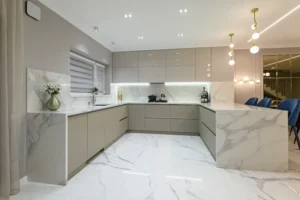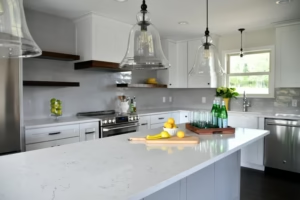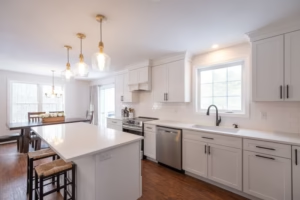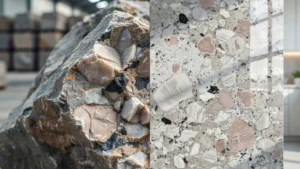
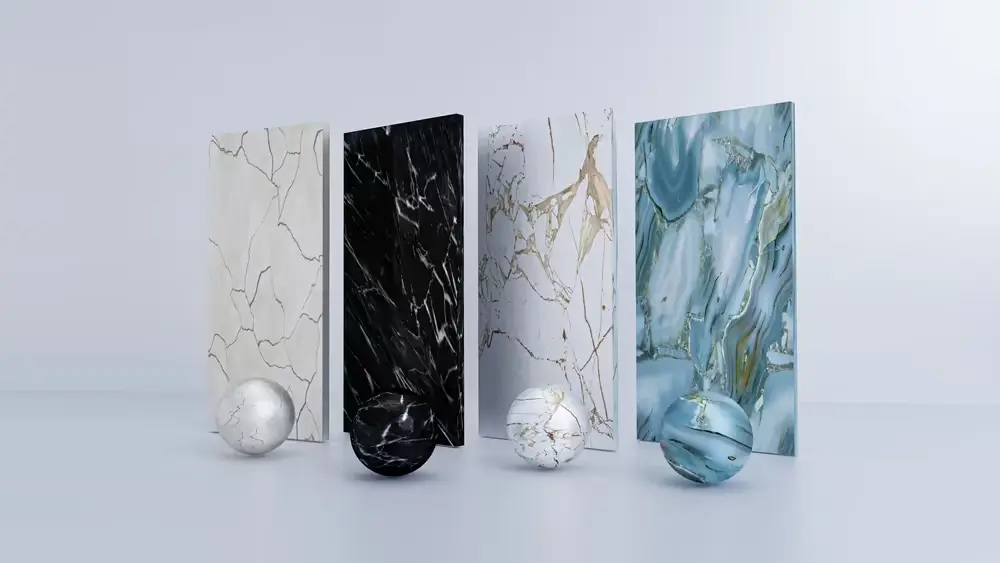
Picking between granite and quartz is one of the biggest decisions in any kitchen remodel. Both look beautiful. Both last for years. But they are not priced the same, and the difference can add up fast on a large project. Quartz is generally more expensive than granite, but not always by much.
If you are asking which is more expensive granite or quartz for your specific project, the honest answer is: it depends on the grade, the brand, and your location. This guide breaks it all down clearly so you can make the right call.
Granite vs Quartz Price Comparison
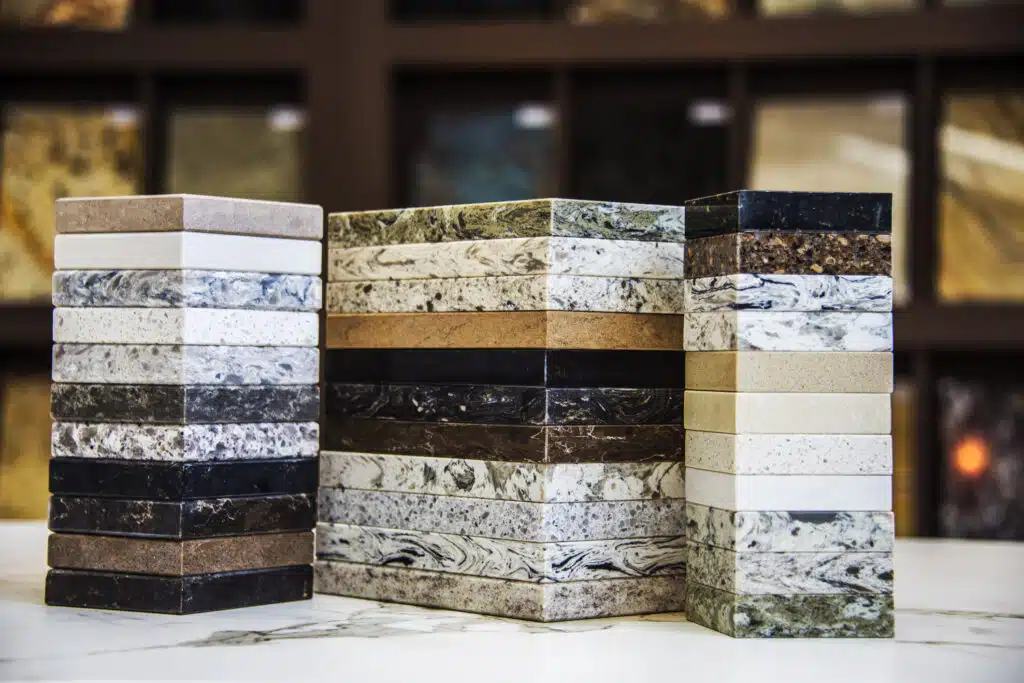
Let us start with real numbers.
Granite countertops typically cost between $40 and $100 per square foot installed. Entry-level granite starts at the lower end. Rare, imported, or exotic granite can push past $150 per square foot.
Quartz countertops usually run between $55 and $150 per square foot installed. Mid-range quartz from brands like Caesarstone or Cambria sits around $75 to $120 per square foot. Premium designer quartz can reach $200 per square foot or more.
So on average, quartz or granite more expensive comes down to grade. At the entry level, they are close. At the high end, quartz tends to cost more. But exotic natural granite can flip that equation entirely.
For a standard 40 square foot kitchen, here is what you are looking at:
A basic granite install runs roughly $1,600 to $4,000 total. A basic quartz install runs roughly $2,200 to $6,000 total. That gap grows as you move up in quality and size.
Why Quartz Is Usually More Expensive
Quartz countertops are engineered. That means they are manufactured, not pulled from the earth and cut.
To make quartz slabs, manufacturers grind natural quartz crystals and mix them with resin binders, pigments, and sometimes recycled materials. The mixture gets compressed under high heat and pressure into a uniform slab. That whole process costs money.
The manufacturing also means better quality control. Every slab looks consistent. There are no natural weak spots, no unexpected veining that splits, no surprise cracks hiding in the stone. That reliability has a price.
Brand also plays a big role in quartz pricing. Brands like Silestone, Cambria, and Caesarstone spend heavily on design, warranties, and retail distribution. You pay for the name as much as the material.
That is why whats more expensive granite or quartz is usually answered with quartz when comparing similar quality levels from major brands.
When Granite Can Cost More
Do not assume granite is always the budget option. It is not.
Rare granite varieties can be shockingly expensive. Blue Bahia granite from Brazil, for example, runs $100 to $200 per square foot installed. Lemurian Blue, Van Gogh granite, and certain book-matched slabs can push even higher.
Quarry location matters too. Granite sourced from small quarries in Brazil, Norway, or India costs more to ship and process. That cost passes to you.
Thickness adds cost as well. Standard granite slabs are 3/4 inch or 1.25 inches thick. Custom thick slabs, waterfall edges, and specialty finishes like leather or honed surfaces all raise the final price.
So which cost more quartz or granite depends entirely on what you choose. Premium natural stone can easily outprice premium quartz. It goes both ways.
Durability Comparison
Price is not the only number that matters. How long the countertop lasts affects the real cost over time.
Granite is a hard natural stone. It resists scratches well and holds up to heat. You can set a hot pan on sealed granite without worry. It does need annual sealing to stay stain resistant. Without sealing, liquids can soak into the pores and leave permanent marks.
Quartz is slightly harder than most granite on the Mohs hardness scale. It does not need sealing because the resin binder makes it non-porous. Stains, bacteria, and moisture cannot penetrate the surface. That makes it easier to maintain in a busy kitchen.
However, quartz does not handle heat as well as granite. The resin can warp or discolor if you place hot pans directly on the surface. Always use trivets with quartz.
Both materials resist chipping well. Granite can crack if struck hard at the edges. Quartz can chip at the edges too, though the uniform composition makes it slightly more predictable.
For long-term durability, both materials last 15 to 25 years or more with proper care. Neither one falls apart quickly. So the durability argument does not strongly favor either side.
Maintenance Costs Over Time
This is where the real cost difference hides.
Granite needs sealing. Most kitchen granite should be sealed once a year. A professional sealing service costs $50 to $100 per visit. A DIY sealer kit costs $15 to $30. Over 10 years, that is $150 to $1,000 in maintenance costs depending on how you handle it.
Quartz needs no sealing. Wipe it with mild soap and water. That is all. Zero added maintenance cost over its lifetime.
If you are asking is quartz cheaper than granite countertops over a 10-year period, the answer starts to shift. The upfront cost gap narrows when you factor in granite maintenance.
For someone who wants zero maintenance, quartz makes financial sense even at a higher upfront cost.
Installation Costs: Are They Different?
Both materials are heavy and require professional installation. Do not attempt either as a DIY project unless you have fabrication experience.
Installation costs are similar for both. Most fabricators charge by the square foot and the price includes cutting, edging, and fitting. The labor difference between granite and quartz is minimal, usually within $5 to $10 per square foot.
Where the difference shows up is in templating. Quartz slabs from large brands are more uniform. That can speed up the templating process slightly. Granite slabs vary more in size and thickness, which sometimes adds a bit of time.
In short, installation costs are not a major factor in deciding which is more expensive granite or quartz. The material cost drives most of the price difference.
Which Countertop Gives Better Value?
Value is not just about price. It is about what you get for what you spend.
Granite gives you a one-of-a-kind natural stone surface. No two granite countertops in the world look exactly the same. That uniqueness has appeal, especially in high-end homes. If natural beauty and authenticity matter to you, granite delivers that at a lower base price than most quartz.
Quartz gives you consistency, low maintenance, and a non-porous surface that is more hygienic by design. For busy families with kids, pets, and constant kitchen use, that practicality is worth paying more for.
Home resale value is roughly equal between the two. Both granite and quartz are considered premium countertop materials by buyers. Neither gives you a significant edge over the other when selling a home.
So which is worth more to you personally? That is the real question.
You can read about: Quartz vs Granite Countertops Which Is Better
Is Quartz Worth the Extra Cost?
For most homeowners, yes. Here is why.
Quartz costs more upfront but saves money over time through zero maintenance. It is harder to stain, easier to clean, and does not require annual sealing. For kitchens that see heavy daily use, that adds up to real savings in time and money.
Quartz also offers more design consistency. If you want a specific look repeated perfectly across a large kitchen with multiple sections, quartz delivers that. Natural granite cannot. Each slab is different.
But if you love the look of natural stone and want something truly unique, granite is worth every penny. High-quality granite with dramatic veining or rare colors brings a character to a kitchen that engineered stone simply cannot replicate.
What’s cheaper granite or quartz at the entry level? Granite wins. But cheapest is not always best. The better question is: which material fits your kitchen, your lifestyle, and your long-term budget?
How to Decide Between Granite and Quartz
Ask yourself these questions before committing.
Do you cook heavily every day? Quartz handles daily wear without needing maintenance. Do you want a completely unique, natural surface? Granite is the only option for that. Are you on a tight budget? Entry-level granite is usually the more affordable choice. Do you have kids or pets in the kitchen constantly? Quartz is more forgiving and easier to clean. Do you want to avoid annual sealing? Quartz requires no sealing, ever.
If you answered yes to most of the first set, go with quartz. If natural beauty and lower upfront cost matter more, granite is your material.
Final Thoughts
So which is more expensive granite or quartz? Quartz is usually the pricier option, especially at mid to high grades. But exotic granite can match or beat quartz prices easily. Over time, quartz’s zero maintenance cost closes the gap further.
Neither material is a bad choice. Both last decades, both add real value to your home, and both look great in the right kitchen. The decision comes down to your budget, your lifestyle, and how much you value natural stone versus engineered consistency.
If you are ready to move forward with a natural stone install, SF Marble & Granite is the team to call. For expert Granite Countertop Installation Lowell, MA, our experienced fabricators help you choose the right slab, handle every cut, and deliver a finished kitchen you will love for years. Contact us to SF Marble & Granite for a free estimate today.
Frequently Asked Questions
Which is more expensive granite or quartz on average?
Quartz is generally more expensive. Granite averages $40 to $100 per square foot installed. Quartz averages $55 to $150 per square foot. At higher grades, quartz typically costs more, though rare granite varieties can exceed quartz prices.
What’s cheaper granite or quartz for a small kitchen?
Granite is usually cheaper for a small kitchen using entry-level stone. A basic granite install for 25 square feet can cost $1,000 to $2,500. A basic quartz install for the same area runs $1,375 to $3,750.
Is quartz cheaper than granite countertops when you factor in maintenance?
Over 10 years, the gap narrows. Granite requires annual sealing at $50 to $100 per year. Quartz needs no sealing. That adds $500 to $1,000 in maintenance costs to granite over a decade.
Does quartz or granite add more value to a home?
Both are considered premium materials by home buyers. Neither gives a significant edge over the other in resale value. The quality of installation and condition of the countertop matter more than material choice.
Can granite ever cost more than quartz?
Yes. Rare granite varieties like Blue Bahia or Lemurian Blue cost $100 to $200 per square foot installed. That is more expensive than most quartz options. Exotic natural stone regularly outprices mid-range engineered quartz.
Which is easier to repair, granite or quartz?
Granite chips and small cracks can be filled with color-matched epoxy relatively easily. Quartz repairs are harder because the engineered surface is difficult to match perfectly. Granite has a slight edge in repairability.
How long do granite and quartz countertops last?
Both last 15 to 25 years or more with proper care. Granite sealed annually can last a lifetime. Quartz maintained with mild soap and water lasts just as long. Neither material wears out quickly under normal kitchen use.