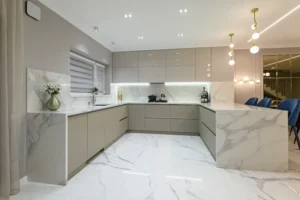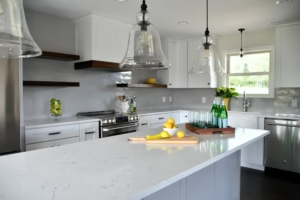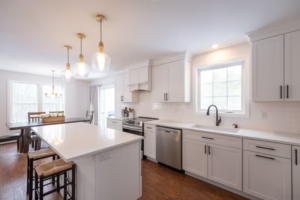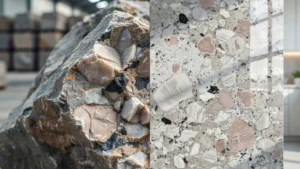
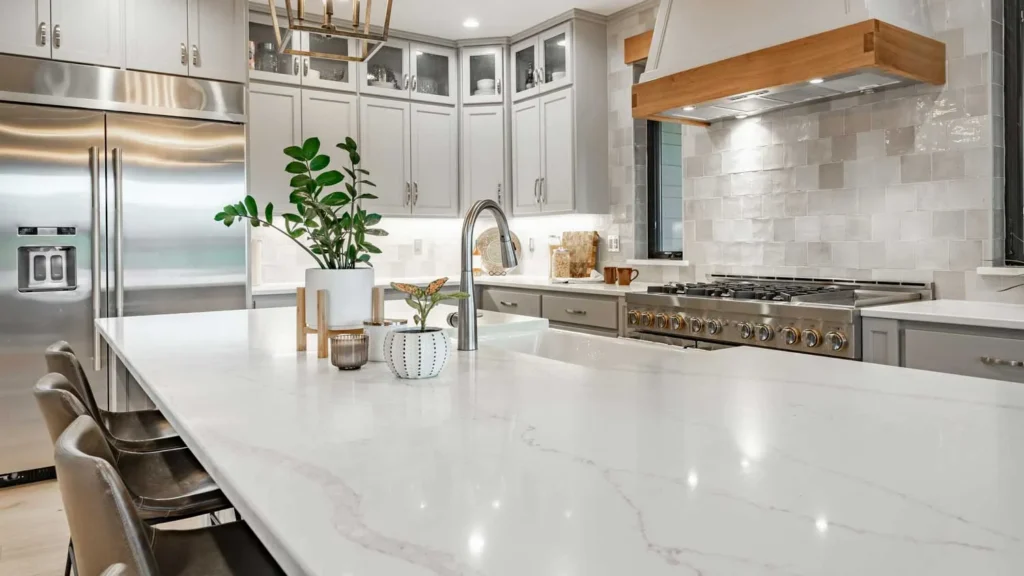
One of the most common questions homeowners ask before buying quartz countertops is whether they need to seal them. The short answer is no. Quartz countertops do not need sealing. Unlike granite or marble, quartz is an engineered stone made with resin binders that fill the pores completely. That makes it non-porous by design.
So does quartz need to be sealed ever, under any condition? No. Not when it is new, not after years of use, and not after heavy cleaning. This guide explains exactly why, and what you should do instead to keep quartz looking its best.
Why Quartz Countertops Do Not Need Sealing
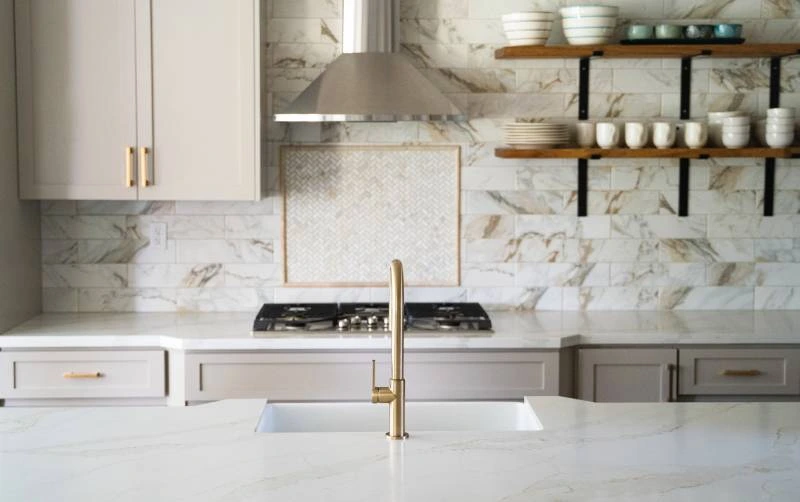
To understand why quartz skips sealing, you need to know what quartz actually is.
Quartz countertops are not solid stone pulled from a quarry. They are engineered. Manufacturers grind natural quartz crystals into a fine powder and mix that powder with polymer resin binders, pigments, and sometimes recycled glass or stone particles. The mixture gets compressed under high heat and pressure into dense, uniform slabs.
That resin binder is the key. It fills every microscopic gap between the quartz particles. The finished slab has virtually no open pores. Liquids cannot penetrate the surface. Bacteria cannot find a foothold inside the material.
This is the fundamental difference between quartz and natural stone like granite or marble. Natural stone has open pores running through it. Without a sealer, those pores absorb liquids and stains. Quartz has no open pores. There is nothing for a sealer to fill.
Applying sealer to non-porous quartz countertops is like applying sunscreen to glass. The product has nowhere to go and nothing useful to do.
Main Reasons Quartz Does Not Need Sealing
Here is a clear breakdown of why quartz sealing requirements simply do not exist.
The resin binder creates a built-in barrier. Quartz slabs contain 7% to 10% polymer resin by weight. That resin locks every quartz particle together and closes off any path a liquid could take into the material. No sealer does a better job than what is already built into the slab.
Quartz meets food safety standards without sealing. The National Sanitation Foundation tests countertop materials for bacteria resistance. Quartz passes at the highest levels without any additional treatment. Sealed granite passes too, but only because of the sealer. Remove the sealer and bacteria can grow in granite’s pores. Quartz never has that problem.
Manufacturer warranties do not require sealing. Every major quartz brand, including Caesarstone, Cambria, Silestone, and MSI, explicitly states that their countertops do not require sealing. Their warranties cover manufacturing defects without any sealing obligation from the homeowner.
Sealing cannot improve quartz performance. A sealer bonds to porous surfaces and creates a protective film inside the pores. On quartz, there are no pores for the sealer to bond with. The product sits on the surface temporarily and then washes away. It adds no lasting benefit.
Is Quartz Completely Waterproof?
This is a fair question. Quartz is non-porous and water resistant. But there is one important nuance.
The quartz surface itself is fully water resistant. Water, juice, coffee, and wine sit on top of the surface and wipe away cleanly. They do not soak in.
However, the seams and edges of a quartz installation can be vulnerable. Seams are joined with epoxy adhesive. If water consistently pools at a seam or runs under the countertop edge, it can break down the adhesive over time. This is not a quartz problem. It is an installation and care problem.
The fix is simple. Wipe water away from edges and seams regularly. Do not let standing water sit on the countertop indefinitely, especially near the sink. Dry the area around the faucet and drain after use.
This is also why quartz countertop protection focuses on daily habits rather than annual treatments. The material protects itself. Your job is to avoid the few things that can still cause damage.
How to Tell if Your Quartz Countertop Needs Sealing
It does not. There is no water test, no scratch test, and no timeline that triggers a sealing requirement for quartz.
If someone told you that your quartz needs sealing, they may be confusing it with granite or marble. This happens often because stone care professionals frequently work with all three materials and the advice sometimes gets mixed up.
If a product salesperson is suggesting you buy a quartz sealer, that product is unnecessary. You are paying for something that does nothing. No reputable quartz manufacturer recommends sealing, and many specifically advise against applying sealers, waxes, or surface treatments to their products.
The only surface test worth running on quartz is checking for damage, etching from harsh chemicals, or surface dulling from abrasive cleaners. None of those require sealing to fix. They require changes in cleaning habits.
What Happens if You Seal Quartz?
Most of the time, nothing harmful. But nothing helpful either.
A sealer applied to quartz sits on the surface temporarily. It does not bond to the material because there are no pores to anchor into. Within days or weeks of normal use, the sealer wears away. You get no lasting protection from it.
In some cases, applying the wrong type of sealer can actually cause problems. Oil-based sealers can leave a residue that attracts dirt and makes the surface look cloudy. Topical sealers that are designed for porous stone may leave a hazy film on quartz that is difficult to remove.
Some homeowners have reported that applying granite sealer to their quartz created a streaky, dull appearance that took significant effort to clean off. In rare cases, the solvents in some sealers can affect the resin binder in quartz if left to sit.
The safest approach is to follow manufacturer guidelines. Every major quartz brand says the same thing: do not seal, do not wax, do not apply surface treatments. Listen to the people who made the product.
Best Way to Clean Quartz Countertops
Since quartz countertop sealing is off the table, proper cleaning is your only maintenance responsibility. And the good news is that it is extremely simple.
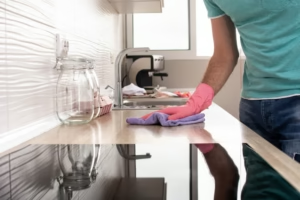
For daily cleaning: Wipe the surface with a damp cloth or sponge and a small amount of mild dish soap. Rinse with clean water. Dry with a soft cloth to prevent water spots. That is the complete daily routine.
For stuck-on food: Let warm water soften the residue for a few minutes. Then use a plastic scraper or spatula to gently lift it off. Do not use metal scrapers or steel wool. Follow up with the regular soap and water wipe.
For grease splatter: Apply a small amount of dish soap directly to the grease. Let it sit for 2 minutes. Wipe with a warm damp cloth. Rinse and dry.
For dried or tough stains: Use a non-abrasive surface cleaner like Bar Keepers Friend or a cleaner specifically labeled safe for quartz. Apply with a soft cloth, work in gentle circles, rinse thoroughly, and dry.
What to avoid: Bleach in high concentrations, abrasive scrubbing pads, oven cleaners, paint removers, and any product with a high alkaline or acidic pH. These can break down the resin binder and permanently dull the surface.
For quartz countertop cleaning in daily kitchen use, mild soap and water handle 95% of situations. You do not need specialty products, stone cleaners, or treatments of any kind.
You can read about: Quartz Countertop Cost
Quartz vs Granite Sealing Requirements
This comparison clarifies exactly why the two materials need such different care.
Granite is a natural stone. It comes from quarries with natural pore structures that vary by granite type and color. Some granites are very porous. Others are denser. But all granite has enough porosity that liquids can penetrate over time without a sealer.
Granite sealing requirements are real. Most kitchen granite needs sealing once a year. Some lighter-colored, more porous varieties need sealing every 6 months. Without sealing, oils, wine, and coffee soak into granite and leave permanent stains.
Quartz has no such requirement. The engineered manufacturing process gives quartz a consistent, uniform, non-porous structure that granite cannot match naturally. You never run a water test on quartz. You never schedule an annual sealing appointment. You never buy sealer products.
The practical impact over 10 years is significant. Granite sealing at $50 to $100 per year adds up to $500 to $1,000 over a decade. Quartz maintenance cost over 10 years is essentially zero beyond regular dish soap. That is a real financial advantage of choosing quartz.
Can Quartz Stain Without Sealing?
Quartz is highly stain resistant but not completely stain-proof. There is a difference.
Because non-porous quartz countertops do not absorb liquids, most staining agents like wine, coffee, juice, and oil wipe away cleanly with no mark left behind. This is one of the biggest practical advantages of quartz over granite and marble.
However, a few things can discolor quartz if left long enough.
Permanent markers and ink can leave marks if they are not wiped up immediately. The pigment in some inks is small enough to settle into micro-imperfections on the surface.
Highly pigmented foods like turmeric, beetroot, or certain food dyes can leave a faint surface stain if left to sit for extended periods without wiping.
Harsh chemicals like bleach, nail polish remover, or paint stripper can chemically react with the resin binder and cause discoloration that no amount of cleaning can reverse.
Heat damage is not technically staining, but sustained direct heat above 300 degrees Fahrenheit can discolor or warp the resin in quartz. Always use trivets.
None of these risks are addressed by sealing. They are addressed by prompt cleanup and careful daily habits. That is the true nature of quartz countertop protection: smart use, not chemical treatment.
Does Outdoor Quartz Need Special Protection?
This is a situation where standard quartz advice gets modified.
Most quartz brands do not recommend their products for outdoor installations. The resin binder in quartz is sensitive to UV radiation. Prolonged direct sun exposure causes the resin to yellow or discolor over time. There is no sealer that adequately protects quartz from UV damage.
If you want stone countertops for an outdoor kitchen, granite is a better choice. Granite is a natural stone that handles UV exposure, temperature swings, and outdoor conditions much better than engineered quartz.
If a quartz manufacturer offers an outdoor-rated product line, follow their specific care instructions for that product. Outdoor-rated quartz uses different resin formulas that are more UV stable, but even those products have limitations.
For standard indoor kitchen and bathroom quartz, outdoor protection is not relevant.
Benefits of Quartz Countertops
Understanding why does quartz need to be sealed gets a firm no becomes more meaningful when you see the full picture of what quartz offers.
No sealing, ever. Zero maintenance cost for stone treatments. Just clean and use.
Bacteria resistant by design. The non-porous surface gives bacteria nowhere to live or grow. Important in food preparation areas.
Consistent appearance. Unlike natural stone, quartz slabs are manufactured to look consistent. Matching two sections of a large kitchen is predictable and reliable.
Scratch resistant. Quartz ranks 7 on the Mohs hardness scale. It resists everyday scratches from kitchen use better than marble and most wood surfaces.
Wide design range. Quartz is available in hundreds of colors and patterns. Designs that replicate marble, concrete, and even rare stone varieties are widely available.
Long lifespan. With basic care, quartz countertops last 15 to 25 years or more. Many manufacturers back their products with 10 to 15-year warranties.
No annual treatments. No sealing, no waxing, no conditioning. Quartz takes care of itself as long as you avoid harsh chemicals and extreme heat.
Professional Quartz Countertop Installation Matters
Even though quartz does not need sealing, how it gets installed matters enormously for long-term performance.
Poorly installed quartz has seam gaps that collect debris and allow moisture to reach the adhesive. It has uneven support that causes stress cracks over time. It has edges that were not properly finished, making them vulnerable to chipping.
A professional installation ensures the slab is correctly templated, cut precisely, supported fully on the cabinet base, and joined at seams with color-matched, waterproof epoxy. Edges get properly finished and polished to the profile you selected.
The connection at the wall and backsplash also matters. A proper silicone bead between the quartz and the wall prevents water from running behind the countertop. An improper or missing silicone bead lets water reach the cabinet below over time.
Good installation is a one-time investment that protects a countertop that already requires no ongoing treatment. It is worth getting right from the start.
For Countertop Installation in Lowell, MA, the team at SF Marble & Granite provides expert quartz installation with precision templating, clean seam work, and proper edge finishing. Our team has installed hundreds of quartz countertops across the area and stands behind every job with a workmanship guarantee. If you are choosing quartz for your kitchen or bathroom, SF Marble & Granite makes sure the installation matches the quality of the material.
Conclusion
Does quartz need to be sealed? No. Not when new, not after years of use, and not after heavy cooking. Quartz is engineered with a non-porous structure that needs no sealing treatment of any kind. The resin binder in the slab provides built-in protection that no topical sealer can improve.
Your entire maintenance responsibility with quartz is simple. Clean it with mild soap and water. Wipe spills promptly. Use trivets under hot pans. Avoid harsh chemicals. That is all it takes to keep quartz looking great for decades.
Skip the sealer. Skip the stone treatments. Enjoy the countertop you paid for.
Frequently Asked Questions
Does quartz need to be sealed when first installed?
No. Quartz does not need sealing at installation or at any point afterward. The material is non-porous by design. No sealing step is needed before first use or ever.
What happens if I accidentally use a granite sealer on quartz?
Most of the time, nothing serious. The sealer will not bond properly and will wear off quickly. However, some sealers can leave a hazy residue on quartz. If this happens, clean with a non-abrasive quartz cleaner to remove the film.
How do I know if my countertop is quartz or granite?
Ask your fabricator or check any documentation from your installation. If you are unsure, quartz typically has a very consistent color and pattern with no natural variations. Granite has unique veining and color shifts across the slab that no two pieces share exactly.
Does quartz countertop sealing help with scratch resistance?
No. Sealing adds no scratch protection to quartz. The hardness of the surface comes from the quartz mineral itself. No topical treatment changes that. Avoid cutting directly on the surface regardless.
Can I use vinegar to clean my quartz countertop?
Occasional use of diluted vinegar is unlikely to cause immediate damage, but regular use is not recommended. Vinegar is acidic and can break down the resin binder over time with repeated exposure. Stick to mild dish soap and water for regular cleaning.
Do quartz countertops stain easily?
No. Quartz is highly stain resistant because it is non-porous. Most common kitchen staining agents wipe away cleanly. Highly pigmented substances like turmeric or permanent marker should be wiped up immediately to prevent surface discoloration.
Is quartz better than granite for low maintenance?
Yes, for maintenance purposes. Granite requires annual sealing and is more vulnerable to staining without it. Quartz requires no sealing and is consistently non-porous regardless of how long you own it. If low maintenance is a priority, quartz wins.