Selecting a new kitchen worktop is not easy. You want something pretty that can take hot pots and spilled coffee and not stain. You have a busy household and you don’t have hours to spend washing sensitive surfaces or fretting about micro-scratches every single day.
We get it, you need an environment that is functional and worry free. A textured natural stone slab is the right blend of tough performance and deep textured beauty. This post provides an explanation of why Quartzite Enhancing Your Kitchen with Black Leather Granite Countertops is a good choice for busy houses. We compare these materials head to head to help you select the best surface for your long term needs.
What are Black Leathered Granite Countertops?
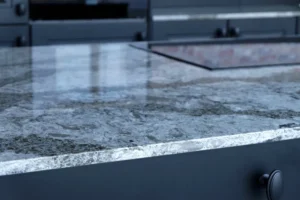
Black leathered granite is a distinctive textured natural stone surface. The raw stone slab is not polished to a mirror finish but is treated with professional diamond-tipped brushes. The heavy brushes move across the surface, removing the softer minerals and leaving the tougher ones.
The technique changes the physical feel of the material entirely. It produces a gentle, rippled pattern resembling the organic texture of true leather. It’s almost all matte finish, so it soaks up light instead of bouncing it around the room. This makes it a great choice for places that are heavily overhead-lit, where reflections can cause eye strain.
Brushing the slab will not just change its appearance. It really seals up the small microscopic pores on the surface of the stone. This makes the material very resistant to liquid penetration even before you put a liquid sealer on it. The texture on this surface is very practical for high traffic food preparation areas.
What are Quartzite Countertops?
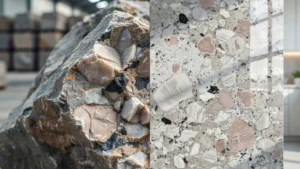
Quartzite countertops are premium surfaces made entirely from natural metamorphic rock. This material begins its life as sandstone before experiencing intense heat and pressure deep within the earth. This natural geological process recrystallizes the sand grains into a incredibly dense and hard network of quartz minerals.
This material is distinct from manufactured surfaces because every slab is unique. The intense pressure forces the minerals to fuse completely, creating a rock that scores a 7 on the Mohs hardness scale. This makes it significantly harder than standard granite or marble blocks.
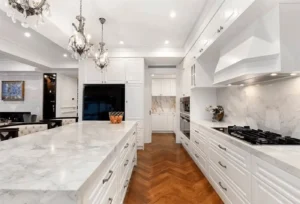
The visual appearance of this stone often resembles luxury Italian marble. It frequently features soft white or gray backgrounds with deep, dramatic veining patterns. However, it delivers far greater structural strength than marble, making it popular for high-end updates.
The Benefits of Quartzite Countertops
Are quartzite countertops highly durable kitchen surfaces? Yes, quartzite countertops are exceptionally durable surfaces that handle heat and scratches with ease. This natural stone provides excellent structural strength, making it nearly impossible to scratch with standard kitchen knives. Its high density ensures that hot pans will not scorch or crack the surface during daily cooking activities.
Beyond sheer strength, this premium countertop material offers long-term visual value. The complex veining ensures that dirt and small imperfections blend into the background. It does not yellow from sunlight exposure, which is a common issue with resin-based engineered surfaces.
| Feature | Quartzite Performance | Kitchen Benefit |
| Mohs Hardness | Rating of 7 | Resists deep knife scratches |
| Thermal Limit | Exceptionally High | Allows direct contact with hot pots |
| UV Resistance | 100% Stable | Will not fade near large windows |
| Porosity | Moderate to Low | Requires less frequent chemical sealing |
To maintain this performance, periodic sealing is required. Because it is a natural stone, it features a semi-porous surface that can absorb liquids if left unprotected. Applying a high-quality penetrating sealer once a year keeps liquids on top where they can be wiped away.
Our Selection of Quartzite Countertops
We curate a specific collection of natural stone slabs based on mineral purity and structural integrity. Our inventory focuses on materials that display minimal natural fissures and excellent color consistency. This ensures that when your stone is cut, the pieces fit together seamlessly along the seams.
We offer options ranging from soft, muted white slabs to rich, dark charcoals with dramatic white lines. Each piece is inspected under specialized lighting to check for internal flaws before fabrication begins. This attention to detail prevents cracks during the cutting and installation phases.
Choosing the right slab requires viewing the material in person. Light shifts across the natural veining in ways that photos cannot fully capture. We guide you through selecting the exact block that matches your cabinetry and overall flooring tones.
Quartz vs. Quartzite Countertops in the Kitchen
Many homeowners confuse these two options due to their similar names. The primary difference rests on how they are created. Quartz is an engineered product made from crushed stone pieces bound together with polymer resins and color pigments. Quartzite is entirely natural stone cut straight from the quarry.
Engineered options are completely non-porous, meaning they never require liquid sealers. The downside is their vulnerability to high temperatures. If you place a scorching pan directly onto an engineered surface, the plastic resins can melt, leaving a permanent dark ring.
Natural slabs tolerate hot cookware without structural issues. However, they do require maintenance to protect their porous surface from oil and acid stains. The choice comes down to whether you prefer zero sealing maintenance or superior heat resistance.
Why Quartz Countertops Best?
Is engineered quartz the best material for busy family spaces? Engineered quartz is often considered best for low-maintenance kitchens because it never needs sealing. The industrial manufacturing process seals every microscopic void with resin, preventing bacteria growth and permanent liquid stains. This makes it an incredibly safe and sanitary surface for preparing daily family meals.
The color options are completely predictable and uniform. If you need multiple slabs for a massive island and surrounding counters, the patterns will match exactly. There are no surprise mineral patches or unexpected shifts in background color.
Daily cleaning requires nothing more than a wet microfiber cloth and mild dish soap. You do not need to purchase specialized stone cleaners or worry about citrus juices causing dull spots. For households prioritizing maximum convenience, this material delivers consistent performance.
Maximizing Visual Appeal: The Role of Texture
Texture changes how we interact with our kitchen spaces. A high-gloss surface feels cold and formal, bouncing light away and highlighting every streak left by a cleaning rag. A brushed or leathered finish feels warm and organic to the touch, encouraging people to gather around the island.
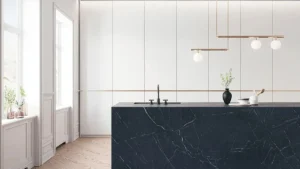
Darker colors profit immensely from texturing. For instance, enhancing your kitchen with black leather granite countertops introduces depth that solid black surfaces often lack. The soft ridges capture light at different angles, turning a simple dark surface into a complex focal point.
This finish is highly effective at hiding daily mess. Crumbs, water rings, and fingerprints disappear into the physical pattern. Instead of wiping down the surfaces multiple times a day, you can enjoy your space without constantly checking for streaks.
Suggested Data Integration for Kitchen Material Selections
To make the best choice, look at independent material testing data. For example, the Natural Stone Institute provides comprehensive stress-test ratings for mineral hardness and absorption. Reviewing these third-party charts helps verify that your chosen material aligns with your specific cooking style.
Deep Comparison: Black Leathered Granite vs. Quartzite
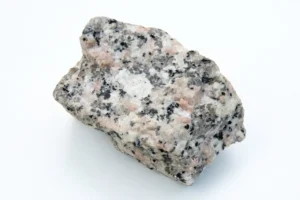
While both are natural stones, they serve different design goals. Granite is an igneous rock formed from cooling magma, containing high levels of feldspar and quartz. This mineral mix gives it a classic peppered appearance. Quartzite has a softer, more fluid look that closely mimics marble.
In terms of physical hardness, quartzite holds a slight advantage on the mineral scale. However, black granite is less prone to chemical etching from spilled lemon juice or tomato sauce. This makes black granite a safer choice for islands where meal preparation happens daily.
Cost factors also vary between these two premium options. Slabs of rare quartzite often command higher prices due to the difficulty of quarrying such hard rock. Black granite is more widely available, making it a more budget-friendly route to a premium look.
Maintenance Protocols for Leathered Surfaces
Caring for a brushed surface is straightforward but requires consistency. You must avoid abrasive scrubbing pads that can alter the factory texture over time. Stick to soft cloths or sponges that glide smoothly over the subtle stone ridges.
Sealing remains an essential task for protecting your investment. While the brushing process closes up many pores, applying a penetrating sealer adds an invisible barrier against grease. You can check if it is time to seal by dropping water onto the surface; if the water beads up, your protection is intact.
Never use cleaners containing heavy acids, bleach, or ammonia. These harsh chemicals break down the protective sealer layer, exposing the raw stone underneath. Standard dish soap and warm water are all you need to keep the surface pristine.
Preventing Common Stone Issues: Etching and Staining
Etching occurs when acidic liquids react chemically with calcium carbonate minerals inside a stone. This reaction dissolves a tiny layer of the stone, creating a dull, cloudy spot. While marble is highly vulnerable to this issue, granite lacks the calcium levels needed for this reaction to happen.
Staining is different from etching. Stains occur when a colored liquid sinks deep into the porous surface of an unprotected slab. If cooking oil or red wine sits on an unsealed counter for hours, it can leave a permanent dark mark underneath the surface.
- Wipe up spills immediately: Treat citrus, wine, and oils as immediate hazards.
- Use trivets consistently: Protect the sealer layer from breaking down under high heat.
- Avoid cutting directly on stone: This protects your knives from dulling and preserves the finish.
- Use cutting boards: Keeps acidic food juices from pooling on the stone surface.
By maintaining your sealer layer, you keep these liquids trapped on top. The leathered texture provides an extra layer of defense by keeping liquids from spreading rapidly across the slab. This gives you more time to clean up accidents before damage occurs.
Design Combinations That Work with Dark Stone
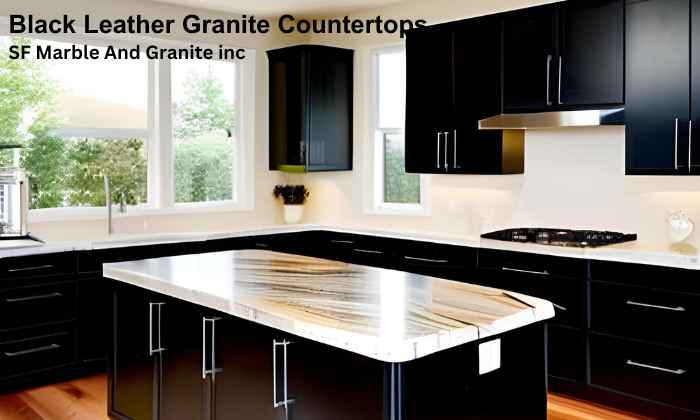
Dark, textured surfaces require careful pairing to keep the room feeling balanced. Matching black counters with dark cabinets can make a small room feel tiny and dark. Pairing dark stone with lighter elements creates a balanced, high-contrast look.
Natural wood tones work beautifully alongside textured black surfaces. White oak or walnut cabinets bring out the warm tones within the stone finish. This combination feels grounded and timeless, avoiding the sterile look of all-white modern designs.
Lighting choices matter immensely when working with matte materials. Under-cabinet LED strips illuminate the unique texture, showing off the detailed hand-brushed finish. Using warm bulbs prevents the black stone from looking cold or gray.
Long-Term Value and ROI of Natural Stone
Upgrading your workspaces is a reliable way to boost your home value. Buyers recognize natural stone as a premium feature that lasts for decades. Unlike laminate or cheap tile, quality stone installations retain their value over time.
Black leathered granite offers excellent practical value because it ages gracefully. It does not show micro-scratches from sliding plates, meaning it looks new long after installation. This slow wear cycle means you avoid expensive refinishing costs down the road.
The timeless nature of dark stone means your kitchen will not look dated in five years. While specific color trends come and go, neutral black and charcoal tones remain popular across generations. It represents a smart, durable investment in your property.
Choosing Your Ideal Kitchen Surface
Selecting the right material depends on your daily habits and design preferences. If you want a perfectly uniform look with zero sealing maintenance, engineered quartz fits your needs. If you want unique patterns and high heat resistance, natural quartzite or granite is ideal.
For busy homes, enhancing your kitchen with black leather granite countertops provides a smart middle ground. It delivers the strength of a natural slab while hiding the daily mess that makes polished surfaces frustrating to maintain. It creates a space that works for you, rather than creating extra cleaning chores.
Take time to visit a stone yard to feel the differences in person. Run your hands over polished, honed, and leathered slabs to see how they respond to light. Seeing the full material helps you select the right choice for your home remodeling project.
Frequently Asked Questions (FAQs)
Are leathered countertops harder to keep clean than polished ones?
No, leathered countertops are not harder to keep clean, though they require a wiping motion that follows the natural texture. Because the surface features tiny ridges, a microfiber cloth works best to pick up dust. It completely eliminates the need to buff out streaks or water marks.
Does black granite require annual chemical sealing?
Yes, black granite typically requires sealing every twelve to twenty-four months depending on daily use. The high density of dark granite means it absorbs liquids slowly, but an annual water-drop test will tell you exactly when it is time to reapply your protective layer.
Can you cut food directly on a leathered granite surface?
You should avoid cutting food directly on granite because the extreme hardness of the stone will instantly dull your kitchen knives. While the blade will not easily scratch the stone, using a cutting board prevents metal transfer lines from marking your counter.