Marble floors and countertops can lose their shine over time because of foot traffic, scratches, spills, and improper cleaning products. Professional polishing can restore the appearance of many marble surfaces, but the cost depends on the surface area, its condition, and the type of treatment required.
So, how much does it cost to polish marble? In the United States, routine marble floor polishing and restoration may cost approximately $1 to $3 per square foot as a preliminary budgeting estimate. More extensive restoration involving grinding, honing, deep scratch removal, or additional treatments can cost more.
These figures are estimates rather than guaranteed quotes. Local labor rates, minimum service charges, and the condition of your marble can affect the final price. This guide explains marble polishing costs per square foot, the factors that influence pricing, and when professional marble polishing may be worthwhile.
Average Marble Polishing Cost Per Square Foot
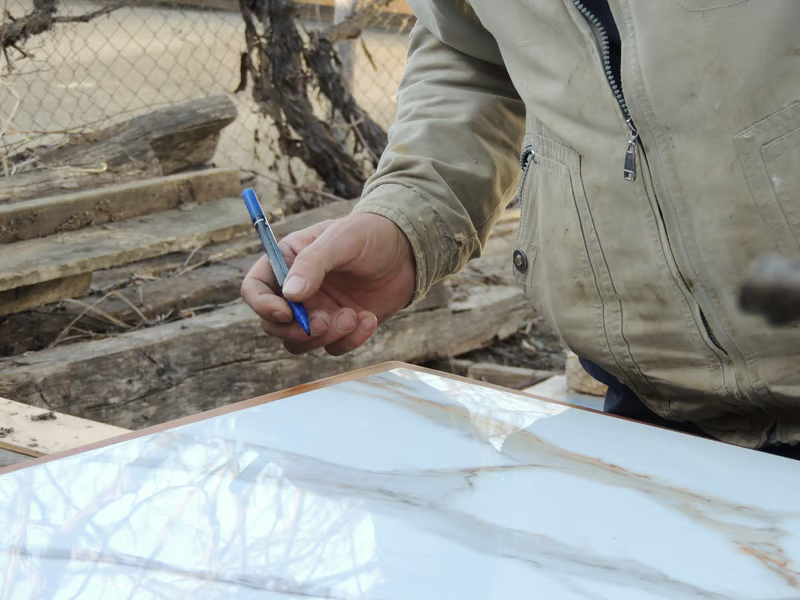
The cost of polishing marble varies depending on whether the surface needs routine polishing or more extensive restoration. Lightly worn marble may require less work than a floor with deep scratches, uneven areas, or acid etching.
The following table provides a preliminary budgeting guide for US homeowners.
| Type of service | Estimated cost per square foot |
|---|---|
| Routine marble floor polishing and restoration | $1–$3 |
| More extensive polishing and restoration | $3–$6 or more |
| Grinding, honing, or significant surface repair | Requires an individual quote |
These ranges are general estimates, not a standardized national price list. Actual prices depend on the contractor, location, marble condition, and scope of work.
How Much Does It Cost to Polish a Marble Floor?
Your total cost depends on the size of the floor and the amount of restoration needed. For example, using the estimated rate of $1–$3 per square foot:
| Floor area | Estimated total cost |
|---|---|
| 100 square feet | $100–$300 |
| 250 square feet | $250–$750 |
| 500 square feet | $500–$1,500 |
| 1,000 square feet | $1,000–$3,000 |
These totals are calculated by multiplying the floor area by the estimated rate. They do not include additional charges for repairs, furniture moving, difficult access, or minimum service fees.
Small projects may cost more per square foot than larger ones because equipment setup and travel take time regardless of the floor’s size. Ask contractors whether their estimates include cleaning, polishing, repairs, and sealing.
What Factors Affect the Cost of Marble Polishing?
Several factors determine how much you may pay to restore a marble surface.
1. Condition of the Marble
The current condition of your marble is one of the most important pricing factors. A floor with minor dullness may need routine polishing, while a heavily worn surface may require several restoration steps.
Common problems include:
- Light dullness: The surface has lost some of its shine but has few visible scratches.
- Surface scratches: Small marks affect the finish and may require specialized treatment.
- Acid etching: Vinegar, lemon juice, and other acidic substances can dull marble by reacting with its surface.
- Deep scratches or chips: These may require professional repair before polishing.
- Uneven tiles: Differences in height between neighboring tiles may require additional grinding.
Deeper scratches and persistent etching can increase labor and equipment requirements. A professional assessment can help determine whether polishing alone will solve the problem.
2. Size of the Area
Larger areas generally require more materials and labor, so their total cost is higher. However, a contractor may offer a lower rate per square foot for a large, open floor than for a small bathroom or hallway.
When requesting an estimate, measure the actual area to be polished rather than the entire room if some surfaces are covered by permanent fixtures or use a different material.
3. Type of Marble Surface
Marble flooring and marble countertops do not always require the same equipment or techniques.
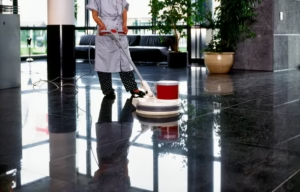
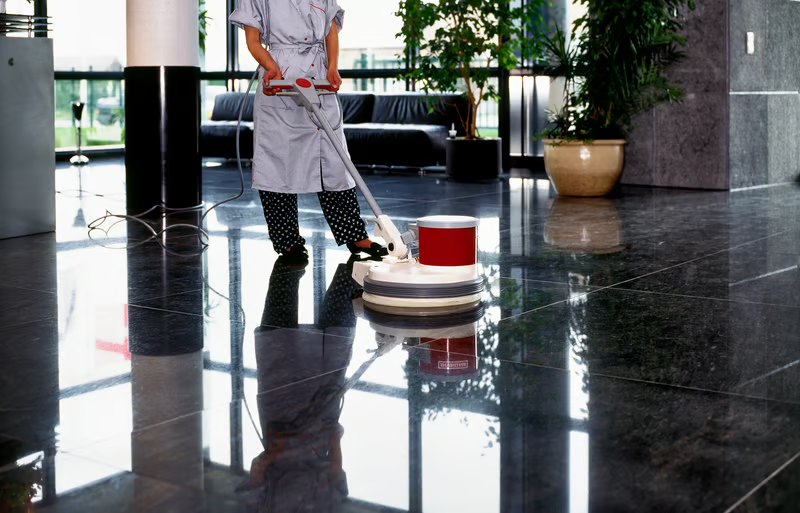
Floor polishing often involves machines designed to cover large areas efficiently. Countertops require more controlled work around edges, corners, sinks, backsplashes, and cutouts.
Staircases, shower walls, vanity tops, and decorative marble features may also require specialized tools or additional labor. Ask for a quote specific to your surface instead of assuming the same rate applies everywhere.
4. Polishing Method and Finish
The finish you want also affects the work required.
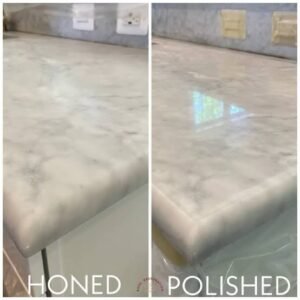
- Polished finish: Creates a glossy appearance that reflects light.
- Honed finish: Produces a smooth, matte or low-sheen appearance.
- Grinding and honing: May be necessary to address deeper wear, surface irregularities, or an existing damaged finish before the final treatment.
Not every marble surface needs grinding or complete refinishing. Choosing the appropriate treatment for the existing damage can help prevent unnecessary costs.
5. Location and Labor Rates
Professional marble polishing prices vary across the United States. Labor costs, travel distance, local demand, and contractor availability can all influence your estimate.
Some contractors also charge a minimum fee for small jobs. For this reason, two homes with similarly sized marble floors may receive different quotes.
Professional Marble Polishing vs. DIY: Which Is More Affordable?

If your marble has only light surface dullness, a suitable marble polishing product may help improve its appearance. However, DIY treatment is not appropriate for every type of damage.
When DIY Polishing May Be Suitable
DIY care may be reasonable when the marble has minor surface marks and the product is specifically designed for the stone and finish. Before applying any product, read the manufacturer’s instructions and test it in an inconspicuous area.
For routine maintenance:
- Remove loose dirt and grit with a soft dust mop or cloth.
- Clean the surface using a pH-neutral cleaner suitable for natural stone.
- Dry the surface with a soft cloth.
- Use a compatible marble polishing product only when appropriate for the finish and the manufacturer’s guidance.
Avoid experimenting with acidic household cleaners, abrasive powders, or aggressive scrubbing tools. These can damage marble rather than improve it.
When to Hire a Professional
Professional marble polishing is usually the safer choice when the surface has deep scratches, widespread etching, uneven wear, or a finish that requires mechanical restoration.
A stone restoration professional can assess the damage, select the appropriate abrasive or polishing method, and determine whether repairs or honing are needed before the final finish is applied.
A practical rule: If the marble is simply dirty, start with appropriate cleaning. If its surface is physically damaged or remains dull after cleaning, seek an assessment before buying polishing equipment or attempting a repair.
How to Polish Marble Without Damaging It
Understanding how to polish marble starts with identifying the problem. A dirty surface, an acid etch, and a scratch may look similar from a distance, but they require different treatments.
Step 1: Identify the Problem
Inspect the surface under good lighting. Look for scratches, cloudy marks, stains, and areas where the finish differs from the surrounding stone.
Remember that a stain is not the same as etching. A stain changes the stone’s color, while etching affects the surface finish. Polishing alone may not remove every stain.
Step 2: Clean the Surface Properly
Remove dust and grit before doing any polishing. Use a soft cloth or mop and a cleaner formulated for natural stone.
Do not use vinegar or lemon juice to clean marble. Acidic substances can etch the stone, leaving dull spots that ordinary cleaning cannot correct.
Step 3: Select a Compatible Polishing Method
Use a product suitable for the particular marble and its finish. Follow the manufacturer’s directions for application, buffing, and cleanup.
Do not assume that a countertop polishing product is suitable for every marble floor, honed surface, or specialty finish. Using the wrong product or abrasive can create uneven patches.
Step 4: Assess the Results
Once the surface is clean and dry, inspect it again. If scratches, dull spots, or etching remain, stop rather than repeatedly applying more product.
Persistent damage may require professional honing, polishing, or localized restoration. For deeper scratches, chips, and stubborn etching, specialized equipment and experience can help avoid further damage.
How Can You Reduce Marble Floor Polishing Prices?
Regular care can help preserve your marble’s finish and reduce avoidable restoration work. Although no maintenance routine eliminates every future polishing expense, these practices can help protect the surface.
- Clean spills promptly. This is especially important for acidic liquids such as citrus juice and vinegar.
- Use pH-neutral cleaners. Avoid products that are not recommended for natural stone.
- Remove grit regularly. Fine sand and dirt can contribute to surface wear when walked across the floor.
- Use protective mats. Place suitable mats near entrances and felt pads under furniture where appropriate.
- Address damage early. Have persistent etching or scratches assessed before attempting aggressive DIY treatment.
- Request itemized estimates. Compare the proposed work, included treatments, and any extra charges rather than choosing solely by the lowest price.
These measures help protect the finish, but they do not make marble scratch-proof or prevent all etching.
Marble Polishing vs. Marble Countertop Costs
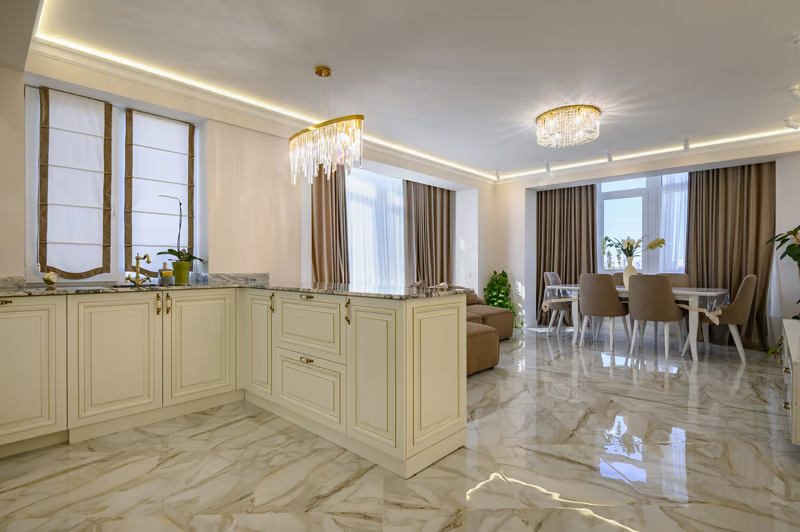
Polishing an existing marble surface is different from purchasing and installing a new marble countertop. Polishing is a restoration or maintenance service, while a new countertop project may involve stone selection, fabrication, cutouts, transportation, and installation.
If you are comparing restoration with a new countertop, read our related guide, How Much Do Marble Countertops Cost?. It can help you explore the separate costs involved in a countertop project.
Before deciding between restoration and replacement, consider the condition of the stone, the extent of the damage, and the finish you want. A professional assessment may help you determine whether the existing marble can be restored to a satisfactory appearance.
Why Choose S F Marble & Granite for Your Marble Needs?
S F Marble & Granite helps homeowners explore quality marble and granite solutions for their homes. Our informative guides cover marble polishing costs, professional restoration, countertop options, and proper stone care to help homeowners make informed decisions. Whether you want to restore the shine of your marble floors or understand the factors affecting polishing costs, we aim to make your research easier and help you choose the right solution for your space.
Final Thoughts
The cost to polish marble depends on the size of the surface, its current condition, the finish you want, and the amount of restoration required. For preliminary budgeting, routine marble floor polishing may fall around $1–$3 per square foot, while more extensive work can cost substantially more.
Start by identifying whether your marble needs cleaning, polishing, or deeper restoration. Then request itemized estimates from qualified professionals so you can compare the scope of work and the final price.
Contact Us at S F Marble & Granite today to discuss your marble and countertop project needs and explore suitable options for your space.
Frequently Asked Questions
1. How much does it cost to polish marble per square foot?
Routine marble floor polishing and restoration may cost around $1–$3 per square foot as a preliminary US budgeting estimate. More extensive restoration can cost more depending on damage, labor, and the method required.
2. How often should marble be polished?
There is no fixed polishing schedule for every marble surface. The frequency depends on foot traffic, cleaning habits, the type of finish, and visible wear. Polish or restore marble when its condition calls for it rather than following an arbitrary timetable.
3. Can I polish marble myself?
Yes, some minor surface dullness may be treatable with a compatible marble polishing product. Deep scratches, extensive etching, and uneven surfaces are better assessed by a stone restoration professional.
4. Does marble polishing remove scratches?
Polishing may improve minor surface marks, but deeper scratches often require additional restoration, repair, or refinishing. The correct treatment depends on the depth of the damage and the type of marble finish.
5. Is marble polishing the same as sealing?
No. Polishing improves the surface finish, while sealing uses a suitable protective treatment to reduce the penetration of certain liquids and staining substances. Sealing does not prevent acid etching or make marble completely stain-proof.
6. Is professional marble polishing worth the cost?
Professional polishing can be worthwhile when marble has widespread dullness, persistent etching, deeper scratches, or a finish that requires specialized restoration. For routine dirt or minor maintenance needs, appropriate cleaning may be sufficient.