Choosing between porcelain and granite for your kitchen can be difficult. Both materials offer attractive designs and durable surfaces, but they differ in maintenance, appearance, heat resistance, installation, and repair.
Porcelain is often the better choice for homeowners who want a low-maintenance, nonporous surface with consistent design options. Granite may be better for those who prefer natural stone, distinctive patterns, and a substantial stone countertop. Neither material is automatically better for every kitchen. Your budget, cooking habits, preferred style, and installation requirements should guide the decision.
In this guide, S F Marble and Granite explores the key differences between porcelain and granite countertops, their advantages and disadvantages, and what to consider before choosing a material for your home.
What Is the Difference Between Porcelain and Granite?
Porcelain is a manufactured ceramic material made from refined mineral ingredients that are shaped and fired at high temperatures. Porcelain countertop slabs are available in various colors, finishes, and patterns, including designs that resemble marble or natural stone.
Granite is a natural igneous rock formed as molten material cools beneath the Earth’s surface. Each granite slab has its own mineral composition, color variations, and patterns. It is widely used for kitchen countertops, bathroom vanities, flooring, and other interior applications.
The main difference is that porcelain is manufactured for consistency and design flexibility, while granite offers the distinctive character of natural stone.
Granite vs. Porcelain Countertops: Key Differences
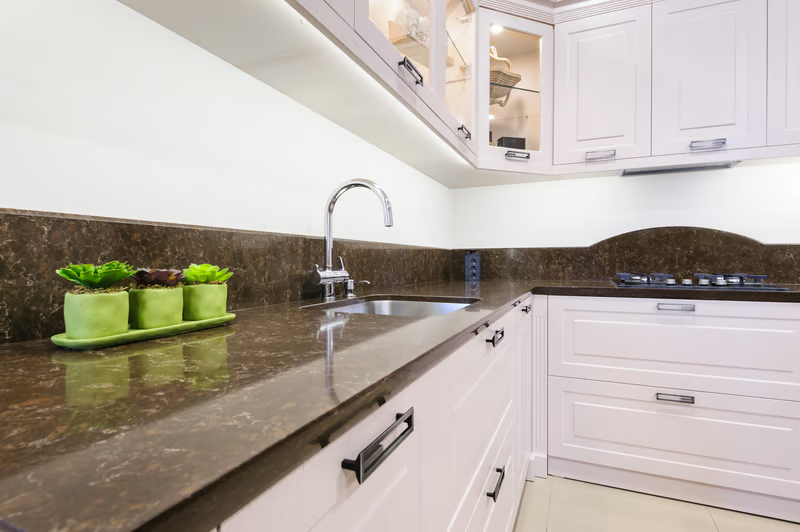
The following table summarizes the main factors to consider when comparing these two materials.
| Feature | Porcelain Countertops | Granite Countertops |
|---|---|---|
| Material | Manufactured ceramic surface | Natural stone |
| Appearance | Consistent colors and printed patterns | Unique natural mineral patterns |
| Stain resistance | Generally excellent because of low porosity | Good; varies by stone and protection |
| Scratch resistance | Generally high, but varies by product and finish | Generally high |
| Heat resistance | High, depending on the product and installation | High, but sudden temperature changes can cause damage |
| Routine sealing | Usually not required | May be recommended for some varieties |
| Edge durability | Thin edges may chip if struck | Edges can chip from hard impacts |
| Repairs | Chips can be difficult to disguise | Some chips can be professionally repaired |
| Installation | Requires skilled fabrication and careful handling | Requires skilled fabrication and substantial support |
| Design | Broad range of colors and stone-inspired patterns | Natural patterns and variations in every slab |
Actual performance depends on the specific slab, finish, thickness, fabrication quality, and installation. Always check the manufacturer’s care and technical guidance before making a final decision.
1. Durability: Is Porcelain Stronger Than Granite?
Both porcelain and granite can perform well in busy kitchens when correctly selected and installed. However, durability involves more than hardness alone.
Porcelain durability
Porcelain is a dense, low-porosity material that generally resists everyday stains, moisture, and surface scratches. These characteristics make it suitable for homeowners who want a countertop that can handle regular food preparation without extensive maintenance.
However, porcelain is not indestructible. A hard impact on an exposed corner or edge can cause chipping. Thin slabs and poorly supported areas may also be vulnerable to cracking during handling or installation.
Granite durability
Granite is a hard natural stone known for its resistance to everyday wear, scratching, and heat. Its natural mineral composition makes it a popular option for kitchens that see frequent use.
Granite can still chip, crack, or stain under certain conditions. Unsupported overhangs, sudden temperature changes, hard impacts, and inadequate installation can cause problems. Some granite varieties also benefit from a suitable penetrating sealer.
Which is more durable? Both are durable countertop materials. Porcelain offers excellent resistance to moisture and many household stains, while granite provides substantial natural-stone durability. The quality of the specific material and the workmanship matter as much as the material category.
2. Heat Resistance: Porcelain vs. Granite
Heat resistance is important if you cook regularly or frequently place hot cookware near your countertop.
Porcelain is fired at very high temperatures during manufacturing, and many porcelain countertop products offer excellent heat resistance. However, manufacturing temperature does not mean every installed porcelain slab is immune to thermal shock. Product specifications, slab thickness, surface finish, and installation all affect performance.
Granite is also naturally heat resistant. Nevertheless, concentrated heat and sudden temperature changes can create thermal stress and damage the stone or its finish.
For both materials, using trivets or heat-resistant mats is a sensible precaution. Do not assume that a countertop is completely damage-proof simply because it is marketed as heat resistant.
3. Stain Resistance and Maintenance
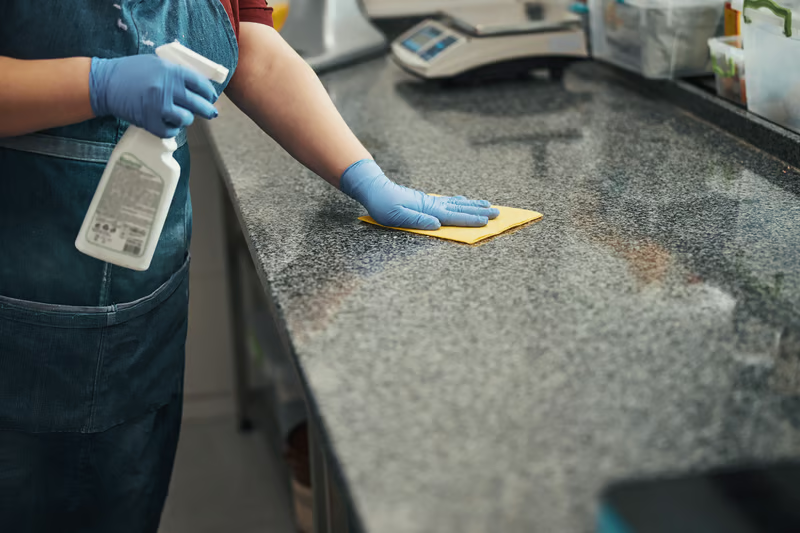
Maintenance is one of the clearest differences between porcelain and granite.
Porcelain countertop maintenance
Porcelain has very low water absorption, so liquids are less likely to penetrate its surface. Routine cleaning generally involves a soft cloth, water, and a mild, manufacturer-approved cleaner.
Most porcelain countertop products do not require routine sealing. This makes porcelain an appealing choice for homeowners who want a straightforward cleaning routine.
Granite countertop maintenance
Granite is also relatively easy to maintain, but its porosity varies. Some varieties benefit from a penetrating sealer that reduces the absorption of water and oil-based liquids. Sealing improves stain resistance; it does not make granite completely stain-proof.
For daily care, clean granite with a suitable neutral cleaner and wipe up spills promptly. Avoid assuming that every granite slab needs the same sealing schedule. Follow recommendations for the specific stone and sealer.
Which is easier to maintain? Porcelain generally has the advantage because routine sealing is usually unnecessary. Granite remains a practical, low-maintenance option when the selected stone receives appropriate care.
4. Appearance and Design Options
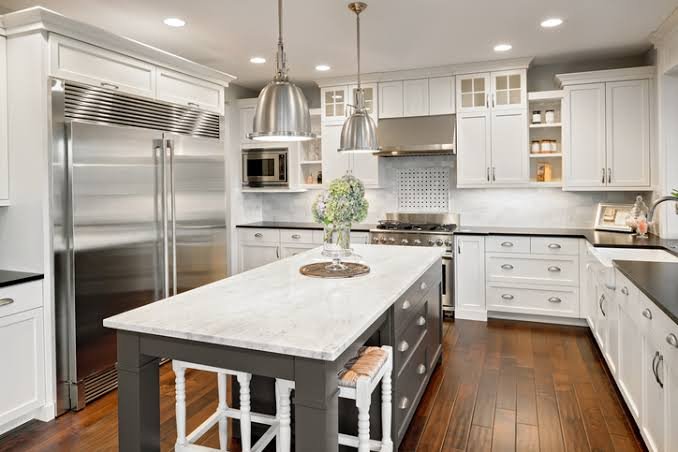
Your countertop can influence the overall look of your kitchen, so consider how each material works with your cabinets, backsplash, flooring, and lighting.
Porcelain designs
Porcelain is available in solid colors, subtle textures, bold veining, and patterns inspired by marble, concrete, and other materials. Manufactured designs can offer a more consistent appearance across multiple pieces.
Large-format slabs may also help reduce the number of visible seams, depending on the kitchen layout and slab dimensions.
Natural granite designs
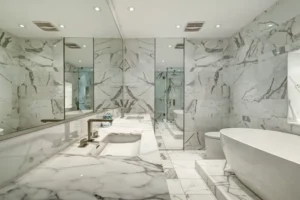
Granite offers patterns created by naturally occurring minerals. Some slabs feature small, consistent flecks, while others have dramatic veins, contrasting colors, or movement across the surface.
Because granite is a natural material, slabs sold under the same color name can look different. Viewing the actual slab before fabrication can help you understand its pattern and how it will look in your kitchen.
Which looks better? Porcelain may suit homeowners seeking a specific, repeatable design, while granite is ideal for those who appreciate the natural variations of stone. The best choice depends on your preferred kitchen style.
5. Installation and Repair Considerations
Installation should be part of your decision, not an afterthought.
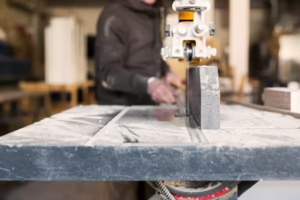
Porcelain countertop slabs require careful cutting, handling, and edge fabrication. The material can be damaged if unsupported during transportation or installation, and cutouts for sinks and cooktops need proper planning. Repairs to visible chips may be difficult to blend with the original finish.
Granite is heavy and requires secure cabinets, accurate measurements, professional fabrication, and appropriate support. Its edges can also chip, although certain small chips can be repaired by an experienced stone professional.
Neither material is ideal for a casual DIY installation involving large slabs, complex cutouts, or heavy lifting. Hiring qualified fabricators and installers helps reduce the risk of damage.
Before choosing either option, ask the installer about slab thickness, edge profiles, seams, cutouts, support requirements, and repair options.
6. Cost: Is Porcelain More Expensive Than Granite?
There is no universal winner on price. The total cost of either countertop depends on the material selected, slab availability, thickness, finish, kitchen dimensions, fabrication, installation, and the number of cutouts and custom edges.
Porcelain can be expensive when a project requires specialty slabs, intricate fabrication, or difficult cutouts. Granite ranges from relatively affordable options to premium varieties with distinctive patterns or limited availability.
When comparing quotes, make sure both include equivalent work. Ask whether the price covers templating, fabrication, sink cutouts, edge finishing, delivery, installation, and any required support.
For an accurate comparison, request itemized quotes for the same kitchen layout rather than comparing material prices alone.
7. Porcelain Kitchen Countertops: Pros and Cons
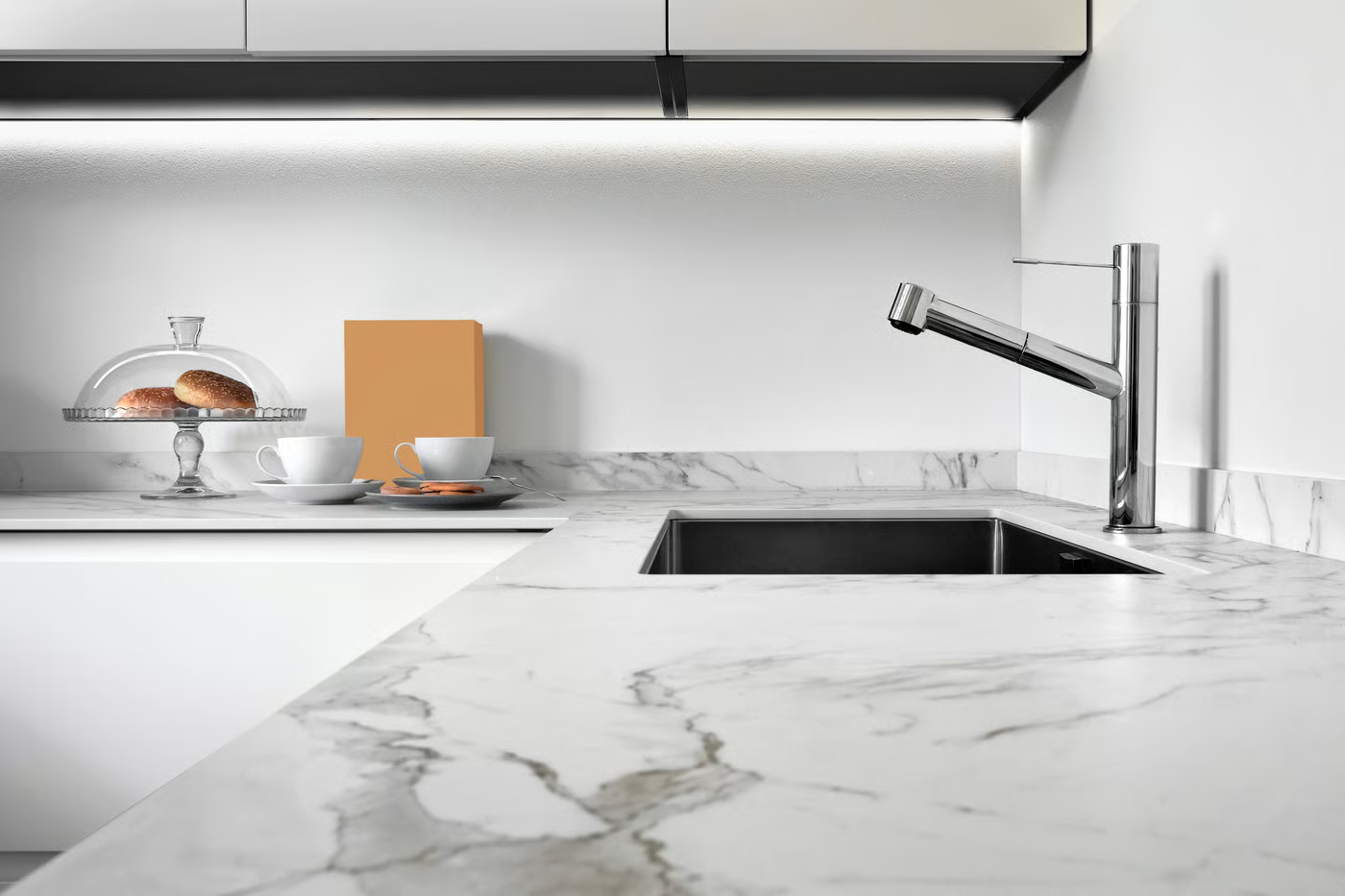
Before making a decision, consider the practical advantages and limitations of porcelain.
Pros
- Low porosity and strong resistance to many common stains.
- Usually does not require routine sealing.
- Available in a wide range of colors, patterns, and finishes.
- Generally easy to clean with appropriate products.
- Can provide a coordinated appearance across countertop and other surface applications.
Cons
- Edges and corners can chip from hard impacts.
- Cutting, handling, and installation require specialized skills.
- Some chips and cracks are difficult to repair invisibly.
- Specialty fabrication and custom designs can increase project costs.
- Performance varies by product, thickness, and finish.
8. Granite Countertops: Pros and Cons
Granite offers a different set of advantages for homeowners who prefer natural stone.
Pros
- Each slab has its own natural pattern and character.
- Good resistance to everyday wear and heat.
- A wide range of colors and mineral patterns is available.
- Can last for many years with appropriate installation and care.
- Some damage, including certain small chips, can be professionally repaired.
Cons
- Some varieties benefit from periodic sealing.
- Natural color and pattern variations can make matching slabs difficult.
- Heavy slabs require proper cabinet support and professional handling.
- Hard impacts or thermal stress can cause chips or cracks.
- Premium varieties and complicated installations can be costly.
You Can Read About Kitchens with Dark Granite Countertops.
9. Granite vs. Porcelain Tiles: Are They Different From Countertops?
The comparison changes when you are choosing flooring or wall tiles instead of a countertop slab. Granite slabs, granite tiles, porcelain tiles, and porcelain countertop slabs are not interchangeable products.
Granite tiles are cut from natural stone. Their appearance varies, and their maintenance requirements depend on the stone and finish. Porcelain tiles are manufactured ceramic products that are available in many sizes, designs, and surface textures.
When comparing granite tile vs. porcelain tile, consider:
- Water absorption: Porcelain tiles generally have low water absorption, but confirm the product’s specifications.
- Slip resistance: For floors, especially wet areas, check the tile’s slip-resistance rating and suitability for the intended use.
- Grout and seams: Tile installations have grout joints that require appropriate cleaning and maintenance.
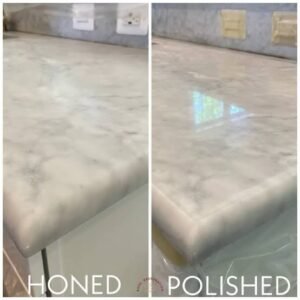
- Surface finish: Polished, honed, textured, and matte finishes can perform differently.
- Installation: Substrate preparation, setting materials, grout, and workmanship affect long-term performance.
Porcelain tile can be a practical choice for many floors and walls, while granite tile may appeal to people who prefer natural stone. Choose based on the intended application rather than assuming one material is always superior.
10. Which Material Should You Choose for Your Kitchen?
Your daily routine and design preferences can help you decide.
Choose porcelain if you:
- Want a low-porosity surface that generally does not require sealing.
- Prefer a particular color or marble-inspired pattern.
- Want a straightforward daily cleaning routine.
- Have access to a qualified fabricator experienced with porcelain slabs.
Choose granite if you:
- Prefer the natural appearance of real stone.
- Want distinctive patterns and mineral variations.
- Value a durable surface with good heat resistance.
- Are comfortable following the care recommendations for your chosen slab.
If possible, view full slabs or large samples in person. Small samples may not show the full pattern, color variation, or finish that you will see across an entire countertop.
Final Thoughts
So, is porcelain better than granite? Porcelain is often the stronger choice for low maintenance and consistent design, while granite is often the better fit for homeowners who want the character of natural stone. Both can make excellent kitchen countertops when the material is appropriate for the project and professionally installed.
Before choosing between porcelain and granite, visit S F Marble and Granite to explore your countertop options, compare available slabs, and discuss your project requirements. Request an installation quote to help you choose a countertop that fits your style, needs, and budget.
Contact us today to discuss your countertop project and get a quote from S F Marble and Granite.
Frequently Asked Questions
1. Is porcelain better than granite for kitchen countertops?
Porcelain is often better for homeowners who want low maintenance and a wide range of designs. Granite is ideal for those who prefer natural stone patterns and character.
2. Which is more durable, porcelain or granite?
Both are durable countertop materials. Porcelain resists stains and scratches, while granite offers excellent durability when properly installed and maintained.
3. Does porcelain scratch more easily than granite?
Both surfaces resist scratches, but neither is completely scratch-proof. Avoid cutting directly on either countertop to protect its finish.
4. Do porcelain countertops need to be sealed?
Porcelain countertops generally do not require sealing because they have very low porosity. Granite may need periodic sealing, depending on the stone and the sealer used.
5. Is porcelain more expensive than granite?
Costs vary depending on material quality, slab size, fabrication, and installation. Compare local quotes for both materials before making a decision.
6. Can you put hot pans on porcelain or granite countertops?
Both materials can tolerate heat, but sudden temperature changes may cause damage. Use trivets or heat-resistant pads to protect your countertop.
7. Which is easier to maintain, porcelain or granite?
Porcelain is generally easier to maintain because it does not usually require sealing. Granite may need occasional sealing and stone-safe cleaning products.
8. Is porcelain tile better than granite tile?
Porcelain tile offers many designs and typically absorbs very little water. Granite tile provides natural stone patterns, but the best option depends on your budget, maintenance preferences, and intended use.