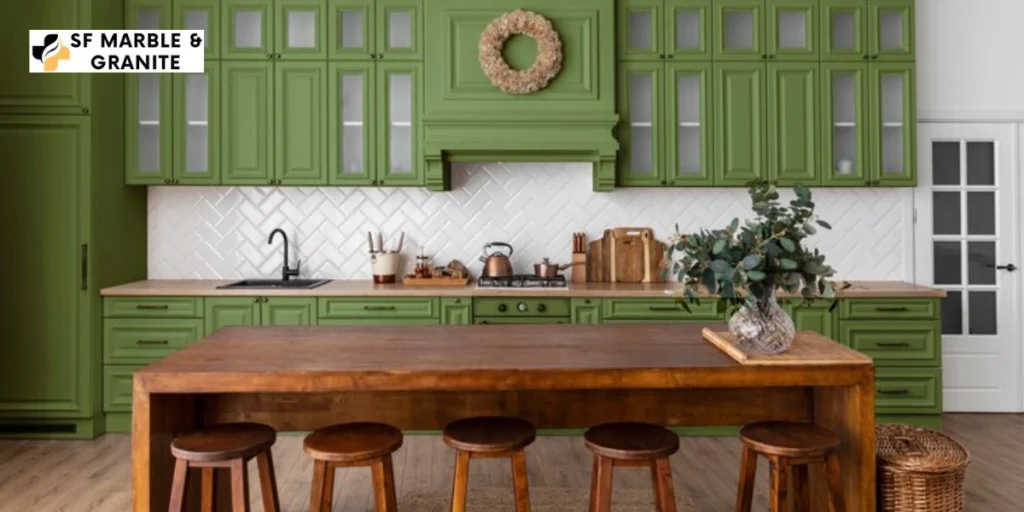
feels flat, cold, or like a showroom instead of a home, that reaction makes sense. A kitchen is where a family actually cooks, argues over homework, and drinks coffee at 6 a.m., not just where photos get taken for a listing.
Green kitchen cabinets solve that problem without pushing your home into a color trend that looks dated in three years. Quick answer: sage, olive, and forest green cabinets pair with wood, white, and stone finishes, they photograph well for resale, and search interest for them has held steady for several years running. Below, we’ll walk through the benefits, the best shades, real design combinations, common mistakes, and the practical steps for pulling this off in your own kitchen.
What Are Green Kitchen Cabinets, Exactly?
In short, this cabinetry style means doors and drawer fronts painted, stained, or refinished in a shade of green instead of the standard white, gray, or natural wood tone. The shade can run anywhere from a soft, gray-toned sage to a near-black hunter green. Homeowners tend to land on green because it sits between the safety of a neutral and the boldness of navy or black.
It reads as fresh and grounded at the same time. That’s part of why it keeps showing up in kitchen renovations year after year instead of fading out the way some paint trends do. Designers often describe it as the color version of a compromise: bold enough to have a personality, calm enough not to fight with the rest of the house.
The undertone in the paint matters as much as the shade itself. A green with a blue base will read cooler and pair better with stainless steel and white marble, while a green with a yellow or brown base feels warmer and sits nicely next to wood floors and brass fixtures. Bringing a paint chip home and holding it against your existing finishes for a day or two is the simplest way to catch this before you commit to a full repaint.
Benefits of Sage Green Kitchen Cabinets
Sage works because it borrows from nature without turning your kitchen into a themed room. The muted, gray undertone in sage keeps it from fighting with your countertops, backsplash, or flooring, so it plays well with materials you already own. You’re not forced to gut the whole room to make one cabinet color work.
It also hides daily wear better than pure white. Fingerprints, water spots, and light scuffs blend into the color instead of standing out under kitchen lighting. Pair it with brass or matte black hardware and the cabinets look intentional, not accidental.
There’s a psychological angle here too. Green is consistently ranked as one of the most calming colors in interior design studies, largely because it mimics the natural environments people find restful. A kitchen is a high-traffic, high-stress room by nature, so a color that takes some of the visual noise down a notch has practical value beyond looks.
Green kitchen cabinets have also shown staying power in resale data. Data suggestion: this is a strong spot for a statistic, such as findings from Zillow’s Paint Color Analysis report or a National Kitchen and Bath Association survey. Either source, pulled from a 2025 or 2026 update, would carry real weight here since both track how specific paint colors affect buyer perception and sale price. Buyers tend to view sage and olive tones as a safe upgrade rather than a personal risk, unlike a saturated color like cobalt blue.
Popular Shades of Green for Kitchen Cabinets
Not every green reads the same way, and picking the wrong undertone is the most common regret homeowners run into after living with a new color for a few months.
- Sage. Soft, gray-green, and the easiest shade to live with long term. Works in small kitchens without closing them in, and hides everyday grime well.
- Olive. Warmer and earthier than sage. Pairs well with brass hardware and warm wood floors, and tends to suit farmhouse or traditional kitchens.
- Hunter or forest green. Deep and moody. Best suited to kitchens with plenty of natural light or a lighter countertop to balance it, since it can feel heavy in a windowless room.
- Emerald. Bold and jewel-toned. Works best as an accent, such as on a kitchen island, rather than on every cabinet in the room.
- Black-green. A near-black shade with a green cast that only shows up in certain light. Reads as sophisticated but needs strong contrast elsewhere in the room to avoid feeling like a cave.
Design Inspirations with Green Kitchen Cabinets

Light Green Elegance
Embrace the freshness of light green kitchen cabinets for a bright and welcoming ambiance. Pair them with white or light-colored countertops to amplify the sense of spaciousness. Incorporate natural elements like wooden accents or open shelving to create a harmonious and inviting atmosphere.
Dark Green Drama
Infuse a touch of drama and sophistication with dark green kitchen cabinets. Opt for sleek, handle-less designs to maintain a modern aesthetic. Complement the dark cabinets with metallic hardware or fixtures to add a hint of glamour. This combination creates a bold and luxurious kitchen space that captivates attention.
Sage Green Serenity
Find the perfect balance between light and dark by choosing sage green kitchen cabinets. This muted and versatile shade pairs well with a variety of color schemes. Integrate brass or gold hardware for a touch of elegance. The result is a serene and timeless kitchen that exudes both tranquility and style.
Two-Tone Charm
Experiment with a two-tone approach by combining different shades of green for upper and lower cabinets. For instance, pair light green upper cabinets with dark green lower cabinets to create visual interest. This design not only adds depth to the kitchen but also allows you to showcase your personal style through color contrast.
Open Shelving Accent
Enhance the impact of green and blue kitchen cabinets by incorporating open shelving. Display colorful dishes, plants, or kitchen accessories against the green backdrop. This not only adds a personalized touch to your kitchen but also breaks up the visual monotony, creating a dynamic and engaging space.
Natural Harmony with Green and Wood
Achieve a harmonious connection with nature by combining green cabinets with wooden elements. Choose wooden countertops, flooring, or accents to infuse warmth into the kitchen. This organic pairing creates a cozy and inviting atmosphere, perfect for those who appreciate a natural aesthetic.
Bold Backsplash Statements
Let your green cabinets stand out by complimenting them with a bold and eye-catching backsplash. Whether it’s vibrant tiles, geometric patterns, or artistic designs, a striking backsplash adds personality and character to your kitchen, making it a focal point of visual interest.
Green kitchen cabinets offer a canvas for creativity, allowing you to personalize your space in a way that reflects your style and preferences. Whether you prefer a subtle, tranquil look or a bold, statement-making design, green cabinets provide endless possibilities for a kitchen that is both functional and visually captivating.
Tips for Incorporating Green Kitchen Cabinets

Balance with Neutral Tones
Maintain balance by pairing green cabinets with neutral tones. White, beige, or light gray countertops and backsplashes create a harmonious contrast, allowing the green to stand out without overwhelming the space.
Mix and Match Shades
Experiment with mixing different shades of green for a dynamic look. Consider using a lighter shade for upper cabinets and a darker hue for lower cabinets, creating a visually appealing contrast that adds depth to your kitchen.
Play with Lighting
Enhance the impact of green cabinets by strategically placing lighting fixtures. Under-cabinet lighting can illuminate the countertops, while pendant lights above an island draw attention to the cabinets, creating a well-lit and inviting atmosphere.
Natural Elements
Bring in natural elements to complement the green palette. Wooden accents, such as open shelving, flooring, or barstools, add warmth and texture, creating a balanced and organic feel in the kitchen.
Statement Hardware
Elevate the design by choosing statement hardware. Brass or gold handles and knobs provide a touch of sophistication, while matte black hardware creates a modern and sleek aesthetic. The right hardware can enhance the overall look of your green cabinets.
Contrast with Bold Backsplash
Introduce a bold and eye-catching backsplash to contrast with the green cabinets. This could be in the form of patterned tiles, colorful mosaics, or even a solid contrasting color. The juxtaposition creates visual interest and makes the cabinets pop.
Open Shelving Display
Consider incorporating open shelving to break up the solid green expanse. Displaying decorative items, colorful dishes, or plants on open shelves adds a personalized touch and prevents the kitchen from feeling too closed off.
By following these tips, you can seamlessly integrate green kitchen cabinets into your design scheme, creating a space that is not only visually striking but also functional and inviting.
Common Mistakes to Avoid
The most common mistake is choosing a green based on a photo instead of a physical sample. Screens shift color temperature constantly, and a sage that looks neutral on your phone can look distinctly blue or yellow once it’s on your actual cabinets under your actual lighting.
Another frequent misstep is pairing a dark green with a dark countertop and dark flooring at the same time. Without a lighter surface somewhere in the room, the kitchen can start to feel more like a cellar than a gathering space. Keeping at least one major surface light and neutral solves this in most layouts.
Skipping proper prep work is the third big one. Cabinet doors get more daily contact than almost any other surface in the house, so sanding, priming with a bonding primer, and applying a durable topcoat aren’t optional steps if you want the finish to last more than a year or two.
Best Countertops and Hardware to Pair with Green Cabinets
White or light gray countertops are the most reliable pairing for green cabinets. Materials like white quartz, Carrara-style marble, or a lighter granite create contrast against the cabinet color without competing for attention. That contrast is what keeps a green kitchen feeling balanced instead of heavy.
Butcher block is another strong option, particularly with olive or sage tones, since the warm wood grain softens the color and adds texture. A neutral, textured backsplash, such as subway tile or a simple stone mosaic, gives the eye a place to rest between the cabinet color and the countertop instead of adding a third competing pattern.
For hardware, brass and matte black are the two finishes that show up most often in professionally designed green kitchens, largely because both hold their own against a saturated cabinet color without disappearing into it. Brushed nickel is a safer, quieter option if you’d rather the hardware stay in the background.
Conclusion
Green kitchen cabinets promise not just a visual upgrade, but a lifestyle enhancement. Whether you choose the timeless serenity of sage or the bold allure of dark green, your kitchen becomes a statement of personal style and tranquility.
Ready to bring these visions to life? SF Marble And Granite Inc is your design ally, offering quality and sustainability. Contact us at sfmarbleandgranite@gmail.com or 978-459-582. Elevate your kitchen with enduring sophistication at 755 Dutton St., Lowell, MA 01854.
FAQs
Are green kitchen cabinets a passing trend or a lasting choice?
Green kitchen cabinets are a lasting choice, not a passing trend. Search interest and design publications have tracked steady demand since around 2019, and sage and olive shades in particular are treated as a neutral alternative to white rather than a bold statement color that risks looking dated.
Trend cycles in kitchen design usually run three to five years before buyers start associating a color with a specific era. Green has avoided that so far because it spans multiple design styles, from farmhouse to modern, instead of being tied to one look.
What is the most popular shade of green for kitchen cabinets?
The most popular shade of green for kitchen cabinets is sage. Its muted, gray-green undertone works with warm and cool color palettes alike, which makes it the safest starting point for anyone nervous about committing to a colored kitchen instead of white or gray cabinetry.
Paint brands consistently report sage-adjacent colors among their best sellers for cabinetry, largely because it behaves like a neutral in photos and in person, which lowers the risk of buyer’s remorse.
Do green cabinets increase home value?
Green cabinets don’t automatically raise a home’s sale price, but they rarely hurt it either. Muted, neutral-leaning shades like sage and olive are generally viewed as a safe design choice by buyers and appraisers, while saturated or dark greens carry more personal taste risk and may need repainting before resale.
If resale is a priority, sticking to a lighter, gray-toned green and pairing it with neutral countertops keeps the kitchen appealing to the widest range of buyers.
What countertop color pairs best with green cabinets?
White or light gray countertops pair best with green cabinets in most kitchens. Materials like white quartz, Carrara-style marble, or light granite create contrast against the cabinet color without competing for attention, which keeps the kitchen feeling balanced instead of heavy or closed in.
Darker countertops can work in larger kitchens with strong natural light, but in smaller or dimmer rooms, they tend to make the kitchen feel closed in rather than cozy.
Can I paint my own cabinets, or should I hire a professional?
Painting cabinets yourself is possible, but hiring a professional produces a more durable, factory-style finish. DIY paint jobs often chip within a year without proper sanding, priming, and a sprayed-on finish, while professional refinishing typically holds up for eight to ten years with normal daily use.
The biggest difference comes down to equipment. A sprayed finish, which most homeowners don’t have access to, lays down far more evenly than a brush or roller and resists chipping around hinges and handles.