Marble can change the look of a room, but its natural color isn’t always right for a new design. If an old marble surface looks dated, you may wonder if painting is easier than replacing the stone. Can You Paint Marble? Yes, but painting marble requires careful preparation, the right primer, suitable paint, and a protective topcoat. It’s not the same as painting a wall.
If the goal is a lower-cost cosmetic change, painting can make sense on some marble surfaces. However, it isn’t always the best choice for a busy floor or kitchen countertop. In this guide, I’ll explain how painting works, where it makes sense, what can go wrong, and when cleaning, polishing, restoration, or replacement may be a better option..
How to Paint Marble?
Transforming dense stone into a painted feature requires precise mechanical scoring, solvent cleaning, priming, and topcoat sealing. Follow this sequence to achieve maximum bonding strength.
Step 1: Deep Surface Degreasing
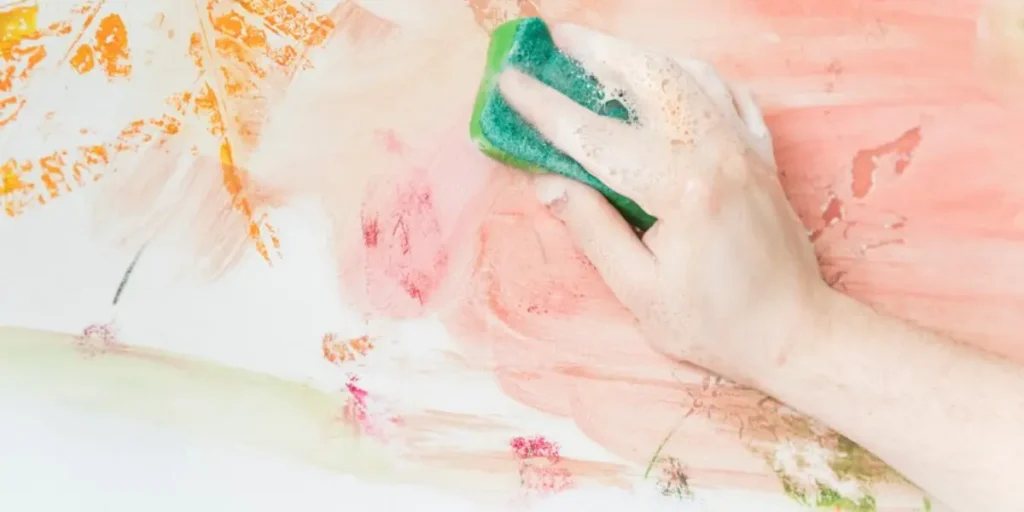
Remove all surface sealers, oils, and soap scum. Wash the entire surface with a heavy-duty trisodium phosphate (TSP) substitute or industrial degreaser. Scrub thoroughly with a stiff nylon brush, then rinse completely with clean water and let dry.
Step 2: Mechanical Etching
Smooth stone lacks the mechanical profile necessary for standard paint adhesion. Use an orbital sander fitted with 120-grit to 150-grit silicon carbide sandpaper to scuff the stone surface. Sand until the factory gloss vanishes completely, creating a dull, slightly textured surface anchor.
Step 3: Solvent Wipe-Down
Vacuum all residual stone dust using a HEPA-filtered shop vacuum. Wipe the entire surface with a lint-free microfiber cloth soaked in pure acetone or denatured alcohol. This eliminates micro-dust trapped within surface pores and evaporates cleanly without leaving residue.
Step 4: Apply High-Adhesion Bonding Primer
Apply a thin, uniform coat of high-adhesion bonding primer (such as an bonding acrylic primer or solvent-based bonding block). Use a high-density foam roller to prevent brush marks. Allow the primer to dry according to the manufacturer’s directions, typically 3 to 6 hours.
Step 5: Apply Decorative Topcoat
Roll on two thin coats of high-grade self-leveling acrylic alkyd or waterborne enamel. Keep coats thin to prevent sagging and bubbles. Wait 4 to 8 hours between coats, scuffing lightly with 220-grit sandpaper between applications for optimal mechanical inter-coat adhesion.
Step 6: Seal with Protective Clear Coat
Protect your finish against moisture, oils, and scratching by applying a clear coat. Use a non-yellowing, two-part polyurethane or clear acrylic topcoat. Allow the final surface to dry undisturbed for at least 48 to 72 hours before gentle use, and avoid full washings for 14 days while the coating completes its chemical cure.
Pros and Cons of Painting Marble
Painting isn’t automatically the right move just because it’s cheaper. Here’s how it actually breaks down.
What works in its favor:
- Costs a fraction of full replacement, often under $300 for a kitchen versus thousands for new stone
- Finishes in a weekend instead of weeks
- Lets you pick any color, not just what quarries happen to offer
- Skips the mess and dust of demolition entirely
What works against it:
- Doesn’t restore the marble; it hides it, and the stone underneath stays as damaged as before
- Chips and scratches show white or gray stone underneath, which stands out fast on a dark paint color
- Most DIY jobs need a touch-up or full redo within two to five years
- Heat from pans and cuts from knives can damage the topcoat faster than they’d damage sealed natural stone
- Some buyers see painted stone as a red flag during a home sale, not an upgrade
We’ve walked through this trade-off with plenty of homeowners over the years. One client painted a dated marble vanity top a soft gray to match a bathroom remodel, and it looked great for about eighteen months before hairline chips started showing near the faucet base. That’s not a failure of the paint job; it’s just what happens when a painted surface meets daily water and toothpaste splatter. Going in with realistic expectations saves you from feeling let down later.
Can You Paint Marble Flooring?
Yes, you can paint marble flooring, but it needs a tougher topcoat than countertops do because feet, furniture legs, and dropped objects wear a floor down faster than any other surface in the home. A two-part epoxy or polyurethane finish rated for floor traffic is the only realistic choice here.
Floors take a beating a countertop never sees. Every step is a small abrasion, and over months that adds up. If you’re painting marble floors, plan on at least three coats of topcoat in high-traffic paths like hallways and entryways, and consider walk-off mats at exterior doors to cut down on grit getting tracked in. Bathrooms and mudrooms bring another problem: moisture. Painted marble near a shower or a door that sees rain and snow needs a topcoat rated for wet conditions, or the paint will lift at the edges within a season.
Can You Paint Marble Countertops?
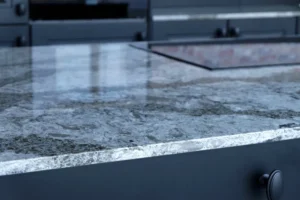
Marble countertops can be painted, but the coating must tolerate repeated cleaning, spills, moisture, and everyday contact. Proper cleaning, light surface abrasion, bonding primer, compatible paint, and a durable protective topcoat are needed. Painted countertops generally require more care than natural stone.
This is one of the most searched uses for marble painting because replacing a countertop can be costly.
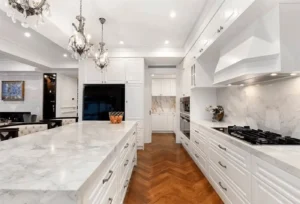
Painting over marble countertops can give an old kitchen a different color without removing the existing slab. It may also work when the owner wants a temporary style change before a larger renovation.
Still, countertops are demanding surfaces.
Think about what happens in a kitchen every day. Hot pans sit nearby. Water splashes around the sink. Oil and food land on the surface. Knives, appliances, and heavy containers move across it.
Painting Marble vs. Replacing It
The real question isn’t just can you paint marble, it’s whether painting still makes sense once you factor in redo costs a few years down the line. Here’s a side-by-side look:
| Factor | Painting Marble | Replacing Marble |
|---|---|---|
| Upfront cost | Low ($50–$300 typical) | High ($2,000–$8,000+ depending on size) |
| Time to complete | A weekend | One to three weeks including fabrication |
| Lifespan of the finish | 2–5 years before touch-up | 20+ years with proper sealing |
| Resale impact | Mixed; some buyers see it as a flaw | Adds genuine value in most markets |
| Repair options | Sand and repaint | Professional polishing and re-sealing |
Painting makes the most sense as a short-term fix while you save for replacement, or for a rental property you don’t plan to own long term. Replacement makes more sense if the marble is already cracked, chipped deeply, or if you’re planning to stay in the home long enough to recoup the cost through resale value.
Common Mistakes to Avoid When Painting Marble
-
Even experienced DIYers encounter coating failures when working with dense, smooth stone. Avoid these critical pitfalls to ensure your refinished surface lasts:
-
Skipping the Mechanical Etch: Paint cannot adhere to smooth stone gloss. Skipping sanding causes sheets of paint to peel off within weeks.
-
Using Standard Wall Primers: General-purpose latex primers fail on non-porous surfaces. Always select an acrylic or epoxy primer labeled specifically for tile, glass, or stone.
-
Rushing Dry and Cure Times: Drying differs from curing. While paint may feel dry to the touch in 2 hours, full cross-linking takes up to 7 to 14 days. Placing heavy appliances on fresh paint causes permanent indentations.
-
Applying Thick Layers: Heavy coats trap solvents underneath, leading to soft finishes, bubbling, and wrinkling. Always roll multiple thin coats.
-
Cleaning with Harsh Chemicals: Bleach, acidic cleaners, and abrasive scrub pads strip protective clear coats and dull glossy topcoats.
Conclusion
-
In conclusion, painting marble surfaces can be a rewarding DIY project with the right preparation and materials. Whether you’re looking to update your countertops, flooring, or other marble surfaces, following the correct steps is essential for achieving a beautiful and long-lasting finish. By cleaning and preparing the surface, choosing the right paint, and applying it correctly, you can transform your space and enhance its beauty.
If you’re considering painting your marble surfaces, don’t hesitate to contact SF Marble And Granite Inc for expert advice and guidance. Our team of professionals can provide you with the best paint and techniques to use, ensuring a high-quality finish that will last for years to come. You can also contact us at sfmarbleangranite@gmail.com or by phone at 978-459-582. Our address is 755 Dutton St. Lowell- 0185MA4.
FAQs
Can you paint marble over existing countertops?
Yes, you can paint over existing marble countertops. However, it’s essential to prepare the surface properly and use the right materials.
How long does painted marble last?
The longevity of painted marble depends on various factors, including the quality of the paint and the level of wear and tear. With proper care, painted marble can last for several years.
Can you paint marble floors?
Yes, painting marble floors is easy. However, it’s essential to choose a paint specifically designed for use on floors and follow the correct application process.
How do I maintain painted marble surfaces?
To keep your painted marble surfaces looking their best, clean them regularly with a mild detergent and water. Avoid using harsh chemicals or abrasive cleaners, as these can damage the paint.
Can I hire a professional to paint my marble surfaces?
Yes, you can hire a professional painter to paint your marble surfaces. A professional can ensure a high-quality finish and provide expert advice on the best paint and techniques to use.