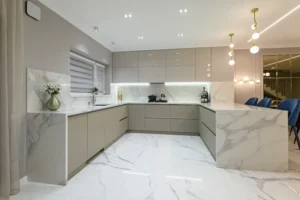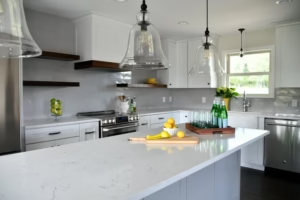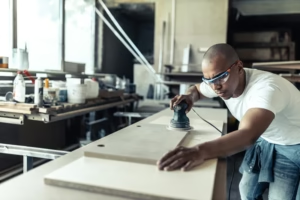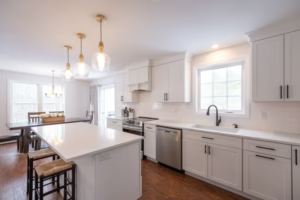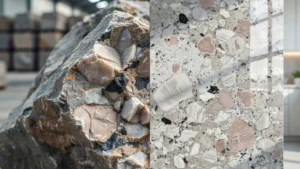
Luxury natural stone creates unmatched visual impact in modern homes, but choosing the right material takes careful consideration. Selecting high-end marble often feels overwhelming when you’re balancing aesthetic beauty, durability, and total maintenance requirements. This guide breaks down everything you need to know about incorporating Calacatta Marble in Interior Design so you can invest with complete confidence.
Calacatta marble stands as one of the most sought-after white marbles in the world. Known for its bright white background and bold, dramatic veining, it turns standard surfaces into striking focal points. Whether you’re planning a kitchen renovation or updating a primary bathroom, understanding its unique characteristics helps you make the best decision for your space.
What is Calacatta Marble?
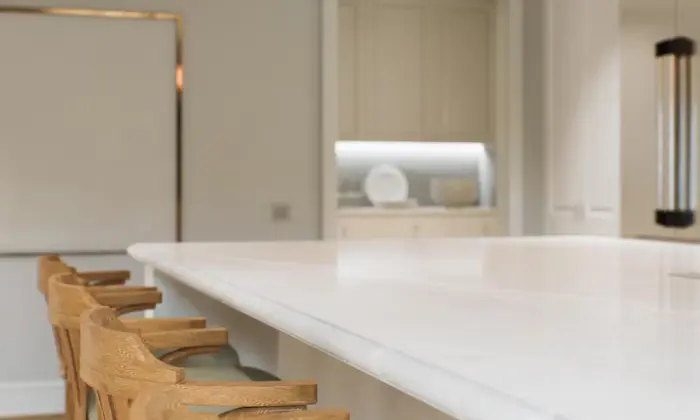
Calacatta marble is a natural metamorphic stone quarried in Italy’s Apuan Alps. It has a bright white base with bold, dramatic veining in gray, gold, or brown. It’s rarer than Carrara marble, so it costs more and is often chosen as a luxury statement surface.
Marble starts as limestone. Heat and pressure over millions of years recrystallize it into a dense, calcium-rich stone. Calacatta ends up with a whiter background and thicker, more irregular veins than most marbles.
Think of Carrara as a quiet pencil sketch and Calacatta as a bold brushstroke. Statuario sits between them, with a white base and strong but more controlled veining. Each slab is different, so no two kitchens look the same.
Where is Calacatta Marble From?
Calacatta marble comes from the Carrara marble basin in Tuscany, Italy, where a handful of quarries in the Apuan Alps produce it. The same mountains have supplied marble since Roman times. Michelangelo sourced stone from this area too, and true Calacatta is only a small share of output.
That limited supply explains the price. Quarries yield only a few blocks with the right mix of white background and dramatic veins. Many stones sold as “Calacatta” come from other countries and look similar, so ask for the origin in writing.
A homeowner once held a Carrara sample next to a Calacatta sample and asked which one was the “real” white marble. Both are real. They just speak at different volumes.
What are the Types of Calacatta Marble?
It comes in several distinct varieties, each with its unique veining, color patterns, and overall aesthetic. Here are some of the most popular types:
Calacatta Gold
This variety features warm gold, taupe, and bronze veins mixed with classic gray. It pairs remarkably well with warm wood tones, brass hardware, and cream-colored cabinetry.
Calacatta Borghini
Borghini features thick, dramatic veining that shifts from charcoal gray to honey hues. It’s ideal for large-scale applications where you want the stone pattern to take center stage.
Calacatta Michelangelo
Named after the famed artist who favored stone from this region, Michelangelo offers a softer look. The background is pristine white with delicate, uniform gray veining throughout.
Calacatta Extra
For maximum contrast, Extra pairs an icy white field with dark charcoal veining. It works exceptionally well in contemporary, high-contrast kitchen and bathroom layouts.
What is Like Calacatta Gold but Not Marble?
If you’re looking for materials that resemble Calacatta Gold Marble but aren’t marble, several alternatives offer similar aesthetics with different properties. These materials can provide the luxurious look of Calacatta Gold while offering benefits like lower maintenance or increased durability. Here are some options:
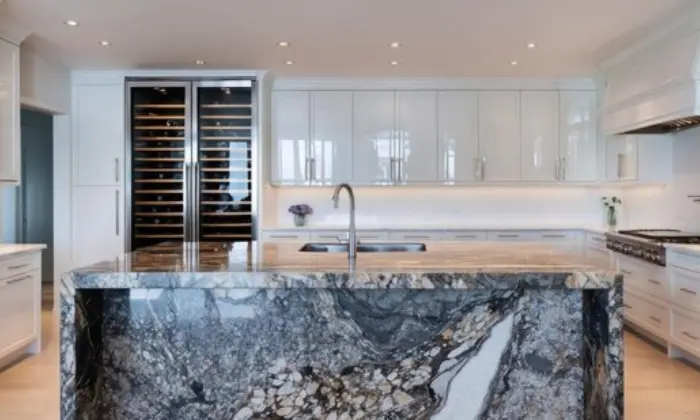
Calacatta Gold quartz is the best non-marble alternative, offering engineered quartz surfaces that mimic the white background and warm gold veining of natural marble. Porcelain slabs and quartzite also replicate this luxurious appearance while providing significantly higher stain and scratch resistance.
If you want the aesthetic of natural marble without the ongoing maintenance, several modern alternatives offer exceptional durability:
Engineered Quartz: Non-porous and resistant to staining, quartz replicates marble veining patterns through modern manufacturing techniques.
Slab Porcelain: Ultra-thin porcelain panels offer high-definition prints of natural Italian marble with heat and scratch resistance.
Natural Quartzite: Stone options like Calacatta Macaubas quartzite provide a similar visual style while offering greater hardness than traditional marble.
No, Carrara marble is generally less
Is Carrara Marble More Expensive Than Calacatta Marble?
No, Carrara marble is usually cheaper than Calacatta marble. Carrara is quarried in larger volumes and has softer, feathery gray veining. Calacatta is rarer, whiter, and bolder, so slabs often cost much more per square foot, especially premium grades with dramatic veining.
Several factors move the final number:
- Grade and veining: Clean white backgrounds with dramatic veins sit at the top of the price range.
- Slab size and thickness: Larger or thicker slabs cost more.
- Edge profile: Mitered or built-up edges add fabrication time.
- Layout and waste: Bookmatched pieces need extra material.
- Installation: Heavy slabs need skilled handling and solid cabinet support.
Prices shift by market and by season, so ask for a written quote based on the exact slab. A photo-based estimate is like judging a book by its cover.
How Do You Choose the Right Calacatta Slab?
Choose a Calacatta slab by viewing it in person, not from a photo. Check vein color, density, and flow, and look for cracks or fissures. Ask whether slabs are bookmatched, confirm the finish, and check the exact slab under lighting like your home’s before you approve the layout.
Slabs from the same block can look quite different. Walk the stone yard, take a sample home, and look at it in morning and evening light. Decide where the dramatic vein will land. A strong vein running through an island’s center reads as art, but one cut by a seam looks like a mistake.
Ask your fabricator for a layout drawing before cutting starts. That one step catches most problems while they’re still easy to fix.
Calacatta Marble Elegance for Your Lowell Home
Bring the timeless beauty of Calacatta Marble indoors with our expert marble floor installation services. Known for its crisp white background and bold, dramatic veining, Calacatta Marble instantly elevates any room whether you’re refreshing a classic living room or creating a spa-like bathroom retreat. At SF Marble & Granite Inc., our skilled installers handle every step from precise templating and cutting to flawless grouting and sealing so you can enjoy a stunning, durable floor without the stress. Ready to transform your space? Discover how our Marble Floor Installation in Lowell can bring lasting elegance and value to your home. Contact us today.
FAQs
What makes Calacatta Marble different from Carrara Marble?
Calacatta Marble has a brighter white background and thicker, more dramatic veins, while Carrara tends toward softer gray tones and subtler veining.
How durable is Calacatta Marble as flooring?
With proper sealing and maintenance, Calacatta Marble floors resist stains and wear, making them suitable for both high-traffic areas and elegant living spaces.
How long does marble floor installation take?
A typical Calacatta Marble floor installation in a standard room takes 3–5 days, including subfloor preparation, cutting, setting, and curing time.
Do marble floors require special upkeep?
Yes, regular cleaning with a pH-neutral cleaner and periodic resealing (every 1–2 years) keep your marble looking pristine.