Marble looks stunning until the first scratch appears. It can happen from a dragged chair, a dropped ring, or even a rough cleaning pad. And once you see it, it is hard to ignore. The good news is that most scratches are fixable without replacing the stone.
Knowing how to get scratches out of marble saves you money and keeps your surface looking polished. Light scratches can be handled at home. Deeper ones may need a professional. This guide covers both, clearly and without the guesswork.
Why Marble Gets Scratched So Easily
Marble is a natural stone, but it is softer than most people expect.
On the Mohs hardness scale, marble sits between 3 and 4. That means everyday objects like keys, metal cookware, ceramic mugs, and even some cleaning tools can scratch it.
The surface is also calcium carbonate. This makes marble reactive to acids and rough abrasives. Even lemon juice or vinegar can etch the surface, leaving dull marks that look like scratches but are actually chemical damage.
This softness is part of what makes marble beautiful. The same quality that lets it be polished to a high gloss also makes it vulnerable to daily wear.
Types of Marble Scratches You Should Know
Not every scratch is the same. Identifying the type helps you choose the right repair method.
Surface Scratches (Light)
These are shallow marks that only affect the top polish layer. They catch light and look more noticeable than they actually are. You can often feel them slightly with your fingernail, but they do not penetrate deep into the stone.
These respond well to marble polishing powder or a fine-grit buffing pad.
Deep Scratches
These go through the polish and into the stone itself. You can feel them clearly with your finger. They usually come from something sharp, like a knife blade or a metal edge dragged across the surface.
Deep scratches require more work. You need to use wet-dry sandpaper to sand down to the scratch level, then re-polish.
Etching (Chemical Marks)
Etching looks like a scratch but is different. It is caused by acidic substances reacting with the calcium carbonate in marble. The surface goes dull in patches.
Etching does not have texture like a scratch. It is flat but lacks shine. Marble polishing powder is the go-to fix for etch marks.
Chip or Gouge
This is physical damage where a piece of marble is missing. Small chips can be filled with marble repair epoxy or a color-matched filler. Large chips or gouges need professional attention.
How to Get Scratches Out of Marble (Step-by-Step)
Here is how to approach marble scratch repair based on the depth of damage.
What You Will Need
- Soft cloths or microfiber towels
- Marble polishing powder (tin oxide or aluminum oxide)
- Wet-dry sandpaper (various grits: 200, 400, 800, 1500, 3000)
- Marble sealer
- Clean water
- Masking tape (to protect surrounding areas)
- Rubber gloves
Step 1: Clean the Area
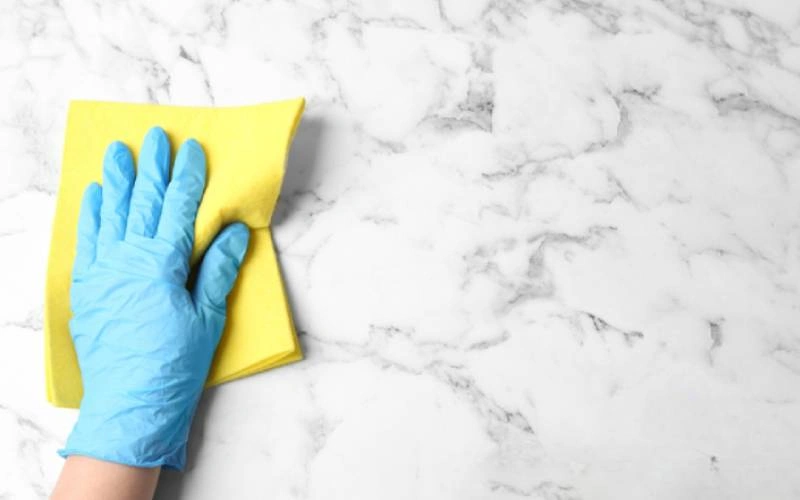
Wipe the scratched area with a damp cloth and a pH-neutral stone cleaner. Do not use vinegar, bleach, or any acidic cleaner. Dry it completely before starting any repair work.
Step 2: Assess the Scratch
Run your fingernail gently across the scratch.
- If your nail does not catch: it is a surface scratch. Skip to Step 4.
- If your nail catches clearly: it is a deep scratch. Start at Step 3.
Step 3: Sand the Deep Scratch (For Deep Scratches Only)
This is the most important step for getting scratches out of marble that go into the stone.
Start with 200-grit wet-dry sandpaper. Keep the surface and paper wet throughout this process. Sand in small, circular motions directly over the scratch. Apply light, even pressure.
Progress through finer grits in order: 400, then 800, then 1500, then 3000. Each grit removes the marks left by the previous one. The surface will look dull after sanding. That is normal. You will restore the shine in the next step.
Do not skip grits. Jumping from 200 to 1500 leaves visible scratching patterns.
Step 4: Polish the Surface
Apply a small amount of marble polishing powder to a damp cloth. Rub it into the scratched area using circular motions. Apply moderate pressure.
Continue buffing until the shine begins to return. This may take 5 to 10 minutes of steady work. For etch marks, this step alone is often enough to restore the finish.
Wipe away the residue with a clean damp cloth and dry the surface.
Step 5: Seal the Marble
After repair, apply a marble sealer to the area. This protects the stone from moisture, staining, and future damage. Follow the product instructions. Most sealers need 24 hours to cure fully before the surface gets wet again.
Sealing is a step many people skip. Do not skip it. It is what keeps your repair lasting.
You can read about: How Much Do Marble Countertops Cost
How to Get Marks Out of Marble: Specific Scenarios
How to Get Marks Out of Marble Countertops
Countertops take the most abuse. Heat, moisture, and acidic foods all contribute to marks over time.
For surface scratches and etch marks on countertops, marble polishing powder works well. For deeper scratches near a sink or cooking area, wet sanding followed by polishing gives the best result.
Always seal the countertop after any repair work.
Scratches on Marble Floors
Marble floors deal with foot traffic, furniture, and grit tracked in from outside. Floor scratches are often surface-level but spread across a wider area.
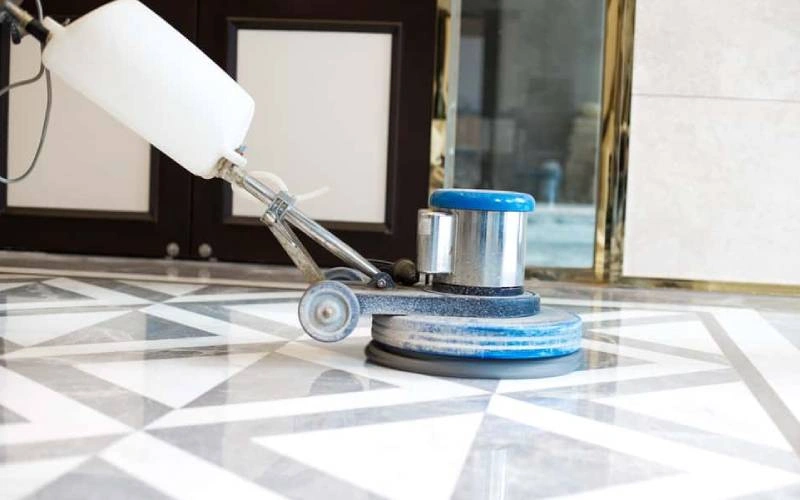
A floor buffing machine with a polishing pad makes floor repair faster and more even than hand polishing. For deep floor scratches or larger affected areas, a professional stone restoration service is the more practical choice.
Scratches on Marble Tables
Table surfaces are usually polished to a high gloss. Scratches here are very visible. Use the same sanding and polishing method, but work slowly and check your progress often to avoid over-sanding.
How to Prevent Scratches on Marble
Repair is possible, but prevention is always better.
Use coasters and trivets. Never place metal, ceramic, or glass directly on marble. Always use a coaster, cutting board, or trivet underneath.
Add felt pads to furniture legs. Chair and table legs dragged across marble floors cause long, shallow scratches. Felt pads eliminate this risk.
Sweep or dust mop before mopping. Grit and sand particles act like sandpaper underfoot. Remove them before they get ground into the surface.
Use only pH-neutral cleaners. Acidic or alkaline cleaners etch marble quickly. Stick to cleaners labeled safe for natural stone.
Seal marble regularly. A good sealer every 6 to 12 months adds a protective layer over the surface. It does not make marble scratch-proof, but it does reduce damage from daily use.
Use rugs in high-traffic areas. A rug in a hallway or near a kitchen sink protects floor marble where wear is heaviest.
Common Mistakes to Avoid
Even with good intentions, some DIY repair attempts make things worse. Here are the mistakes that cause the most damage.
Using the wrong sandpaper grit. Starting with too coarse a grit removes more stone than necessary. Always start at 200-grit and work upward.
Sanding dry. Dry sanding generates too much friction and heat. Always keep the surface and paper wet.
Using vinegar or lemon juice to clean before repair. These acids etch the marble and create new damage. Use only water or a stone-safe cleaner.
Skipping the grit progression. Every grit level serves a purpose. Jumping ahead leaves scratching patterns that are hard to remove later.
Buffing too aggressively. Heavy pressure does not speed up polishing. It can create uneven spots and swirl marks.
Not sealing after repair. Unsealed marble absorbs moisture and stains much faster. Always finish with a sealer.
Is It Worth Repairing Scratched Marble?
For most situations, yes. Marble scratch repair is worth doing because:
- Replacing marble is expensive. Even a single slab costs significantly more than repair supplies.
- Light and moderate scratches respond well to DIY methods.
- A repaired surface, properly sealed, can look close to new.
The exception is severe damage. If the marble has large cracks, multiple deep gouges, or structural damage, replacement or professional restoration makes more sense.
How do you remove scratches from marble and know when to stop? The rule is simple. If you sand through one or two grit levels and the scratch is still deep, stop and call a professional. Over-sanding can thin the marble and cause cracking.
When to Call a Professional Stone Restorer
Some jobs are beyond DIY methods.
Call a professional if:
- The scratch covers a large area or multiple tiles.
- The marble has deep gouges or chips missing.
- You have tried polishing and the etch marks will not clear.
- The surface has uneven lippage (tiles sitting at different heights) that causes catching.
- You are dealing with antique or high-value marble where the risk of DIY error is too high.
Professional stone restorers use diamond grinding pads and industrial buffing machines. They can restore surfaces that look completely ruined and match the finish precisely.
Final Thoughts
Marble is worth protecting. It adds real value to any space, and with the right care, it lasts for decades without losing its look.
Most scratches are fixable. Light marks come out with polishing powder. Deeper scratches respond to wet sanding followed by polishing. The key is matching the repair method to the type of damage and not skipping the sealing step at the end.
If you are installing new marble or need professional restoration, SF Marble & Granite offers expert Marble Floor Installation in Lowell, MA and surrounding areas. Getting the installation right from the start reduces the chances of premature scratching and damage down the line.
Whether you are doing a home repair or starting fresh with new stone, the right approach makes all the difference.
FAQs
How to get scratches out of marble at home?
Use marble polishing powder for surface scratches and etch marks. For deeper scratches, wet-sand with progressively finer grits starting at 200, then polish and seal. Always use pH-neutral cleaners throughout the process.
How do you remove scratches from marble without professional help?
Light to moderate scratches can be removed using wet-dry sandpaper and marble polishing powder. Deep gouges or large damaged areas are better handled by a professional stone restorer.
What is the best product for marble scratch repair?
Marble polishing powder (tin oxide or aluminum oxide) is the most effective product for surface scratches and etch marks. For deeper damage, wet-dry sandpaper paired with polishing powder gives the best results.
How to get marks out of marble caused by acid?
Acid marks are etch marks, not true scratches. Polish them out with marble polishing compound and a soft cloth. Seal the area afterward to prevent future etching.
Can all scratches be removed from marble?
Most can. Light and moderate scratches respond well to DIY repair. Very deep gouges or large chip damage may require professional restoration or, in extreme cases, replacement.
Does getting scratches out of marble require special tools?
Not always. For light scratches, a soft cloth and polishing powder are enough. For deeper scratches, you will need wet-dry sandpaper in multiple grits and a marble sealer.