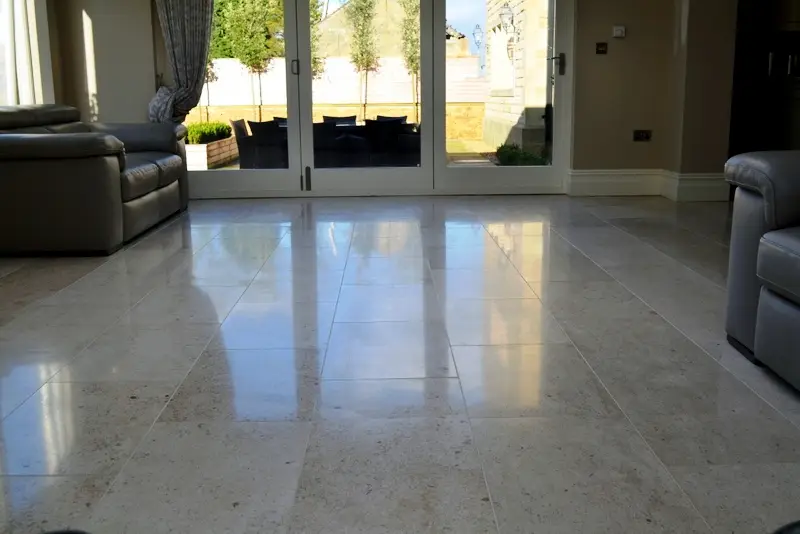
Cleaning limestone is straightforward if you use the right tools. You need a pH-neutral cleaner and a soft microfiber mop to keep the stone safe. Avoid vinegar or harsh chemicals because they will eat into the surface and leave dull spots.
Many homeowners love the natural look of limestone but feel unsure about maintenance. Knowing how to clean limestone floors correctly ensures your stone stays beautiful for decades without losing its glow. At SF Marble & Granite, we help clients maintain these surfaces every day.
What Makes Limestone Floors Hard to Clean
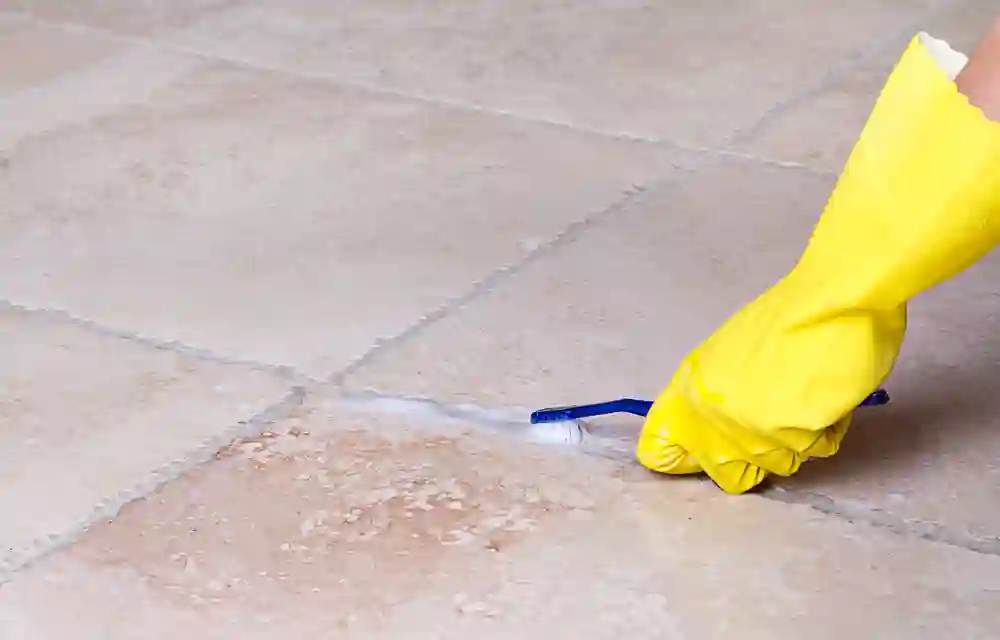
Limestone is a sedimentary rock made mostly of calcium carbonate. That chemical makeup is the key to understanding why it needs special care.
Here is why limestone gives homeowners trouble:
It reacts to acid. Vinegar, lemon juice, orange-based cleaners, and many all-purpose sprays are acidic. Even a small amount will etch limestone. Etching means the surface gets dull, rough, and damaged. It looks like a stain but it is actually physical damage.
It absorbs liquids fast. Limestone is porous. Spill coffee, wine, or oil on it and the liquid soaks in quickly. That causes deep stains that are hard to remove later.
It scratches easily. Limestone is soft compared to granite or porcelain. Sand, dirt, and grit act like sandpaper when you walk across it.
It is sensitive to moisture. Too much water causes calcium deposits, white haze, and long-term structural damage.
Understanding these four facts will change how you approach limestone floor cleaning forever.
Daily Cleaning Routine: Dust and Protect
Daily care is the most important part of limestone maintenance. It takes five minutes and prevents most damage.
Step 1: Dry dust mop every day. Use a microfiber dust mop. Never use a vacuum with a beater bar. The beater bar scratches the surface. Sweep away all grit, sand, and debris before it gets ground in by foot traffic.
Step 2: Place mats at every entry point. Door mats catch sand and dirt before it reaches the floor. Use mats without rubber backs. Rubber can trap moisture and stain limestone.
Step 3: Clean up spills immediately. Do not let any liquid sit. Blot it up with a clean dry cloth. Press down, do not wipe. Wiping spreads the spill further into the stone.
Step 4: Use felt pads on furniture. Chair legs and table bases scratch limestone over time. Stick felt pads on anything that sits on the floor.
This daily routine alone prevents 80% of limestone damage.
Weekly Cleaning Method: Safe Mopping Guide
Once a week, give your floors a proper clean. The key is using the right mop and the right solution.
What you need:
- A pH-neutral stone cleaner (look for labels that say “safe for natural stone” or “pH neutral”)
- A microfiber flat mop
- Two buckets of clean warm water
- Dry towels or a fan
What NOT to use:
- Vinegar (acidic, will etch)
- Bleach (damages sealant and stone)
- Dish soap (leaves residue)
- All-purpose sprays (usually acidic)
- Steam mops (too much moisture and heat)
The mopping process:
- Dust mop first to remove loose debris.
- Mix your pH-neutral limestone cleaner with warm water. Follow the product’s dilution ratio.
- Wring the mop out very well. The mop should be barely damp, not wet.
- Mop in small sections. Work toward the door so you do not walk on wet areas.
- Change your water often. Dirty mop water spreads grime instead of removing it.
- Dry the floor right after mopping. Use a dry microfiber mop or towels. Do not let water sit.
Never let the floor air dry on its own. Standing water causes mineral deposits and white haze.
Deep Cleaning Limestone Floors
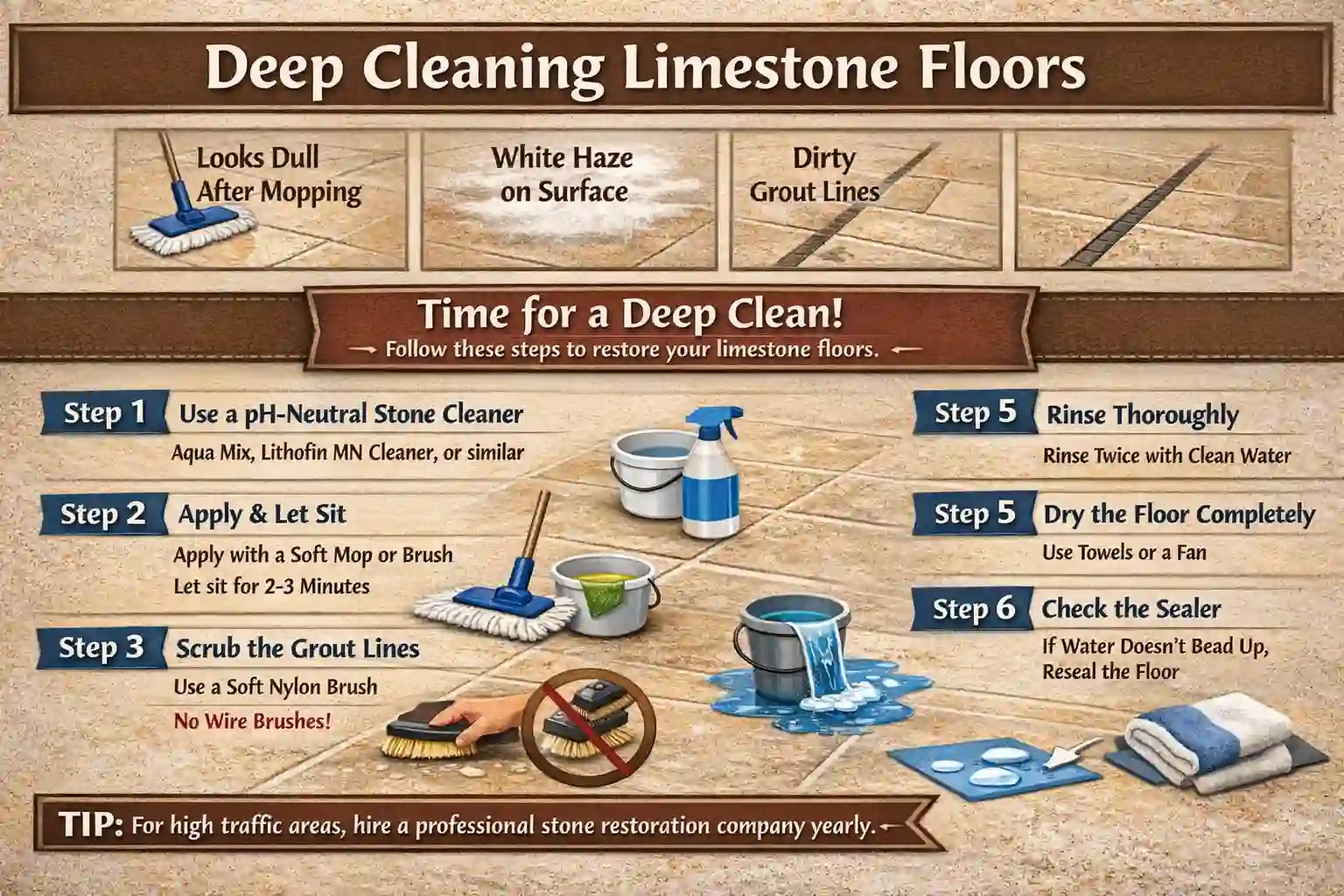
Deep cleaning removes built-up grime, old wax, and residue. Do this every one to three months depending on traffic.
Signs you need a deep clean:
- The floor looks dull even after mopping
- There is a white haze or film on the surface
- Grout lines look dark and dirty
Deep cleaning steps:
Step 1: Use a professional-grade pH-neutral stone cleaner. Products like Aqua Mix Stone & Tile Cleaner or Lithofin MN Cleaner work well. Always check the label says safe for limestone.
Step 2: Apply the cleaner with a soft brush or mop. Let it sit for two to three minutes. Do not let it dry on the surface.
Step 3: Scrub grout lines with a soft nylon brush. Never use wire brushes or steel wool. These scratch limestone and damage grout.
Step 4: Rinse twice with clean water. Residue left behind dulls the finish.
Step 5: Dry the floor completely with towels or a fan.
Step 6: After deep cleaning, inspect the sealer. If water no longer beads on the surface, it is time to reseal.
For heavily trafficked areas or commercial spaces, consider hiring a professional stone restoration company once a year.
You can read about: How to Clean Pebble Shower Floor
Common Mistakes That Damage Limestone
These mistakes are the top reasons limestone floors get ruined. Avoid all of them.
Using vinegar or lemon juice to clean. This is the most common mistake. Many people read that vinegar is a natural cleaner and use it on everything. On limestone, it causes etching. The surface becomes permanently dull. There is no way to fix etching without professional polishing.
Using a steam mop. Steam forces hot moisture deep into the pores of the stone. It weakens the sealer and can cause cracking over time.
Letting grout haze dry on stone. If you are installing new tiles and grout haze dries on limestone, it is very hard to remove. Always wipe grout haze off immediately.
Ignoring spills. Even water can leave marks if left too long. Act on every spill within seconds.
Using the wrong mop. String mops hold too much water. Always use a flat microfiber mop wrung out very well.
Using abrasive scrubbers. Scotch-Brite pads, steel wool, and stiff brushes scratch limestone. Use only soft cloths and nylon brushes.
Not sealing the stone. Unsealed limestone absorbs everything. Always keep a fresh coat of sealer on the surface.
How to Remove Stains from Limestone Floors
Different stains need different treatments. Using the wrong method makes stains worse.
Oil-Based Stains (cooking oil, grease, lotion)
Use a poultice made from baking soda and a few drops of dish soap mixed into a paste. Spread it over the stain, cover with plastic wrap, and tape the edges. Leave for 24 to 48 hours. The poultice draws the oil out of the stone. Remove, rinse, and dry.
Organic Stains (coffee, wine, tea, food)
Mix hydrogen peroxide (12% or less) with a small amount of baking soda to make a paste. Apply, cover, and wait 24 hours. Rinse well. Test in a hidden area first. Never use full-strength hydrogen peroxide.
Water Stains and White Haze
This is usually mineral deposit buildup. Use a product made for hard water deposits on natural stone. Never use calcium remover or lime scale spray. These are too acidic. A professional stone polisher can also buff these out.
Rust Stains
Rust stains are tricky on limestone. Use a commercial rust remover made specifically for natural stone. Read the label carefully. Never use products with hydrofluoric acid.
Ink or Dye Stains
Try acetone (nail polish remover) on a cotton ball. Blot gently. Rinse well after. This works on unsealed or freshly sealed stone.
Etch Marks (Dull Spots from Acid)
Etch marks are not stains. They are physical damage. A marble polishing powder (like Marble Life Marble Polish) can reduce light etching. Heavy etching needs professional diamond polishing.
Sealing Limestone Floors: Complete Guide
Sealing is the single most important protection step for limestone. A proper sealer fills the pores of the stone. This slows down liquid absorption and makes cleaning much easier.
How Often to Seal
Seal new limestone before use. After that, test every six to twelve months. The water bead test tells you when it is time: pour a small amount of water on the floor. If it soaks in within a minute, reseal. If it beads up, the sealer is still working.
High-traffic areas may need resealing once a year. Low-traffic areas can go two years between seals.
Types of Sealer
Penetrating sealers (impregnators): These soak into the stone and seal from within. They do not change the look of the floor. This is the best choice for most homeowners. Look for brands like Miracle Sealants 511 Impregnator or Aqua Mix Sealer’s Choice Gold.
Topical sealers: These sit on top of the stone and create a shiny coating. They wear off faster and can look plastic. Most professionals avoid these for limestone.
How to Apply Sealer
- Clean and fully dry the floor. Any moisture under the sealer causes problems.
- Apply sealer with a clean lint-free cloth or a foam applicator. Work in small sections.
- Let it absorb for five to ten minutes.
- Wipe off any excess sealer before it dries. Excess sealer dries cloudy.
- Let the first coat cure for two hours.
- Apply a second coat the same way.
- Wait 24 hours before walking on the floor and 72 hours before wet mopping.
Do not skip the second coat. One coat is rarely enough for unsealed stone.
Limestone vs Marble vs Granite: Cleaning Differences
If you have multiple stone floors in your home, knowing the differences matters.
| Feature | Limestone | Marble | Granite |
| Hardness | Soft | Medium | Hard |
| Acid sensitivity | Very high | High | Low |
| Porosity | High | Medium | Low |
| Scratch resistance | Low | Medium | High |
| Sealing frequency | Every 6–12 months | Every 12 months | Every 1–2 years |
| Best cleaner type | pH-neutral only | pH-neutral only | pH-neutral preferred |
Granite is the most forgiving of the three. It handles everyday cleaners better and is harder to scratch or etch. Marble and limestone need the same level of careful handling, but limestone is slightly more porous and more prone to staining.
All three stones should never be cleaned with acidic products, abrasive pads, or steam mops.
Grout Line Cleaning for Limestone Floors
Grout lines collect dirt fast and can make even clean limestone look dull. Here is how to clean them safely.
Use a soft nylon brush and a pH-neutral grout cleaner. Scrub in short strokes along the grout line. Rinse with clean water right after. Never use bleach on grout near limestone. Bleach can splash onto the stone and etch it. It also breaks down colored grout over time.
For heavily stained grout, apply an oxygen-based grout cleaner (like OxiClean diluted in water). Leave for five minutes, scrub, and rinse. This is safer than bleach on natural stone floors.
After cleaning grout, apply a grout sealer. This keeps future dirt from soaking in as easily.
Pro Maintenance Tips for Long Life
These tips come from professional stone care technicians and stone restoration experts.
Buff the floor after mopping. Use a dry microfiber pad and a low-speed floor buffer once a month. This keeps the surface looking polished between professional cleanings.
Use stone-safe cleaning products only. Build a small kit: a pH-neutral stone cleaner, a poultice powder for stains, and a penetrating sealer. That is all you need.
Schedule professional honing every few years. Over time, limestone loses its polish from daily wear. A professional stone technician can hone and re-polish the surface without replacing the tile. This is far cheaper than replacement.
Watch humidity levels. In humid climates, limestone can develop white mineral deposits from moisture rising up through the slab. A dehumidifier helps. So does good ventilation.
Never use wax on limestone. Wax builds up over time and dulls the surface. It also traps dirt underneath. Only use sealers specifically made for natural stone.
Test any new product in a hidden area first. Even products labeled “natural stone safe” can sometimes react with certain limestone types. Always patch test before full use.
Re-inspect your sealer after any heavy cleaning. Deep cleaning can strip some sealers. Always re-test with water and reseal if needed after a deep clean session.
Conclusion
Limestone floors are elegant but demanding. The basics are simple: keep them dry, avoid acids, seal regularly, and use only pH-neutral limestone cleaners. Do that and your floors will stay beautiful for decades.
If you need professional stone care or installation services, the team at SF Marble & Granite has years of hands-on experience with limestone, marble, and granite surfaces. Whether you need maintenance advice or are considering Marble Floor Installation in Lowell, MA, Our team delivers expert results you can trust.
Start with the daily routine. Add the weekly mopping habit. Seal every six to twelve months. That simple system is how you protect a significant home investment and keep it looking its best every single day.
FAQs
Q: Can I use vinegar to clean limestone floors?
No. Vinegar is acidic and will etch limestone. It causes permanent dull spots that need professional polishing to fix. Always use a pH-neutral stone cleaner instead.
Q: How often should I mop limestone floors?
Mop once a week with a barely damp mop and a pH-neutral cleaner. Dry the floor immediately after. Daily dust mopping is also important.
Q: What is the best cleaner for limestone floors?
The best limestone cleaners are pH-neutral and labeled safe for natural stone. Good options include Aqua Mix Stone & Tile Cleaner, Miracle Sealants Daily Cleaner, and Lithofin MN Cleaner.
Q: How do I remove a stain from a limestone floor?
It depends on the stain type. Use a baking soda poultice for oil stains. Use diluted hydrogen peroxide for organic stains like coffee or wine. Always test in a hidden spot first.
Q: How do I know when to reseal limestone?
Pour a few drops of water on the floor. If it soaks in within 60 seconds, reseal. If it beads up, the sealer is still working.
Q: Can I use a steam mop on limestone?
No. Steam forces heat and moisture deep into the stone and weakens the sealer. Use a flat microfiber mop wrung out very well instead.