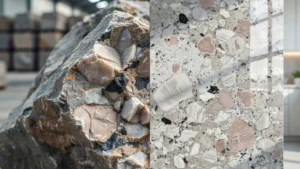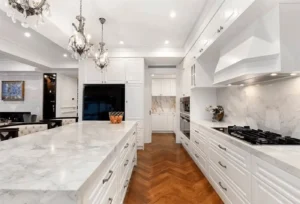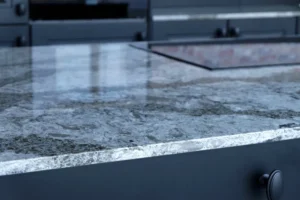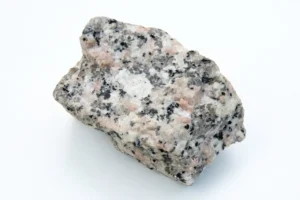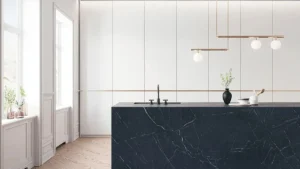
Marble is a metamorphic rock formed when limestone or dolostone changes under heat, pressure, and geological forces without melting. That simple fact explains much of marble’s appearance: its original minerals recrystallize into an interlocking texture, while other minerals can create the veins and colors seen in finished slabs.
If you’ve searched What Type of Rock Is Marble, you’re probably looking for more than one word. The useful answer is that marble belongs to the metamorphic rock group, while its parent material is usually limestone or dolostone. In this guide, I’ll explain how that change happens, what marble contains, how it compares with granite, where it’s found, and why its geology matters when it’s used in a home.
Understand What Type of Rock Is Marble?
Marble is a non-foliated metamorphic rock that forms when sedimentary limestone is subjected to high heat and pressure within the Earth’s crust. This intense process recrystallizes the original calcite or dolomite minerals into a dense, interlocking network of crystals, creating the distinct veining and polish typical of natural marble stone.
Beyond geology, this structure dictates how the material reacts to daily wear. Knowing the rock type helps you protect household surfaces from household acids, scratches, and heavy daily use.
What Types of Rocks Are There?
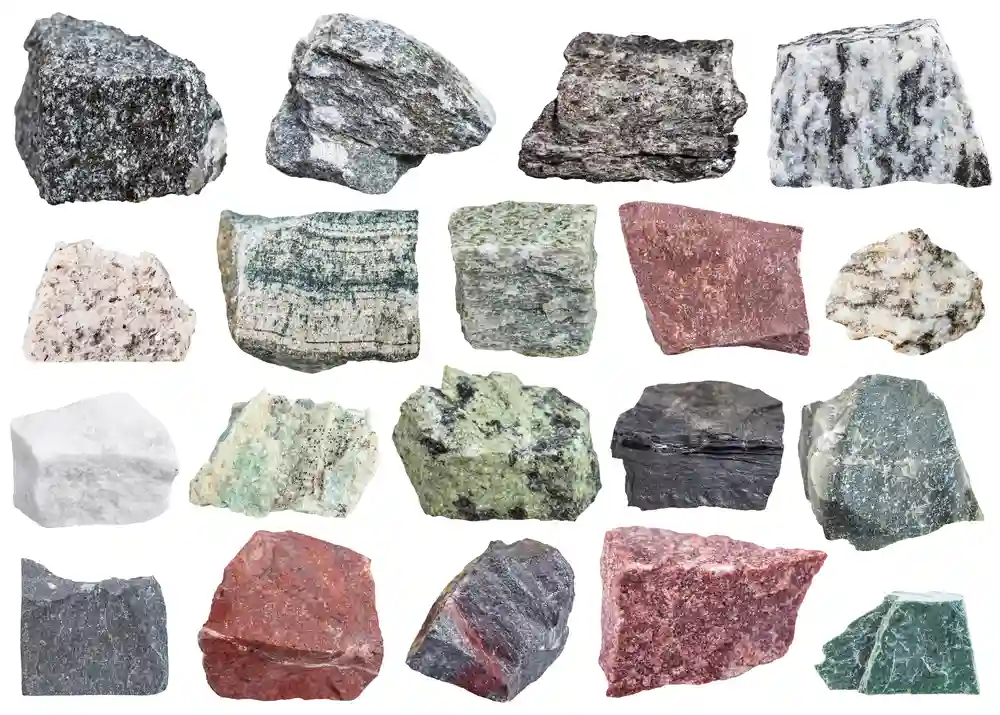
Geologists classify all Earth rocks into three primary categories: igneous, sedimentary, and metamorphic, based entirely on their physical origin and formation process. Understanding these main classifications makes it much easier to select durable, safe, and practical materials for various home support and living environments.
Here is how the three categories differ in daily life:
-
Sedimentary Rocks: Formed from compressed layers of sand, shells, and organic debris over long periods. Examples include limestone and sandstone.
-
Igneous Rocks: Created when molten magma or lava cools and solidifies. Granite and basalt belong to this group.
-
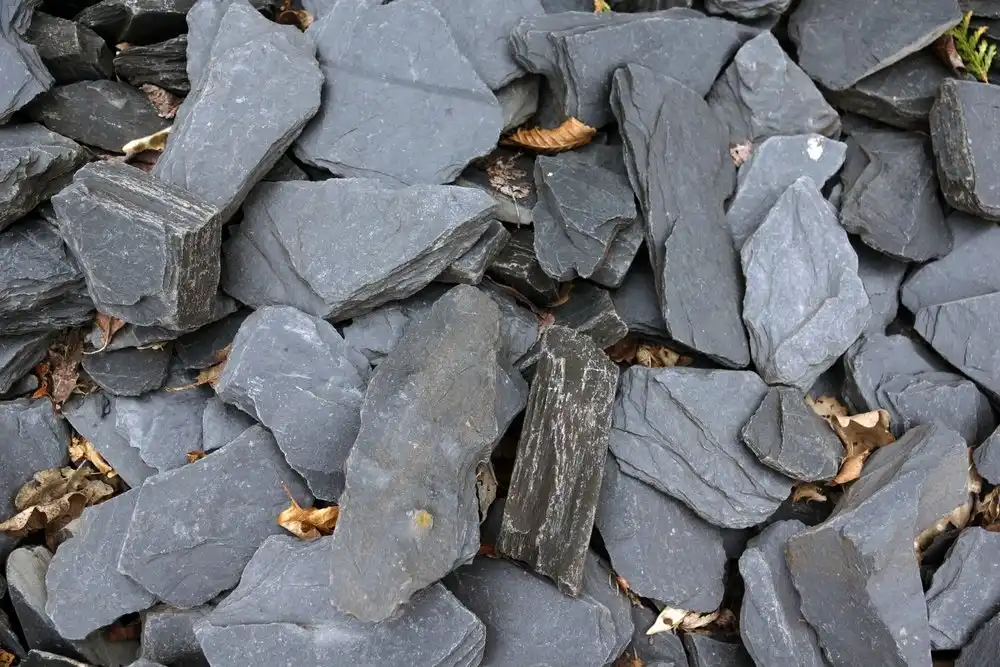
Metamorphic Rocks: Created when existing sedimentary or igneous rocks change under extreme thermal and pressure conditions without melting completely. Marble and slate are classic examples.
For a clearer comparison of how these three geological types perform under daily household conditions, consider the following structural metrics:
| Rock Category | Geological Origin | Primary Density Range | Water Absorption Rate | Common Household Use |
| Sedimentary | Compressed mineral sediment | 2.2 – 2.5 g/cm³ | 2.0% – 8.0% (High) | Wall cladding, garden paths |
| Igneous | Solidified molten magma | 2.6 – 2.8 g/cm³ | 0.1% – 0.5% (Very Low) | Heavy-duty counter surfaces |
| Metamorphic | Heat-altered limestone | 2.5 – 2.7 g/cm³ | 0.2% – 0.6% (Low to Moderate) | Low-traffic vanities, decorative hearths |
How Does Marble Form?
Marble forms when limestone or dolomite rock sits deep underground and gets subjected to heat and pressure, usually near tectonic plate boundaries. The original rock doesn’t melt. Instead, its calcite crystals reorganize and grow larger, producing the smooth, interlocking texture marble is known for. This can take millions of years.
Picture squeezing a lump of clay between your palms for a long time. It doesn’t turn to liquid, but its internal structure shifts and compacts. That’s roughly what happens to limestone as it becomes marble rock, minus the human hands and plus a few hundred degrees of heat.
What Is Marble Made Up Of?
Marble is primarily made up of calcium carbonate ($CaCO_3$), which usually originates from calcite or dolomite mineral grains found in ancient sea beds. Pure calcium carbonate results in bright white stone, while microscopic mineral impurities create colorful veins and swirling patterns across the surface.
These secondary minerals alter the finished stone appearance in distinct ways:
-
Iron Oxides: Produce rich red, yellow, pink, or amber veining.
-
Serpentine: Adds deep forest green or subtle olive tones.
-
Clay Minerals and Silt: Create soft gray, charcoal, or dark blue bands across the surface.
Because calcium carbonate is naturally alkaline, it reacts quickly when exposed to acidic liquids like lemon juice, coffee, or vinegar. This chemical reaction dulls polished surfaces, making routine sealing essential for long-term care.
What Are the Most Common Types of Marble?
The most common types of marble include Carrara, Calacatta, Statuario, Crema Marfil, and Nero Marquina, each categorized by origin, background color, and veining density. These distinct styles offer varied aesthetic choices for living spaces, bathrooms, and decorative home features.
Here is a breakdown of popular options:
-
Carrara: Mined in Italy, offering a soft white-to-gray background with delicate, feathered gray veins. It remains a cost-effective, widely available choice.
-
Calacatta: A rare Italian stone featuring a bright white background with bold, striking gold and charcoal veining.
-
Statuario: Highly prized for its translucent white tone and thick, dramatic veins, often reserved for high-end accent features.
-
Crema Marfil: Quaried in Spain, displaying warm beige and cream shades with subtle, muted veining.
-
Nero Marquina: A rich Spanish black stone accented by crisp white veining, delivering high contrast in modern spaces.
What Is the Difference Between Rock and Stone?
Rock refers to the natural mineral material as it exists in the ground, while stone usually refers to rock that’s been cut, shaped, or processed for a specific use, like building or countertops. The material itself doesn’t change. What changes is its purpose and form once it leaves the quarry.
So when someone asks “what type of rock is marble” versus “what type of stone is marble,” they’re really asking the same question from two angles. In the ground, it’s a rock. On your kitchen island, it’s a stone. Both terms are correct depending on context.
How Is Marble Different From Granite?
Marble differs from granite in mineral composition, hardness, stain resistance, and routine maintenance requirements, as marble is a softer metamorphic rock while granite is a harder igneous rock. Granite withstands heavy daily wear more naturally, whereas marble requires extra care to prevent surface scratches and acidic etching.
The main differences include:
-
Hardness: Granite ranks around 6 to 7 on the Mohs Hardness Scale, while marble ranks between 3 and 5.
-
Acid Resistance: Granite resists household acids well, whereas marble reacts to acidic spills quickly.
-
Visual Pattern: Granite usually exhibits a speckled grain appearance, while marble displays sweeping, fluid veining.
If you are evaluating natural surfaces for busy household environments, granite often provides superior scratch resistance, while marble offers timeless aesthetic warmth.
You can read about: How Much Is Marble Per Square Foot
Where Is Marble Found in the World?
Marble deposits exist on every continent except Antarctica, but the most famous sources are in Italy, Greece, Turkey, and India. In the United States, notable marble quarries operate in Vermont, Georgia, and Colorado. Each region’s marble carries a slightly different mineral makeup, which affects its color and veining.
Italy’s Carrara region has supplied marble for centuries, including the stone Michelangelo used for his sculptures. Turkey and India have become major exporters in recent decades, supplying much of the marble used in countertops across North America. If you’re sourcing marble for a project, where it comes from often affects both its appearance and its price.
Why Is Marble So Popular in Construction and Design?
Marble has been used in architecture and art for thousands of years. There are good reasons it’s never gone out of style.
Aesthetics: The natural veining and shine of polished marble are simply beautiful. No manufactured material quite replicates it.
Heat resistance: Marble stays cool to the touch, which is why it’s popular for bathroom floors and kitchen counters.
Longevity: When properly cared for, marble surfaces can last generations.
Versatility: It works in traditional, modern, and minimalist designs equally well.
Status: Marble has long been associated with quality and craftsmanship. From the Taj Mahal to the Vatican, it signals permanence and care.
That said, marble does require maintenance. It’s porous, so it needs to be sealed regularly. And because it’s soft, it can scratch or etch. Knowing what type of rock is marble and understanding its metamorphic nature actually helps you care for it better.
Conclusion
So, what type of rock is marble? Marble is a metamorphic rock, formed when limestone is transformed by heat and pressure deep within the Earth. It is not igneous; it does not come from cooled lava. It starts as a sedimentary rock and becomes something far more refined through geological change.
It’s made mostly of calcite, shaped over millions of years, and found on every continent. Each slab is unique. And that’s exactly what makes it such a valued material for floors, countertops, and architectural work.
If you’re considering marble for your home or business, the SF Marble & Granite team is here to help. We specialize in Marble Floor Installation in Lowell, MA, and we bring expertise, craftsmanship, and an eye for quality to every project. Whether you need marble flooring, countertops, or custom stonework, we’ll help you choose the right material and install it the right way.
Marble is more than a building material, it’s a piece of the Earth’s history, now living in your home.
FAQs
What type of rock is marble classified as?
Marble is classified as a non-foliated metamorphic rock created from altered limestone. It forms deep underground when regional heat and pressure recrystallize original carbonate minerals into dense, interlocking crystals, yielding smooth surfaces and distinct mineral veining.
Is marble harder than granite?
No, marble is softer than granite. Marble rates between 3 and 5 on the Mohs Hardness Scale, while granite rates between 6 and 7. This means marble scratches and etches more easily when exposed to sharp items or acidic liquids.
Can you use marble in high-traffic kitchens?
Yes, you can use marble in kitchens if you seal it regularly and clean acidic spills immediately. However, many families choose harder igneous options for cooking zones, reserving marble for lower-impact areas like bathroom vanities and decorative features.
Why does marble feel cold to the touch?
Marble feels cold because it conducts heat away from your skin much faster than wood, carpet, or drywall. Its dense mineral structure draws heat away quickly, keeping the stone surface cooler than room temperature.