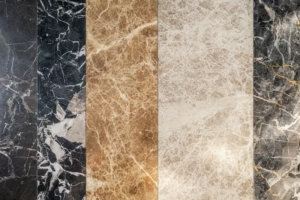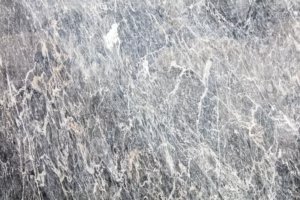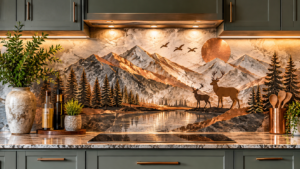
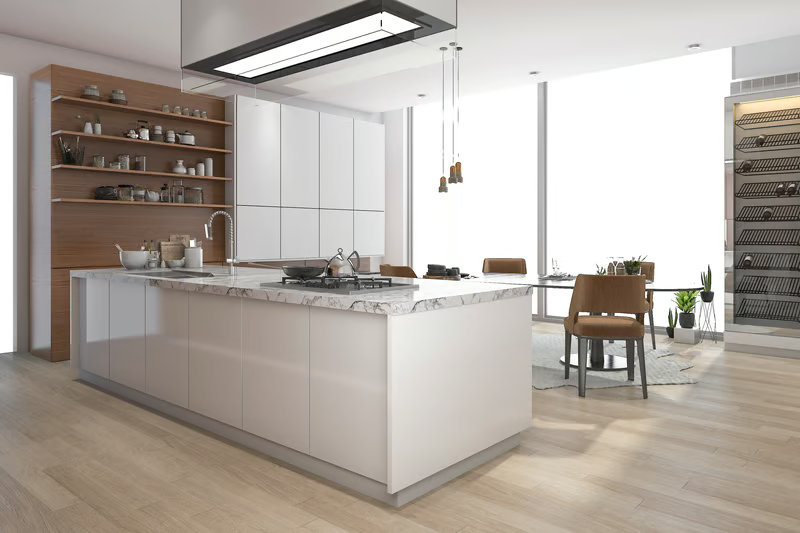
Taj Mahal quartzite is popular for its creamy beige background and subtle gray, taupe, or gold-toned veining, although individual slabs vary. Because of these natural variations, the cabinet color that looks perfect in one kitchen may look different in another.
In this guide, S F Marble & Granite explores the best cabinet colors for Taj Mahal quartzite, kitchen color combinations, and practical ways to coordinate cabinets, backsplashes, flooring, and hardware.
Best Cabinet Colors for Taj Mahal Quartzite
The most successful cabinet colors complement the stone’s natural undertones rather than competing with its pattern. Here are six options to consider for your kitchen.
1. White Kitchen Cabinets with Taj Mahal Quartzite
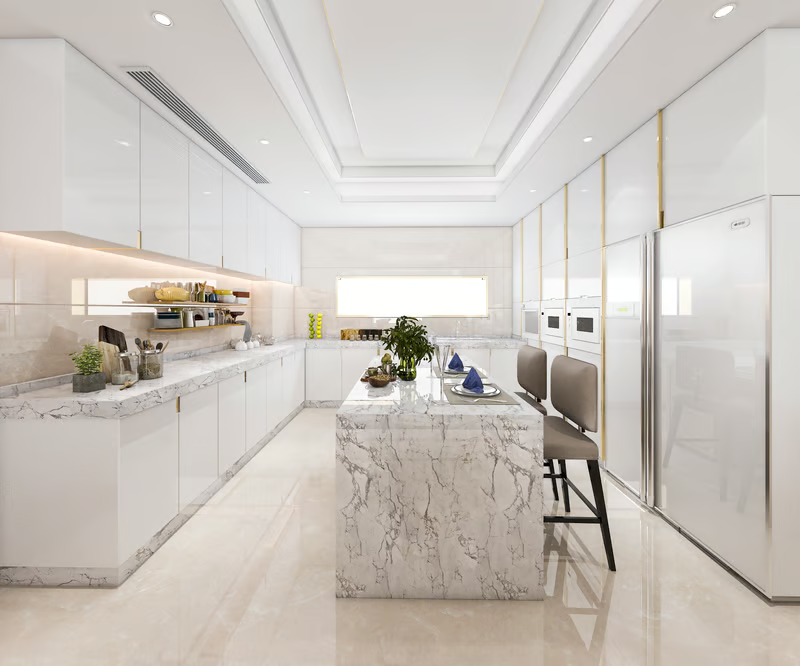
White cabinets are a timeless option for Taj Mahal quartzite. They create a bright, clean background that allows the countertop’s natural veining to stand out.
Warm white and soft ivory cabinets are particularly suitable when the slab has creamy or beige undertones. These shades create a coordinated appearance without making the kitchen feel overly stark. Cooler whites can also work, especially in contemporary kitchens, but compare samples with the actual stone before choosing.
Best combinations include:
-
Warm white shaker cabinets with Taj Mahal quartzite countertops and brushed brass hardware.
-
White perimeter cabinets with a quartzite kitchen island.
-
Soft white cabinets with light oak flooring and a cream backsplash.
White cabinets work well in traditional, transitional, and modern kitchens. If you want a light, versatile design that can accommodate different decorative styles, this is an excellent starting point.
2. Cream and Beige Cabinets
Cream and beige cabinets complement the warm neutral tones commonly found in Taj Mahal quartzite. Rather than creating a dramatic contrast, these colors produce a softer, more coordinated kitchen palette.
Cream cabinetry offers a warmer alternative to pure white, while beige creates an earthy appearance that works well with natural wood and bronze finishes.
To prevent the kitchen from looking flat, choose a cabinet shade that differs slightly from the countertop’s background color. You can also introduce contrast through cabinet door profiles, hardware, flooring, and lighting.
Best combinations include:
-
Cream cabinets with Taj Mahal quartzite and bronze hardware.
-
Light beige cabinetry with a slightly contrasting neutral backsplash.
-
Ivory cabinets with a natural wood island and understated pendant lights.
These shades are especially suitable for homeowners who prefer warm, understated kitchens rather than bold color contrasts.
3. Natural Oak and Light Wood Cabinets
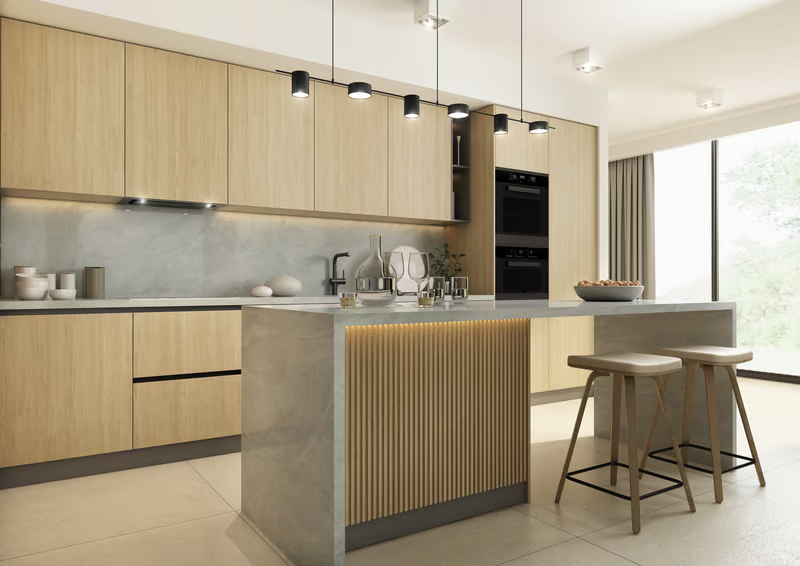
Natural oak is one of the most appealing options for homeowners who want to emphasize the organic appearance of Taj Mahal quartzite. The wood grain introduces texture, while the stone adds a smooth surface with subtle natural movement.
Light oak cabinetry can make a kitchen feel welcoming without relying entirely on painted finishes. Pale, neutral oak creates a contemporary look, while honey-toned oak introduces additional warmth.
Best combinations include:
-
White oak cabinets with Taj Mahal quartzite and matte black hardware.
-
Natural oak lower cabinets with warm white upper cabinets.
-
Light wood cabinetry with a quartzite waterfall island and simple pendant lighting.
Pay attention to the wood’s undertones. Very golden wood can make the overall palette appear warmer, while neutral oak often produces a more restrained appearance.
Natural wood cabinets work particularly well in modern organic, Scandinavian-inspired, and transitional kitchens.
4. Dark Brown and Walnut Cabinets
Dark brown and walnut cabinets create a rich contrast against the lighter surface of Taj Mahal quartzite. This combination adds depth while allowing the countertop’s creamy background and veining to remain visible.
Walnut is especially attractive when you want a sophisticated appearance without using black or very dark gray cabinetry. Its natural grain also prevents the darker finish from looking completely uniform.
Best combinations include:
-
Walnut cabinets with a light Taj Mahal quartzite island.
-
Dark brown lower cabinets with warm white upper cabinets.
-
Walnut cabinetry with champagne bronze hardware and a cream backsplash.
For smaller kitchens, consider using walnut on the island or lower cabinets instead of throughout the entire room. Combining dark wood with lighter cabinetry can help maintain a balanced appearance.
5. Dark Gray and Charcoal Cabinets
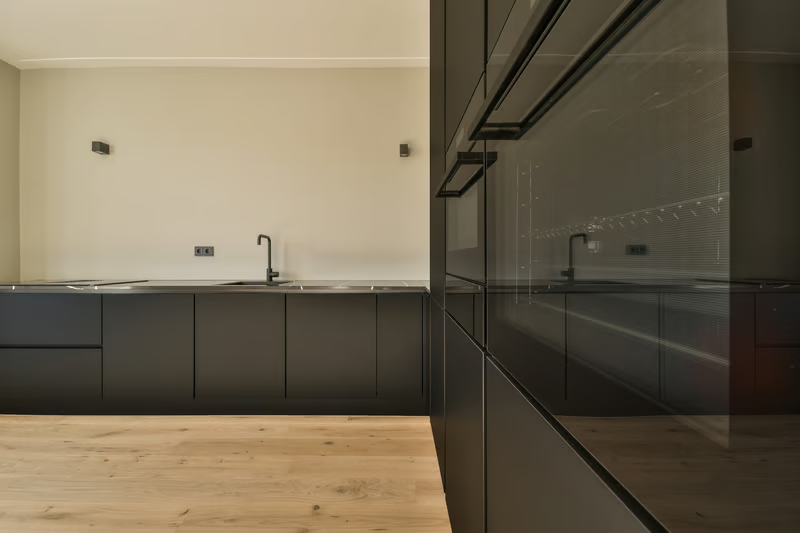
Dark gray and charcoal cabinets provide a more dramatic option for Taj Mahal quartzite. The contrast between the darker cabinetry and lighter stone creates definition and makes the countertop a visual focal point.
Warm charcoal is a useful starting point because its neutral appearance can complement the beige and taupe details found in many slabs. Cooler blue-gray cabinets can also work, but they create a different effect and require careful coordination with the surrounding finishes.
Best combinations include:
-
Charcoal cabinets with Taj Mahal quartzite and warm white walls.
-
A dark gray kitchen island with lighter perimeter cabinets.
-
Warm charcoal cabinetry with bronze hardware and a neutral backsplash.
This combination is suitable for contemporary and transitional kitchens. In a smaller space, consider limiting dark cabinetry to the island or lower cabinets if you want to preserve a lighter overall appearance.
If you are also choosing a backsplash, read our related guide, What Color Backsplash with Gray Cabinets?, for additional ideas on coordinating gray cabinetry with other kitchen finishes.
6. Greige and Warm Gray Cabinets
Greige combines gray and beige, offering a middle ground between warm neutrals and cooler gray cabinetry. It can complement Taj Mahal quartzite without creating the strong contrast associated with charcoal or dark brown.
Greige cabinets are a practical option if you want a modern, understated kitchen that still feels warm. Shades with beige or taupe undertones are often a good starting point for slabs with warm veining.
Best combinations include:
-
Light greige cabinets with a warm neutral backsplash.
-
Medium greige lower cabinets with white upper cabinets.
-
Warm gray cabinetry with a natural oak island and Taj Mahal quartzite countertops.
Because gray-beige shades can look different under different lighting conditions, test a cabinet sample beside the stone before making your final choice.
Taj Mahal Quartzite Cabinet Color Ideas for Different Kitchen Styles
The right cabinet color depends on your preferred design style, the size of your kitchen, and the other finishes in the room. These combinations can help you narrow down your options.
| Kitchen style | Recommended cabinet color | Overall appearance |
|---|---|---|
| Modern organic | Natural oak or white oak | Warm, natural, and understated |
| Traditional | Cream or warm white | Classic and inviting |
| Contemporary | Charcoal or dark gray | Bold and defined |
| Transitional | Greige or soft beige | Balanced and versatile |
| Luxury-inspired | Walnut or dark brown | Rich and sophisticated |
| Minimalist | Soft white or pale beige | Bright and uncluttered |
For a modern organic kitchen, natural oak cabinetry and Taj Mahal quartzite create a combination of wood texture and soft stone patterns. A traditional kitchen may benefit from cream cabinets and bronze hardware, while a contemporary space can use charcoal cabinets to create contrast.
These are starting points rather than strict rules. Your actual quartzite slab, flooring, wall color, and lighting will influence the final result.
Taj Mahal Quartzite Kitchen Color Combinations
Cabinets are only one part of the kitchen’s color scheme. The backsplash, flooring, walls, and hardware should complement the countertop rather than compete with it.
White, Cream, and Brass
Combine warm white cabinets with Taj Mahal quartzite, a cream backsplash, and brushed brass hardware. This palette creates a light, coordinated appearance without relying on stark contrasts.
It works particularly well in kitchens where you want the stone to remain the main feature.
Natural Oak, Ivory, and Black
Natural oak cabinets, ivory walls, and matte black hardware create a balanced combination of warm wood and defined accents. Taj Mahal quartzite fits naturally into this palette because its neutral background complements both materials.
Use black selectively on cabinet pulls, lighting fixtures, or faucets to avoid overpowering the lighter finishes.
Walnut, Beige, and Bronze
Walnut cabinets, warm beige walls, and bronze hardware create a deeper, more traditional palette. The light quartzite countertop helps balance the darker cabinetry while maintaining a warm overall appearance.
This combination is worth considering for kitchens with a large island or ample natural light.
Charcoal, Warm White, and Gold
Charcoal cabinetry creates contrast, while warm white walls and gold-toned hardware soften the overall look. Taj Mahal quartzite provides a lighter surface that connects the darker cabinets with the rest of the kitchen.
For a two-tone design, consider charcoal cabinetry on the island and warm white cabinets along the perimeter.
How to Choose the Right Cabinet Color for Taj Mahal Quartzite
Before selecting your cabinets, evaluate the actual stone and the surrounding materials. These practical steps can help you avoid a color mismatch.
1. Examine the quartzite slab. Look at its background color and the undertones in its veins. Some slabs appear creamier, while others contain more noticeable gray, taupe, or gold details.
2. Compare physical samples. Place cabinet door samples beside the actual slab. Online photos and small paint chips may not accurately represent the finished combination.
3. Check natural and artificial lighting. View the samples in daylight and under your planned kitchen lighting. Different light sources can change how cabinet colors and stone undertones appear.
4. Coordinate the backsplash and flooring. Bring samples of these materials together with the countertop and cabinetry. A color that works with the stone alone may look different when surrounded by other finishes.
5. Consider the kitchen’s size and layout. Light cabinets can help create a bright appearance, while dark cabinets add contrast. If you prefer dark cabinetry in a small kitchen, consider using it on the island or lower cabinets.
6. Choose hardware that supports the palette. Brass and bronze often complement warm neutrals, while black hardware creates definition. The best choice depends on your cabinet finish and other fixtures.
7. Review the complete design before ordering. Compare all the major finishes together rather than making decisions separately. This helps you identify undertone clashes before installation.
Remember that Taj Mahal quartzite is natural stone. Variations in color, veining, and movement mean that a sample may not represent every part of the final slab.
Common Mistakes to Avoid
Even attractive materials can look mismatched if the overall color scheme is not considered carefully.
-
Ignoring undertones: A cabinet color that looks good by itself may clash with the beige, gray, or gold tones in your quartzite.
-
Matching every surface too closely: Similar shades can work together, but using nearly identical colors everywhere may make the design feel flat. Add texture or subtle contrast.
-
Choosing colors from photographs alone: Screen settings and lighting can change the appearance of stone and paint. Check physical samples whenever possible.
-
Using too many competing finishes: Strongly contrasting cabinets, busy backsplashes, and highly patterned flooring can distract from the countertop.
-
Forgetting practical maintenance: Dark, glossy cabinets may show dust and fingerprints, while some light finishes make certain marks more noticeable. Consider your household’s needs when choosing finishes.
-
Overlooking the hardware and lighting: Cabinet pulls, faucets, and pendant lights affect how the completed kitchen looks. Include them in your color planning.
How S F Marble & Granite Fits into Your Kitchen Design Project
Choosing a cabinet color is an important part of planning a kitchen around Taj Mahal quartzite. The countertop, cabinetry, backsplash, flooring, and hardware should work together to create a cohesive design.
For your kitchen project, start by comparing the stone’s actual colors with the cabinet finishes you are considering. Warm white and cream can create a light, coordinated look, natural oak adds texture, and walnut or charcoal offers stronger contrast.
S F Marble & Granite’s website provides a starting point for exploring countertop options and gathering ideas for your kitchen design. Before finalizing your materials, consider these points:
-
Compare cabinet samples with the specific quartzite slab you plan to use.
-
Select a backsplash that complements both the countertop and cabinetry.
-
Consider how the finishes will look under your kitchen’s lighting.
-
Decide whether you prefer a consistent neutral palette or a design with stronger contrast.
Visit S F Marble & Granite to explore the website’s countertop information and continue planning a kitchen that reflects your style.
Final Thoughts
So, what color cabinets go with Taj Mahal quartzite? Warm white, cream, natural oak, walnut, greige, and charcoal are all strong options. White and cream create a bright, timeless appearance, natural wood adds warmth and texture, and darker cabinets provide contrast.
The best choice depends on the undertones of your particular slab, your kitchen’s lighting, and the overall style you want to achieve. Before making a final decision, compare cabinet samples with the actual quartzite, backsplash, and flooring.
With thoughtful color coordination, Taj Mahal quartzite can serve as the foundation for a kitchen that feels balanced, welcoming, and suited to your home.
For Further details Contact Us today
FAQ Section
1. What is the best cabinet color for Taj Mahal quartzite?
Warm white, cream, natural oak, walnut, and greige are excellent options for Taj Mahal quartzite. White and cream create a light appearance, while walnut and charcoal offer more contrast. The best choice depends on the slab’s undertones and your preferred kitchen style.
2. Does Taj Mahal quartzite look good with dark cabinets?
Yes, Taj Mahal quartzite pairs well with dark brown, walnut, and charcoal cabinets. The lighter stone contrasts with darker cabinetry, creating depth and making the countertop stand out.
3. Are white kitchen cabinets with Taj Mahal quartzite a good choice?
Yes, white cabinets are a versatile choice for Taj Mahal quartzite. Warm white shades often complement the stone’s creamy and beige undertones. Brass hardware, natural wood flooring, and a subtle backsplash can add warmth to the design.
4. What backsplash goes best with Taj Mahal quartzite?
Cream, warm white, beige, and soft taupe backsplashes generally complement Taj Mahal quartzite. A matching quartzite backsplash creates a continuous look, while ceramic or porcelain tiles introduce a different texture.
5. Can I pair Taj Mahal quartzite with gray cabinets?
Yes. Warm gray, greige, and charcoal cabinets can all work with Taj Mahal quartzite. Warm gray creates subtle contrast, while charcoal provides a more dramatic appearance. Compare samples with your actual slab before choosing.