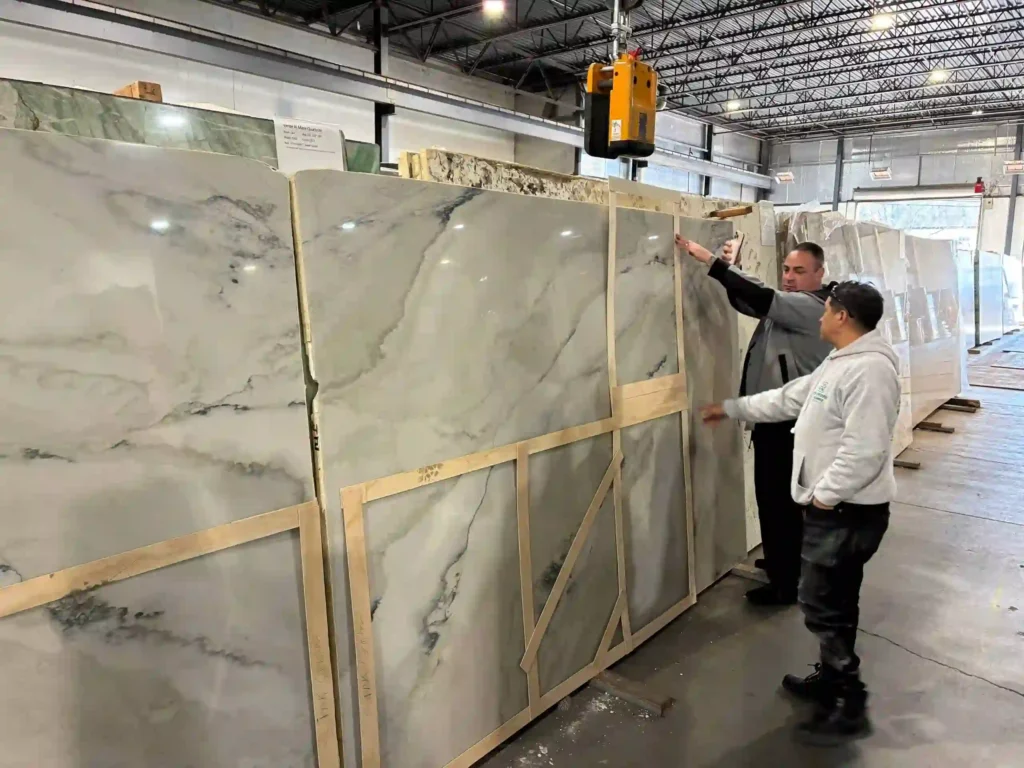
Shopping for granite countertops means dealing with slabs, not just samples. And before you fall in love with a particular stone, you need to know whether it is physically large enough to cover your kitchen or bathroom without too many seams.
So, how big is a slab of granite? Most standard slabs run between 100 and 120 square feet in surface area, roughly 9 to 10 feet long and 5 to 6 feet wide. That covers most kitchens comfortably. But slab sizes vary by quarry, stone type, and thickness. This guide gives you the full picture so you buy smart.
How Is Granite Made into a Slab?
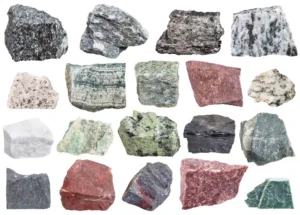
Granite starts as igneous rock deep underground. Over millions of years, magma cools slowly and forms the interlocking crystal structure that gives granite its hardness and visual pattern.
Quarries extract granite in massive blocks, typically 10 to 20 feet in each dimension and weighing tens of thousands of pounds. These blocks are then sent to fabrication facilities where giant gang saws with diamond-tipped blades cut the blocks into individual slabs.
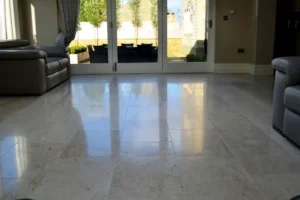
Each cut slab is then ground and polished on one side to bring out the natural color and crystal pattern. The resulting slab is what you see in a stone yard when you go shopping.
Because every block is a different size and every quarry works differently, no two slabs are identical in size. This natural variation is why knowing the standard ranges matters more than expecting a fixed number.
Standard Dimensions of Granite Slabs
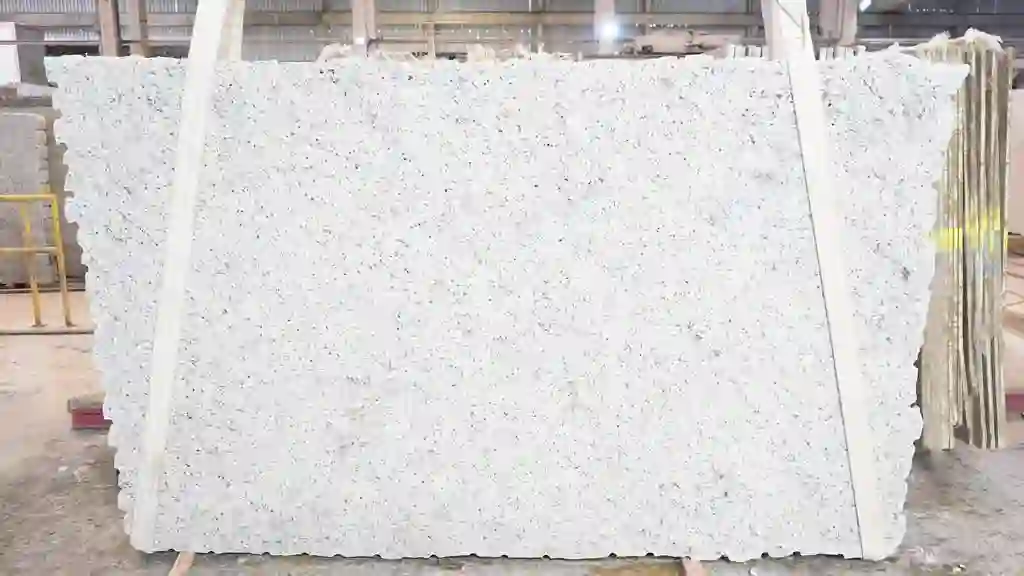
Most granite slabs fall within a predictable range of dimensions. Here is what you will typically find at a stone supplier.
Length: Most slabs run between 9 and 10 feet long (roughly 108 to 120 inches). Some larger slabs from premium quarries can reach 11 to 12 feet. Shorter offcut slabs may be as small as 5 to 6 feet.
Width: Standard slab width ranges from 5 to 6 feet (60 to 72 inches). Wider slabs do exist but are less common and often priced at a premium.
Thickness: The two most common thicknesses are 2 centimeters (about 3/4 inch) and 3 centimeters (about 1 1/4 inch). For kitchen countertops, 3 cm is the standard. It is stronger, requires no plywood underlayment, and handles edge profiles better. The 2 cm thickness is sometimes used for bathroom vanities and wall cladding.
These dimensions are not carved in stone (no pun intended). They represent the range you are most likely to encounter at a stone yard.
What Is the Average Size of a Granite Slab?
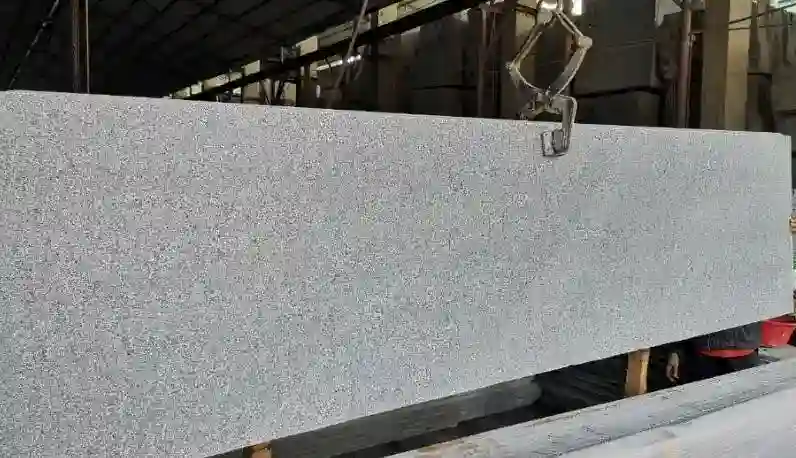
The average granite slab size is approximately 9 feet long by 5.5 feet wide at 3 cm thickness.
That works out to roughly 49.5 square feet per slab before any waste factor. But usable square footage after cutting and waste is closer to 35 to 45 square feet per slab depending on the layout.
So how many square feet in a slab of granite on average? The gross surface area of a typical slab is 100 to 120 square feet. After accounting for cuts, seams, sink cutouts, and material waste (typically 15 to 20 percent), the net usable area per slab is closer to 80 to 100 square feet.
For a standard kitchen with 40 to 60 square feet of countertop space, one slab usually covers the job. A large kitchen or L-shaped layout with an island may require one and a half to two slabs.
Variations in Granite Slab Sizes
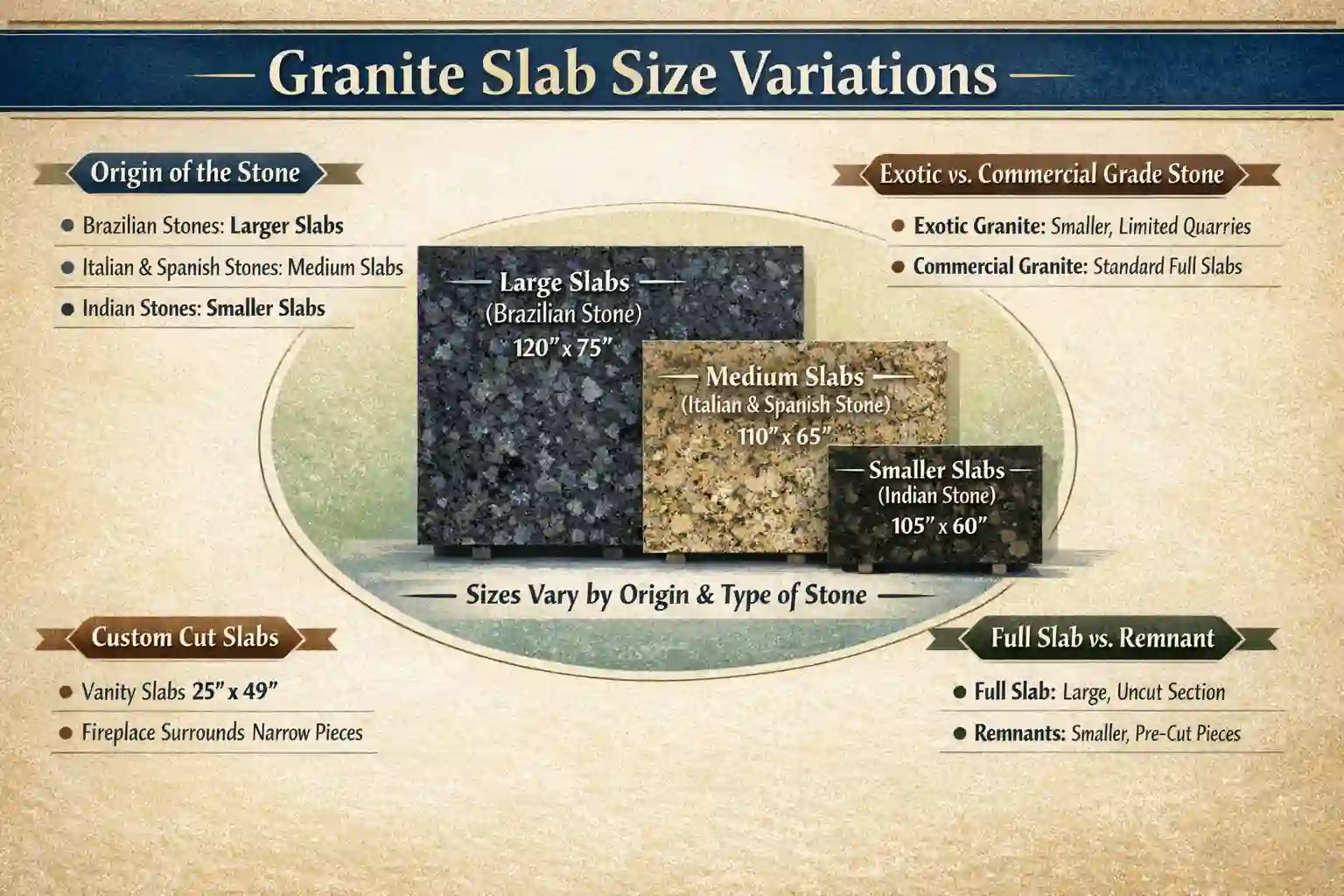
Not all granite comes in the same size range. Several factors create variation.
Stone origin. As mentioned, Brazilian, Indian, Italian, and Chinese granites all have slightly different typical size ranges based on block sizes at their respective quarries.
Exotic and rare granite. Some premium granite varieties, like Blue Bahia from Brazil or Cosmic Black from India, come in smaller block sizes due to the limited deposits available. Slabs from these stones are often shorter and narrower than standard, which affects how much countertop you can get from each piece.
Jumbo slabs. Some European and Brazilian quarries produce jumbo slabs measuring 10 to 12 feet long and up to 6.5 feet wide. These are ideal for large kitchens where minimizing seams is a priority. They cost more but reduce fabrication complexity.
Remnant pieces. Stone yards sell remnant slabs, which are leftover pieces from previous projects. These are typically 2 to 5 feet long and work well for bathroom vanities, laundry rooms, or small accent countertops. Remnants are significantly cheaper than full slabs and are worth checking if your project is small.
How Long Is a Slab of Granite?
How long is a slab of granite in practical terms? The answer depends on where the stone was quarried and how the block was cut.
Brazilian granites, which are among the most widely available in the U.S. market, typically run 9 to 10 feet in length. Italian granites tend to be slightly larger, often reaching 10 to 11 feet. Indian granites vary widely, from 8 feet to over 10 feet depending on the specific quarry and block size.
For most homeowners, a 9-foot slab covers a straight kitchen countertop wall comfortably. The extra length in a 10-foot slab is useful when the countertop run is close to or over 9 feet, since you need overhang and material for edge finishing.
If you are working on a kitchen where one wall of countertop exceeds 10 feet, a seam becomes necessary. A skilled fabricator places seams in low-visibility areas and matches the pattern as closely as possible, but knowing this upfront helps you plan the layout before you buy.
How Many Square Feet Is a Slab of Granite?
This is one of the most practical questions to answer before you buy.
A full granite slab at 9 feet by 5.5 feet has a gross area of approximately 49.5 square feet. But stone yards sell by the slab, not by the square foot in most cases. You pay for the whole slab even if your project only uses part of it.
How many square feet is a slab of granite after realistic waste? Here is a simple breakdown:
A small kitchen countertop of 30 square feet needs about 35 to 38 square feet of gross stone to account for cuts and waste. One slab handles this comfortably with material left over.
A medium kitchen countertop of 50 square feet needs roughly 58 to 62 square feet of gross stone. One full slab usually covers this, but you will have less leftover material.
A large kitchen with an island totaling 80 square feet of countertop needs about 92 to 96 square feet of gross stone. This typically requires one full slab plus a partial second slab or remnant piece for the island.
Understanding this math before you shop prevents the frustration of buying one slab only to discover mid-fabrication that you needed more.
Variations in Granite Slab Sizes
Not all granite comes in the same size range. Several factors create variation.
Stone origin. As mentioned, Brazilian, Indian, Italian, and Chinese granites all have slightly different typical size ranges based on block sizes at their respective quarries.
Exotic and rare granite. Some premium granite varieties, like Blue Bahia from Brazil or Cosmic Black from India, come in smaller block sizes due to the limited deposits available. Slabs from these stones are often shorter and narrower than standard, which affects how much countertop you can get from each piece.
Jumbo slabs. Some European and Brazilian quarries produce jumbo slabs measuring 10 to 12 feet long and up to 6.5 feet wide. These are ideal for large kitchens where minimizing seams is a priority. They cost more but reduce fabrication complexity.
Remnant pieces. Stone yards sell remnant slabs, which are leftover pieces from previous projects. These are typically 2 to 5 feet long and work well for bathroom vanities, laundry rooms, or small accent countertops. Remnants are significantly cheaper than full slabs and are worth checking if your project is small.
Kitchen Granite Size: What You Actually Need
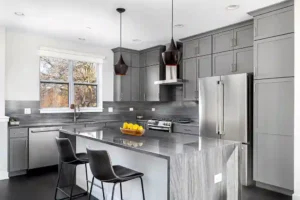
Kitchen granite size planning starts with measuring your countertop layout accurately.
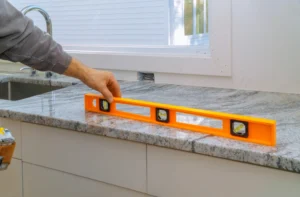
Measure every wall run of countertop separately. Note the depth (typically 25 to 26 inches for kitchen countertops) and the length. Add up all runs, convert to square feet, and add 15 to 20 percent for waste. That is your minimum gross stone requirement.
For a straight galley kitchen with two parallel runs totaling 20 linear feet at 25-inch depth, you need approximately 42 square feet of gross stone before waste, or about 50 square feet after adding the waste factor. One full slab handles this with room to spare.
For an L-shaped kitchen with an island, you might need 70 to 90 square feet of gross stone. Planning for two slabs from the same quarry block is important here because slabs cut from the same block have the most consistent color and pattern matching.
Ask your fabricator to show you multiple slabs from the same batch when your project requires more than one. Slabs from different batches or different blocks of the same stone variety can vary significantly in color and veining.
You can read about: Green Countertops Slabs
Tips for Choosing the Right Granite Slab Size
Picking the right slab size for your project saves money and prevents headaches later.
Measure before you shop. Bring accurate countertop measurements to the stone yard. Your fabricator can tell you exactly how many slabs you need based on your layout.
Account for pattern matching. If your granite has bold veining or a directional pattern, pattern matching across seams requires extra material. Your fabricator may recommend buying additional square footage to ensure the pattern flows naturally.
Check slab dimensions in person. Stone yard photos and online listings can be misleading about actual slab size. Visit the yard with your measurements in hand. Lay your template on the actual slab to confirm coverage before you commit.
Ask about remnants for smaller projects. For a single bathroom vanity or a small laundry room countertop, a remnant piece is almost always available and costs a fraction of a full slab.
Factor in the backsplash. If you plan a granite backsplash, add that square footage to your total. A 4-inch granite backsplash along a 10-foot wall adds about 3.3 square feet to your material requirement.
Buy from the same batch. If you need more than one slab, buy all slabs from the same quarry block. Color consistency between slabs from different blocks is rarely perfect, and the difference becomes obvious once the stone is installed.
Why Is It Essential to Choose the Correct Granite Slab Size?
Getting the size right before you buy is about more than avoiding waste. It affects the entire outcome of your project.
Seam placement. If a slab is slightly too short for your countertop run, the fabricator has to add a seam where one would not otherwise be needed. More seams mean more visible joints and more potential weak points over time.
Pattern continuity. For granite with dramatic veining, every additional seam interrupts the visual flow. A slab that is large enough to cover a full countertop run with minimal cutting gives you the best visual result.
Cost efficiency. Buying too little stone and needing to source a remnant or a partial slab from a different batch is both time-consuming and potentially more expensive than buying correctly from the start.
Structural integrity. For very large spans, using a slab that is too narrow requires adding a second slab with a seam in the middle of the span. Seams in high-stress locations, like across the width of a large island, are more vulnerable to cracking over time.
How big is a slab of granite matters for all of these reasons. Getting the size right from the start protects your investment and gives you the best possible result.
Conclusion
How big is a slab of granite? Most standard slabs run 9 to 10 feet long, 5 to 6 feet wide, and provide 100 to 120 square feet of gross surface area. After fabrication waste, you can typically count on 80 to 100 square feet of usable material per slab. For most kitchens, one slab is enough. Large kitchens and islands often need two.
Knowing your slab size requirements before you visit a stone yard gives you a real advantage. You buy the right amount, from the right batch, at the right time, without scrambling for matching material after the fact.
If you are planning a kitchen or bathroom renovation in the Lowell area, SF Marble & Granite offers expert Granite Countertops Installation in Lowell, MA with in-house fabrication, professional templating, and a full selection of slabs to choose from. Their team helps you select the right slab size for your specific layout and handles everything from measurement to final installation.
FAQs
How big is a slab of granite on average?
A standard granite slab averages 9 feet long by 5.5 feet wide, giving a gross surface area of roughly 100 to 120 square feet. After cutting and waste, you get approximately 80 to 100 square feet of usable material per slab.
How many square feet in a slab of granite?
A typical full granite slab contains 100 to 120 square feet of gross surface area. After accounting for fabrication cuts, sink cutouts, and a 15 to 20 percent waste factor, usable square footage per slab is closer to 80 to 100 square feet.
How long is a slab of granite?
Most granite slabs run 9 to 10 feet long. Premium quarries in Brazil and Europe sometimes produce slabs up to 11 to 12 feet long. Remnant pieces and offcuts are shorter, typically 2 to 5 feet, and work well for smaller projects.
What is the standard kitchen granite size I should plan for?
For a standard kitchen with 40 to 60 square feet of countertop surface, one full slab is typically enough. Add 15 to 20 percent to your measured square footage to account for waste. Large kitchens or those with islands usually require one and a half to two slabs.
Does granite slab size vary by country of origin?
Yes. Brazilian granite typically runs 9 to 10 feet long. Italian granite often reaches 10 to 11 feet. Indian granite varies from 8 to 10 feet depending on the quarry. Exotic and rare varieties may come in smaller sizes due to limited deposit sizes.