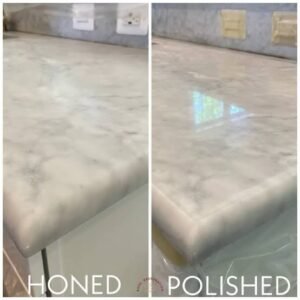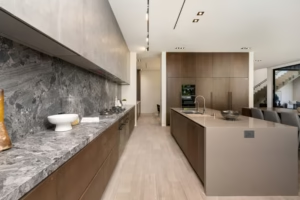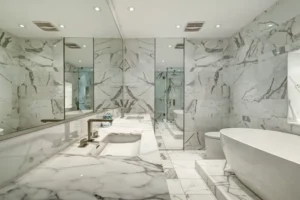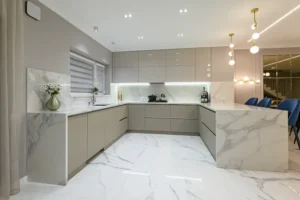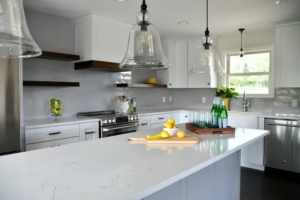

Choosing a granite surface involves more than picking a color. Polished and Honed Granite can use the same natural stone, yet the surface finish can change how the slab looks, feels, reflects light, and handles everyday marks. Polished granite has a glossy, reflective surface, while honed granite has a smooth, low-sheen or matte appearance. Neither finish is automatically the better choice.
If you’re comparing the two for a kitchen countertop, bathroom vanity, floor, or another stone surface, the practical question is simple: which finish fits your room and your daily routine? This guide explains how each finish is made, what you can expect from it, how maintenance differs, and where each option makes the most sense.
What is Polished Granite?

olished granite is a natural stone surface ground with fine diamond abrasives until it achieves a high-gloss, reflective finish. This mechanical buffing process seals small surface pores, creates a smooth texture, and brings out the natural color depth and veining of the stone slab.
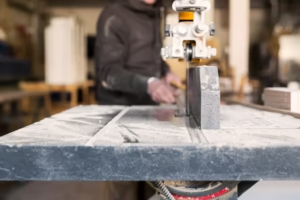
When stone fabricators polish a slab, they pass increasingly fine abrasive pads over the surface. The high friction and fine grain smooth out minor imperfections, leaving a surface that reflects light similar to a mirror. Because the pores are compacted during this process, polished granite naturally repels water, oils, and common household spills better than unpolished options.
Polished Granite Characteristics
High Reflectivity: Creates a bright, mirror-like sheen that reflects ambient overhead light.
Color Saturation: Deepens natural pigments, making dark tones richer and highlights sharper.
Non-Porous Surface Density: Compacted surface structure provides built-in stain resistance.
Smooth Texture: Feels slick and completely smooth to the touch.
Low Daily Friction: Allows cleaning cloths and sponge pads to slide effortlessly across the counter.
Polished Granite Recap
A polished granite finish is perfect for those who love a sleek and luxurious look. Its smooth, glossy surface highlights the natural beauty of the stone, making colors appear richer and more vibrant. However, while it resists stains well, it can be more prone to visible scratches, especially in high-traffic areas.
- Feel: Smooth and sleek
- Look: Glossy, shiny, and reflective
- Durability: Stain-resistant but can show scratches over time
- Recommended Applications: Ideal for kitchen and bathroom countertops, fireplace surrounds, and accent walls
- Maintenance: Clean regularly with mild detergent and wipe up spills immediately to preserve its shine
When choosing between polished and honed granite, it’s essential to consider both style and functionality. A polished finish works beautifully in areas where elegance is a priority, while a honed finish offers a softer, more natural appeal. We help people find the perfect balance between beauty and practicality for their space.
What is Honed Granite?

Honed granite is a slab that’s been ground smooth but not buffed to a shine, which leaves a soft, matte or satin surface. The finish shows less glare and softens the stone’s color. Honing stops one step before polishing, so the stone keeps its natural texture and feel.
Picture sea glass next to a window pane. Both are glass, but one looks soft and the other throws glare. Honed granite works the same way.
Honed Granite Characteristics
- Matte look: Light scatters instead of reflecting, so the room feels calm and low-key.
- Softer color: Dark stones look more muted, and light stones look more even.
- Hidden marks: Fingerprints, water spots, and small scratches blend in.
- Better grip: The surface has more traction, which suits floors and shower surrounds.
- More open surface: It absorbs liquids a little faster, so sealing matters more.
- Oil spots: Cooking oil can leave dark patches if it sits, so wipe it quickly.
Honed Granite Recap
Pick honed if you want a soft, modern look and a surface that forgives daily wear. Seal it well and wipe oily spills fast. That small habit prevents most problems.
Honed Granite Characteristics
Honed granite offers a more subtle, matte appearance, making it less prone to visible scratches compared to its polished counterpart. This makes it a great option for high-traffic areas where wear and tear are a concern. However, it’s more susceptible to staining, so quick cleanup of spills is essential to keep it looking its best.
In terms of safety, honed granite vs polished granite stands out for its less slippery surface when wet, making it a better choice for flooring or areas exposed to moisture. The honed finish granite also works well in spaces that need a more natural, understated look.
Whether you choose polished and honed granite, the key is to find the surface that fits your home’s needs combining style with practicality.
How Do They Compare Side by Side?
Here’s how Polished and Honed Granite stack up at a glance.
| Feature | Polished | Honed |
|---|---|---|
| Look | Glossy, reflective | Matte, soft |
| Color depth | Deep and bold | Muted and even |
| Fingerprints and water spots | Show easily | Barely show |
| Light scratches | More visible | Less visible |
| Stain risk | Lower | Slightly higher |
| Wet grip | Slippery | Better traction |
| Upkeep | Frequent wiping | Careful sealing |
| Best for | Countertops, vanities | Floors, showers, busy kitchens |
Polished and Honed Granite Fabrication Service in Lowell
Polished and honed granite finishes are defined by their distinct fabrication processes, with polished granite buffed to a high-gloss sheen and honed granite stopped before the final buffing to produce a smooth, matte surface. These finishes are achieved during custom stone fabrication, where dimensions, edge profiles, and surface sheens are carefully controlled. A polished granite finish enhances natural color depth and reflects light for a luxurious look, making it ideal for accenting kitchen countertops and bathroom vanities. In contrast, a honed finish offers a velvet-like feel and reduced glare, perfect for high-traffic areas such as flooring and island surfaces. Both finishes require precise edging and sealing for long-lasting performance, with polished granite often resisting stains more effectively, while honed granite benefits from resealing every 6–12 months to maintain its appearance. At SF Marble & Granite Inc., our Granite Fabrication Service in Lowell delivers expert craftsmanship to customize your finish and ensure seamless integration into your home. Contact us today!
Cost Considerations and Fabrication Factors
Fabricating granite involves specialized machinery, diamond tooling, and labor-intensive finishing stages.
Labor and Finishing Costs: Honed granite can sometimes cost 10% to 20% more than standard polished inventory. Most slabs arrive from quarries pre-polished; custom-honing a slab at a local fabrication shop requires extra machine time and labor.
Material Sourcing: Standard polished slabs are widely available across distributor yards, whereas pre-honed options may have longer lead times depending on regional availability.
Surface Comparison and Practical Trade-offs
| Feature | Polished Finish | Honed Finish |
| Visual Appearance | High gloss, mirror-like reflection | Flat matte or satin, no glare |
| Color Depth | Dark, rich, and highly saturated | Lighter, muted, and subtle |
| Stain Resistance | High (compacted surface pores) | Moderate (requires robust sealing) |
| Scratch Visibility | Shows fine hairline scratches in direct light | Conceals minor wear and surface scuffs |
| Maintenance Need | Periodic sealing (every 1–2 years) | Frequent sealing (every 6–12 months) |
Conclusion
Both honed and polished granite bring a touch of luxury to any space, each with its own unique appeal. Whether you’re drawn to the high shine of polished granite or the soft, natural look of honed granite, both options offer timeless beauty and durability.
If you’re still deciding between honed or polished granite, our team is here to help. Contact us or visit our showrooms to explore your options in person. You can also browse our live inventory to find the perfect selection for your project. For those still wondering about granite honed vs polished, we’re happy to guide you in making the best choice for your home.
FAQ’s
Does honed granite stain easier than polished granite?
Yes, honed granite absorbs liquids and oils faster than polished granite because its surface pores remain open after grinding. Applying a quality impregnating sealer every 6 to 12 months creates a barrier that prevents spills from setting into the stone.
Can you change polished granite to honed granite?
Yes, professional stone fabricators can convert a polished granite slab into a honed finish using specialized abrasive machinery. This refinishing process requires industrial grinding tools to remove the glossy surface layer evenly without causing uneven dips across the slab.
Is honed granite more expensive than polished granite?
Honed granite often costs slightly more than polished granite due to the additional custom labor required during fabrication. Since most slabs are imported with factory-polished finishes, local fabricators must spend extra shop time honing the surface manually.
Which finish is better for hiding fingerprints?
Honed granite hides fingerprints, water marks, and smudges significantly better than polished granite due to its non-reflective matte texture. Polished granite’s glossy, mirror-like surface highlights oil residues and smudges when viewed under direct lighting.