The Look of a Marble Epoxy Floor
The aesthetic appeal of a marble look epoxy floor comes from the way light plays across its surface. Unlike solid vinyl tile or basic painted concrete, this finish uses three-dimensional pigment movement to create genuine visual depth.
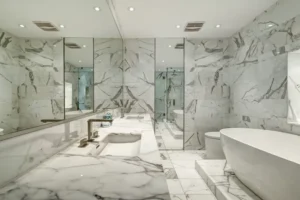
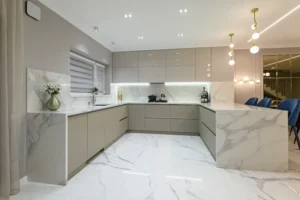
When organic or metallic color additives mix into a clear liquid resin, they float, drift, and settle into organic patterns. The result is a smooth surface that closely mirrors natural Italian marble, complete with soft color transitions, distinct veining, and a glossy shine.
Customization options allow complete freedom over the final appearance:
Classic White and Gray: Replicates luxury Carrara or Calacatta stone with soft gray veins running through an off-white base.
Warm Earth Tones: Blends cream, soft beige, and dark brown accents for a warm, traditional feel.
Bold Charcoal: Features deep black, charcoal, and metallic silver highlights for modern accent rooms or commercial lobbies.
Because no two pours cure in the exact same pattern, every single floor is a completely unique piece of functional art.
The Benefits of a Marble Epoxy Floor
Natural stone is porous, heavy, and susceptible to staining from everyday spills. A resin marble floor solves these structural drawbacks while preserving the upscale visual appeal.
The key advantages include:
Seamless Cleanliness: Dirt, moisture, and dust cannot penetrate the non-porous surface, eliminating grout lines where bacteria usually settle.
High Impact Resistance: Polymer resin flexes under heavy loads, meaning dropped heavy tools won’t chip the surface the way they would brittle ceramic or natural stone.
Stain and Chemical Resistance: Motor oil, household cleansers, coffee, and acidic liquids wiped up within a reasonable window won’t etch or stain the topcoat.
Low Maintenance: Daily cleaning requires nothing more than a dust mop and warm water mixed with a mild, pH-neutral floor cleaner.
The Cost of a Marble Epoxy Floor

Understanding project pricing helps prevent surprise expenses during a remodel.
What is the average cost of an epoxy marble floor installation? An epoxy marble floor cost typically ranges between $7 and $15 per square foot for professional installation, including surface preparation and materials. DIY installation kits lower the baseline expense to roughly $3 to $6 per square foot, though specialized prep tools are still required.
Several key factors shift your overall financial investment:
Concrete Preparation Requirements: Cracks, spalling, or moisture issues require repairs or specialized moisture-blocking primers before applying the primary resin layer.
Square Footage: Larger spaces often carry a lower cost per square foot for materials, though total labor increases.
Topcoat Upgrades: Choosing a high-wear polyurethane or polyaspartic clear top layer increases upfront costs by $1 to $3 per square foot but significantly extends scratch and UV light resistance.
Marble Epoxy Floor Coatings Explained
A durable installation relies on a engineered system rather than a single coat of material applied directly to bare concrete.
The structural layout includes three core components:
Epoxy Coating on Marble Concrete Substrates: A primary primer coat seals the concrete pores, preventing air bubbles from outgassing through subsequent layers during the curing process.
Metallic and Pigmented Base Layer: A 100% solids resin mixed with fine metallic powder pigments forms the primary body, creating swirled contrast and visual depth.
Protective Clear Topcoat: A clear protective barrier shields the underlying decorative work from surface abrasion, hot tire pickup, and solar yellowing.
Choosing the right base coat formulation ensures the surface bonds permanently with the subfloor without peeling or bubbling over time.
How to Install Metallic Epoxy Floor: Installation Process and Instructions
A successful installation requires systematic prep work, strict timing, and proper technique. Skipping preparation steps is the primary cause of floor coating failure.
PROs and CONs of Using Epoxy on Concrete Floors
Epoxy coatings are a popular choice for concrete floors due to their durability and aesthetic appeal. However, like any flooring option, they come with their own set of advantages and disadvantages. Here’s a balanced look at the pros and cons of using epoxy on concrete floors:
PROs
Durability
- Long-Lasting: Epoxy coatings are highly resistant to wear and tear, making them ideal for high-traffic areas. They can withstand heavy loads and impact, which prolongs the lifespan of your flooring.
- Chemical Resistance: Epoxy floors are resistant to chemicals, oils, and solvents, making them suitable for industrial and commercial environments where spills are common.
Aesthetic Appeal
- Customizable Designs: Epoxy floors come in various colors and finishes, including metallic and glossy options. This flexibility allows you to create a customized look that enhances the visual appeal of your space.
- Seamless Finish: The application process creates a smooth, seamless surface that eliminates grout lines and joints, giving your floor a sleek and modern appearance.
Easy Maintenance
- Low Maintenance: Epoxy floors are non-porous, making them easy to clean. Spills and stains can be wiped away easily, reducing the need for intensive cleaning routines.
- Resistance to Mold and Mildew: The non-porous nature of epoxy prevents the growth of mold and mildew, making it a hygienic choice for areas prone to moisture.
Cost-Effectiveness
- Affordable Option: Compared to natural stone or high-end tiles, epoxy flooring is generally more cost-effective. It offers a high-end look without the high price tag.
CONs
Application Challenges
- Complex Installation: Proper installation is crucial for the longevity of epoxy floors. If not applied correctly, issues like peeling, bubbling, or uneven surfaces can occur. Professional installation is often recommended to ensure the best results.
- Preparation Required: The surface must be properly prepared before application, which may involve cleaning, repairing, and etching. This preparation can add to the overall cost and effort.
Curing Time
- Long Curing Period: Epoxy floors require a curing period before they can be used. This period can range from 24 to 72 hours, during which the floor must remain undisturbed. This may cause inconvenience, especially in high-traffic areas.
Potential for Slipperiness
- Slippery Surface: Depending on the finish, epoxy floors can become slippery, particularly when wet. Adding an anti-slip additive to the top coat can mitigate this issue but may affect the appearance.
Susceptibility to UV Damage
- Color Fading: Epoxy floors can be prone to color fading when exposed to direct sunlight for extended periods. UV-resistant top coats can help reduce this issue but may add to the cost.
Limited Flexibility
- Not Suitable for All Surfaces: Epoxy coatings may not be suitable for surfaces with high moisture levels or excessive movement. In such cases, alternative flooring solutions might be more appropriate.
Where Else Can You Have Marble Epoxy?
Transform any hard surface with marble epoxy. Ideal for basements, garages, warehouses, and showrooms, marble epoxy brings luxury and durability to any space. Upgrade your floors with SF Marble And Granite Inc. for a stunning, resilient finish.
Who Can Install A Marble Epoxy Floor?
Both professional contractors and skilled DIY enthusiasts can install a marble epoxy floor, depending on the project’s complexity and desired outcome. Professional contractors, such as concrete coating specialists, have the expertise and equipment to ensure a high-quality finish.
Elevate Your Home with Expert Marble Floor Installation in Lowell
Transform your living space with the timeless elegance of marble flooring. At SF Marble & Granite Inc., we specialize in Marble Floor Installation in Lowell, delivering unparalleled craftsmanship and attention to detail. Our team ensures a seamless installation process, enhancing your home’s aesthetic appeal and value. With over a decade of experience serving the Lowell community, we are committed to providing high-quality materials and exceptional service. Trust SF Marble & Granite Inc. to bring sophistication and durability to your floors.
Conclusion
It is an excellent choice for anyone looking to enhance the aesthetic appeal and functionality of their space. With its stunning appearance, durability, and low maintenance requirements, it offers numerous benefits at a cost-effective price.
Transform your space with the elegance of a marble epoxy floor! Contact us today for a free quote and expert installation. Let us help you create a beautiful and durable floor that you’ll love for years to come.
FAQs
Does a marble-look epoxy floor use real marble?
Usually, the marble appearance comes from resin, pigments, metallic materials, and hand-created veining rather than large pieces of natural marble. Always ask the installer for the exact material specification if natural stone content matters to your project.
Is a marble resin floor slippery?
It can be, especially when a high-gloss surface becomes wet. Slip resistance depends on the coating system and finish, so wet areas should be discussed with the installer before the material is selected.
How long does installation take?
Installation time varies with room size, preparation, repairs, coating layers, environmental conditions, and curing requirements. Some published residential examples report several days from preparation through curing, but the product manufacturer’s requirements should control the schedule.
Can epoxy go over old tile?
Some epoxy systems can be installed over tile, but the tile must be suitable, stable, clean, and properly prepared. The specific coating manufacturer should confirm compatibility before installation.
Is real marble better than resin flooring?
They’re different materials with different characteristics. Natural marble offers genuine stone variation, while resin can provide a continuous marble-like appearance with fewer joints. Compare appearance, maintenance, substrate, budget, and expected use before choosing.