Category: Countertops Installation

  • How Much Does It Cost to Install Countertops in 2026

    How Much Does It Cost to Install Countertops in 2026

    New countertops can transform your kitchen or bathroom. Most homeowners pay between $2,000 and $4,500 for a standard project. This cost usually covers the material, labor, and basic edge finishes for a typical kitchen.

    The total price depends on the material you choose and the size of your space. If you want to know How Much Does It Cost to Install Countertops for your specific home, you need to look at both the price of the slab and the complexity of the job. Quality materials like granite or quartz will sit at the higher end of the scale.

    Average Countertop Installation Cost

    How Much Does It Cost to Install Countertops

    Here’s a quick snapshot of what homeowners typically pay in 2026:

    Cost Level Price Range
    Low end (laminate, small area) $400 – $1,200
    Mid range (quartz, granite) $2,000 – $4,500
    High end (marble, large kitchen) $5,000 – $10,000+
    National average $2,800 – $3,500

    These figures include both materials and labor. A basic laminate job in a small kitchen can cost under $1,000. A large marble installation in a chef’s kitchen can easily hit $10,000 or more.

    The average kitchen has around 30 to 40 square feet of counter space. Use that as your baseline when getting quotes.

    Countertop Cost Per Square Foot by Material

    How Much Does It Cost to Install Countertops

    Material choice is the biggest cost driver. Here’s what you’ll pay per square foot installed in 2026:

    Material Cost Per Square Foot (Installed)
    Laminate $15 – $40
    Tile $20 – $50
    Butcher Block / Wood $40 – $100
    Concrete $65 – $135
    Quartz $55 – $150
    Granite $45 – $200
    Marble $75 – $250
    Quartzite $80 – $200
    Soapstone $70 – $180

    Granite countertop cost per square foot installed in 2026 sits between $45 and $200. That range depends on the grade of stone, edge detail, and your location.

    Quartz is often priced similarly to granite but requires less maintenance. Many homeowners pick quartz for that reason alone.

    Marble is the most luxurious option but also the most porous and scratch-prone. It’s beautiful — but it requires regular sealing.

    Labor Cost for Countertop Installation

    Labor is typically $10 to $35 per square foot, or $200 to $1,000 for the full job, depending on complexity.

    Factors that push labor costs up include:

    • Cutouts for sinks and cooktops ($50–$150 each)
    • Backsplash installation (separate labor charge)
    • Difficult layouts with lots of corners or angles
    • Second-story installation (harder to carry heavy slabs)
    • Removal of old countertops ($50–$300 extra)

    Labor for natural stone like granite or marble tends to cost more than laminate. Stone slabs are heavy and require specialized tools to cut and install correctly.

    Key Factors That Affect Countertop Installation Cost

    Several things shift your final price up or down.

    1. Kitchen or Bathroom Size More square footage means more material and more labor. A small bathroom vanity might use 5 to 8 square feet. A large kitchen island alone can take 20 square feet.
    2. Material Type Already covered above, but it’s the biggest variable. Laminate costs a fraction of marble.
    3. Edge Profile A simple eased edge is usually included in the base price. Fancy profiles like ogee, waterfall, or bullnose add $10–$30 per linear foot.
    4. Number of Cutouts Every sink, faucet hole, or cooktop cutout adds cost. Each one takes extra time and a precise cut.
    5. Your Location Labor costs are higher in cities like Boston, New York, and San Francisco. If you’re in a smaller market, you’ll likely pay less.
    6. Removal of Old Countertops Most contractors charge $50 to $300 to remove and dispose of existing countertops. Always ask if this is included in your quote.
    7. Countertop Thickness Standard countertops are 3/4 inch thick. Thicker slabs (1.25 to 1.5 inches) cost more for both material and labor.

    Additional Costs Most Homeowners Miss

    When budgeting a kitchen countertop remodel cost, people often forget these extras:

    • Plumbing disconnect/reconnect: $100–$300 if you’re replacing around an existing sink
    • Backsplash: $400–$1,500 depending on tile and labor
    • Cabinet leveling: Old cabinets sometimes need to be leveled before new countertops go in
    • New sink: If you’re upgrading the countertop, many people upgrade the sink too — budget $150–$600
    • Sealant: Natural stone needs sealing every 1–2 years. First application is usually included; future ones cost $50–$150
    • Permits: Rarely needed for countertops, but check your local rules if doing major remodeling

    Budget an extra 10–20% buffer on top of your quote for these surprises.

    Cost Breakdown by Countertop Types & Usage Areas

    Kitchen Countertops

    The kitchen is the most common and most expensive area. Average kitchen countertop remodel cost runs $2,000 to $5,000. A full kitchen with an island can reach $8,000 to $12,000 for premium materials.

    Bathroom Countertops

    Bathrooms use less material. Expect to pay $400 to $1,500 for a standard vanity top. Natural stone vanity tops run $800 to $2,500.

    Laundry Room & Utility Areas

    Often done in laminate or butcher block. Budget $300 to $900 for these spaces.

    Outdoor Kitchen Countertops

    Outdoor areas need weather-resistant materials like concrete, granite, or porcelain. These cost $60 to $150 per square foot installed. Durability matters more than looks outdoors.

    Bar Countertops

    A home bar countertop is typically 8 to 15 linear feet. Budget $500 to $3,000 depending on material and overhang needs.

    You can read about: Top Countertop Patterns

    DIY vs Professional Countertop Installation Cost

    Can you do it yourself?

    Laminate countertops are the most DIY-friendly. A prefab laminate kit from a home improvement store costs $200 to $600. You save $200 to $500 in labor. But you need basic carpentry skills and the right tools.

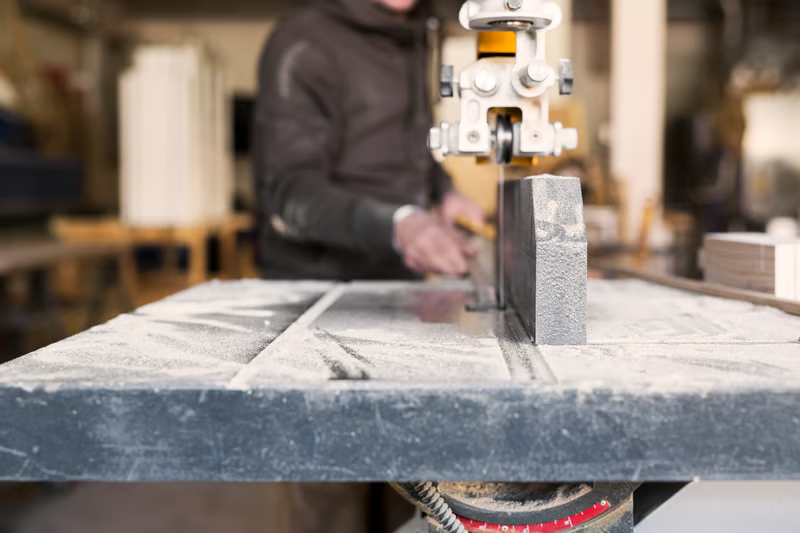
    Natural stone granite, quartz, marble is almost always a professional job. Slabs can weigh 400 to 800 pounds. Cutting them requires wet saws and diamond blades. One mistake can crack a $2,000 slab.

    DIY cost comparison:

    Task DIY Cost Pro Cost Savings
    Laminate (prefab) $200–$600 $600–$1,200 $200–$600
    Tile countertop $300–$700 $800–$1,500 $500–$800
    Butcher block $400–$900 $900–$2,000 $500–$1,100
    Granite/Quartz Not recommended $2,000–$5,000

    If you’re not experienced, the risk of DIY for heavy stone materials outweighs the savings. A damaged slab or improper installation can void warranties and cost more to fix.

    Countertop Replacement vs Repair Cost

    Sometimes you don’t need a full replacement. Here are common repair options:

    Repair Type Average Cost
    Chip or crack repair (resin fill) $100–$300
    Stain removal (professional) $50–$200
    Resurface/refinish (laminate) $200–$500
    Re-sealing (natural stone) $50–$150
    Full countertop replacement $1,500–$5,500+

    If damage is minor, repair is the smart move. If the countertop is more than 15 years old or has widespread damage, replacement usually makes more financial sense especially if you’re planning to sell the home.

    The cost to replace countertops is almost always higher than repair. But replacement adds significantly more value.

    How to Save Money on Countertop Installation

    Here are real, practical ways to lower your countertop renovation cost:

    1. Choose laminate or tile Both look much better today than they did 20 years ago. High-quality laminate can mimic granite at a fraction of the price.
    2. Stick with simple edge profiles A basic eased or beveled edge costs nothing extra. Fancy ogee profiles can add hundreds of dollars.
    3. Limit the number of cutouts Every hole adds cost. If possible, keep the sink in the same location so the plumber has less work.
    4. Buy remnants Stone fabricators sell leftover pieces from larger jobs at big discounts. A small kitchen or bathroom vanity can often be done with remnants.
    5. Get three quotes minimum Labor prices vary widely between contractors. Getting three bids takes a few hours but can save you $500 to $1,500.
    6. Time your project right Winter and early spring are slower seasons for contractors. You may get better pricing between January and March.
    7. Reuse your existing sink If your sink is in good shape, keep it. New undermount sinks cost $150 to $600 plus installation.
    8. Ask about factory seconds Some stone suppliers sell slabs with minor imperfections at 20–40% off. Small flaws are often hidden under appliances or on the back edge.

    Does Installing New Countertops Increase Home Value?

    Yes but not always dollar for dollar.

    According to real estate professionals, kitchen upgrades including countertops return roughly 60 to 80 cents for every dollar spent at resale. That’s not a full return, but it helps your home sell faster and at a higher price.

    Granite and quartz are most valued by buyers in the current market. Laminate is less appealing to buyers but still better than damaged or dated surfaces.

    If you’re planning to sell within 1 to 3 years, it’s worth upgrading. If you’re staying long-term, choose what you love the personal enjoyment has its own value.

    Important note: Overspending on countertops in a modest neighborhood can hurt your return. Keep your upgrade in line with the price range of comparable homes nearby.

    What to Expect During Countertop Installation

    Knowing the process helps you plan and avoid surprises.

    Step 1: Measure & Template The fabricator visits your home to take precise measurements. For stone, they often create a physical or digital template of your counter layout. This takes 1 to 2 hours.

    Step 2: Fabrication Stone is cut, edges are shaped, and cutouts are made at the shop. This typically takes 5 to 10 business days for natural stone. Laminate is often quicker.

    Step 3: Old Countertop Removal Existing countertops are removed before installation. The process takes 1 to 3 hours depending on size.

    Step 4: Installation The new countertop is placed and secured. Seams are filled and polished. The whole process usually takes a few hours to a full day for large kitchens.

    Step 5: Plumbing Reconnection If a sink is involved, a plumber reconnects the water supply. This happens the same day or the next day.

    Step 6: Sealing (if applicable) Natural stone is sealed at the end of installation. You’ll need to avoid using the surface for 24 hours while the sealant cures.

    Total timeline: Plan for 1 to 2 weeks from quote acceptance to completed installation.

    Conclusion

    Countertop costs range widely from a few hundred dollars for a small laminate vanity to $12,000 or more for a full marble kitchen. The key variables are material, size, edge style, and labor in your area.

    If you know your budget upfront, it’s much easier to pick the right material and set realistic expectations. Start by measuring your countertop area, then get at least three quotes from licensed fabricators and installers.

    For homeowners in the Greater Boston area looking for expert installation, SF Marble & Granite offers professional Countertop Installation in Lowell, MA and surrounding areas. The team works with granite, quartz, marble, and more helping you get the best value for your budget.

    Whether you’re doing a full kitchen countertop remodel or just updating a bathroom vanity, how much does it cost to install countertops comes down to the choices you make. Use this guide to make those choices with confidence.

    Frequently Asked Questions

    Q: How much does it cost to install countertops in a kitchen? 

    A: Most kitchens cost $2,000 to $5,500 for countertop installation. Large kitchens with premium materials can exceed $10,000.

    Q: What is the cheapest countertop to install? 

    A: Laminate is the most affordable option at $15 to $40 per square foot installed. Prefab laminate options can bring the total cost below $1,000 for a small kitchen.

    Q: How long does countertop installation take? 

    A: Most installations take one day once the countertop is fabricated. The full timeline from measurement to completion is usually 1 to 2 weeks.

    Q: Is quartz or granite cheaper? 

    A: They’re often similarly priced. Granite can be cheaper at the low end ($45/sq ft) while quartz tends to have a more consistent mid-range price ($55–$150/sq ft).

    Q: Does replacing countertops add home value? 

    A: Yes. Kitchen and bathroom countertop upgrades typically return 60–80% of the investment at resale, and they help homes sell faster.

    Q: Can I install countertops myself? 

    A: Laminate and tile are reasonable DIY projects. Natural stone like granite and quartz should be professionally installed due to the weight and cutting equipment required.

  • Cost to Install Butcher Block Countertops: Full Pricing Guide

    Cost to Install Butcher Block Countertops: Full Pricing Guide

    Butcher block countertops bring warmth and character to any kitchen. They are made from solid wood strips glued together, and they work great for both cooking and looks. Prices vary by wood type, size, and who installs them. On average, you can expect to spend between $1,500 and $4,500 for a standard kitchen.

    The cost to install butcher block countertops depends on more than just the material. Labor, sealing, and edge style all play a role. This guide breaks everything down so you know exactly what to budget before you start.

    What Are Butcher Block Countertops?

    cost to install butcher block countertops

    Butcher block countertops are made from thick strips of hardwood joined side by side or end to end. They have been used in professional kitchens for over a century. Today, they are popular in homes because they are natural, renewable, and beautiful.

    The most common wood types are maple, walnut, cherry, oak, and teak. Each has a different look and price point. Maple is the most affordable and most used. Walnut is rich and dark but costs more.

    There are three grain styles:

    •     Edge grain: Wood strips laid on their long edge. Most common and budget-friendly.
    •     Face grain: Wide faces of the wood are visible. Great for aesthetics but less durable.
    •     End grain: Cross-section of the wood faces up. Most durable and most expensive.

    Most homeowners use butcher block in kitchens, but it also works in bathrooms, laundry rooms, and home offices.

    Average Cost to Install Butcher Block Countertops

    cost to install butcher block countertops

    Here is a simple breakdown of what most homeowners pay:

    •     Low end: $800 to $1,500 (small kitchen, edge grain, basic wood)
    •     Mid range: $1,500 to $3,500 (average kitchen, maple or oak, standard installation)
    •     High end: $3,500 to $6,500+ (large kitchen, walnut or teak, custom edges, professional seal)

    These numbers include both materials and labor. The butcher block countertop prices you see at big box stores are usually for materials only. Always add 20–30% for installation costs on top of that.

    A 30-square-foot kitchen with basic maple edge-grain countertops from a local contractor might cost around $2,000 total. The same project with walnut end grain and a custom waterfall edge could run $5,500 or more.

    Cost Per Square Foot for Butcher Block Countertops

    Understanding cost per square foot helps you budget based on your kitchen size.

    Material cost alone: $10 to $100 per square foot, depending on wood type and grain style.

    Installed cost (material + labor): $30 to $120 per square foot.

    Here is a quick breakdown by wood type:

    •     Maple: $20–$40 per sq ft (material only)
    •     Oak: $25–$50 per sq ft
    •     Cherry: $35–$65 per sq ft
    •     Walnut: $50–$100 per sq ft
    •     Teak: $60–$120 per sq ft

    The price of butcher block countertop installed adds $10 to $35 per square foot for professional labor on top of the material cost. For a 40-square-foot kitchen, that adds $400 to $1,400 in labor alone.

    You can read about: Terrazzo Floor Restoration

    Factors That Affect the Cost to Install Butcher Block Countertops

    Several things drive the final number up or down. Knowing these helps you make smart choices.

    1. Wood Type and Grade

    Hardwoods cost more than softwoods. Premium grades with fewer knots and uniform grain also cost more. A clear-grade maple slab costs more than a character-grade maple with visible knots.

    2. Grain Style

    End grain is the most expensive option, often 30–50% more than edge grain. Face grain sits in the middle. If budget is tight, edge grain gives you a clean look without the premium price.

    3. Kitchen Size and Layout

    More square footage means more material and more labor. Complex layouts with islands, L-shapes, or lots of corners take more time to cut and fit. Each seam or cutout for a sink or cooktop adds to the cost.

    4. Thickness

    Standard countertops are 1.5 inches thick. Thicker slabs (2 to 4 inches) look more substantial and last longer but cost 20–40% more. Thick slabs are also heavier and harder to install, which can raise labor costs.

    5. Edge Profile

    A square edge is the most affordable. Decorative edges like bevel, roundover, or waterfall add $5–$30 per linear foot. A full waterfall edge that wraps around the side of an island can add $300–$800 to the total project cost.

    6. Cutouts and Sink Type

    Undermount sinks require precise cuts and more finishing work around the edge. This adds $75–$200 to the installation. Drop-in sinks are simpler and cheaper to accommodate.

    7. Location and Labor Rates

    Labor costs vary by region. In cities like Boston, New York, or San Francisco, expect to pay 20–40% more in labor than in rural areas. Local contractor rates, overhead, and demand all affect the final number.

    8. Removal of Old Countertops

    If you are replacing existing countertops, removal adds $100–$400 to your project. Tile countertops or solid surface slabs take longer to remove and cost more.

    Additional Costs for Sealing, Finishing, and Maintenance

    Raw butcher block must be sealed before use. Sealing protects the wood from water, bacteria, and stains. This is not optional  it is required. The cost of butcher block countertops should always include a sealing budget.

    Here are the main finishing options and what they cost:

    •     Food-grade mineral oil: $10–$25 per bottle. You apply it yourself every few months. Low cost, easy to do.
    •     Beeswax and oil blend: $20–$50. More protection than plain oil. Still DIY-friendly.
    •     Polyurethane finish: $30–$80 for materials. Creates a hard, water-resistant surface. Not food-safe near cutting areas. Best for non-prep zones.
    •     Tung oil: $25–$60. Durable and natural. Takes multiple coats. Good for whole-surface protection.
    •     Professional sealing service: $100–$300 added to installation cost. Some contractors include this.

    Ongoing maintenance costs are low but real:

    •     Re-oiling every 1–3 months: $10–$25 per session in materials
    •     Light sanding and re-oiling every 1–2 years: $50–$150 if DIY, $200–$500 if professional
    •     Full refinish after heavy damage: $300–$800

    Cost Comparison: Butcher Block vs Other Kitchen Countertop Materials

    How does butcher block stack up against other popular options? Here is a clear comparison:

    Material Cost Per Sq Ft Durability Maintenance
    Butcher Block $30–$100 Good Moderate
    Granite $50–$200 Excellent Low
    Quartz $60–$150 Excellent Very Low
    Laminate $10–$40 Fair Low
    Marble $75–$250 Good High
    Concrete $65–$135 Good Moderate

    Butcher block sits in the affordable-to-mid range. It costs less than granite, quartz, or marble. It also offers something those materials do not  a warm, natural surface you can sand and refinish when it gets scratched.

    How to Budget for Butcher Block Countertops

    Planning your budget the right way avoids surprises. 

    Here is a step-by-step approach:

    •     Step 1: Measure your countertop area. Calculate total square footage. Add 10% for waste and cuts.
    •     Step 2: Choose your wood species. Get material prices per square foot from at least two suppliers.
    •     Step 3: Get three installation quotes. Ask each contractor to itemize labor, sealing, and removal of old countertops.
    •     Step 4: Add a 10–15% contingency buffer. Unexpected issues like uneven cabinets or hidden water damage happen.
    •     Step 5: Include ongoing maintenance costs. Budget $50–$100 per year for oil and minor upkeep.

    The butcher block countertops installation cost is easier to predict when you break it into these categories. Most homeowners underestimate sealing, edge work, and removal costs so plan for those upfront.

    Is Butcher Block Countertop Worth the Cost?

    This comes down to how you use your kitchen and what you value.

    Butcher block is worth it if you:

    •     Want a warm, natural look that granite and quartz cannot match
    •     Cook often and enjoy a softer surface that is gentle on knives
    •     Like the idea of refinishing your countertops instead of replacing them
    •     Want a more affordable countertop that still looks high-end
    •     Are building a farmhouse, craftsman, or rustic-style kitchen

    It may not be the best choice if you:

    •     Want something completely maintenance-free
    •     Have a household that is hard on surfaces
    •     Have a kitchen that gets a lot of standing water near the sink area

    The cost of butcher block countertops installed is competitive with mid-range granite. But butcher block adds a texture and warmth that stone simply cannot replicate. For many homeowners, that makes it well worth the investment.

    DIY vs Professional Installation Cost

    Can you install butcher block yourself? Yes, but with some important caveats.

    DIY Installation

    If you are handy with a circular saw and have basic tools, you can install butcher block yourself. Material costs stay the same. You save the $300–$800 in labor.

    What you need for DIY:

    •     Circular saw or jigsaw for cuts
    •     Orbital sander for finishing edges
    •     Wood glue and clamps
    •     Food-safe mineral oil or your chosen finish
    •     Drill and screws for mounting to cabinet base

    DIY risks: Poor cuts at corners, inadequate sealing, or improper sink cutouts can cost more to fix than hiring a pro. If you mess up a $600 slab of walnut, the savings disappear fast.

    Professional Installation

    A pro brings precision, experience, and the right tools for your specific layout. They handle tricky cuts, plumbing cutouts, and uneven cabinets. They also warranty their work.

    Professional butcher block countertops installation cost ranges from $200 to $700 for labor on a standard kitchen. For complex layouts with islands or multiple seams, budget $700 to $1,200 for labor alone.

    For most homeowners, professional installation is the safer choice. The small labor savings from DIY are not worth the risk of a ruined slab.

    Why Choose SF Marble and Granite for Countertop Installation

    Not all installers are equal. Butcher block requires careful handling, precision cuts, and proper sealing to last. Choosing the right team matters.

    When picking an installer, look for:

    •     Experience with wood countertops specifically, not just stone
    •     Clear itemized quotes with no hidden fees
    •     References from past butcher block projects
    •     Warranty on labor and installation
    •     Knowledge of different wood species and finishes

    SF Marble & Granite brings years of countertop expertise to every project. The team handles everything from precise measurement to professional sealing. You get a finished product that looks great and is built to last.

    Transform Your Kitchen & Bath with SF Marble and Granite

    Your kitchen deserves more than a generic countertop. Whether you want the warmth of walnut, the clean look of maple, or a custom edge that fits your style, SF Marble & Granite delivers it with care.

    The team offers professional Countertop Installation Lowell, MA for homeowners who want quality work without the stress. From the first measurement to the final seal, every step is handled by experienced pros.

    SF Marble & Granite works with all countertop materials  wood, stone, and engineered surfaces. If you are comparing options or ready to move forward with butcher block, contact the team for a free quote. Get accurate numbers for the cost to install butcher block countertops in your space before you commit.No pressure. No confusing jargon. Just honest pricing and expert work.

    Conclusion

    The cost to install butcher block countertops typically falls between $1,500 and $4,500 for a standard kitchen. Material, wood type, kitchen size, and labor rates are the biggest variables. Sealing and maintenance add a small ongoing cost but keep your countertops looking great for decades.

    Butcher block is a smart choice for homeowners who want natural beauty, a refinishable surface, and mid-range pricing. With the right installer and proper care, these countertops can last 20–30 years or more.

    Ready to get started? SF Marble & Granite makes the process easy. Reach out for a personalized quote on butcher block countertop prices and installation in your area today.

     FAQs

    Can I put hot pans on butcher block?

    No. High heat will burn the wood. Always use a trivet or hot pad.

    How often do I need to oil my countertops?

    Most pros suggest oiling once a month for the first year. After that, every few months is usually enough.

    Does water damage butcher block?

    Standing water can cause stains or rot. Always wipe up spills right away.

    Can I use butcher block in a bathroom?

    Yes, but it needs a very strong waterproof sealer. It is not recommended for areas that stay wet all the time.

    How do I fix a scratch in the wood?

    That is the best part! You can just sand it down and re-oil it. It will look brand new.

  • Best Most Durable Countertops for Busy Kitchens

    Best Most Durable Countertops for Busy Kitchens

    A busy kitchen tells a real story. Breakfast rush before school. Hot pans straight from the stove. Spilled juice, dropped plates, and heavy grocery bags were placed on the island. If this sounds familiar, you are not just choosing a design; you are choosing performance. That is why understanding the Most Durable Countertops for Busy Kitchens matters more than ever.

    At SF Marble & Granite Inc, we work with homeowners who want countertops that look beautiful but also survive real life. In our experience, durability is not just about picking a popular material. It is about choosing the right stone, understanding maintenance, and making sure it is installed correctly.

    Why Durability Matters in a Family Kitchen

    Most Durable Countertops for Busy Kitchens infographic showing granite, quartz, and quartzite with heat, scratch, stain, and impact resistance tips from SF Marble & Granite Inc.

    Kitchens are the hardest-working rooms in any home. For busy families, the countertop becomes:

    • A cooking station
    • A homework desk
    • A baking table
    • A gathering place

    Daily wear and tear includes:

    • Heat from pots and pans
    • Knife scratches
    • Oil and sauce stains
    • Accidental impacts

    Choosing one of the most durable countertops for kitchens helps prevent chips, cracks, and permanent stains. Instead of worrying about damage, you focus on living your life.

    Durability is also about long-term value. Replacing countertops every few years is expensive. Investing in strong materials from the beginning saves money and stress. At SF Marble & Granite Inc, we focus on precision fabrication and expert fitting because long-term performance starts with proper installation.

    What Makes Countertops Actually Durable?

    When clients ask, what’s the most durable countertop, we explain that durability depends on several technical factors.

    1. Scratch Resistance

    Harder materials resist knife marks and daily abrasion better.

    2. Heat Resistance

    Busy kitchens need surfaces that handle hot cookware without burning or cracking.

    3. Stain Resistance

    Non-porous materials absorb less liquid, reducing stains.

    4. Impact Resistance

    Dropped dishes and heavy objects test surface strength.

    5. Porous vs Non-Porous Surfaces

    • Porous stones (like marble) need sealing.
    • Non-porous surfaces (like quartz) resist moisture naturally.

    6. Maintenance Requirements

    Some materials need sealing. Others only need simple cleaning.

    True durability is the balance of all these factors.

    What Is the Most Durable Countertop for Families?

    There is no single answer for every home. However, when comparing performance, granite, quartz, and quartzite often rank at the top among the most durable countertops for kitchens.

    Natural Stone vs Engineered Surfaces

    Natural Stone (Granite, Quartzite):

    • Extremely hard
    • Heat resistant
    • Unique patterns
    • Requires periodic sealing

    Engineered Quartz:

    • Non-porous
    • Consistent color
    • Stain resistant
    • Lower maintenance

    For families asking which is more durable, the answer depends on lifestyle. Heavy cooking and high heat favor granite or quartzite. Low-maintenance households may prefer quartz.

    Top 6 Most Durable Countertops for Kitchens

    Granite Countertops

    Granite remains one of the most durable countertops for busy kitchens.

    Strengths:

    • High heat resistance
    • Strong scratch resistance
    • Natural beauty
    • Long lifespan (20+ years)

    Considerations:

    • Needs sealing once a year
    • Natural variation in pattern

    In real kitchens, granite handles heavy pots and daily use very well.

    Quartz Countertops

    Quartz is engineered for consistency and durability.

    Benefits:

    • Non-porous surface
    • Excellent stain resistance
    • No sealing required
    • Easy cleaning

    Many families looking for no maintenance kitchen countertops choose quartz because upkeep is minimal.

    Quartzite Countertops

    Quartzite is often harder than granite.

    Advantages:

    • Extreme durability
    • Natural stone appearance
    • Strong heat resistance

    If you are asking what’s the most durable countertop for heat, quartzite is a strong candidate.

    Porcelain Countertops

    Modern and thin, porcelain offers:

    • UV resistance
    • Heat resistance
    • Lightweight structure

    However, edges may be more fragile compared to thicker stone slabs.

    Concrete Countertops

    Concrete is customizable and strong, but:

    • May develop hairline cracks
    • Requires sealing
    • Heavy and complex to install

    Solid Surface Countertops

    These are repairable but less heat-resistant. Good for moderate-use kitchens.

    Granite vs Quartz | Which Is More Durable?

    This is one of the most common questions: which is more durable?

    Scratch Resistance

    • Granite: Very strong
    • Quartz: Strong but slightly softer

    Heat Resistance

    • Granite: Excellent
    • Quartz: Can discolor under extreme heat

    Stain Resistance

    • Granite: Good with sealing
    • Quartz: Excellent without sealing

    Maintenance

    • Granite: Needs periodic sealing
    • Quartz: Low maintenance

    For heavy cooking homes, granite often performs better under direct heat. For families wanting no maintenance kitchen countertops, quartz may feel easier.

    Both are among the most durable countertops for kitchens, but the better choice depends on usage.

    No Maintenance Kitchen Countertops | Is That Real?

    Many homeowners search for no maintenance kitchen countertops. The truth is simple: no surface is completely maintenance-free.

    Even quartz requires:

    • Regular cleaning
    • Avoiding harsh chemicals
    • Using cutting boards

    Low maintenance means:

    • No annual sealing
    • Easy stain cleanup
    • Minimal special care

    Quartz comes closest to the “no maintenance” category. Granite, with proper sealing, is also very manageable.

    What’s the Most Durable Countertop for Heavy Cooking Homes?

    If your kitchen sees:

    • Daily frying and boiling
    • Large family meals
    • Frequent entertaining

    Then heat resistance becomes critical.

    Granite and quartzite are often the best fit. They handle high temperatures and resist damage from hot cookware.

    For serious cooking environments, these are considered some of the most durable countertops for busy kitchens.

    The Real Cost Over Time (Not Just Upfront)

    When homeowners ask what is the most durable countertop, cost over time matters.

    Consider:

    • Initial material cost
    • Installation quality
    • Maintenance expenses
    • Repair frequency
    • Lifespan

    Granite and quartz may cost more upfront, but often last 20+ years. Cheaper materials may need replacement sooner.

    Long-term durability equals better return on investment.

    The Role of Professional Installation in Countertop Durability

    Even the strongest stone can fail if installed poorly.

    Durability depends on:

    • Accurate measurements
    • Strong cabinet support
    • Proper seam placement
    • Correct edge profiling
    • Level installation

    Professional services like Countertop Installation Lowell, MA ensure the stone is supported correctly. Poor installation leads to cracks and uneven stress.

    How to Make Your Countertops Last 20+ Years

    Durable materials still need care.

    Simple Maintenance Tips:

    • Use cutting boards
    • Avoid harsh chemical cleaners
    • Wipe spills quickly
    • Seal granite annually
    • Do not place extreme heat on quartz

    Small habits protect even the most durable countertops for kitchens.

    Best Durable Countertops by Lifestyle

    Families with Young Kids

    Quartz offers stain resistance and easy cleaning.

    Homes with Pets

    Granite resists scratches from claws.

    Baking-Focused Kitchens

    Quartz provides a smooth surface.

    Heavy Cooking Homes

    Granite and quartzite handle heat best.

    Understanding your lifestyle answers the question of what’s the most durable countertop for you.

    You may also read: 25 Stylish and Functional Kitchen Countertops Ideas

    Final Thoughts

    Selecting from the most durable countertops for busy kitchens is not just about appearance. It is about heat resistance, scratch strength, stain protection, and professional installation.

    If you are still wondering which is more durable or what is the most durable countertop for your home, the best step is to speak with experienced professionals who understand materials and real-world usage.

    At SF Marble & Granite Inc, we help families choose surfaces that match their lifestyle and budget. From material selection to expert installation, our goal is long-term performance and satisfaction. If you are planning a kitchen upgrade, contact us today to discuss the best durable countertop solution for your home.

    FAQs 

    What is the most durable countertop for busy kitchens?

    Granite and quartzite are among the strongest materials. Quartz is also highly durable and low-maintenance, making all three strong options.

    Which is more durable, granite or quartz?

    Granite handles heat better, while quartz resists stains without sealing. Both are part of the most durable countertops for kitchens, depending on use.

    Are there truly no maintenance kitchen countertops?

    No countertop is completely maintenance-free. Quartz comes closest because it does not require sealing and resists stains.

    What’s the most durable countertop for heat resistance?

    Granite and quartzite perform best under high heat. They are ideal for households that cook heavily.

    How long do durable countertops last?

    With proper installation and care, quality stone countertops can last 20 years or more.

  • 25 Stylish and Functional Kitchen Countertops Ideas You’ll Love

    25 Stylish and Functional Kitchen Countertops Ideas You’ll Love

    Choosing the right kitchen countertop is one of the most important decisions in any kitchen project. It’s more than just a cooking surface; it’s where families gather, meals are prepared, and everyday life happens. That’s why exploring practical kitchen countertops ideas matters more than many homeowners expect.

    At SF Marble & Granite Inc, we work with homeowners daily who want countertops that look good, last for years, and stay within budget. This guide is based on real-world experience, not short-term trends. Whether you’re exploring modern kitchen countertop ideas, reviewing kitchen countertop ideas pictures, or searching for kitchen countertop ideas on a budget, this article will help you make a confident, informed decision.

    Why Kitchen Countertops Matter More Than You Think

    25 kitchen countertops ideas infographic showing granite, marble, quartz, butcher block, laminate, modern and budget-friendly designs

    Kitchen countertops take more daily abuse than almost any other surface in your home. They face heat, spills, knives, heavy cookware, and constant cleaning, something we see firsthand while working with homeowners at SF Marble & Granite Inc.

    Here’s why they deserve serious thought:

    • Daily use & durability: Countertops must handle heat, moisture, and impact without cracking or staining.
    • Maintenance & hygiene: Some materials are easy to clean, while others need sealing or extra care.
    • Style vs functionality: A beautiful surface means little if it doesn’t fit how you cook and live.
    • Home value impact: Well-chosen countertops can significantly boost resale value.

    Many homeowners focus only on looks, but the best kitchen countertop ideas balance appearance with long-term performance.

    How We Selected These Kitchen Countertop Ideas

    These ideas are not pulled from trends alone. They are based on real kitchens, real budgets, and real installation challenges we see every week.

    Our selection considers:

    • How materials perform in real kitchen usage
    • Long-term maintenance needs
    • Current but lasting design trends
    • Practical fit for different lifestyles
    • Overall long-term value, not short-term appeal

    This approach helps you avoid regret and choose countertops that still feel right years later.

    Most Popular Kitchen Countertop Materials (Quick Overview)

    Before diving into design ideas, it helps to understand the materials themselves. Many people browse kitchen countertop ideas pictures without knowing what they’re actually looking at.

    Granite Countertops

    Granite is a natural stone known for its strength and heat resistance. Each slab is unique, making it ideal for homeowners who want character and durability.

    Marble Countertops

    Marble offers timeless beauty and a soft, elegant look. It’s popular in luxury kitchens but requires more care than granite.

    Quartz Countertops

    Quartz is an engineered stone, valued for consistency, low maintenance, and modern appeal.

    Soapstone Countertops

    Soapstone has a smooth, matte look and excellent heat resistance, though it scratches more easily.

    Concrete Countertops

    Concrete allows custom shapes and colors, often seen in unusual countertop ideas and industrial designs.

    Stainless Steel Countertops

    Common in professional kitchens, stainless steel is hygienic and durable but shows scratches easily.

    Butcher Block Countertops

    Warm and natural, butcher block works well for prep areas but needs regular sealing.

    Laminate Countertops

    Laminate remains one of the best low cost countertop ideas, offering many styles at a lower price point.

    Granite Kitchen Countertop Ideas (Durable & Timeless)

    Granite remains a top choice for homeowners seeking long-lasting beauty.

    Polished Granite for Modern Kitchens

    Polished granite reflects light and pairs well with modern kitchen countertops ideas, especially in open layouts.

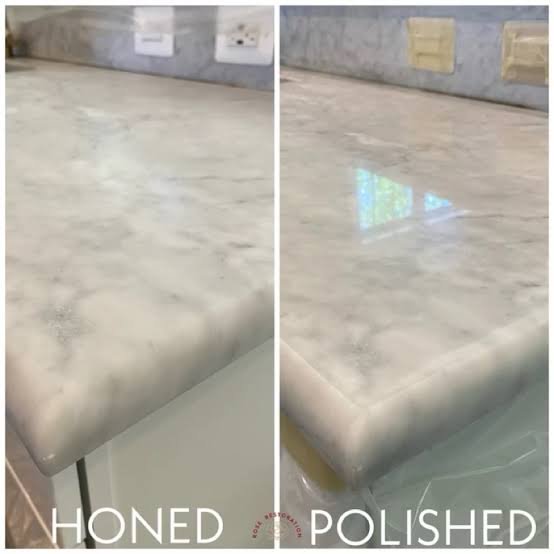
    Honed Granite for Matte Finish Lovers

    Honed granite offers a soft, non-glossy look that hides fingerprints and feels more natural.

    Dark Granite Countertops for Bold Designs

    Dark granite adds depth and contrast, especially in white or light-colored kitchens.

    Light Granite Countertops for Bright Kitchens

    Light granite helps smaller kitchens feel open and airy while still being durable.

    Granite Kitchen Island Countertop Ideas

    Using granite on a kitchen island creates a strong focal point and adds a functional workspace.

    Granite Countertops with Custom Edge Profiles

    Edge details like eased, beveled, or bullnose finishes elevate the entire kitchen design.

    Marble Kitchen Countertop Ideas (Luxury & Elegance)

    Marble remains a symbol of elegance and craftsmanship.

    White Marble Countertops for Classic Kitchens

    White marble pairs beautifully with traditional cabinetry and neutral tones.

    Marble Waterfall Edge Countertops

    Waterfall edges are a favorite in modern kitchen countertops ideas, extending the stone down the sides.

    Marble Countertops with Matching Marble Floors

    When done right, this creates a seamless, high-end look.

    Marble for High-End Kitchen Designs

    Marble works best in kitchens where design takes priority, and owners are comfortable with maintenance.

    Modern & Creative Kitchen Countertop Ideas

    Some homeowners want something different. These unusual countertop ideas focus on creativity and function.

    Waterfall Edge Countertops

    A popular design choice that adds drama and visual flow.

    Mixed-Material Countertops

    Combining stone with wood or metal can define zones within the kitchen.

    Stand-Alone Kitchen Countertops

    Standalone prep counters work well in large kitchens or open spaces.

    Extended Countertops for Extra Workspace

    Extended surfaces double as dining or work areas, perfect for busy homes.

    Functional Kitchen Countertop Ideas for Everyday Use

    Great countertops should make life easier, not harder.

    Heat-Resistant Countertops for Busy Kitchens

    Granite and soapstone handle hot cookware better than many alternatives.

    Scratch-Resistant Countertops for Families

    Quartz and granite perform well in homes with kids and heavy use.

    Easy-to-Clean Countertop Surfaces

    Quartz and polished stone are ideal for homeowners who want low-effort cleaning.

    These are often the most practical budget countertops ideas because they reduce long-term maintenance costs.

    Countertop & Backsplash Combination Ideas

    The right backsplash completes the countertop.

    Granite Countertop with Stone Backsplash

    Creates a cohesive, natural stone look.

    Marble Countertop with Full-Height Backsplash

    A bold, seamless design choice for luxury kitchens.

    Matching vs Contrasting Backsplash Designs

    Matching feels calm and uniform, while contrast adds personality.

    Custom Countertop Fabrication Ideas for Unique Kitchens

    No two kitchens are the same. Custom fabrication is essential for:

    • Small kitchens with tight layouts
    • Large kitchen islands
    • Irregular or older homes
    • Clean seams and precise edge finishing

    This is where professional fabrication and Countertop Installation Lowell, MA services make a noticeable difference.

    Common Kitchen Countertop Mistakes to Avoid

    Many problems come from avoidable decisions:

    • Choosing material based only on looks
    • Poor measurements
    • Ignoring professional installation
    • Saving money on edge finishing

    These mistakes often turn “cheap” options into expensive repairs later.

    You may also read: Top Countertop Patterns That Define a Luxurious Kitchen

    Why Professional Countertop Installation Makes a Difference

    Even the best material can fail if installed poorly.

    Professional installation ensures:

    • Long-term durability
    • Clean seams and joints
    • Proper leveling
    • Safe, polished results

    Homeowners searching for kitchen countertop ideas on a budget often overlook this step, but correct installation protects your investment.

    Final Thoughts

    The best kitchen countertops ideas combine style, function, and long-term value. Trends come and go, but smart material choices and professional installation always pay off.

    If you’re planning a kitchen upgrade and want guidance based on real experience, contact us to explore the right solution for your space. With expert fabrication and installation from SF Marble & Granite Inc, your countertops can be both beautiful and built to last.

    FAQs

    Which countertop is best for daily kitchen use?

    Granite and quartz are among the best for daily use due to their durability and low maintenance. They work well in both modern and traditional kitchens.

    Is granite better than marble for kitchens?

    Granite is generally more durable and easier to maintain, while marble offers unmatched elegance. The right choice depends on how much care you’re willing to provide.

    Are custom countertops worth it?

    Custom countertops ensure a perfect fit and better finishing, especially in unique layouts. They often last longer and look more refined.

    How long do natural stone countertops last?

    With proper care, natural stone countertops can last decades. Many homeowners never need to replace them.

  • Marble Countertops Pros and Cons: A Complete Homeowner’s Guide

    Marble Countertops Pros and Cons: A Complete Homeowner’s Guide

    Choosing the right surface for your kitchen or bathroom isn’t just about looks; it’s about lifestyle, maintenance, and long-term value. When homeowners search for marble countertops pros and cons, they’re usually trying to answer one important question: Is marble truly worth it?

    At SF Marble & Granite Inc, we’ve worked with homeowners across Massachusetts who love the elegance of marble but also want honest guidance before making a major investment. In this guide, you’ll find a clear, practical breakdown based on real-world installation experience, not marketing hype.

    What Are Marble Countertops?

    Infographic showing marble countertops pros and cons, including benefits like natural beauty and heat resistance, and drawbacks such as staining, scratches, maintenance, and cost comparison.

    Marble countertops are surfaces made from natural stone that is quarried from the earth, cut into slabs, polished, and fabricated for kitchens and bathrooms. At SF Marble & Granite Inc, we often explain to homeowners that marble’s natural origin is what makes it both beautiful and unique.

    Unlike engineered materials, marble forms naturally under heat and pressure. This natural formation is what gives every slab its distinctive veining and movement.

    How Marble Slabs Are Made

    • Large marble blocks are extracted from quarries.
    • Blocks are cut into slabs.
    • Slabs are polished and finished.
    • Fabricators shape and install them as a marble counter top.

    Because marble is natural, no two pieces are identical, which is exactly why many homeowners fall in love with it.

    Why Homeowners Choose Marble Countertops

    There’s a reason marble has been used for centuries in architecture and design.

    1. Luxury Appearance

    A white marble counter instantly elevates a kitchen. The soft veining creates depth and elegance that manufactured materials often try to imitate but rarely match.

    2. Timeless Appeal

    Trends change, marble doesn’t. A well-designed kitchen layout with white marble countertopsrarely feels outdated.

    3. High-End Feel

    Marble is commonly used in upscale homes, boutique hotels, and luxury bathrooms. It signals craftsmanship and refined taste.

    Pros of Marble Countertops

    Let’s look at the practical advantages behind the beauty.

    Natural Beauty & Unique Patterns

    Every slab of marble has one-of-a-kind veining. If you value originality in your home, this matters. No two white marble countertops kitchen installations ever look the same.

    Heat Resistance

    Marble handles heat better than many synthetic options. Hot pans won’t instantly damage it (though trivets are still recommended). Bakers especially appreciate the naturally cool surface.

    Smooth & Cool Surface

    For pastry work, dough rolling, and chocolate tempering, marble performs beautifully. Professional chefs often prefer a natural marble counter top for this reason.

    Adds Property Value

    Natural stone surfaces are considered premium upgrades. In many cases, installing a white marble counter can enhance perceived home value and buyer appeal.

    You may also read: Bathroom Tile Grout

    Cons of Marble Countertops

    Honesty builds trust. Marble isn’t perfect, and it’s important to understand the trade-offs.

    Porous Nature (Staining Risk)

    Marble is porous. That means:

    • Wine can stain.
    • Oil can darken spots.
    • Lemon juice can leave marks.

    If you’re asking, is marble good for countertops in busy kitchens? This is where you need to pause and think carefully.

    Scratches & Etching

    Acidic substances like vinegar or tomato sauce can cause etching, dull spots that change the finish. Over time, a marble counter top may develop a “patina” from daily use.

    Some homeowners love this aged look. Others don’t.

    High Maintenance

    Marble requires:

    • Regular sealing
    • Gentle cleaning products
    • Immediate spill cleanup

    Compared to synthetic marble kitchen countertops or quartz countertops, it requires more attention.

    Cost Consideration

    Marble typically costs more than basic granite options. Installation complexity can also increase labor expenses.

    When reviewing the full marble countertop pros and cons, maintenance is often the deciding factor.

    Marble Countertops Pros and Cons | Quick Comparison

    Advantages Disadvantages
    Elegant, natural veining Can stain easily
    Heat resistant Prone to etching
    Cool surface for baking Requires sealing
    Adds resale appeal Higher maintenance

    This simple table helps homeowners quickly evaluate the pros and cons to marble countertops before committing.

    Marble vs Granite Countertops

    Many homeowners comparing marble countertop pros and cons also ask about granite.

    Durability

    Granite is harder and more resistant to scratches.

    Maintenance

    Granite still needs sealing, but less frequently than marble.

    Daily Kitchen Use

    For heavy cooking households, granite may be more forgiving.

    That said, granite doesn’t replicate the soft elegance of a white marble counter.

    Marble vs Quartz Countertops

    Quartz is engineered. Marble is natural.

    Stain Resistance

    Quartz and synthetic marble kitchen countertops are far more stain-resistant.

    Maintenance

    Quartz requires minimal upkeep compared to marble.

    Long-Term Care

    Marble develops character. Quartz stays consistent.

    If you prefer low maintenance over natural authenticity, synthetic marble kitchen countertops may be worth exploring.

    Best Places to Use Marble Countertops

    Marble isn’t always ideal for every kitchen layout. Here’s where it performs best:

    • Bathroom vanities
    • Kitchen islands used for prep
    • Fireplace surrounds
    • Low-traffic kitchens

    In these areas, a white marble countertops kitchen design can shine without excessive wear.

    Is Marble a Good Choice for Kitchens?

    So, is marble good for countertops in real kitchens?

    It depends on:

    • How often do you cook
    • Whether you clean spills immediately
    • Your tolerance for natural aging

    Busy families who cook daily may prefer granite or quartz. Design-focused homeowners who value appearance often accept the maintenance trade-offs.

    Maintenance Tips for Marble Countertops

    If you choose marble, proper care makes all the difference.

    Seal Regularly

    Reseal every 6–12 months, depending on usage.

    Daily Cleaning

    Use mild soap and water. Avoid acidic cleaners.

    Avoid Direct Cutting

    Always use cutting boards.

    Protect from Acids

    Wipe spills immediately, especially citrus, wine, and vinegar.

    Good habits extend the life of your marble counter top significantly.

    Common Marble Countertop Mistakes to Avoid

    Here’s where many homeowners go wrong:

    • Skipping sealing
    • Using vinegar-based cleaners
    • Leaving oil spills overnight
    • Cutting directly on the surface

    Understanding these risks upfront makes the pros and cons to marble countertops easier to manage.

    When Marble Countertops Are Worth the Investment

    Marble makes sense when:

    • You’re designing a luxury home
    • You prioritize aesthetics over durability
    • You’re comfortable with maintenance

    It may not be ideal if you want a completely worry-free kitchen surface.

    Professional Marble Countertop Installation Matters

    Even the highest-quality marble can fail if installed poorly.

    Proper fabrication ensures:

    • Accurate measurements
    • Seam alignment
    • Correct edge finishing
    • Proper sealing

    If you’re considering Countertop Installation Lowell, MA, working with experienced professionals is critical. Proper fabrication, accurate measurements, and careful handling help protect the stone’s integrity and ensure long-term durability and performance.

    A professionally installed white marble counter not only looks better, but it also performs better long term.

    Final Thoughts

    When evaluating marble countertops pros and cons, the real question isn’t whether marble is good or bad; it’s whether it fits your lifestyle. A white marble countertops kitchen delivers unmatched elegance. A white marble counter brings timeless appeal. But marble demands care and understanding.

    At SF Marble & Granite Inc, we believe homeowners deserve honest guidance, not sales pressure. If you’re considering marble, granite, or synthetic marble kitchen countertops, the right advice starts with a conversation. Contact us today to discuss your project and explore expert Countertop Installation Lowell, MA services tailored to your home.

    FAQs

    Do marble countertops stain easily?

    Yes, because marble is porous. Regular sealing reduces the risk, but spills should always be cleaned quickly.

    Is marble good for countertops in busy kitchens?

    It can work, but high-traffic kitchens may experience more etching and staining over time.

    Are synthetic marble kitchen countertops better?

    They offer better stain resistance and lower maintenance, but they don’t provide the same natural veining as real marble.

    How long does a marble counter top last?

    With proper care and maintenance, marble countertops can last decades.

    What are the biggest marble countertops pros and cons?

    The biggest advantage is natural beauty. The biggest drawback is maintenance and susceptibility to stains.

  • Laminate Countertops vs Granite: Which One Is Better for Your Kitchen?

    Laminate Countertops vs Granite: Which One Is Better for Your Kitchen?

    Choosing a kitchen countertop seems simple until you compare options. Many homeowners struggle with laminate countertops vs granite because both look appealing, but perform very differently. Laminate offers affordability, while granite provides long-term durability and value. Modern granite look laminate countertops can appear surprisingly realistic, making the decision harder. 

    Granite is often seen as expensive without understanding its long-term benefits. At SF Marble & Granite Inc, we help homeowners navigate this choice every week. This guide provides a clear, honest comparison to help you select the countertop that fits your kitchen, lifestyle, and budget best.

    What Are Granite Countertops?

    Laminate countertops vs granite comparison chart showing cost, durability, heat resistance, and maintenance.

    Granite countertops are made from natural stone and are prized for their strength, longevity, and timeless appeal.

    Natural Stone Composition of Granite

    Granite is a 100% natural stone formed deep within the earth. Large slabs are carefully cut from quarries, then polished and fabricated to fit your kitchen. No two slabs are alike, giving each countertop its unique character.

    Why Granite Is Popular in Home Kitchens

    Homeowners often choose between granite and laminate based on kitchen usage. Granite is highly favored because it offers:

    • Exceptional durability
    • A premium, natural look
    • Resistance to heat and scratches
    • A lifespan that can exceed 20–30 years

    For homeowners in Lowell and surrounding areas, SF Marble & Granite Inc provides expertly fabricated granite countertops that bring both beauty and lasting value to any kitchen.

    What Are Laminate Countertops?

    Laminate countertops are a man-made surface designed to offer style at a lower cost. They are often used in budget-conscious projects and rental properties.

    How Laminate Countertops Are Made

    Laminate countertops are built in layers:

    • A particle board or MDF core for the structure
    • A printed decorative layer that creates the design
    • A clear protective top coating

    This printed layer is why granite look laminate countertops exist. The surface image mimics natural stone, but the material underneath is not stone.

    Where Laminate Countertops Are Commonly Used

    Laminate or granite countertops serve very different purposes. Laminate is commonly chosen for:

    • Rental homes and apartments
    • Low-budget kitchen remodels
    • Temporary renovations
    • Light-use kitchens

    In these situations, affordability matters more than long-term durability.

    Laminate vs Granite Countertops | Quick Comparison Table

    Feature Laminate Countertops Granite Countertops
    Cost Lower upfront cost Higher initial investment
    Durability Moderate Very high
    Heat Resistance Low High
    Scratch Resistance Low to moderate High
    Moisture Resistance Vulnerable at seams Excellent
    Maintenance Easy but limited repair Simple with sealing
    Lifespan 10–15 years 20–30+ years
    Appearance Printed designs Natural stone
    Home Value Impact Minimal Strong positive impact

    This table alone answers many questions about laminate countertops vs granite, but details matter especially for real kitchens.

    Cost Comparison | Laminate vs Granite Countertops

    Initial Cost of Laminate Countertops

    Laminate countertops are appealing because they:

    • Costs significantly less upfront
    • Have an affordable installation
    • Works well for short-term needs

    For homeowners, asking are laminate countertops good for a tight budget? The answer is yes, in the short term.

    Granite Countertops Cost & Long-Term Value

    Granite costs more initially, but value comes over time:

    • Longer lifespan means fewer replacements
    • Better durability reduces repair needs
    • Adds measurable resale value

    When comparing granite or laminate, granite often delivers better long-term return on investment.

    You may also read: Types of Granite Countertops

    Durability & Lifespan Comparison

    How Long Do Laminate Countertops Last?

    Laminate countertop durability is limited. Most last:

    • Around 10–15 years
    • Less in busy kitchens

    Common issues include:

    • Burn marks from hot pans
    • Chips along edges
    • Swelling from moisture

    These problems usually require full replacement, not repair.

    How Long Do Granite Countertops Last?

    Granite countertops can last decades with basic care. They handle:

    • Daily cooking
    • Heavy use
    • Busy family kitchens

    This durability is why many homeowners choose granite countertops vs laminate for primary homes.

    Heat, Scratch & Moisture Resistance

    Laminate Performance in Daily Kitchen Use

    Laminate struggles with:

    • Heat damage from cookware
    • Scratches from knives
    • Moisture seepage at seams

    These factors directly impact laminate countertop durability.

    Granite Performance in Real-Life Kitchens

    Granite performs far better:

    • Safe for hot pots
    • Scratch-resistant under normal use
    • Handles moisture well when sealed

    For daily cooking households, granite is often the safer choice.

    Maintenance & Cleaning Differences

    Laminate Countertop Maintenance

    Laminate is easy to clean:

    • Mild soap and water
    • No sealing required

    However, once damaged, repairs are limited.

    Granite Countertop Maintenance

    Granite requires:

    • Periodic sealing
    • Simple daily cleaning

    When installed professionally, such as through Countertop Installation Lowell, MA services, maintenance is minimal and manageable.

    Appearance & Design Options

    Is There a Laminate That Looks Like Granite?

    Yes, granite look laminate countertops are widely available. They offer:

    • Stone-inspired patterns
    • Many color options

    However, the surface lacks:

    • Depth
    • Natural variation
    • Real stone texture

    Up close, the difference is noticeable.

    Natural Beauty of Granite Stone

    Granite offers:

    • Unique veining and mineral patterns
    • Natural depth and texture
    • A high-end appearance

    This is where laminate countertops vs granite differ the most visually.

    Pros and Cons of Laminate Countertops

    Pros

    • Budget-friendly
    • Fast installation
    • Wide range of designs

    Cons

    • Low heat resistance
    • Shorter lifespan
    • No increase in home value

    Understanding laminate countertops pros and cons helps set realistic expectations.

    Pros and Cons of Granite Countertops

    Pros

    • Extremely durable
    • Heat and scratch-resistant
    • Increases home value

    Cons

    • Higher upfront cost
    • Requires professional installation

    Despite the cost, granite often wins when comparing granite or laminate for long-term homes.

    Impact on Home Value

    Does Laminate Increase Home Value?

    In most cases, no. Buyers usually see laminate as:

    • A budget material
    • Something to replace later

    This limits resale appeal.

    Why Granite Countertops Increase Property Value

    Granite is viewed as:

    • A premium upgrade
    • A long-term feature

    This makes granite countertops vs laminate an important decision for homeowners thinking about resale.

    Which Countertop Is Better for You?

    Choose Laminate If:

    • Your budget is very tight
    • The space is temporary
    • It’s a rental property

    Choose Granite If:

    • You want a long-term solution
    • You cook daily
    • You want a premium kitchen look

    This decision framework simplifies the laminate or granite debate.

    Laminate vs Granite | Final Verdict

    When comparing laminate vs granite countertops, there is no one-size-fits-all answer. Laminate works for short-term or low-budget needs. Granite stands out for durability, appearance, and long-term value.

    For most homeowners planning to stay in their home, granite remains the stronger choice.

    Granite Countertop Installation | Why Professional Installation Matters

    Granite is only as good as its installation. Professional installation ensures:

    • Accurate fabrication
    • Proper sealing
    • Long-lasting performance

    This is why homeowners often rely on trusted Countertop Installation Lowell, MA specialists for the best results.

    Conclusion

    Choosing between laminate countertops vs granite comes down to how you use your kitchen and how long you plan to stay in your home. Laminate offers affordability and quick results, while granite delivers durability, beauty, and long-term value.

    If you’re ready to upgrade your kitchen and want expert guidance, contact SF Marble & Granite Inc to discuss your options and find the countertop solution that truly fits your home.

    FAQs

    Are laminate countertops good for kitchens?
    Laminate countertops are good for light-use kitchens and tight budgets. They are not ideal for heavy cooking or long-term use.

    Can laminate really look like granite?
    Granite look laminate countertops can mimic stone patterns, but they lack the depth and texture of real granite.

    Which countertop lasts longer?
    Granite countertops last significantly longer than laminate, often 20–30 years or more.

    Are granite countertops hard to maintain?
    No. With simple sealing and basic cleaning, granite is easy to maintain.

    Granite or laminate, what’s better for resale?
    Granite offers far better resale value than laminate countertops.

  • Types of Granite Countertops: Complete Guide to Colors, Finishes & Grades

    Types of Granite Countertops: Complete Guide to Colors, Finishes & Grades

    Granite has been used in homes for centuries, and it continues to be one of the most trusted countertop materials today. When homeowners search for types of granite countertops, they usually want to know what granite looks like in real homes, how many options are available, and which choice truly works beyond showroom photos. Granite is a natural stone formed deep within the earth from cooled magma, which makes every slab unique. No two kitchens ever look the same. 

    At SF Marble & Granite Inc, we see this daily. Each slab has its own color depth, movement, and character. Understanding granite types and names helps homeowners choose confidently and avoid costly mistakes.

    Why Understanding Types of Granite Countertops Is Important

    Types of granite countertops showcasing various colors, finishes, and patterns for kitchen designs.

    Choosing granite is not just about picking a color you like. Different granite countertop colors, patterns, and finishes affect how your kitchen looks, how much maintenance it needs, and how it ages over time.

    Some granite countertop colors hide stains better, while others show fingerprints more easily. Granite grey and white tones may brighten a kitchen, whereas darker stones create a sophisticated contrast. When homeowners skip this research, they often regret their choice after installation. From our professional experience at SF Marble and Granite Inc in Lowell, MA, the best results happen when homeowners understand what granite looks like in real lighting, how it performs daily, and how it fits their budget long-term.

    Granite Countertop Types by Color

    Color is the first thing most people notice. Below are the most common granite colors and how they work in real homes.

    Black Granite Countertops

    Black granite countertops offer a bold, modern appearance. They create a strong contrast with white or light cabinets and look especially clean in contemporary kitchens.

    Pros

    • Hides stains well
    • Looks sleek and high-end
    • Works well in busy kitchens

    Cons

    • Can show fingerprints if polished
    • Needs good lighting to avoid a dark look

    Black granite is often chosen for modern kitchens and high-traffic bathrooms.

    White Granite Countertops

    White granite countertops give kitchens a bright and open feel. Many people confuse white granite with marble, but granite is more durable and easier to maintain.

    White granite usually includes gray, beige, or black flecks. These natural patterns help hide daily wear.

    Maintenance note: White granite needs proper sealing to prevent staining, especially near sinks.

    Gray Granite Countertops

    Granite grey and white tones are extremely popular right now. Gray granite works well in both modern and traditional kitchens.

    It pairs nicely with:

    • White cabinets
    • Wood cabinetry
    • Stainless steel appliances

    Gray granite countertops offer balance without overpowering the space.

    Brown & Beige Granite Countertops

    Brown and beige granite countertops are classic choices. These common granite colors bring warmth and blend easily with wood cabinets and neutral floors.

    They are forgiving of crumbs, stains, and everydaygranite types and names used, making them ideal for family kitchens.

    Red & Gold Granite Countertops

    Red and gold granite countertops make a statement. These granite choices are bold and dramatic, often used as a focal point.

    They work best in larger kitchens with simple cabinetry so the stone can stand out without overwhelming the space.

    Blue & Green Granite Countertops

    Blue and green granite options are rare and often considered exotic. They offer depth, movement, and a luxury feel.

    Because of their uniqueness, these granite types and names usually fall into higher price ranges and are best used intentionally.

    Pink, Yellow & Ivory Granite Countertops

    These lighter and less common granite countertop colors are ideal for creative or airy designs. Ivory granite, in particular, works well in smaller kitchens by reflecting light.

    Granite Countertop Types by Pattern

    Pattern matters just as much as color when deciding what does granite look like in your home.

    Solid Granite

    Solid granite has minimal movement and consistent color. It works well in simple kitchen designs and small spaces where busy patterns might feel overwhelming.

    Speckled Granite

    Speckled granite is the most common granite pattern. It hides stains, crumbs, and scratches better than other styles, making it ideal for busy households.

    Veined Granite

    Veined granite resembles marble with flowing lines. It offers a high-end look with better durability than marble, making it a popular luxury option.

    You may also read: How Much Do Granite Countertops Cost

    Granite Countertop Types by Surface Finish

    Finish changes how granite looks and feels.

    Polished Granite Countertops

    Polished granite has a glossy, reflective surface. It enhances color depth and is the most popular finish for kitchens.

    Honed Granite Countertops

    Honed granite has a matte, smooth surface. It offers a softer look and is less reflective, though it may show stains more easily.

    Leathered Granite Countertops

    Leathered granite features a textured surface. It hides fingerprints and scratches well and feels natural and unique.

    Types of Granite Countertops by Grade

    Granite grades help categorize quality, rarity, and price.

    Level 1 Granite (Entry-Level)

    • Budget-friendly
    • Limited colors and patterns
    • Good for simple projects

    Level 2 Granite (Mid-Range)

    • Better durability and appearance
    • More granite countertop colors available
    • Most popular choice for homeowners

    Level 3 & Exotic Granite

    • Rare granite types and names
    • Bold colors and movement
    • Premium pricing for custom kitchens

    Popular Granite Countertop Styles for Kitchens

    Modern kitchens often use granite grey and white slabs with polished finishes. Traditional kitchens lean toward beige or brown granite. Luxury kitchens focus on exotic veined granite with dramatic movement.

    Matching the style to your kitchen layout is more important than following trends.

    How to Choose the Right Type of Granite Countertop

    Choosing the right granite comes down to real-life factors:

    • Kitchen size and lighting
    • Cabinet and backsplash colors
    • Budget and long-term value
    • Maintenance expectations

    Working with professionals experienced in Countertop Installation Lowell, MA helps ensure the granite you choose works practically, not just visually.

    Granite Countertops vs Other Countertop Materials

    Granite vs Marble:
    Granite is harder, less porous, and easier to maintain.

    Granite vs Quartz:
    Granite is natural and unique, while quartz offers consistency and lower maintenance. Granite remains a long-term investment because it balances beauty, strength, and value.

    Maintenance Tips for All Granite Countertop Types

    • Clean daily with mild soap and water
    • Seal granite as recommended
    • Use trivets for hot cookware
    • Wipe spills quickly to prevent stains

    Proper care keeps granite countertops looking great for decades.

    Cost Differences Between Granite Countertop Types

    Prices vary based on:

    • Color rarity
    • Pattern complexity
    • Finish type
    • Thickness and edge style
    • Installation and fabrication

    Exotic granite costs more, while common granite colors are more budget-friendly.

    Common Mistakes to Avoid When Choosing Granite Countertops

    • Not viewing the full slab
    • Choosing color without testing lighting
    • Ignoring maintenance needs
    • Skipping professional installation

    These mistakes often lead to regret after installation.

    Final Thoughts

    Understanding the types of granite countertops helps you make a confident, long-term decision. From granite counter top colors to finishes and grades, each choice affects daily use and overall satisfaction.

    At SF Marble & Granite Inc, we guide homeowners through every step from selection to installation based on real experience, not trends. If you’re planning a granite upgrade, contact us to explore granite choices that truly fit your home, lifestyle, and budget.

    FAQs

    Which granite countertop is best for kitchens?

    Speckled and mid-range granite types are best because they hide stains and handle daily use well.

    Are dark granite countertops hard to maintain?

    They are easy to clean but may show fingerprints if polished.

    How long do granite countertops last?

    With proper care, granite countertops can last 30 years or more.

    What does granite look like compared to quartz?

    Granite has natural variation, while quartz looks more uniform.

  • How Much Do Granite Countertops Cost

    How Much Do Granite Countertops Cost

    Granite remains one of the most requested countertop materials for kitchens and bathrooms. But before starting a remodel, most homeowners ask the same practical question: how much do granite countertops cost? The answer depends on material quality, slab size, fabrication details, and installation. At SF Marble & Granite Inc, we speak with homeowners every week who want clear numbers, not vague estimates. 

    In this guide, you’ll find real pricing ranges, what affects the final bill, and how to plan your budget wisely. Granite is not a one-size-fits-all product. The cost of granite countertops can vary based on grade, thickness, edge style, and labor. Understanding these factors helps you avoid surprises and invest with confidence.

    What Is the Average Granite Countertop Cost?

    How much do granite countertops cost for a large kitchen island with sink and polished white granite surface.

    Let’s start with realistic numbers.

    Granite Countertops Cost Per Square Foot (Material Only)

    The granite countertops cost per square foot for material alone usually ranges between:

    • $40 to $100 per square foot for common colors
    • $100 to $200+ per square foot for premium or exotic slabs

    If you’re wondering about the granite countertop price per square foot, remember that rare colors, bold veining, and limited-availability slabs naturally increase the price. At SF Marble & Granite Inc, homeowners can explore different grades and colors in person to better understand how selection affects overall cost.

    Installed Cost Per Square Foot

    When including fabrication and labor, the average granite countertop cost installed typically falls between:

    • $70 to $150 per square foot
    • High-end designs can reach $200+ per square foot

    Many homeowners ask, how much is it to install granite countertops? Installation costs generally range from $30 to $50 per square foot, depending on complexity.

    Average Total Project Cost

    • Small kitchen (30 sq ft): $2,100 – $4,500
    • Medium kitchen (40 sq ft): $2,800 – $6,000
    • Large kitchen with island: $5,000 – $10,000+

    Bathroom vanity projects cost significantly less due to smaller surface areas.

    What Affects the Cost of Granite Countertops?

    Several factors directly influence pricing. Understanding them helps you control your budget.

    Granite Grade and Level

    Granite is often categorized into Level 1, 2, and 3.

    • Level 1 (Entry-Level): Simple patterns, common colors, lower price range
    • Level 2 (Mid-Range): More movement and color variation
    • Level 3+ (Premium): Exotic patterns, rare stone, higher granite countertop price per square foot

    Higher-grade granite increases both the slab cost and the final installation price.

    Granite Color and Pattern Rarity

    Color matters more than many homeowners expect.

    • Common colors like beige, brown, and black are more affordable.
    • White granite with bold veining costs more.
    • Exotic stones with dramatic patterns can double the granite countertops cost per square foot.

    If you’re asking, how much is a slab of granite? A full slab can range from $1,000 to $3,000 or more, depending on rarity and origin.

    Slab Thickness (2cm vs 3cm)

    • 2cm slabs are lighter and more affordable.
    • 3cm slabs are thicker, stronger, and slightly more expensive.

    Thicker slabs may increase the cost to install granite countertops due to added weight and support needs.

    Edge Profiles and Fabrication

    Edge detail impacts labor costs.

    Common options include:

    • Eased edge (standard, budget-friendly)
    • Beveled edge
    • Ogee edge (decorative, higher cost)
    • Waterfall edge (premium, modern look)

    Custom edges increase fabrication time and raise the cost of granite countertops.

    Finish Options

    Granite can be finished in different textures:

    • Polished: Glossy and most common
    • Honed: Matte surface
    • Leathered: Textured, modern appearance

    Leathered and honed finishes may slightly increase the granite countertop price per square foot.

    Labor and Installation Costs

    Homeowners often ask, how much is it to install granite countertops? Installation includes:

    • Measuring and templating
    • Cutting and fabrication
    • Sink and cooktop cutouts
    • Delivery
    • Final placement and sealing

    The cost to install granite countertops typically ranges between $1,000 and $3,000 for a full kitchen, depending on layout complexity.

    If you’re planning a local project, professional Countertop Installation Lowell, MA services ensure proper leveling, seam placement, and long-term durability.

    Additional Costs to Consider

    Granite pricing is not just about slabs.

    Sealing Granite Countertops

    Granite needs sealing every 1–3 years. Sealing costs are usually modest but should be factored into long-term maintenance.

    Backsplash Installation

    Adding a matching granite backsplash increases total square footage and labor.

    Old Countertop Removal

    Removing laminate or tile can add $200–$500.

    Plumbing Disconnect & Reconnect

    Sinks and faucets must be safely disconnected and reinstalled.

    Optional Features

    • Integrated sinks
    • Overhang supports
    • Waterfall edges
    • Custom cutouts

    These features raise the overall average granite countertop cost.

    Granite Countertop Cost by Project Type

    Small Bathroom Vanity

    • 10–15 sq ft
    • $700 – $2,000 total
    • Lower installation cost

    Standard Kitchen (30–40 sq ft)

    • $2,800 – $6,000
    • Most common residential project size

    Large Kitchen with Island

    • 50+ sq ft
    • $5,000 – $10,000+
    • Higher fabrication complexity

    If you’re calculating how much granite countertops cost for your home, measure accurately and include islands and backsplashes.

    Granite vs Other Countertop Materials (Cost Comparison)

    Understanding alternatives helps justify your investment.

    Granite vs Quartz

    Quartz costs similar to or slightly higher than granite. However, quartz does not require sealing. Granite offers natural variation that many homeowners prefer.

    Granite vs Marble

    Marble is often more expensive and requires more maintenance. Granite is more durable for kitchens.

    Granite vs Laminate

    Laminate is cheaper upfront but lacks durability and resale value.

    Granite vs Concrete

    Concrete can be expensive due to custom fabrication.

    Granite vs Butcher Block

    Butcher block is affordable but requires ongoing maintenance.

    When comparing materials, the cost of granite countertops balances durability, appearance, and long-term value.

    Ways to Save Money on Granite Countertops

    You can control costs without sacrificing quality.

    • Choose remnant slabs for smaller areas
    • Select common colors
    • Use standard edges
    • Compare local fabricators
    • Consider prefabricated granite

    At SF Marble & Granite Inc, homeowners often reduce expenses by choosing mid-range slabs with standard edge profiles while maintaining a high-end look.

    Granite Countertop Installation Process

    Knowing the process builds trust and prevents confusion.

    • Measurement and Templating: Exact dimensions taken
    • Slab Selection: Choose your preferred color and pattern
    • Fabrication: Cutting, edging, polishing
    • Sink and Appliance Cutouts
    • Delivery and Installation
    • Final Sealing and Inspection

    Professional installation reduces the risk of cracks, uneven seams, or long-term damage.

    Granite Countertop Maintenance and Long-Term Costs

    Granite is durable, but care matters.

    Sealing Frequency

    Seal every 1–3 years, depending on usage.

    Cleaning and Stain Removal

    Use mild soap and water. Avoid harsh chemicals.

    Preventing Heat Damage

    Granite handles heat well, but using trivets protects the finish.

    Repairing Minor Damage

    Small chips can be repaired by professionals at a reasonable cost.

    Long-term maintenance is minimal compared to many other materials.

    2026 Granite Color and Design Trends

    Granite styles continue to evolve.

    • White and gray granite remains popular
    • Black granite offers a modern look
    • Leathered finishes add texture
    • Bold veining creates statement islands

    Trends influence pricing. Popular styles may increase the granite countertops cost per square foot in high-demand markets.

    You may also read: How Much Do Marble Countertops Cost in 2026?

    Is Granite Worth the Cost?

    Granite offers:

    • Strong durability
    • High heat resistance
    • Increased home resale value
    • Long lifespan

    When homeowners ask how much is a slab of granite or calculate the average granite countertop cost, they often realize granite provides long-term value compared to cheaper materials that need replacement.

    How to Choose a Trusted Granite Supplier and Installer

    Choosing the right company matters as much as the stone itself.

    Look for:

    • Proven experience
    • In-house fabrication
    • Transparent pricing
    • Warranty coverage
    • Strong local reviews

    A trusted fabricator ensures accurate measurements, clean seams, and safe installation.

    Final Thoughts

    If you’re planning a kitchen or bathroom upgrade, understanding how much do granite countertops cost helps you budget confidently. From slab selection to professional installation, every detail affects the final price.

    At SF Marble & Granite Inc, we believe in transparent pricing, expert craftsmanship, and long-lasting results. If you’re ready to explore your options or want an accurate estimate, contact us today and let our team guide you through the process with clarity and care.

    FAQs

    How much do granite countertops cost for an average kitchen?

    Most kitchens cost between $2,800 and $6,000 installed. The total depends on slab selection, layout complexity, and labor.

    What is the granite countertop price per square foot installed?

    The granite countertop price per square foot typically ranges from $70 to $150 installed, including fabrication and labor.

    How much is a slab of granite?

    A full slab can cost between $1,000 and $3,000, depending on rarity, thickness, and origin.

    How much is it to install granite countertops only?

    The cost to install granite countertops usually ranges from $30 to $50 per square foot, depending on complexity.

    Does granite add value to a home?

    Yes. Granite increases visual appeal and resale value, making the investment worthwhile for many homeowners.

  • How Much Do Marble Countertops Cost in 2026?

    How Much Do Marble Countertops Cost in 2026?

    Marble has long been a symbol of luxury in kitchens and bathrooms. Before choosing it, most homeowners ask: How Much Do Marble Countertops Cost in 2026? Knowing current pricing helps you plan your remodel with confidence. At SF Marble & Granite Inc, we guide homeowners with clear estimates, honest advice, and professional installation. 

    The total cost depends on kitchen size, marble type, fabrication details, and installation complexity. Many clients also ask how much are marble countertops for a full kitchen. Below, we break everything down step by step so you can make a smart and informed decision.

    Marble Countertops Cost in 2026 | Quick Overview

    Modern kitchen with large white marble countertops and island

    Here’s what homeowners are paying this year:

    • Average cost per square foot (installed): $60 – $150
    • Material only: $40 – $100 per sq ft
    • Typical full kitchen installation: $3,000 – $8,500
    • Luxury projects: $10,000+
    • What most homeowners pay: $4,500 – $6,500

    So when asking how much does marble cost, the short answer is: it depends on the marble type and installation details.

    Marble Countertops Cost in 2026 | Quick Overview

    Here’s what homeowners are paying this year:

    • Average cost per square foot (installed): $60 – $150
    • Material only: $40 – $100 per sq ft
    • Typical full kitchen installation: $3,000 – $8,500
    • Luxury projects: $10,000+
    • What most homeowners pay: $4,500 – $6,500

    Based on real project estimates completed by SF Marble & Granite Inc, most pricing variations come down to marble selection, edge details, and overall installation complexity. So when asking how much does marble cost, the short answer is: it depends on the marble type and installation details.

    Marble Countertop Cost Per Square Foot

    Marble Slab Cost (Material Only)

    If you’re wondering how much is marble per square foot, material pricing in 2026 looks like this:

    • Carrara marble: $40 – $60 per sq ft
    • Calacatta marble: $80 – $150 per sq ft
    • Statuario marble: $100 – $200 per sq ft
    • Emperador marble: $50 – $90 per sq ft

    Premium white slabs and dramatic black and white marble counter designs cost more due to rarity and demand.

    Fabrication Cost

    Fabrication includes cutting, polishing, edging, and sink cutouts.

    • $20 – $40 per sq ft
    • Custom edges increase cost
    • Waterfall edges add $500 – $1,500

    Installation Cost

    The cost to install marble countertops typically ranges:

    • $30 – $50 per sq ft
    • Includes leveling, securing, and sealing

    For professional Countertop Installation Lowell, MA, local labor rates and project complexity influence final pricing.

    Total Installed Cost Per Sq Ft

    When combining material, fabrication, and installation:

    • Standard marble installed: $60 – $120 per sq ft
    • Premium marble installed: $120 – $200 per sq ft

    Average Marble Kitchen Countertop Cost by Size

    Small Kitchen (40–50 sq ft)

    • $2,400 – $6,000
      Perfect for condos or galley kitchens.

    Medium Kitchen (60–80 sq ft)

    • $3,600 – $9,600
      Most common kitchen size.

    Large Kitchen (100+ sq ft)

    • $6,000 – $15,000+
      Luxury homes with islands.

    Bathroom Vanity Marble Cost

    • $800 – $2,500
      Remnants often reduce costs significantly.

    If you’re still asking, how much are marble countertops for my kitchen? Measure your square footage and multiply by the installed cost range.

    Marble Countertop Cost by Type of Marble

    Carrara Marble Cost

    Most affordable white marble. Soft gray veining.
    $40 – $60 per sq ft.

    Calacatta Marble Cost

    Bold veining and brighter white background.
    $80 – $150 per sq ft.

    Statuario Marble Cost

    High-end Italian marble with dramatic veining.
    $100 – $200 per sq ft.

    Emperador Marble Cost

    Brown tones with elegant patterns.
    $50 – $90 per sq ft.

    Other Imported & Specialty Marbles

    Unique colors and rare slabs increase pricing significantly.

    If you’re comparing options, remember: how much does marble cost varies greatly by origin and quality.

    What Impacts Marble Countertop Cost in 2026?

    Marble Quality & Grade

    Higher grades have fewer imperfections and stronger veining contrast.

    Thickness (2cm vs 3cm)

    • 3cm is stronger and more expensive.
    • 2cm may require plywood support.

    Edge Profiles

    • Eased edge: standard pricing
    • Ogee or beveled: adds $10–$25 per linear foot

    Cutouts

    • Sink cutout: $150 – $300
    • Cooktop cutout: $200 – $400

    Backsplash & Waterfall Edges

    Adds material and labor costs.

    Installation Complexity

    Uneven cabinets or tight corners increase labor time.

    Geographic Location

    Local labor rates play a major role in overall pricing. Experienced professional installers provide transparent estimates based on accurate on-site measurements, project complexity, and regional market conditions.

    Marble Installation Cost Breakdown

    Template & Measurement

    Precise laser measurements ensure a perfect fit.

    Fabrication Process

    Slabs are cut, polished, and edges are shaped.

    Delivery & Installation

    Heavy slabs require skilled handling.

    Sealing & Finishing

    Sealing protects from stains and etching.

    The full cost to install marble countertops includes all these stages.

    Hidden Costs to Consider Before Buying

    Many homeowners forget about:

    • Old countertop removal: $200 – $500
    • Plumbing reconnection: $150 – $400
    • Structural reinforcement (if needed)
    • Ongoing sealing maintenance
    • Repair or polishing costs

    So when calculating how much are marble countertops, always factor these extras.

    You may also read: Kitchen Countertop Cost in 2026

    Marble vs Other Countertop Materials (Cost Comparison)

    Marble vs Granite Cost

    Granite: $50 – $120 per sq ft installed
    Marble: $60 – $150 per sq ft installed

    Granite is harder and more stain-resistant.

    Marble vs Quartz Cost

    Quartz: $70 – $140 per sq ft installed
    Marble: More natural variation, higher maintenance.

    Marble vs Laminate Cost

    Laminate: $20 – $50 per sq ft installed
    Marble: Higher investment, higher visual value.

    Are Marble Countertops Worth the Cost?

    Aesthetic Value

    Nothing matches natural marble beauty.

    Home Resale Value

    Luxury kitchens attract buyers.

    Durability Considerations

    Marble is softer than granite and quartz.

    Long-Term Maintenance

    Requires sealing and careful cleaning.

    If you love natural stone and accept maintenance, marble is worth it.

    Ways to Save on Marble Countertops

    Choose Carrara Instead of Premium Marble

    Significant savings.

    Consider Marble Remnants

    Ideal for vanities.

    Limit Custom Edge Profiles

    Keep edges simple.

    Keep Layout Simple

    Fewer seams = lower cost.

    Work With Local Fabricators

    Local companies reduce transportation costs.

    Marble Countertop Care & Maintenance Costs Over Time

    Sealing Frequency

    Once every 6–12 months.

    Daily Cleaning

    Mild soap and water only.

    Preventing Etching & Stains

    Avoid acidic cleaners.

    Professional Polishing

    $200 $600 if refinishing is needed. When calculating how much does marble cost, remember long-term care expenses.

    Is Marble Right for Your Kitchen or Bathroom?

    Best Use Cases

    • Low to medium traffic kitchens
    • Bathroom vanities
    • Decorative islands

    When to Avoid Marble

    • Heavy cooking areas
    • Homes with small children

    Ideal Homeowner Profile

    Someone who values beauty and understands maintenance.

    If you’re considering a dramatic black and white marble counter, marble can transform your space instantly.

    Get a Professional Marble Countertop Estimate

    If you’re serious about understanding How Much Do Marble Countertops Cost, the best step is a professional measurement and quote.

    We provide:

    • Free consultation
    • On-site measurement
    • Transparent pricing
    • Custom fabrication
    • Expert installation

    Conclusion

    So, How Much Do Marble Countertops Cost in 2026? Most homeowners spend between $60 and $150 per square foot installed, depending on marble type, thickness, and installation complexity.

    Marble is not the cheapest option, but it delivers unmatched elegance and timeless appeal. If you’re ready to upgrade your kitchen or bathroom, contact us today and get a personalized quote from SF Marble & Granite Inc. Our team will help you choose the right marble, design, and installation plan that fits your budget.

    FAQs

    How much are marble countertops on average in 2026?

    Most homeowners pay between $60 and $150 per square foot installed. The total depends on marble type and installation details.

    How much is marble per square foot for material only?

    Material typically ranges from $40 to $100 per square foot, depending on the marble grade.

    What is the cost to install marble countertops?

    Installation usually costs $30 to $50 per square foot, including labor and sealing.

    Does a black and white marble counter cost more?

    Yes. High-contrast slabs like black and white marble counter designs often cost more due to rarity.

    How Much Do Marble Countertops Cost in 2026?

    Marble countertops in 2026 typically cost $60 – $150 per square foot installed, depending on the marble type, thickness, and installation complexity. Full kitchen projects usually range from $4,500 to $8,500, while luxury or large kitchens can exceed $10,000.

  • Kitchen Countertop Cost in 2026 (Complete Pricing Guide)

    Kitchen Countertop Cost in 2026 (Complete Pricing Guide)

    Upgrading your kitchen is exciting, but most homeowners first want to know the real kitchen countertop cost in 2026. Prices can vary based on material, size, and installation details, and without proper guidance, it is easy to go over budget. The true cost is not just about price per square foot. It also includes durability, maintenance, fabrication quality, and long-term value.

     At SF Marble & Granite Inc, we help homeowners understand these factors clearly. This guide explains pricing, material options, and installation costs so you can confidently plan a kitchen upgrade that fits your space and budget.

    How Much Does a Kitchen Countertop Cost in 2026?

    Kitchen Countertop Cost in 2026 showcased with large quartz island, white cabinets, and modern kitchen layout.

    The average kitchen countertop cost in 2026 ranges between $40 to $150 per square foot installed, depending on the material and complexity.

    Average Cost Per Square Foot

    • Budget materials: $20–$50 per sq ft
    • Mid-range materials: $50–$90 per sq ft
    • Luxury materials: $90–$200+ per sq ft

    Total Project Cost Range

    For a standard kitchen (30–40 square feet of countertop space), most homeowners spend between:

    • $1,500 to $4,500 for mid-range materials
    • $5,000 to $8,000+ for high-end stone surfaces

    The total cost of countertops includes material, fabrication, edge finishing, cutouts, delivery, and installation.

    Small Kitchen vs Large Kitchen Pricing

    • Small kitchen (20–30 sq ft): $1,000–$3,000
    • Medium kitchen (30–40 sq ft): $2,000–$5,000
    • Large kitchen (40+ sq ft): $4,000–$10,000+

    The cost to replace kitchen counter space increases if you add islands, waterfall edges, or custom backsplashes.

    Budget, Mid-Range, and Luxury Comparison

    Budget options include laminate and some ceramic countertop designs, which are practical for homeowners looking to reduce upfront costs. Mid-range materials like granite and quartz offer a strong balance between durability and appearance. Luxury choices include marble, quartzite, and high-end cement countertops that deliver premium aesthetics and long-term value. At SF Marble & Granite Inc, we help homeowners compare these options carefully so they can choose a surface that fits both their design goals and their budget.

    Kitchen Countertop Cost Per Square Foot by Material

    Material choice has the biggest impact on overall pricing.

    Granite Countertop Cost

    Granite ranges from $50 to $100 per square foot installed. It is durable, heat-resistant, and adds resale value. Sealing is required yearly to maintain performance.

    Quartz Countertop Cost

    Quartz costs $60 to $120 per square foot. It is engineered stone, non-porous, and low maintenance. It does not require sealing.

    Marble Countertop Cost

    Marble countertops cost between $70 and $150 per square foot. Marble offers timeless beauty but requires sealing and careful maintenance due to staining risks.

    Quartzite Countertop Cost

    Quartzite ranges from $80 to $150 per square foot. It looks like marble but performs more like granite in durability.

    Soapstone Countertop Cost

    Soapstone costs $70 to $120 per square foot. It is naturally non-porous and develops a rich patina over time.

    Porcelain Slab Countertop Cost

    Porcelain slabs range from $60 to $120 per square foot. They are stain-resistant and suitable for modern kitchens.

    Solid Surface Countertop Cost

    Solid surface materials cost $40 to $80 per square foot. They are seamless and repairable but less heat-resistant.

    Butcher Block Countertop Cost

    Butcher block countertops installation typically costs $40 to $100 per square foot. Wood adds warmth but requires regular sealing and care.

    Concrete Countertop Cost

    A concrete countertop or cement countertops installation ranges from $70 to $140 per square foot. They are customizable and modern but require sealing and may develop hairline cracks.

    Laminate Countertop Cost

    Laminate is the most affordable at $20 to $50 per square foot. It is budget-friendly but less durable.

    Tile Countertop Cost

    Tile or ceramic countertop installations range from $30 to $80 per square foot. Grout maintenance is the main concern.

    Stainless Steel Countertop Cost

    Stainless steel costs $70 to $150 per square foot. It is common in commercial kitchens and is highly durable.

    Recycled Glass Countertop Cost

    Recycled glass surfaces range from $80 to $150 per square foot. They are eco-friendly and visually unique.

    You may also read: Quartz Countertop Cost in 2026

    What Factors Affect Kitchen Countertop Cost?

    Many homeowners underestimate hidden factors that influence final pricing.

    Material Type and Grade

    Premium slabs with rare veining cost more. Imported stone increases the price due to transportation.

    Countertop Size and Thickness

    Thicker slabs (3cm vs 2cm) increase cost. To calculate area, many ask: how do you calculate square footage of a countertop?
    Measure length × width (in feet) for each section and add them together.

    Edge Profiles

    Simple, eased edges are affordable. Decorative edges like ogee or waterfall increase fabrication time and price.

    Cutouts

    Sink, faucet, and cooktop cutouts require precision cutting and add labor charges.

    Backsplash Installation

    Adding a matching backsplash increases the cost of countertops but improves overall design value.

    Removal of Old Countertops

    The cost to replace kitchen counter surfaces includes demolition and disposal fees.

    Labor and Fabrication Charges

    Professional fabrication ensures precise seams and proper leveling. For homeowners searching for reliable service, explore our expert team offering Countertop Installation Lowell, MA for accurate measurements and installation.

    Customization and Special Finishes

    Honed, leathered, or textured finishes increase labor time and final pricing.

    Installation Cost Breakdown

    Understanding installation costs prevents surprises.

    Fabrication Cost

    Fabrication includes cutting slabs, polishing edges, and preparing cutouts.

    Delivery and Handling

    Heavy materials like concrete countertop slabs or marble require special handling equipment.

    Professional Installation Cost

    Professional installation typically ranges from $30 to $50 per square foot. Skilled installers ensure proper support and leveling.

    DIY vs Professional Installation

    DIY installation may reduce labor costs but risks damage, improper sealing, or cracking. Cement countertops especially require technical experience.

    Kitchen Countertop Cost by Kitchen Size

    Small Kitchen (20–30 sq ft)

    Budget: $1,000–$3,000
    Ideal materials: laminate, ceramic countertop, butcher block.

    Medium Kitchen (30–40 sq ft)

    Budget: $2,000–$5,000
    Ideal materials: granite, quartz, and solid surface.

    Large Kitchen (40+ sq ft)

    Budget: $4,000–$10,000+
    Ideal materials: marble, quartzite, and high-end concrete countertop.

    Long-Term Maintenance Costs to Consider

    Sealing Requirements

    Granite and marble countertops cost more in the long term if sealing is required annually.

    Repair and Restoration Costs

    Stone repair may range from $200 to $800, depending on damage. Cement countertops may need resealing over time.

    Cleaning and Care Expenses

    Quartz requires simple cleaning. Ceramic countertop surfaces need grout cleaning.

    Which Countertop Is Lowest Maintenance?

    Quartz and porcelain are typically the lowest maintenance options.

    Most Affordable Countertop Options

    If the budget is limited:

    • Choose laminate or ceramic countertop materials.
    • Select standard edge profiles.
    • Use remnants for islands.
    • Avoid complex cutouts.

    Butcher block countertops installation can also be cost-effective if properly maintained.

    Best Countertops for Long-Term Value

    For resale and durability:

    • Granite offers strong resale value.
    • Quartz attracts modern buyers.
    • Marble adds luxury appeal.
    • Concrete countertop designs appeal to contemporary homes.

    Kitchen Countertop Cost vs Return on Investment (ROI)

    Kitchen upgrades typically recover 60–80% of their value at resale. High-quality installation matters more than material alone. Buyers prefer durable, low-maintenance surfaces over trendy but fragile ones.

    Luxury materials increase visual appeal, but practical choices often provide better ROI.

    Final Thoughts

    Understanding kitchen countertop cost in 2026 is about more than numbers. It is about choosing a surface that fits your lifestyle, maintenance comfort level, and long-term plans.

    Whether you are considering marble countertops cost, installing butcher block countertops, or exploring modern cement countertops, professional guidance makes a major difference. At SF Marble & Granite Inc, we help homeowners choose materials that balance beauty, durability, and budget.

    If you are planning to upgrade your kitchen, contact us today for expert advice and a detailed estimate tailored to your space.

    Frequently Asked Questions

    How much does it cost to replace kitchen countertops?

    The cost to replace kitchen counter surfaces typically ranges from $1,500 to $6,000, depending on material, size, and labor. Removal and disposal add to the total cost of countertops.

    What is the cheapest countertop material?

    Laminate and some ceramic countertop designs are the most affordable. They cost less upfront but may not last as long as stone surfaces.

    Is quartz more expensive than granite?

    Quartz and granite are often priced similarly. Marble countertops cost more than both in many cases.

    How much does countertop installation cost?

    Professional installation ranges from $30 to $50 per square foot. Complex projects like cement countertops increase labor charges.

    How do you calculate the square footage of a countertop?

    Measure the length and width of each section in feet, multiply them, and add the totals together. This gives accurate square footage for pricing.