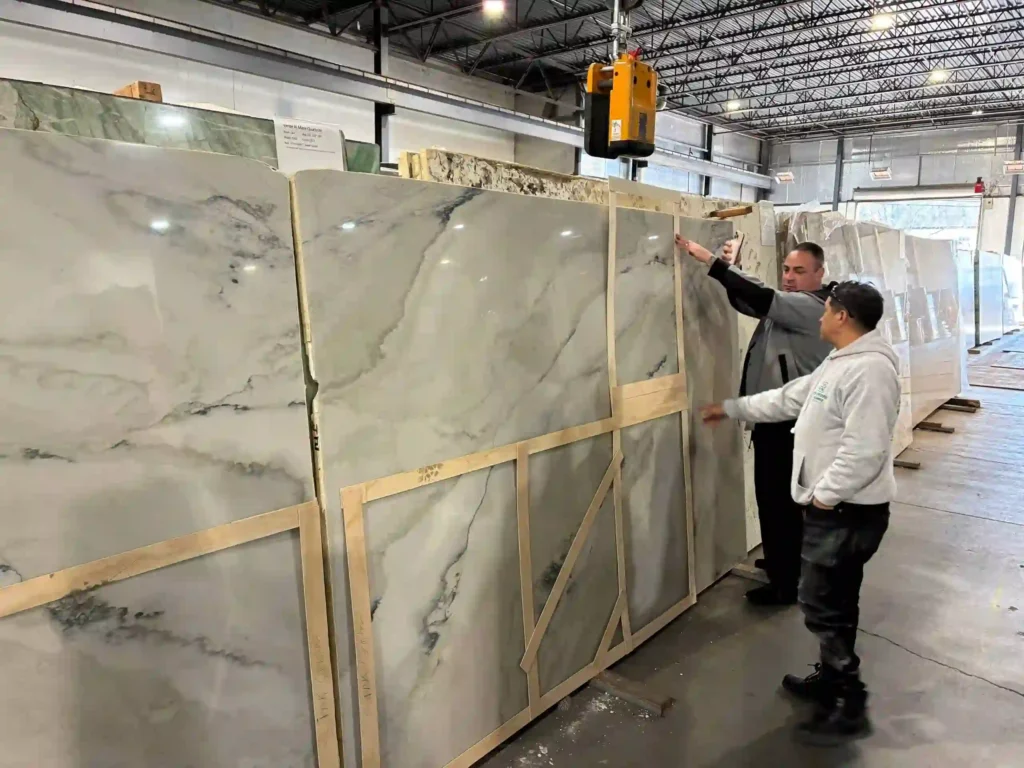
Shopping for granite countertops can be daunting when you don’t know what the actual sizes of the granite slabs options are. Many homeowners have the misconception that granite is brought in small pieces but actually slabs are large natural stones that can contain your countertop, island, bathroom vanity with as little seams possible.
Understanding how big is a slab of granite is helps you plan your project properly, avoid unnecessary waste, and estimate your countertop budget more accurately. Whether you’re remodeling a kitchen or upgrading a bathroom, knowing the standard granite slab size is essential before you buy.
What Is a Granite Slab?
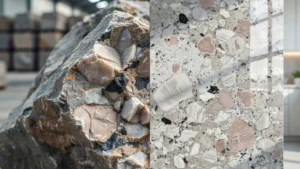
A granite slab is a massive, solid piece of natural stone cut directly from raw stone blocks extracted at a quarry. After workers quarry these dense blocks from the earth, industrial wire saws slice them into uniform sheets. Fabricators then polish one side of each sheet before sending the finished material to regional stone yards for residential projects.
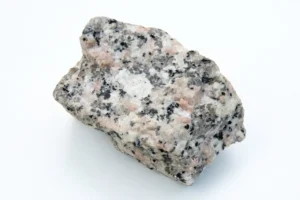
Unlike manufactured materials made from crushed stone and resin, every natural stone slab features a completely unique pattern formed by heat and pressure over millions of years. When you visit a stone yard, you see these giant sheets displayed upright on steel frames called A-frames. Fabricators take these raw sheets, measure your specific project area, and cut them to fit your exact counter layout.
Standard Granite Slab Size
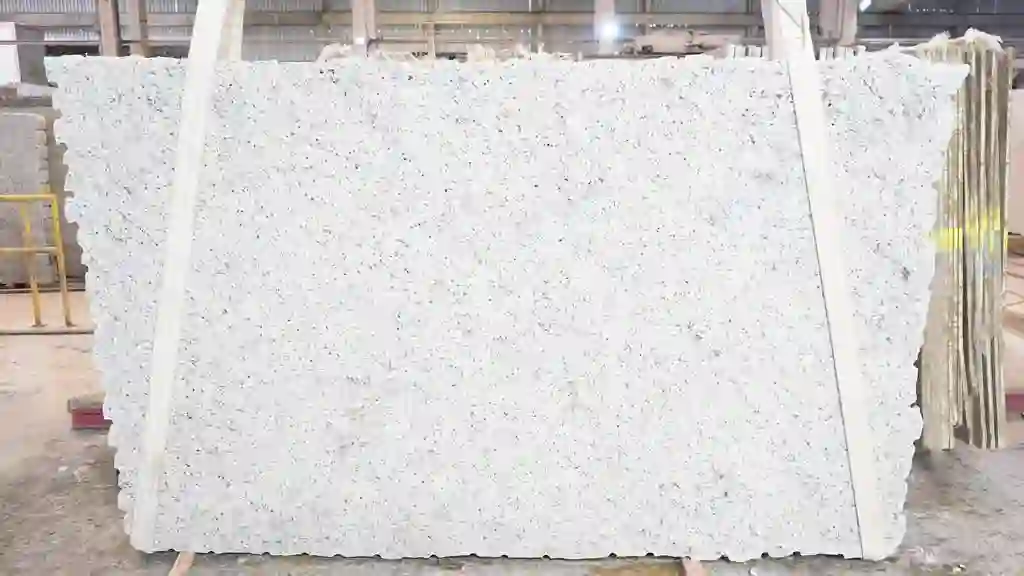
While every piece of natural stone varies slightly, manufacturers slice quarried blocks into standard dimensions to simplify shipping, storage, and fabrication.
| Measurement Category | ¾ Inch Thickness (2 cm) | 1 ¼ Inch Thickness (3 cm) |
| Standard Length | 9 to 10 feet (108″ – 120″) | 9 to 10 feet (108″ – 120″) |
| Standard Width | 5 to 6 feet (60″ – 72″) | 5 to 6 feet (60″ – 72″) |
| Total Surface Area | 45 to 55 square feet | 45 to 55 square feet |
| Weight per Sq. Ft. | ~13 lbs / sq. ft. | ~18 to 19 lbs / sq. ft. |
| Total Slab Weight | ~600 to 715 lbs | ~800 to 1,050+ lbs |
How big is a slab of granite on average?
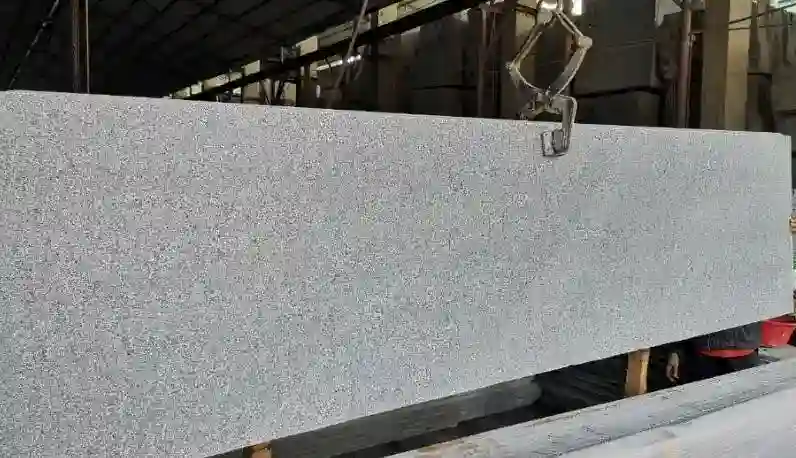
On average, a slab of granite measures around 112 inches long and 65 inches wide, give or take a few inches depending on the quarry. That average holds fairly steady across most granite types sold in the U.S., whether the stone came from Brazil, India, or a domestic quarry.
Here’s a good spot for a data table sourced from a stone industry association, such as the Marble Institute of America or a state building materials board, showing average slab dimensions by country of origin. A simple bar chart comparing slab length by supplier region would also help readers see the variation at a glance.
Averages are useful for planning, but they’re not a guarantee. Two slabs labeled the same granite type can still differ by a foot in either direction. That’s why measuring your actual space matters more than trusting a catalog number.
Granite Slab Dimensions Variability
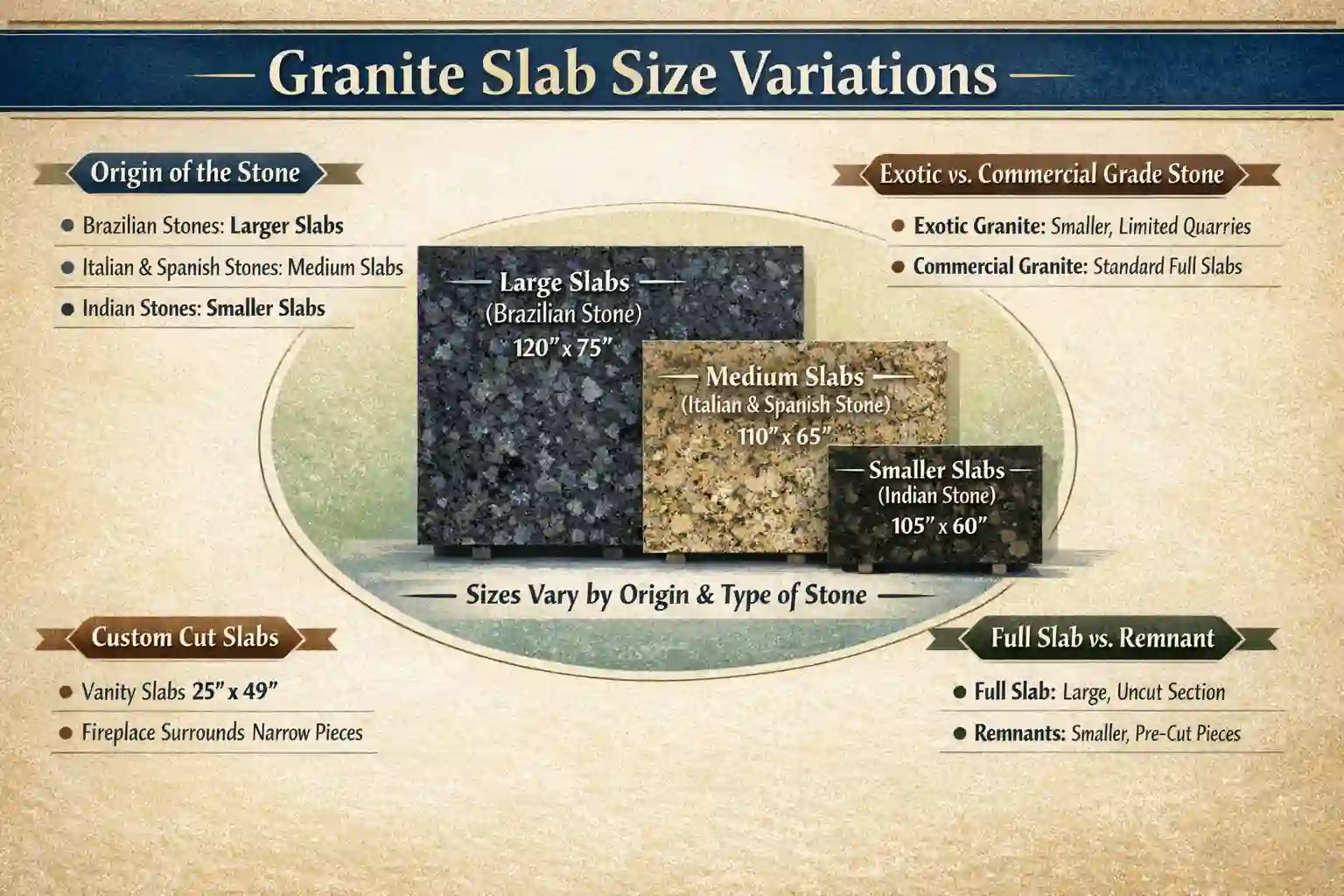
Granite slab dimensions vary because natural geological formations dictate the maximum length and height of extracted stone blocks. Quarry machinery, transportation limitations, and natural stone fissures also influence the final height and width of sliced sheets.
Variation factors include:
-
Quarry Block Integrity: Internal fractures limit how large a single block can be cut without breaking.
-
Regional Mineral Types: Dense granites allow larger cuts, while fragile stone patterns require smaller slices.
-
Shipping Limitations: Freight containers impose strict weight and length boundaries on overseas shipments.
Understanding these natural limitations prevents design surprises when matching multiple pieces across wider rooms.
How Long Is a Granite Slab?
A granite slab is typically 108 to 120 inches long, or roughly 9 to 10 feet. That length is long enough to cover most kitchen counter runs in a single piece, which cuts down on visible seams.
If your counter run is longer than 10 feet, which is common for larger kitchens or islands, you’ll need at least one seam. A good fabricator places that seam near a sink or corner, where it blends into the layout instead of cutting across an open stretch of counter.
How Many Square Feet Is a Granite Slab?
A standard granite slab contains between 45 and 55 square feet of natural stone. To determine how many square feet in a slab of granite you need for your project, calculate the total surface area of your planned counters and add a safety buffer for cutting waste.
For reliable budgeting, use this calculation method:
For example, if your total counter measurements add up to 35 square feet:
Since 42 square feet is just under the average single slab yield (45 to 55 sq. ft.), a single standard piece should comfortably cover your project.
Kitchen Granite Size Requirements
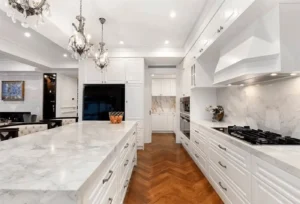
Knowing raw material sizes helps when designing kitchen layouts. The standard depth for a residential kitchen counter is 25.5 inches (including the 1.5-inch overhang past standard 24-inch base cabinets).
For kitchen islands, standard depths range from 36 to 48 inches to allow for seating overhangs. Because standard raw material widths run 60 to 72 inches, a single piece can easily cover a wide island without requiring center seams.
You can read about: Green Countertops Slabs
Tips for Choosing the Right Granite Slab
Picking the right slab isn’t just about color. A few practical steps make the process smoother:
- Measure first, shop second. Bring exact counter dimensions to the slab yard so you’re not guessing.
- See the actual slab, not a sample chip. Granite varies enough that a 4-inch sample won’t show you the full pattern.
- Ask about slab count and remnants. Confirm how many slabs your job needs and whether leftover pieces work for a matching backsplash.
- Check thickness against your cabinets. Older or custom cabinets may need extra support for a 3 cm slab.
- Confirm seam placement before cutting. A quick sketch of where seams will fall saves disappointment later.
Think of it like buying fabric for a custom suit. You don’t just pick the color, you plan the cut before the scissors ever touch the material.
Why Size Granite Slab Is Important
Selecting the appropriate material dimensions affects your project’s total cost, final look, and installation requirements:
-
Seam Minimization: Placing seams in high-traffic or high-visibility areas can disrupt natural stone patterns. Picking a piece long enough to span your main counter run reduces the need for visible joints.
-
Structural Support and Weight: Natural stone is heavy. A 3 cm thick piece covering 50 square feet weighs nearly 1,000 pounds. You must verify that your base cabinets and floor joists can handle this weight before delivery.
-
Cost Efficiency: Stone yards sell raw material by total square footage. Buying a massive piece for a tiny kitchen layout leaves you paying for unused waste.
-
Delivery Access: An oversized piece must clear doorways, tight hallways, stairwells, and corner turns during installation.
What Happens to Leftover Granite? (Remnants)
When a fabricator cuts out your counter shapes, the remaining stone sections are called remnants. Rather than throwing these pieces away, stone yards store and sell them at significant discounts.
Remnants work great for smaller home improvement projects:
-
Bathroom vanity tops and vessel sink bases
-
Fireplace mantels and hearth surrounds
-
Shower seats, thresholds, and window sills
-
Matching kitchen backsplashes or coffee tables
If your project requires less than 20 square feet of material, shopping for remnants can save you 30% to 50% compared to buying full raw sheets.
Final Thoughts
Knowing the answer to how big is a slab of granite is makes buying a countertop so much simpler. So whether you are doing a small vanity or a full luxury kitchen, knowing the size of a normal granite slab lets you get an idea of cost, excess, and seaming
Standard slabs most typically used slabs are 50-60 square feet in size, however larger, jumbo slabs are available for large scale projects. Confirm the exact size of your granite slab with your fabricator before you finalize your choice.
Professional granite countertop installation by SF Marble and Granite. Experienced stone fabricators guide you from start to finish for a perfect fit.
FAQs
Can I buy half a slab of granite?
Yes, many stone yards sell half slabs or remnants for smaller projects like bathroom vanities and small islands. However, availability depends on the supplier’s current stock and the popularity of the specific stone pattern.
How heavy is a full slab of granite?
A full standard slab weighs between 600 and 1,000+ pounds depending on its thickness and total surface area. A ¾ inch (2 cm) piece weighs about 13 lbs per square foot, while a 1 ¼ inch (3 cm) piece weighs roughly 19 lbs per square foot.
What is the standard thickness for kitchen granite?
The standard thickness for kitchen counters is 1 ¼ inches (3 cm). This thickness provides superior structural strength, supports longer overhangs without extra braces, and eliminates the need for plywood sub-decking underneath.
How do I calculate how many slabs I need for my kitchen?
Multiply your total counter square footage by 1.20 to account for 20% waste, then divide by 50 (the average square feet of a standard slab). If your total comes out higher than 1.0, you’ll need to purchase a second piece.