Choosing a tile that looks classy without being frigid is harder than you think. White tiles are overly sterile in intense light, or fade to nothing when the sun crosses the room. If you’ve searched for white travertine, you’re probably seeking a simple answer: Is this the natural stone that will finally deliver the warm, upmarket look you want for your house, without turning into a maintenance headache?
The quick answer is yes, provided it’s installed with the suitable finish and sealed properly for the space it’s going into. Elegant white travertine tile has been a popular choice for floors and walls for centuries since it manages to look polished without feeling rigid, and works in more rooms than most stone options. In this post, we’ll break down what the stone is truly composed of, where it performs best, how it stacks up against marble and porcelain, and what it costs to install so you can decide if it belongs in your next project.
Characteristics Of White Travertine Tile
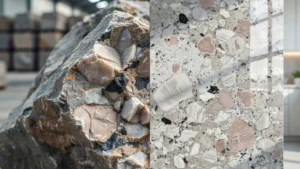
Travertine is formed from deposits of limestone, a calcium carbonate that has built up around mineral hot springs and cave systems over thousands of years. Every slab is a little different from the next because that’s the slow natural process. One tile has little pits, subtle veining and gradual color variations. No two batches are identical.
The color is not a uniform white. Its colour varies from ivory to cream to pale grey, depending on the quarry and the light on it. That range nevertheless reads as a clean, neutral color palette flooring option when set against darker cabinetry, fixtures or furniture.
It’s a natural stone tile, therefore it’s porous by its nature. During processing, manufacturers fix the small surface holes with resin or a fine grout, which gives “filled and honed travertine” its name. They can also be found unfilled for a coarser, more textured look that some homeowners like for outdoor spaces or older home repairs.
Most of the travertine offered for residential buildings comes from quarries in Turkey, Italy or Mexico. The provenance might affect the tone of the stone, as well as the price. Usually a good clue of quality control further down the line is a provider who can tell you where the material was quarried.
Benefits Of Using White Travertine Tile
White travertine holds up well in both hot and cold climates, which is part of why it shows up on patios as often as it does inside homes. It stays noticeably cooler underfoot than porcelain or concrete in direct sun, so it’s a common material for pool decks and outdoor travertine tile installations.
It also has a natural texture that darker, glossier stones don’t offer. Bare feet find as much grip on a honed travertine floor as they would on textured porcelain, without the coldness that comes with pure polished marble.
For anyone chasing a timeless elegant flooring look, the stone brings that on its own. It doesn’t need heavy pattern work or bold grout lines to look finished. A simple layout in crisp neutral tones does most of the visual work for you.
One more point worth knowing: travertine ages differently than manufactured tile does. Small surface changes over the years, from a slight sheen where foot traffic is heaviest to subtle color settling, tend to add character rather than making the floor look worn out the way vinyl or laminate eventually does.
Why Choose White Travertine for Flooring and Walls
This is a stone that homeowners love to use as flooring and also as a wall material without looking out of place. Use the same tile from a shower wall down to the bathroom floor, and the room immediately feels larger, because the eye doesn’t strike a hard visual stopping point between surfaces.
Interior designers employ it, too, to soften interiors that tend toward too modern or too sharp-edged. White travertine tile for exquisite floors and walls naturally mixes with exposed wood beams, matte black fixtures and brushed brass, so it works with a wide range of styles instead of tying a property into one restricted design.
For those constructing a minimalist interior design, the stone’s subtle veining gives a room texture without adding visual clutter. It reads as serene, not busy, which is just the ticket for that kind of environment. Older homes sometimes include rooms with difficult angles or slanted ceilings and these rooms often tend to look cleaner when the flooring and walls are the same soft neutral tone.
Travertine Finishes Explained
Not all travertine tile looks or feels the same, and the finish is the reason why. Picking the wrong one for a given room is the most common mistake homeowners make.
Honed travertine has a matte, flat surface with the pores filled in. It’s the most common finish for indoor floors because it doesn’t show scratches the way a glossy surface would, and it offers decent grip underfoot.
Polished travertine goes through extra buffing for a glossy, reflective surface. It looks closer to marble and works well on accent walls or a travertine backsplash, though it gets slippery when wet, so it’s not the first choice for bathroom or shower floors.
Filled travertine has the natural surface holes packed with resin or matching grout before the tile ever leaves the factory. Filled and honed travertine is the standard combination for most kitchens and living areas, since it’s smoother, easier to clean, and less likely to trap dirt in the pits.
Tumbled and brushed travertine keep more of the natural pitting and a rougher, worn texture. These finishes show up most often on travertine pavers and outdoor patios, where a rustic, aged look suits the setting better than a polished surface would.
Best Rooms & Applications for White Travertine
Flooring
Honed or filled travertine floors work well in kitchens, hallways, and living rooms. The stone handles daily foot traffic fine, and light scuffs tend to blend into the natural variation instead of standing out the way they would on a solid-color tile.
Walls & Backsplash
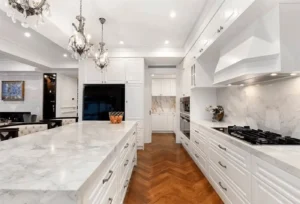
A travertine backsplash brings texture into a kitchen without competing with countertops or cabinetry for attention. Because the base color stays neutral, it pairs with almost any cabinet finish, from white shaker to dark walnut or navy.
Bathrooms
Travertine works on both bathroom floors and shower walls, though it needs a slip-resistant finish underfoot and a quality sealant to handle constant moisture. Adding travertine trim around a shower niche, mirror, or tub deck gives the room a finished, built-in look instead of a tiled-in-a-hurry one.
Outdoor Patios & Pool Decks
This is where white travertine tends to earn its reputation. A travertine pool deck stays noticeably cooler in direct sun than concrete or standard porcelain, and the natural texture helps cut down on slipping around wet edges. Outdoor travertine tile needs a proper seal against water penetration, especially in climates with freeze-thaw winters, or the surface can crack and flake over a few seasons.
White Travertine vs. Marble vs. Porcelain
Homeowners comparing stone options usually land on these three. Here’s how they stack up against each other:
| Feature | White Travertine | Marble | Porcelain |
| Look | Warm, matte, natural veining | Cool, glossy, dramatic veining | Consistent, can mimic stone |
| Feel underfoot | Textured, warmer in sun | Smooth, cold | Smooth, temperature varies |
| Maintenance | Needs periodic sealing | Needs frequent sealing, stains easily | Low maintenance, no sealing |
| Best for | Floors, walls, outdoor patios | Countertops, accent walls | High-traffic floors, budget projects |
| Typical cost | Mid-range | Higher | Lower to mid-range |
Marble tends to stain faster because it’s softer and reacts to acidic spills like wine, coffee, or citrus. Porcelain skips the sealing step entirely since it’s manufactured rather than quarried, but it can’t fully match the depth of color that comes from real limestone sediment. Travertine sits in the middle ground: more natural character than porcelain, and less maintenance sensitivity than marble.
Cost of White Travertine Tile
White travertine tile typically runs between $5 and $15 per square foot for materials, with installation adding another $5 to $10 per square foot depending on the layout and finish chosen. Polished and large-format tiles usually sit at the higher end of that range, while standard honed tiles in common sizes cost less.
Travertine pavers for patios and pool decks are often priced separately from interior tile, since they’re cut thicker to handle outdoor wear and foot traffic. Outdoor travertine tile projects tend to run higher overall once sealing and drainage slope work get factored into the total.
Total project cost also depends heavily on how much cutting the layout requires. A straightforward grid pattern costs less to install than a herringbone or versailles-style layout, since a more intricate pattern means more labor hours and more waste from cuts.
Maintenance & Sealing
Travertine needs resealing roughly every one to two years indoors, and closer to once a year outdoors where it takes more direct sun and rain. A simple water test tells you when it’s due: splash a few drops on the surface, and if they soak in within a couple of minutes instead of beading up, it’s time to reseal.
Stick to a pH-neutral stone cleaner for regular mopping. Vinegar, bleach, and other acidic or abrasive cleaners eat into the calcium carbonate stone over time and dull the finish. A soft mop and warm water handle most everyday messes just fine.
Wipe up spills from wine, coffee, or citrus fairly quickly rather than letting them sit. Filled and honed travertine resists staining better than an unfilled or heavily polished surface, but it’s still a porous material underneath that finish.
Pairing White Travertine With the Rest of Your Home
White travertine works best when it’s paired with something else, rather than left to stand entirely on its own. A floor in crisp neutral tones gives a kitchen or bathroom room to add contrast elsewhere, whether that’s a darker stone countertop, black hardware, or a patterned rug in an adjoining space.
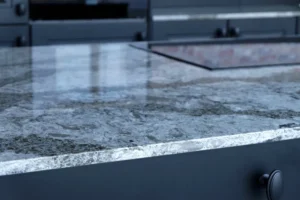
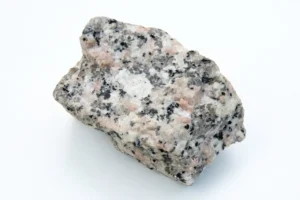
Countertops are one of the easiest pairings to get right. Granite holds up to daily kitchen use better than most stones, and it comes in tones that sit comfortably next to white travertine tile for elegant flooring and walls without competing for attention. Homeowners planning a full kitchen update often handle the flooring and the countertops as one connected project instead of two separate decisions made months apart.
At SF Marble and Granite, we handle both sides of that kind of project, from stone flooring to countertop fabrication and installation. If a kitchen remodel is part of the plan, our Granite Countertop Installation in Lowell service covers material selection, templating, and installation from start to finish, so the whole space comes together instead of looking like two mismatched updates stitched side by side.
Final Thoughts
White travertine tile for elegant flooring and walls isn’t a trend that’s going to look dated in five years. It’s been a go-to material for centuries because it balances warmth and refinement in a way few other stones manage, whether it’s laid across a living room floor or wrapped around a shower wall.
If it’s the right fit for your space, the finish and sealing choices matter just as much as the stone itself. Contact us at SF Marble and Granite to talk through options for your flooring, walls, or countertops before the project gets underway.
FAQs
Is white travertine tile good for a bathroom?
Yes, white travertine tile works well in bathrooms when it’s honed or tumbled for slip resistance and properly sealed against moisture. The natural texture provides better grip than polished stone, and resealing every year or two keeps water from soaking into the porous surface and causing long-term damage.
Choose a honed or tumbled finish for the floor, and save polished travertine for accent walls where slipping isn’t a safety concern.
Does white travertine tile stain easily?
White travertine tile can stain if spills sit on an unsealed surface, since it’s a porous natural stone by nature. Filled and honed travertine resists staining better than unfilled versions. Wiping up acidic spills like wine or citrus promptly, along with resealing every one to two years, keeps staining to a minimum.
Kitchens see the most spill exposure, so that’s the room where sealing schedules matter most.
Is white travertine tile more expensive than porcelain?
Yes, white travertine tile usually costs more than porcelain because it’s a quarried natural stone rather than a manufactured product. Material prices run from about $5 to $15 per square foot for travertine, compared to roughly $2 to $10 for porcelain, though porcelain skips the ongoing cost of periodic sealing.
Factor in resealing costs over ten years when comparing the two, not just the upfront material price.
Can white travertine tile be used outdoors?
Yes, white travertine tile works outdoors on patios, walkways, and pool decks when it’s tumbled or brushed for slip resistance. Outdoor travertine tile needs a quality sealant to prevent water penetration and cracking, especially in climates with freezing winters, and resealing should happen roughly once a year to hold up.
Ask your supplier for an outdoor-rated thickness, since interior tile is usually cut thinner than what patios and decks require.
What is the difference between filled and unfilled travertine?
Filled travertine has its natural surface holes packed with resin or matching grout for a smoother, easier-to-clean finish. Unfilled travertine keeps the raw, pitted texture, giving it a rustic look that’s common on travertine pavers and outdoor projects where a worn-in appearance suits the space better than a polished one.
Indoor kitchens and bathrooms almost always use filled travertine, while unfilled versions show up more on patios and older-style courtyards.