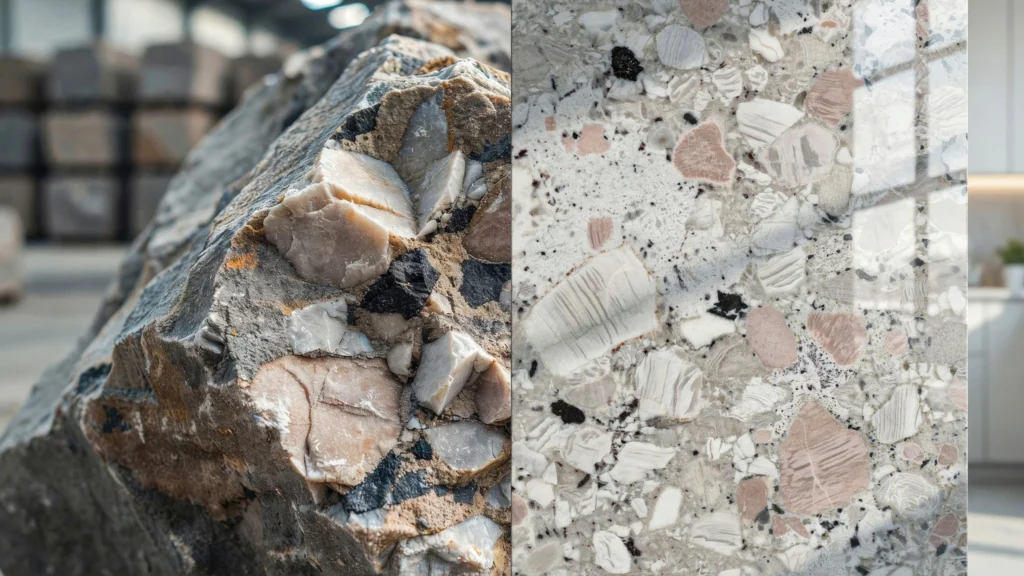
Granite has been used in homes for generations, but many buyers still ask, “Is Granite Natural or Artificial?” The answer is simple: true granite is a natural stone formed deep inside the Earth. It is quarried, cut, and polished for countertops and other surfaces.
Understanding where granite comes from helps you choose with confidence. S F Marble & Granite can help you understand the material, finish, and installation needs before you order a slab.
Is Granite Natural or Artificial?
True granite is a natural igneous rock. It forms when molten rock called magma cools and crystallizes slowly beneath the Earth’s surface. Because the cooling happens underground, granite develops visible interlocking mineral crystals. The National Park Service identifies granite as an intrusive igneous rock, with quartz and feldspar among its main minerals.
A granite slab comes from a natural stone deposit and is later processed into a usable surface.
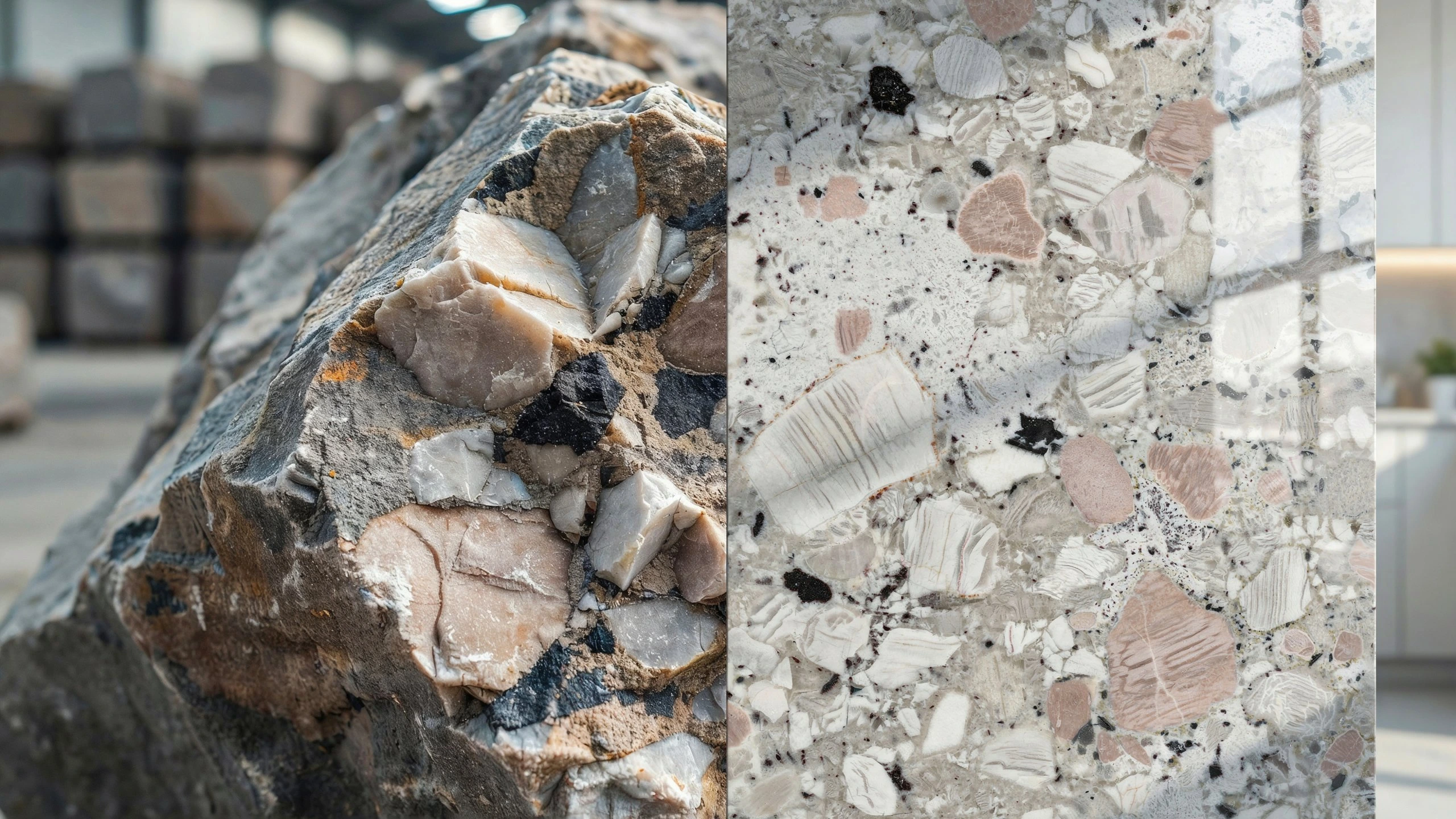
The key difference is between genuine stone and manufactured materials that may look similar. A slab can have variations in color, grain, mineral patterns, and small natural features. Those differences are part of the stone’s character.
How Is Granite Formed?
Granite forms through a slow geological process deep below the surface. The basic process has four stages:
- Magma develops underground. Molten rock collects beneath Earth’s surface.
- The magma remains underground. It cools slowly because surrounding rock insulates it.
- Minerals crystallize. Quartz, feldspar, and other minerals grow as the magma cools.
- Uplift and erosion expose the rock. Over very long periods, buried granite can become exposed.
Slow cooling gives granite its coarse, crystalline texture. USGS explains that intrusive rocks such as granite cool slowly underground, allowing mineral grains to grow relatively large.
This process explains why slabs can vary in color, grain, and mineral pattern from one deposit to another.
What Is Granite Made Of?
Granite is mainly made of minerals rather than a single substance. Its appearance depends on the minerals present and how they formed together.
| Mineral | What it can contribute |
|---|---|
| Quartz | Glassy, clear, gray, or white areas |
| Potassium feldspar | Pink, cream, white, or reddish tones |
| Plagioclase feldspar | White or gray areas |
| Biotite | Dark brown or black specks |
| Muscovite | Light, reflective flakes |
| Amphibole | Dark grains and accents |
The National Park Service describes granite as consisting predominantly of alkali feldspar and quartz, with smaller amounts of plagioclase feldspar and dark minerals such as biotite, muscovite, or amphibole.
This mineral mix creates the familiar speckled or “salt-and-pepper” appearance found in many granite varieties. Other deposits can show stronger movement, larger crystals, or dramatic color changes.
Is Granite Man Made or Mined?
Granite used for countertops is mined from natural stone deposits. Large blocks are extracted from quarries and transported to processing facilities. There, blocks are cut into slabs, finished, inspected, and prepared for fabrication.
Quarrying does not create granite. It removes naturally occurring stone from the Earth.
The path from quarry to countertop is:
Natural deposit → quarrying → block cutting → slab production → surface finishing → fabrication → installation
Fabricators may cut openings for sinks and cooktops and shape the edges. These steps change the form of the stone, but not its geological origin.
This distinction matters when you compare granite with manufactured surfaces. Granite starts as natural rock, while engineered materials are produced through a manufacturing process.

What Is Artificial Granite?
That term is not the same as geological granite. It is often used informally for manufactured surfaces that have a granite-like appearance.
Some engineered surfaces combine minerals, binders, pigments, or other ingredients under controlled manufacturing conditions. Composition varies by product.
A surface can have a granite pattern without being granite. When shopping, ask the supplier:
- Is this slab natural stone or engineered material?
- What is the material’s exact product name?
- Where was it produced or quarried?
- What care does the manufacturer recommend?
- Does the material need sealing?
These questions can prevent confusion between similar-looking products.
How Does Granite Differ from Artificial Stone?
Natural stone and manufactured stone can both be attractive countertop choices, but they are different materials.
| Feature | Natural stone | Manufactured stone |
|---|---|---|
| Origin | Natural geological deposit | Factory-produced |
| Formation | Magma cools and crystallizes underground | Ingredients are processed and formed |
| Appearance | Natural variation from slab to slab | Often more controlled patterns |
| Mineral structure | Naturally formed crystals | Depends on the product |
| Fabrication | Cut and polished after quarrying | Cut and finished after manufacturing |
| Care | Depends on stone and finish | Depends on the specific product |
The useful question is whether its material, maintenance, and performance fit your project.
If you want the geological material called granite, confirm that the product is sold as natural stone rather than a granite-look alternative.
How Can You Tell Natural Stone from Artificial Stone?
Visual inspection can provide clues, but appearance alone does not always prove what a countertop is made of.
Natural stone often shows mineral crystals and irregular patterns. The same slab can contain changes in color, grain size, and mineral distribution.
Use these practical checks:
- Check the product label. Look for the exact material name.
- Ask for the slab origin. Confirm whether it is natural stone.
- View a full slab when possible. Small samples may not show the complete pattern.
- Ask about care instructions. These can help identify the material category.
- Request technical documentation. Supplier or manufacturer information is more reliable than visual guessing.
Do not rely only on color or pattern. Some manufactured surfaces are designed to imitate natural stone closely.
You May Also Read This Is Granite Intrusive or Extrusive?
Is Natural Granite Better for Countertops?
Granite can be a practical countertop material because it offers a hard mineral structure and many colors and patterns. Suitability depends on the stone, finish, fabrication, and installation.
Before choosing a slab, consider:
- Color and pattern: Natural variation means the slab may differ from a small sample.
- Surface finish: Polished and honed finishes can change the look and feel.
- Maintenance: Follow care instructions for the specific stone.
- Sealing: Some stones benefit from sealing, depending on absorption and use.
- Fabrication: Sink cutouts, edge profiles, and seams should be planned before installation.
- Support: Large layouts may need careful cabinet and structural preparation.
Choose based on both appearance and daily use.
What Should You Check Before Buying Granite?
Before paying for a slab, inspect the material and confirm what you are buying.
Use this checklist:
1. Confirm the material
Make sure the product is genuine granite if that is what you want.
2. Inspect the full slab
Look for the overall pattern, natural features, and areas that may affect your layout.
3. Confirm measurements
Verify cabinet dimensions, sink locations, appliance openings, overhangs, and seams.
4. Discuss the finish
Ask how the selected finish affects appearance and routine care.
5. Ask about maintenance
Get clear instructions for cleaning and any recommended sealing schedule.
6. Review fabrication
Confirm edge profiles, seams, cutouts, and finished dimensions before fabrication begins.
These steps can reduce surprises during installation.
How Should You Care for a Granite Countertop?
Granite care starts with knowing the exact stone and finish. For routine cleaning, use the care method recommended for your slab instead of assuming every stone needs the same products.
A simple routine includes:
- Wipe spills promptly.
- Use a cleaner suitable for natural stone.
- Avoid harsh products unless a stone-care professional or manufacturer confirms they are safe.
- Use cutting boards and trivets when appropriate.
- Follow professional advice about sealing and resealing.
- Clean the surface regularly to prevent buildup.
Good care helps preserve the stone’s finish. If you notice stains, chips, cracks, or dull areas, identify the problem before choosing a product.
Professional fabrication also matters. Accurate measurements, proper support, clean cutouts, and careful handling help protect the slab.
S F Marble & Granite:
S F Marble & Granite focuses on helping customers make informed choices about marble, granite, and other countertop materials. The project provides practical information about stone selection, fabrication, installation, care, and common countertop questions, helping homeowners understand what they are buying before work begins.
Final Thoughts
Granite is a natural igneous rock formed when magma cools slowly beneath the Earth’s surface. Its quartz, feldspar, and other minerals create the colors and crystal patterns that make each natural slab distinctive.
When comparing countertop materials, confirm the composition, inspect the full slab, and understand its care and installation needs. S F Marble & Granite can help you evaluate your options and plan a countertop that fits your project.
For help with granite selection, fabrication, or countertop installation, Contact us today to discuss your project.
FAQs
Is granite a natural stone?
Yes. Granite is a natural igneous rock formed from slowly cooled magma underground.
Can granite be man made?
True granite is not man made, although manufactured surfaces can be designed to look like granite.
How does granite form?
Granite forms when magma cools slowly underground and its minerals crystallize into solid rock.
Is a granite-look surface real granite?
No. A granite-look surface may be manufactured to resemble natural stone.
Does granite need sealing?
Some slabs may benefit from sealing, depending on absorption, finish, and intended use.