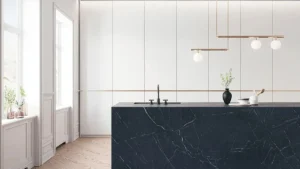
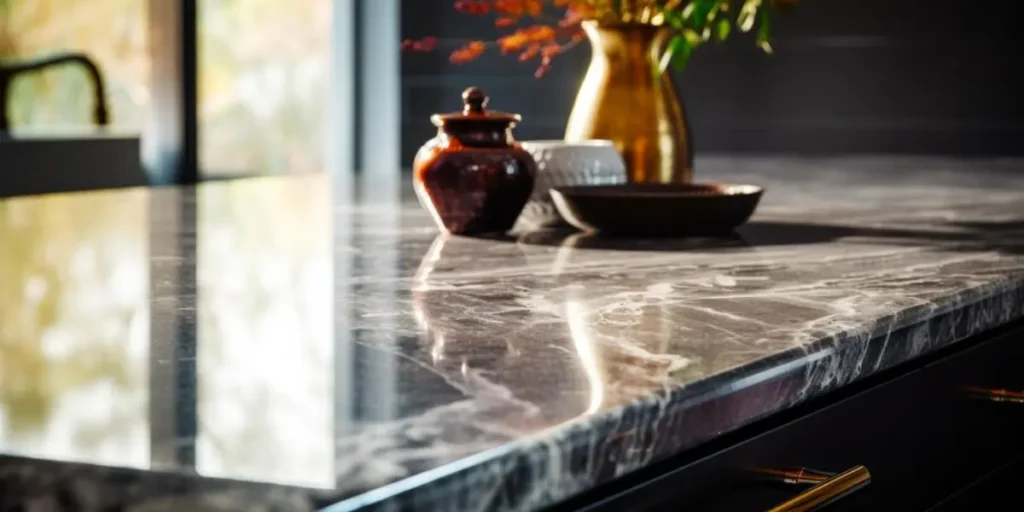
What Is Soapstone Countertops?
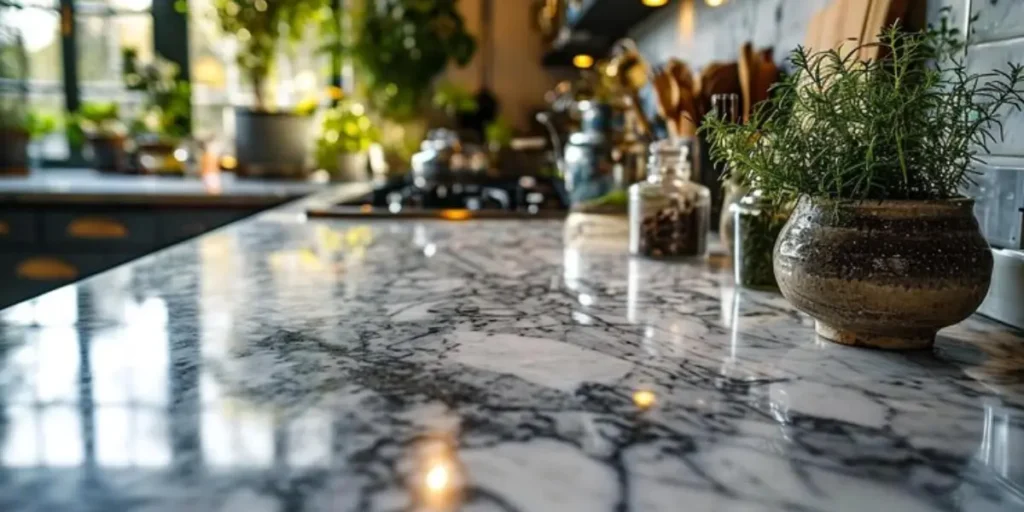
Soapstone countertops are slabs of natural metamorphic rock composed primarily of talc, chlorite, and magnesite, quarried and cut for use as kitchen and bathroom surfaces. The talc content gives the stone its soft, soapy texture and its name, while its mineral density makes it naturally resistant to heat, acid, and bacteria.
Soapstone forms deep underground under intense heat and pressure. That process packs the mineral structure tightly, which is why the stone doesn’t absorb liquids the way limestone or sandstone does. You won’t find pores that trap wine, oil, or tomato sauce.
Color-wise, soapstone starts out in soft gray, blue-gray, or green tones when freshly cut. Over time, exposure to air and mineral oil deepens the stone to a rich charcoal or near-black shade. That’s not damage. That’s the stone doing exactly what it’s supposed to do.
Why Is Soapstone Used in Kitchens?
Soapstone has several qualities that make it practical for kitchen work. Its very low water absorption means spills do not readily soak into the stone. It also handles heat very well and does not need the routine sealing required by many other natural stones.
These traits can make kitchen countertops soapstone a good choice for active cooking spaces. Hot cookware, oily ingredients, and acidic foods create fewer surface-care concerns than they do with some other stones.
Still, low maintenance does not mean no care. The main tradeoff is softness. A dropped pan, dragged object, or sharp edge can leave a visible mark.
Soapstone countertops pros and cons
Every stone has trade-offs, and soapstone is no exception. Knowing them upfront saves you from a surprise six months into ownership.
The Pros
Soapstone resists acid completely, so lemon juice, wine, and vinegar won’t etch or stain the surface the way they damage marble. It’s also non-porous, meaning bacteria and liquids have nowhere to hide without any sealant required.
Heat isn’t a concern either. You can set a hot pan straight from the stove onto soapstone without a trivet, something granite and quartz owners get nervous about. The stone also has a soft, warm feel that many homeowners prefer over the cold touch of granite or the plastic feel of some quartz blends.
Scratches are easy to fix. A light sanding and a coat of mineral oil erase most surface marks, which is more forgiving than trying to repair a chipped quartz edge.
The Cons
Soapstone is softer than granite or quartz, so it dents and scratches more easily under heavy use. It also darkens and develops a patina over time, which some homeowners love and others find unpredictable if they wanted a consistent look.
Slab availability is more limited than quartz, since soapstone comes from a smaller number of quarries worldwide. Color choice is narrower too. If you want bold veining or bright tones, this isn’t your stone.
Weight is another factor people forget to plan for. Soapstone runs dense, so your cabinets need proper support before installation, and moving a slab isn’t a two-person job. Talk to your fabricator early about cabinet reinforcement if your kitchen has an older or lighter-duty base.
Soapstone Countertops vs Quartz
Soapstone and quartz are both low-maintenance choices that generally do not require routine sealing, but they perform differently. Soapstone is natural, highly heat resistant, and softer, while quartz is engineered, more scratch resistant, and available in a much wider range of colors and patterns.
Here is the practical comparison:
| Feature | Soapstone | Quartz |
|---|---|---|
| Material | Natural stone | Engineered surface |
| Heat resistance | Very high | More limited because of resin |
| Scratch resistance | Lower | Higher |
| Sealing | Not normally required | Not normally required |
| Color choices | Limited natural shades | Wide range |
| Patina | Develops over time | Usually stays more consistent |
| Daily cleaning | Simple | Simple |
Choose soapstone if you want a natural material, often cook with hot cookware, and like a changing surface.
Choose quartz if scratch resistance, consistent appearance, and a large color selection matter more to you.
Neither option wins in every kitchen. The right choice depends on how the space is used.
Choosing the Right Soapstone for Your Kitchen
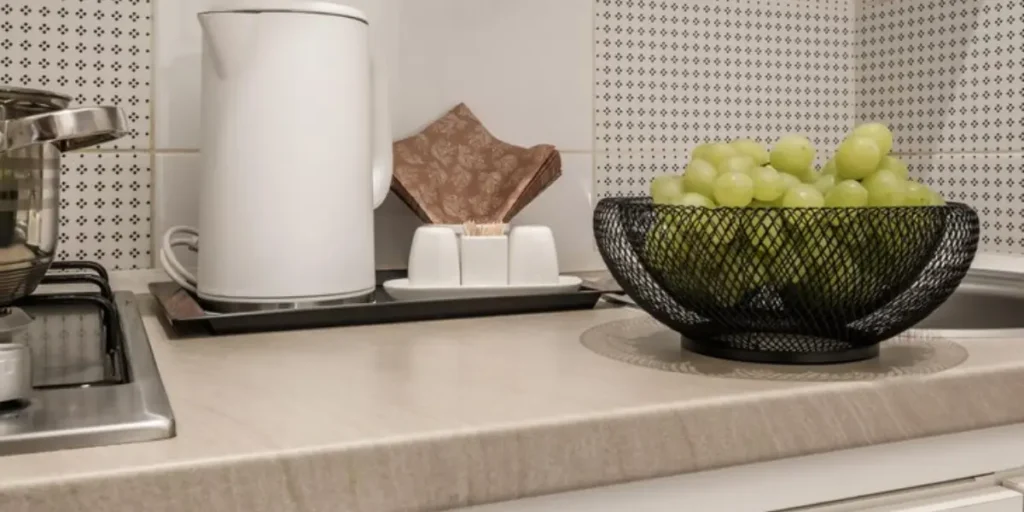
The right soapstone slab should match your kitchen’s lighting, cabinet color, layout, edge needs, and tolerance for visible wear. Always inspect the actual slab when possible because natural variation can change the color, veining, and overall appearance from one piece to another.
Start with the full slab, not a tiny sample. A small sample may hide large veins or color changes that become important across a long counter.
Then check the stone in your home’s lighting. Gray stone can look blue, green, or nearly black depending on daylight and artificial light.
Ask about:
- Slab thickness
- Vein direction
- Edge profiles
- Seams
- Backsplash design
- Sink cutouts
- Overhang support
- Scratch repair methods
A practical layout matters too. An island may show a dramatic vein beautifully. A busy countertop with many appliances may benefit from a quieter slab.
If you are choosing soapstone counter tops for a smaller kitchen, consider how the dark surface works with your cabinets. Light walls, warm wood, and good lighting can keep the room from feeling heavy.
Soapstone Countertops Colors and Styles
It come in a range of colors and styles, each offering a unique look and feel to complement different kitchen designs. Here are popular colors and styles to consider:
Colors
- Classic Gray: The most common color, ranging from light gray soapstone countertops to deep charcoal. Gray soapstone countertops pairs well with various cabinet colors and kitchen styles.
- Green Tones: Some soapstone varieties exhibit green soapstone countertops hues due to chlorite mineral content. These countertops add a touch of natural earthiness to the kitchen.
- Black: Dark charcoal or black soapstone countertops create a striking and sophisticated look, ideal for modern and contemporary Soapstone Kitchen Countertop designs.
Styles
- Natural Matte Finish: Most countertops feature a natural matte finish that develops a patina over time, enhancing the stone’s character and beauty.
- Polished Finish: For a sleeker appearance, soapstone can be polished to a smooth and shiny finish. However, keep in mind that polished soapstone may require more maintenance to preserve its luster.
- Veining and Patterns: Soapstone often exhibits unique veining and patterns, adding visual interest to the countertops. Choose a style with veins that complement your kitchen’s aesthetic.
Conclusion
In conclusion, choosing countertops for your kitchen can be a rewarding decision, offering timeless beauty, durability, and unique characteristics. By understanding the pros and cons, as well as comparing soapstone to other materials like quartz, you can make an informed choice that suits your lifestyle and design preferences. Whether you prefer the natural elegance of soapstone’s matte finish or the versatility of quartz, SF Marble And Granite Inc is here to guide you through the selection process and provide expert installation services.
Enhance Your Kitchen with Premium Granite Countertops
At SF Marble & Granite Inc., we bring over a decade of experience to every project. Our hand-selected range of premium light granite countertops is crafted to elevate your kitchen’s look and performance. Whether your style leans toward modern minimalism or traditional elegance, our expertise ensures a perfect match to your décor. For quality craftsmanship and reliable service, explore our professional Countertops Installation in Lowell options. Let us help you transform your kitchen into a warm, inviting space you’ll love for years to come.
Contact SF Marble And Granite Inc
For personalized assistance with choosing soapstone countertops or any other natural stone surfaces, reach out to SF Marble And Granite Inc. Visit our showroom at 755 Dutton St., Lowell, MA 01851, or contact us via email at sfmarbleandgranite@gmail.com or phone at 978-459-5821. Our team of professionals is dedicated to helping you transform your kitchen with quality craftsmanship and exceptional service. Enhance your home with the timeless beauty of soapstone contact us today!
FAQs
Are soapstones available in white?
Yes, white soapstone countertops can come in shades of dark or light gray. While white soapstone is less common than gray or black, it can add a clean and elegant look to your kitchen.
How can I maintain black soapstone countertops?
Black soapstone require regular cleaning with mild soap and water. Minor scratches or marks can often be concealed with mineral oil or sanding.
Do green soapstone countertops change color over time?
Yes, green soapstone countertops may develop a deeper color and richer patina over time, which enhances their natural beauty.
Are grey soapstone countertops prone to staining?
Soapstone is naturally stain-resistant, including gray varieties. However, it’s still recommended to clean up spills promptly to maintain the stone’s appearance.
What is the difference between light gray and dark gray soapstone countertops?
Light gray soapstone countertops have a softer and lighter appearance, while dark gray soapstone offers a more dramatic and bold look. Both options provide a classic and timeless aesthetic for your kitchen.