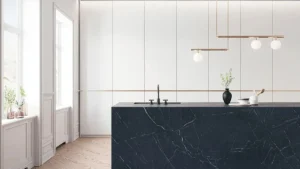
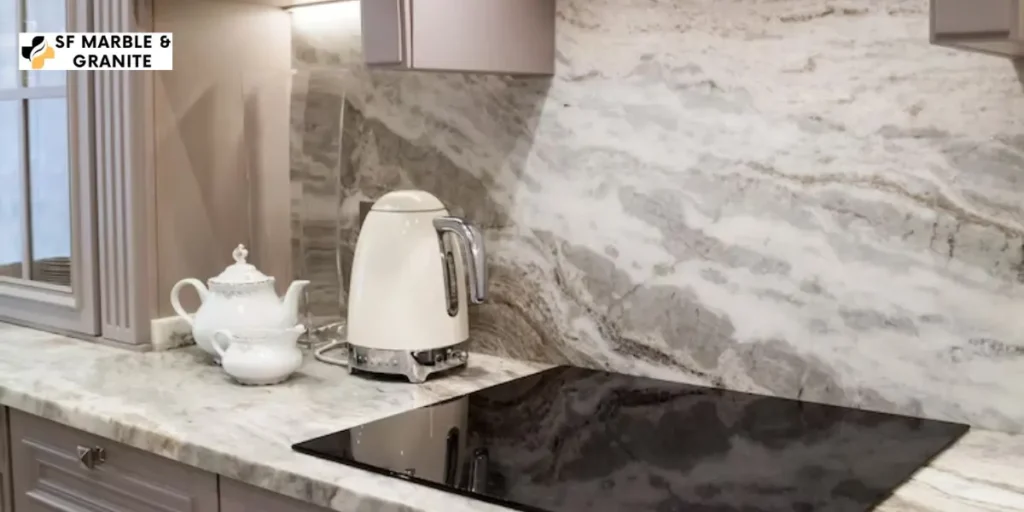
You’re staring at two slabs in a showroom, and the sales rep keeps saying words like “engineered” and “metamorphic” as if you already know the difference. I get it. Picking between these two materials feels bigger than it should, mostly because both show up in nearly every kitchen photo you’ve saved, and both cost real money to get wrong.
Here’s the quick answer before we get into the details: granite gives you a natural stone with one-of-a-kind veining and strong heat resistance, while quartz gives you a manufactured surface that resists stains without sealing and comes in far more consistent colors. The right pick in the quartz vs granite countertops debate comes down to how much upkeep you’re willing to do, your budget per square foot, and whether you want a slab that’s genuinely unique or one that matches a sample exactly. I’ll walk you through both materials, put them side by side, and show you where marble fits into the picture too.
Quartz Countertops
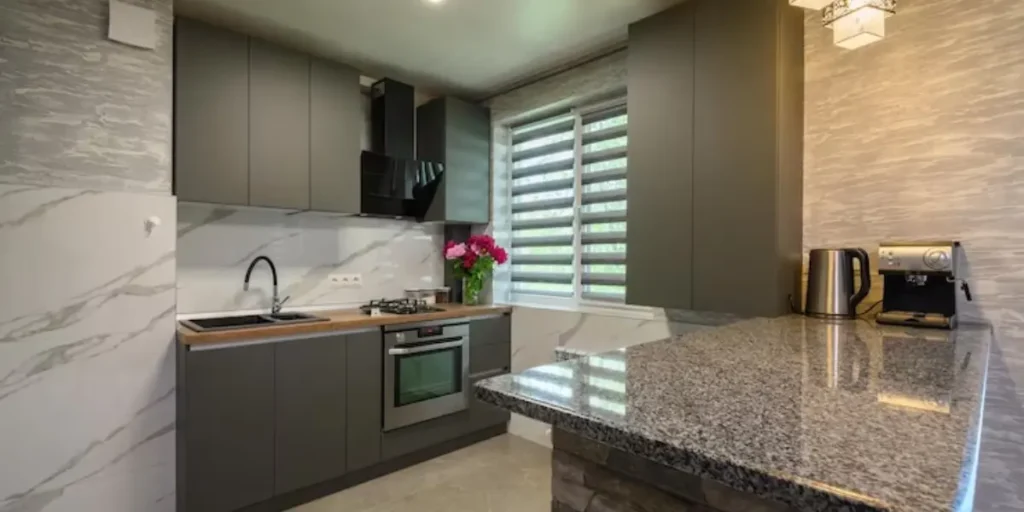
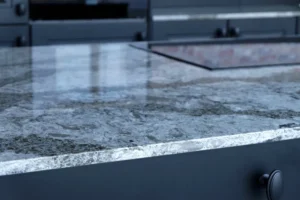
Quartz countertops aren’t cut from a quarry. They’re manufactured, usually from about 90% ground natural quartz mixed with resins and pigment, then pressed into slabs. That process is why quartz looks so uniform from one edge of the kitchen to the other.
I’ve installed quartz in homes where the client wanted a specific white marble look without the marble maintenance. It delivered every time. The surface is non-porous, so it doesn’t need sealing, and it shrugs off red wine, coffee, and tomato sauce without staining.
It’s not indestructible, though. Quartz can discolor under prolonged direct sunlight, and it doesn’t handle a hot pan straight off the stove as well as granite does. Set a trivet down and you’ll never have a problem. Skip that step often enough and you’ll eventually see a scorch mark or a hairline crack near the edge.
Quartz runs on the pricier side, and the exact cost depends on the brand, the color, and the edge profile you choose. Popular manufacturers include Caesarstone, Silestone, and Cambria, and each one has its own warranty terms worth reading before you sign a contract.
Pros of Quartz Countertops
Durability
Quartz is generally highly resistant to scratches, and cracks. This makes them an excellent choice for high-traffic areas like kitchens and bathrooms.
Low Maintenance
Unlike other stone countertops, quartz countertops do not require sealing. They are non-porous, and resistant to stains and bacteria. This makes them easy to clean and maintain.
Variety
Quartz countertops come in a wide range of colors and patterns, allowing for greater customization and flexibility in design.
Consistency
Unlike natural stone countertops, which can have variations in color and pattern, quartz countertops are consistent in appearance.
Cons of Quartz Countertops
Heat Resistance
Quartz countertops are not as heat resistant as natural stone countertops.
Price
Quartz countertops prices vary in different ranges depending on their types.
Installation
Quartz countertops are heavy and require professional installation. This can add to the overall cost of the project.
Limited Repair Options
If a quartz countertop is damaged, it can be difficult to repair. In some cases, the entire countertop may need to be replaced.
Overall, quartz countertops are a durable and low-maintenance option for kitchens and bathrooms. However, they may not be suitable for those who frequently use hot pots and pans or are on a tight budget.
Granite Countertops
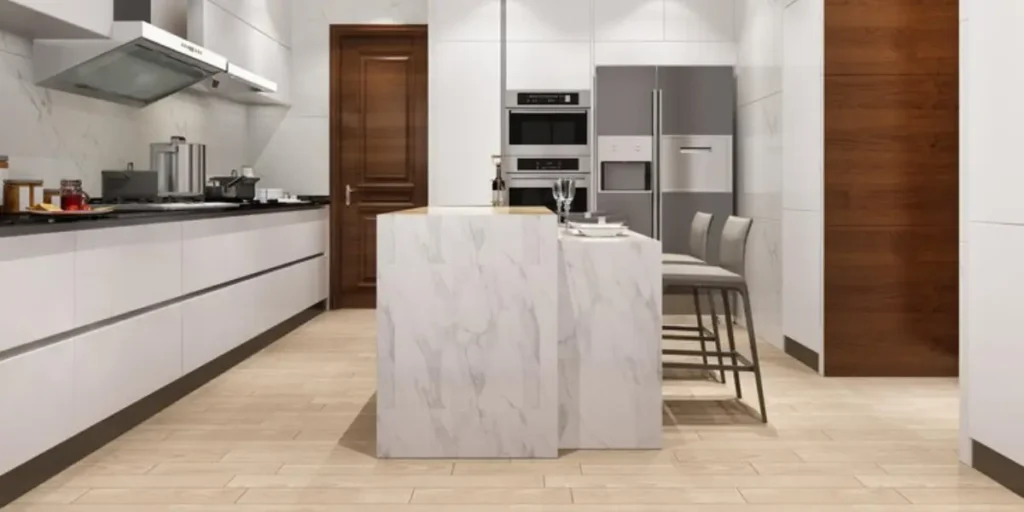
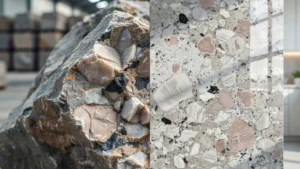
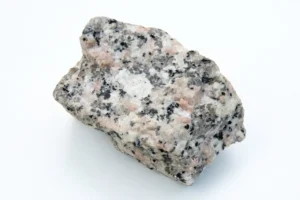
Granite is the original stone countertop, quarried in large blocks from places like Brazil, India, and parts of the United States, then cut into slabs and polished. No two slabs are exactly alike, which is either the whole appeal or a minor headache depending on how much control you want over the final look.
Granite handles heat better than almost any other countertop material on the market. Set a hot pot straight from the stove and it won’t scorch. It’s also scratch resistant enough that a stray knife won’t leave a mark, though I still tell every client to use a cutting board.
The tradeoff is porosity. Granite needs sealing, typically once a year, to keep liquids from soaking into the stone and staining it. Skip that maintenance for a couple of years and a red wine spill can leave a mark that’s tough to lift.
Pros of Granite Countertops
Natural Beauty
Granite countertops are made from natural stone, giving them a unique and one-of-a-kind appearance.
Durability
Granite countertops are highly durable and resistant to scratches, chips, and cracks. This makes them an excellent choice for high-traffic areas like kitchens and bathrooms.
Heat Resistance
Granite countertops are heat resistant, making them suitable for placing hot pots and pans directly on the surface.
Adds Value
Granite countertops can add value to your home, making them a good investment for resale.
Cons of Granite Countertops
Porous
Granite countertops are porous and require sealing to prevent stains and bacteria. Maintenance
Granite countertops require regular maintenance and care to keep them looking their best. This includes sealing, cleaning, and resealing as needed.
Price
Granite countertops can be more expensive than other countertop materials, such as laminate or tile.
Limited Repair Options
If a granite countertop is damaged, it can be difficult to repair. In some cases, the entire countertop may need to be replaced.
Overall, granite countertops are a beautiful and durable option for kitchens and bathrooms. However, they may require more maintenance and care than other countertop materials.
Quartz vs Granite Countertops: A Side-by-Side Comparison
Reading two long sections back to back makes it hard to compare anything at a glance, so here’s the quartz vs granite countertops breakdown in one place.
| Feature | Quartz | Granite |
|---|---|---|
| Material type | Engineered (ground quartz + resin) | Natural quarried stone |
| Sealing required | No | Yes, about once a year |
| Heat resistance | Good, but avoid direct hot pans | Excellent |
| Stain resistance | Very high, non-porous | Moderate, needs sealing |
| Color consistency | Very consistent, matches samples closely | Unique per slab |
| Average lifespan | 25 to 30+ years | 25 to 100+ years with care |
| Best for | Busy kitchens, low-maintenance households | Homeowners who want a one-of-a-kind natural look |
Neither material wins across every category. Granite pulls ahead on heat and long-term durability when it’s sealed properly. Quartz pulls ahead on stain resistance and predictable color matching, which matters a lot if you’re renovating in phases or need to replace a section later.
Quartz vs Granite vs Marble: Which is Best?
There’s no single best option among quartz, granite, and marble. Quartz wins for low maintenance and consistent color, granite wins for heat resistance and natural uniqueness, and marble wins for classic elegance but needs the most careful upkeep of the three. Your kitchen habits should decide which one fits.
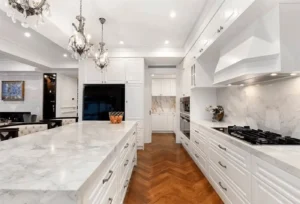
Marble is a natural stone, like granite, but it’s softer and more porous. It etches when acidic foods like lemon juice or vinegar touch it, leaving a dull mark even after sealing. Bakers love it for rolling out dough because it stays cool, but it’s a demanding choice for a busy family kitchen.
If you cook daily and hate maintenance, quartz is the safer bet. If you want a natural stone and don’t mind yearly sealing, granite delivers durability and heat resistance that’s hard to match. Marble is best reserved for homeowners who value its look enough to handle the extra care, or for lower-traffic surfaces like a bathroom vanity.\
Which Countertop Fits Your Kitchen and Lifestyle?
The right countertop fits your cooking habits and your tolerance for upkeep, not just your budget. A young family that cooks every night needs a different surface than a homeowner who entertains occasionally and wants a showpiece island.
If you set hot pans down without thinking twice, lean toward granite. If you cook with a lot of acidic ingredients and want a surface that shrugs off wine and tomato sauce, quartz is the more forgiving choice. And if resale value matters most in your area, ask a local real estate agent or fabricator which material buyers in your market currently prefer, since that preference changes by region and even by neighborhood.
Conclusion
In conclusion, both quartz vs granite countertops have their own unique advantages and disadvantages. Quartz countertops are highly durable, low maintenance, and come in a wide range of colors and patterns. Granite countertops, on the other hand, offer a natural and one-of-a-kind appearance, are heat resistant, and can add value to your home. Ultimately, the best choice for your kitchen or bathroom renovation depends on your personal preferences, budget, and maintenance needs.
At SF Marble And Granite Inc, we understand the importance of choosing the right countertop material for your home. Our team is dedicated to providing exceptional customer service and ensuring that your countertop installation is seamless and stress-free. Contact us today at sfmarbleangranite@gmail.com or visit our showroom at 755 Dutton St. Lowell- 0185MA4 to learn more about our products and services.
FAQs
Is quartz or granite better for countertops?
It depends on your needs and preferences. Quartz is more durable and low maintenance, while granite offers a natural and unique appearance.
How much do quartz vs granite countertops cost?
The cost of quartz vs granite countertops can vary depending on factors such as the quality of the material, size of the countertop, and installation fees. Generally, quartz countertops can be more expensive than granite.
Are quartz countertops more expensive than granite?
Yes, quartz countertops can be more expensive than granite. However, the cost can vary depending on factors such as the quality of the material and size of the countertop.
Do quartz countertops need to be sealed?
No, quartz countertops do not require sealing. They are non-porous and resistant to stains and bacteria.
Can granite countertops be repaired if they chip or crack?
Yes, granite countertops can be repaired if they chip or crack. However, the repair process can be more difficult and expensive than repairing quartz countertops.