
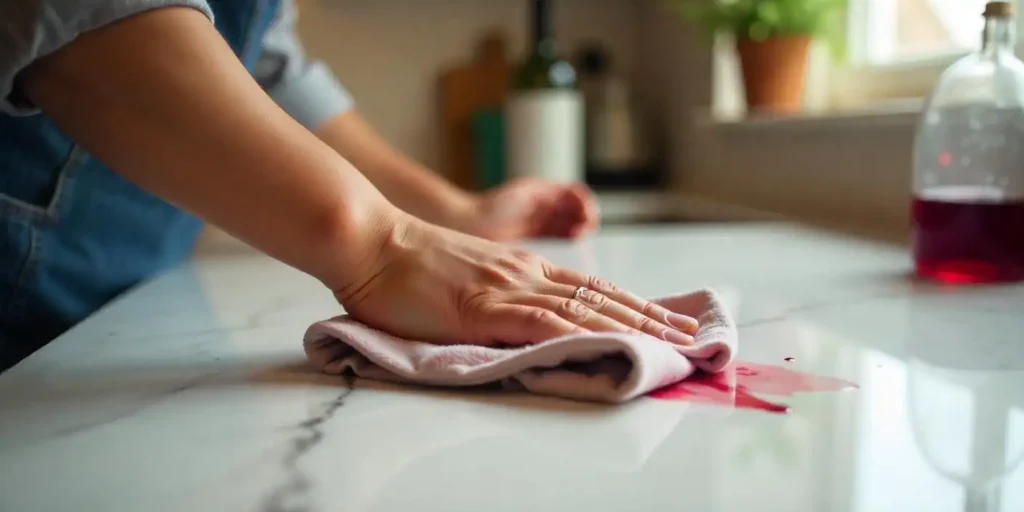
You just found a dark ring on your marble counter, and your stomach dropped. I get it. Marble is gorgeous, it’s expensive, and one glass of red wine left overnight can turn a showpiece into a source of stress. The good news is that most stains come out with the right method, and you don’t need a professional the first time you try.
Here’s the quick answer: mix baking soda with water into a thick paste, spread it over the stain, cover it with plastic wrap, and let it sit for 24 hours. That poultice pulls most oil, wine, coffee, and food stains right out of the stone. This guide walks you through how to get stains out of marble step by step, from the first five minutes after a spill to the poultice method, the stains that need extra work, and the habits that keep your stone looking new for years.
Act Fast: Save Your Marble from Spills Before Stains Set In
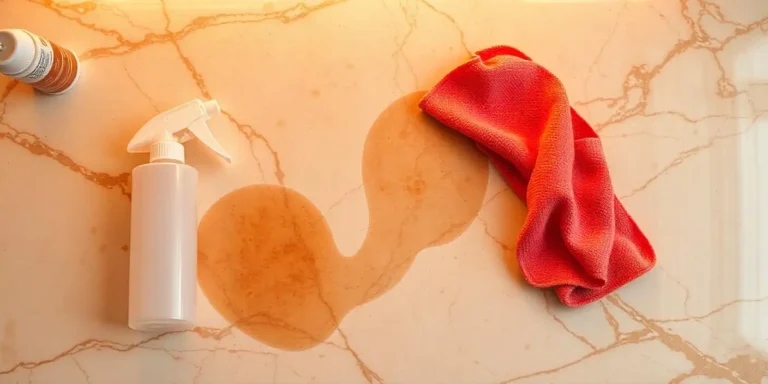
The best way to stop a marble stain is to blot the spill within minutes and rinse the spot with warm water and mild soap. Marble is a porous stone, so liquids soak in fast, often within 10 to 15 minutes on unsealed or poorly sealed surfaces. Speed matters more than the product you use.
Grab a soft cloth or paper towel and blot, don’t wipe. Wiping spreads the liquid across more of the stone and pushes it deeper into the pores. Once you’ve soaked up the excess, rinse with warm water and a drop of dish soap, then dry the area completely with a clean towel.
If the spill was oily, like olive oil or salad dressing, sprinkle cornstarch or baking soda over it right away. Let the powder sit for 15 to 20 minutes so it can draw the oil up before it settles into the stone. Brush it off, rinse, and check the spot. This one habit, acting within the first quarter hour, prevents more marble damage than any cleaner you’ll buy later.
Marble countertops and floors sit in kitchens and bathrooms, exactly where spills happen most. A running list on your fridge or under the sink of “blot first, rinse second” saves a lot of grief.
Marble Stains Decoded: Remove Them Like a Pro
Not every stain behaves the same way, and knowing what you’re dealing with changes your approach. Marble stains generally fall into a handful of categories, and each one has a different fix.
Oil-Based Stains
Cooking oil, butter, grease, and hand cream leave a darkened, greasy patch that spreads slightly at the edges. These stains soak into the stone rather than sitting on top, so a plain wipe won’t touch them. A baking soda poultice, which we’ll cover shortly, is the standard fix here.
Organic Stains
Coffee, tea, wine, fruit, and food stains show up as pink, brown, or gray marks. On light marble, they can look almost like a shadow. Hydrogen peroxide mixed into a paste, or a few drops of ammonia in water for white marble, breaks these down well.
Rust Stains
Rust marks show up orange or brown and usually come from metal cans, furniture legs, or old plumbing fixtures left on the stone too long. These are the hardest of all marble stains to remove, since rust actually bonds to the calcium in the stone. A commercial poultice made for rust, applied more than once, is often the only real fix.
Etch Marks (Not Technically Stains)
Acidic liquids like lemon juice, vinegar, and tomato sauce don’t stain marble so much as they burn a dull spot into the polish. You’ll notice a rough, matte patch rather than a colored mark. Etching needs polishing powder and buffing, not a poultice, since the stone’s surface chemistry has already changed.
Ink and Marker Stains
Pen or marker ink calls for a different tool entirely. For dark marble, use acetone on a cotton ball. For light marble, use hydrogen peroxide instead, since acetone can pull color from lighter stone.
Knowing how to get stains out of marble starts with this kind of identification, because using the wrong method on the wrong stain wastes time and can even make the mark worse.
For wet paint: Wipe with a microfiber cloth + warm water.
- For dried paint: Apply lacquer thinner with a cotton swab.
- Save Your Sanity: Large spills? Call a SF Marble & Granite experts.
How Do You Make a Marble Poultice? Your Secret Weapon Against Stains
A poultice is the ultimate DIY solution for how to get stains out of marble it works like a magnet, pulling stains from deep within the stone’s pores. Whether you’re tackling oil splatters (remove oil stain from marble) or mysterious blue marks (removing blue on marble sink), this method is your go-to fix.
How to Make & Apply a Poultice
| Step | Action | Details |
| 1 | Mix the Poultice | Combine your solvent (e.g., 6% hydrogen peroxide for organic stains, mineral spirits for oil) with baking soda or powdered chalk. Aim for a thick, peanut butter-like paste. |
| 2 | Prep the Stain | Clean the area with mild soap and water. Lightly dampen the stain this helps the poultice penetrate deeper. |
| 3 | Apply the Paste | Spread the poultice ¼–½ inch thick over the stain, extending 1 inch beyond its edges. |
| 4 | Seal & Wait | Cover with plastic wrap, tape the edges, and let it sit 24–48 hours. The longer it sits, the more stain it extracts! |
| 5 | Remove & Reveal | Gently scrape off dried paste with a plastic spatula. Wipe residue with a damp microfiber cloth. Avoid metal tools they scratch! |
| 6 | Repeat if Needed | For stubborn stains (like removing blue on marble sink), reapply the poultice. |
Why This Works
The poultice works by soaking into the marble’s pores, dissolving the stain, and drawing it upward into the paste. It’s especially powerful for:
- Oil stains: Mineral spirits break down grease trapped in the stone (remove oil stain from marble).
- Organic stains: Hydrogen peroxide lifts coffee, wine, or mold (how to remove stains from marble).
- Mystery stains: For odd discolorations like blue marks, adjust the solvent based on the stain type.
Pro Tips:
- Test solvents on a hidden area first some may lighten dark marble.
- Use distilled water to mix the poultice if you have hard water.
- Patience is key! Rushing the process = incomplete stain removal.
By mastering this technique, you’ll solve how to get stains out of marble like a pro no expensive cleaners needed.
When Stains Won’t Budge: Next Steps

Sometimes a single poultice treatment isn’t enough, especially with rust or years-old stains that have settled deep into the stone. Repeat the poultice two or three times before assuming it’s failed. Each application typically lifts the stain a bit lighter than before.
If you’ve tried this method a few times and the mark is still visible, the stain may have reached below the surface layer that home treatments can reach. At that point, a stone restoration company can use diamond abrasive pads to grind down a thin layer of the marble and re-polish it. This is also the point where many people search for how to get stains out of marble professionally, because DIY options have limits on very old or very deep stains.
Age matters here too. A stain that’s a week old behaves very differently than one that’s been sitting for five years. Older stains have had time to bond more fully with the mineral structure of the stone, which is why professional grinding sometimes becomes the only real option.
What NOT to Use on Marble
Marble is calcium carbonate, and that makes it sensitive to acid in a way granite and quartz simply aren’t. A handful of common household products will damage marble faster than they clean it.
Skip these on any marble surface:
- Vinegar and lemon juice. Both are acidic enough to etch marble within seconds of contact.
- Bleach. It can discolor the stone and break down sealants over time.
- Abrasive scrub pads or steel wool. These scratch the polished surface, leaving it dull and rougher, which actually makes future stains soak in faster.
- Generic all-purpose cleaners. Many contain citrus or ammonia at strengths not meant for natural stone.
- Bathroom and tile cleaners. These are made for grout and ceramic, not calcium-based stone, and often carry acidic ingredients.
If a bottle doesn’t say “safe for natural stone” or “pH-neutral” on the label, don’t risk it on your marble. A stone-specific cleaner costs a few dollars more, but it protects a surface that costs a lot more to replace.
Preventing Stains: How Do You Seal Marble?
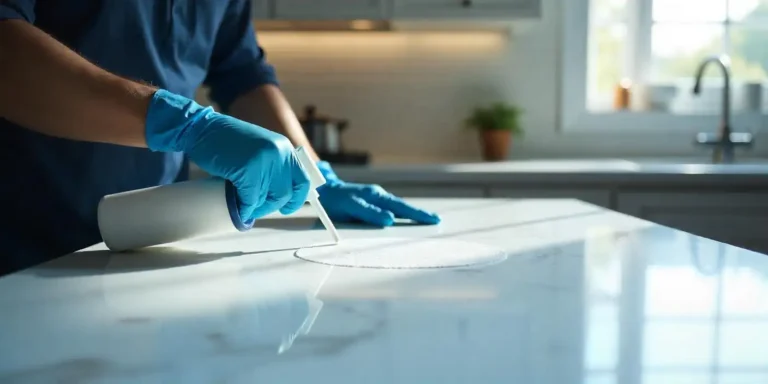
Marble is a timeless and elegant choice for countertops and flooring, but its porous nature makes it vulnerable to stains. Without proper sealing, everyday spills like oil, wine, and coffee can seep into the surface, making it difficult to restore its pristine look. If you’re wondering how to get stains out of marble, the first step to prevention is sealing. A high-quality sealer helps reduce porosity, creating a protective barrier that repels liquids and minimizes the risk of stubborn stains. This simple yet crucial step can save you from the frustration of dealing with discoloration and deep-set marks.
Before sealing, the marble surface must be thoroughly cleaned to ensure no dirt or residue gets trapped. If there are existing stains, it’s important to treat them first. For those struggling with how to clean stained marble, a DIY poultice made from baking soda and water can help draw out discoloration.
Oil-based stains, on the other hand, require a different approach. To remove oil stains from marble, you may need a mixture of baking soda and acetone, applied and left to sit for several hours before wiping away. Once the surface is clean and dry, apply the sealer evenly using a soft cloth or applicator, allowing it to penetrate the stone before buffing off any excess.
Regular maintenance is key to preserving marble’s beauty. Reapplying the sealer every 3–6 months ensures long-lasting protection, especially in high-traffic areas like kitchens and bathrooms.
If you’re considering marble floor installation services in Lowell, proper sealing from the start will enhance durability and maintain its luxurious appeal. By taking these preventive measures, you can enjoy the elegance of marble without the constant worry of unsightly stains.
Pro Tips for Marble Care
Think of marble like a luxury car it thrives on TLC. Start by using coasters or mats under drinks, cosmetics, or even that morning coffee mug. Why? Condensation rings and perfume spills aren’t just stains waiting to happen they’re tiny time bombs for etching. For how to clean stained marble to stay a rare chore, prevention is key. Dust might seem harmless, but those gritty particles? They’re microscopic sandpaper. A quick daily sweep with a microfiber cloth keeps scratches at bay and preserves that mirror-like shine.
After cleaning, dry surfaces immediately with a soft towel. Marble hates lingering moisture it sneaks into pores, inviting water marks or worse. Spilled olive oil? Blot it fast to avoid a frantic remove oil stain from marble mission later. And if you’ve invested in marble floor installation, pair these habits with regular sealing (every 3–6 months) to lock out spills before they strike.
Little effort, big payoff: Treat your marble right, and it’ll stay gallery-worthy for decades.
Psst… Love your marble floors? Explore our expert countertops installation near Lowell to ensure flawless care from day one!
Conclusion
Marble isn’t just a surface it’s a statement. Its veins tell stories of ancient earth, and its glow turns everyday moments into something extraordinary. But like all legends, it thrives on respect. A little proactive care sealing spills fast, avoiding harsh cleaners, and trusting experts when stains dig deep ensures your marble stays as breathtaking as the day it was installed.
Love your marble? Share your favorite care hack in the comments below! Whether it’s a genius poultice trick or a daily habit that keeps stains at bay, your tips could inspire fellow marble lovers.
And if you’re dreaming of a home where marble takes center stage, let SF Marble & Granite make it reality. From flawless marble floor installation to bespoke countertops, we don’t just install stone we craft legacies. Explore our services today and give your space the luxury it deserves.
FAQs
Can toothpaste remove marble stains?
Plain white toothpaste has mild abrasive properties and can help with very light surface marks, but it isn’t strong enough for set-in stains. It also isn’t made for stone, so treat it as a last resort, not a first choice.
Does hydrogen peroxide damage marble?
Standard 3 percent hydrogen peroxide, the kind sold at drugstores, is generally safe for marble in small amounts and works well in poultices for organic stains. Higher concentrations used for wood bleaching are too strong and should be avoided.
How long does a marble stain take to remove?
A single poultice application takes 24 to 48 hours to work. Light, fresh stains sometimes lift in one round, while older or deeper stains can take two to three applications spaced a few days apart.
Is it normal for marble to stain even when sealed?
Yes. Sealing slows absorption, it doesn’t stop it completely. Even well-sealed marble will pick up a stain if a spill sits for hours instead of minutes, which is why quick cleanup still matters most.
Can I use a magic eraser on marble?
Melamine sponges are mildly abrasive and can dull a polished marble finish with repeated use. They’re fine for an occasional light scuff but shouldn’t become a regular cleaning tool for stone.