Travertine can be a beautiful countertop choice, but it needs more care than granite or many engineered surfaces. If you like warm natural colors, soft patterns, and a surface that develops character over time, it may suit your home. If you want a low-maintenance counter that handles acids, stains, and heavy daily use with little attention, another stone may be a better fit.
The Pros and Cons of Travertine Countertops come down to one simple trade-off: natural character versus everyday maintenance. In this guide, I’ll explain what travertine is, where it works well, what can damage it, how much care it needs, and which type of homeowner should consider it before making a purchase.
Is Travertine Good for Countertops?
Travertine is a good countertop choice if you prioritize natural aesthetics, heat resistance, and affordability over scratch and stain resistance. However, because it’s a porous form of limestone, it requires regular sealing and careful upkeep, making it less ideal for high-traffic, heavy-use kitchens.
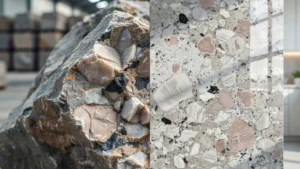
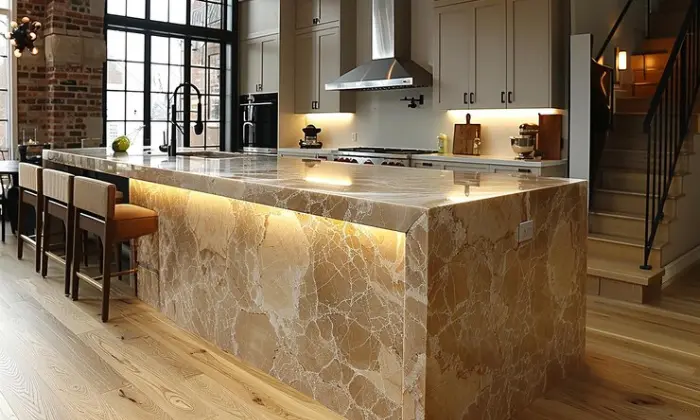
As a form of terrestrial limestone deposited by hot springs, travertine features natural voids, veins, and pockets. These unique physical traits give every slab a soft, rustic character. At the same time, those same pockets mean the stone naturally absorbs liquids if left unprotected.
For households seeking a warm, non-clinical environment, travertine provides a soft appearance that feels inviting rather than industrial. However, you must pair that visual comfort with a willingness to manage routine stone care.
Travertine Countertops Pros and Cons
Every surface material comes with clear trade-offs. Weighing the pros and cons of travertine countertops side-by-side helps clarify whether its advantages fit your lifestyle.
The Advantages
Cost-Effective Natural Stone: Travertine generally costs between $40 and $75 per square foot installed. This makes it significantly more affordable than high-end marble or engineered quartz, offering a premium look on a manageable budget.
Warm Aesthetic: The natural tan, beige, cream, and walnut tones create a calm, soothing atmosphere. This softened look works exceptionally well in living spaces designed for comfort and accessibility.
Heat Tolerance: Like most natural stones, travertine handles hot pots and warm serving dishes without scorching or melting, unlike laminate or acrylic surfaces.
Repairability: If a honed travertine surface gets scratched or dull, a professional stone care specialist can stone-hone and polish out localized damage without replacing the entire slab.
The Disadvantages
High Porosity: Unfilled or poorly sealed travertine absorbs moisture quickly. Spills like coffee, juice, or oil can settle into the stone if not wiped up right away.
Acid Sensitivity (Etching): Citrus, vinegar, tomatoes, and harsh cleaning chemicals react chemically with the calcium carbonate in travertine. This reaction leaves dull spots known as etches.
Ongoing Maintenance: You’ll need to apply a penetrating stone sealer at least once every 12 to 18 months to protect the surface from deep stains.
Surface Voids: Natural travertine contains small holes. While fabricators fill these voids with epoxy or resin during manufacturing, new small pits can open up over years of heavy use.
Is Travertine Countertops Useful in the Kitchen?
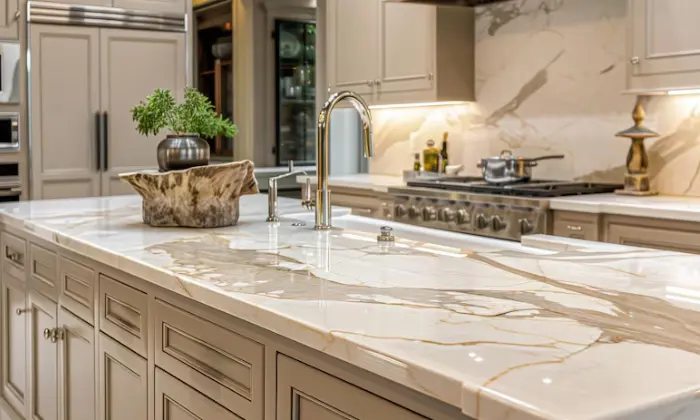
Travertine countertops are useful in low-impact or decorative kitchen areas, such as baking stations, coffee bars, or side buffets, but present challenges on main food prep islands. Their vulnerability to acidic foods and oils means kitchen use requires strict cleaning habits and protective cutting boards.
In a busy kitchen where prep work happens quickly, accidental spills are bound to occur. A splash of lemon juice or tomato sauce left on travertine for even fifteen minutes can etch the surface finish.
If your kitchen routine involves light meal preparation, warm tea, or simple reheating, travertine functions reliably. But for heavy daily cooking involving oils, spices, and fresh citrus, a denser stone like granite or a non-porous solid surface may reduce daily worry.
Should You Choose Travertine as a Kitchen Countertop?
You should choose travertine if you want an affordable, warm natural stone and don’t mind routine maintenance, but avoid it if you need a maintenance-free, stain-resistant workspace. Your choice ultimately depends on balancing your budget against your daily physical willingness to maintain the stone.
To decide whether this material fits your specific living situation, consider these key practical factors:
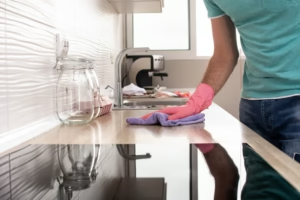
Maintenance Effort: Ask yourself if wiping down counters with mild dish soap and water—and avoiding bleach or vinegar—fits comfortably into your routine.
Visual Aging: Travertine develops a natural patina over time. If you appreciate a surface that shows character as it ages, you’ll love it. If you prefer a flawless, uniform look forever, engineered quartz is a safer bet.
Physical Accessibility: For individuals who need low-stress living environments, choosing a honed finish (matte) rather than a polished finish hides small scratches and water marks much better.
Evaluating the pros and cons of travertine countertops through the lens of daily home life ensures you select a surface that brings long-term comfort without creating extra household burdens.
Expert Travertine Countertop Installations You Can Trust
Upgrade your home effortlessly with our professional travertine countertop installations. At SF Marble & Granite, we ensure every surface is crafted with precision and care to bring natural elegance into your kitchen. Ready for a transformation? Discover our specialized services at Countertops Installation In Lowell and let our experts turn your vision into reality.
FAQs
What is the disadvantage of travertine?
One of the main drawbacks of travertine is its porosity. This characteristic makes it susceptible to staining and requires regular sealing to maintain its appearance and durability. Additionally, travertine can be prone to scratching and may need frequent maintenance compared to less porous materials.
Is travertine good for a kitchen?
Travertine can be a stylish choice for kitchens, offering unique beauty and heat resistance. However, due to its porous nature, it requires regular sealing to prevent stains and damage. While it can handle everyday kitchen use, the extra maintenance may not be ideal for all homeowners.
Is travertine more expensive than granite?
Travertine is less expensive than granite. However, the overall cost can vary based on factors such as quality, finish, and installation. Granite’s durability and lower maintenance needs can sometimes justify its higher price, making it a cost-effective choice in the long run for some.