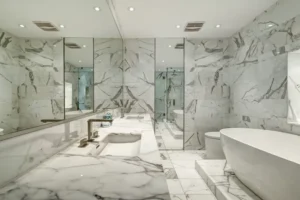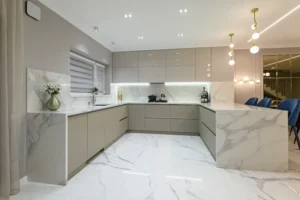

A marble bathroom can look calm, clean, and high-end, but the stone needs the right care from day one. Marble Tile Bathroom Maintenance starts with gentle cleaning, proper sealing, moisture control, and quick attention to stains or etching. If you’re planning a new bathroom, the installation method matters just as much as the products used afterward.
If marble tile is already in your bathroom, you don’t need a long list of complicated chores. A simple routine, the correct pH-neutral cleaner, a soft cloth or mop, good ventilation, and a suitable penetrating sealer can keep the stone in good condition. This guide covers marble types, sealing, installation details, daily care, common problems, design choices, and when professional help makes sense.
WHAT MARBLE TILE IS USED IN BATHROOM?
Honed or tumbled white Carrara, Crema Marfil, and Calacatta marble tiles are the primary choices for residential bathrooms due to their classic appearance and slip-resistant surface finishes. Honed marble features a matte finish that conceals minor scratches and water spots, making it ideal for shower floors.
Different stone grades and finishes dictate where each variety performs best:
Carrara Marble: Features soft gray veining with a cool undertone. Honed Carrara works well on shower floors to reduce slip hazards.
Calacatta Marble: Offers bold, warm veining on a bright white backdrop. Polished slabs suit low-moisture areas like accent walls and vanity backsplashes.
Crema Marfil: A beige limestone-based marble that warms up guest bathrooms and powder room walls.
How to Seal your Marble Tile in the Bathroom?

Seal marble tiles using a solvent-based penetrating (impregnating) sealer, applying two thin coats with an applicator pad, allowing 15 minutes of absorption per layer, and wiping away all excess liquid before it dries completely. Expect this process to take 2 to 3 hours total.
Clean thoroughly: Wash the entire stone surface using a pH-neutral cleaner. Let the tile dry for 24 hours so trapped moisture can evaporate.
Apply the initial coat: Pour a penetrating sealer onto an applicator pad. Work in small 3-foot by 3-foot sections to keep the coverage even.
Allow absorption: Let the sealer sink into the pores for 10 to 15 minutes.
Buff excess liquid: Wipe away residue with a dry microfiber cloth before the liquid dries on top of the stone.
Apply a second coat: Wait 30 minutes, then repeat steps 2 through 4 to ensure complete protection. Let the surface cure for 24 hours before turning on faucets or showers.
To test if your seal remains intact, drop a few teaspoons of water onto the floor. If the water beads up after 10 minutes, the stone is protected. If the tile darkens under the water, apply a fresh coat of sealer.
Marble Tile in a Bathroom: Would I Do It Again?!
Choosing marble tiles for bathrooms is a significant decision that comes with both advantages and challenges. Reflecting on our experience with marble tile in the bathroom, here are some key points to consider:
The Beauty of Marble Tiles
There’s no denying that marble tiles bring a unique and unparalleled beauty to a bathroom. The natural veining and elegant appearance of marble create a luxurious and timeless look that is hard to replicate with other materials. Whether you opt for white marble bathroom tiles or a bold black marble tile bathroom, the aesthetic appeal is unmatched.
Maintenance Requirements
One of the primary considerations when choosing marble tiles is the maintenance involved. Marble is more susceptible to staining and etching compared to other materials like ceramic or porcelain. Regular sealing, careful cleaning, and avoiding harsh chemicals are essential to keep your marble tiles looking pristine.
Durability and Longevity
Marble tiles are durable and can last for decades if properly maintained. However, they are not as hard as granite and can be prone to chipping or scratching. It’s essential to handle them with care, especially during installation and heavy use.
Cost Considerations
Marble tiles tend to be more expensive than other tile options. The cost includes not only the price of the tiles but also the installation and maintenance expenses. It’s important to factor in these costs when deciding whether marble is the right choice for your bathroom.
The Verdict: Would I Choose Marble Again?
Despite the maintenance requirements and higher costs, the beauty and elegance of marble tiles make them a worthwhile investment for many homeowners. If you’re looking to create a luxurious and timeless bathroom, marble tiles are an excellent choice. With proper care and maintenance, they can provide a stunning and functional space for years to come.
Tips and Tricks for Marble Tile Bathroom Maintenance
Proper maintenance depends on daily water removal, weekly cleaning using pH-neutral soap, and avoiding acidic compounds like vinegar, lemon juice, bleach, or abrasive scrubbing pads. Simple preventative measures protect stone surfaces far better than heavy cleaning products.
Daily squeegee routine: Clear water droplets off shower walls after every shower to prevent mineral buildup and soap scum.
Select the right cleaners: Use cleaning products labeled explicitly for natural stone. Household items like dish soap leave a dull film, while acidic bath cleaners etch surface finishes.
Manage bath liquids: Place shampoo bottles, liquid soaps, and lotion containers on raised caddies rather than directly on marble shelves.
Address water spots early: Buff water spots using dry microfiber towels immediately after bathing.
Installation Tips for Marble Tile Bathroom
A good marble bathroom installation needs a sound, properly prepared substrate, correct waterproofing in wet areas, suitable setting materials, accurate tile placement, and properly treated joints. Marble itself isn’t the waterproofing layer, so the shower assembly must control water behind the tile as well as at the finished surface.
Prepare the Substrate
The surface needs to be stable, clean, and suitable for the tile system. Fixing an uneven substrate with excessive mortar during tile setting can create lippage and bonding problems.
Plan the Layout
Dry-lay tile when practical. Check where cuts will fall around doors, niches, drains, plumbing fixtures, and corners.
For marble with strong veining, planning helps create a balanced pattern. Keep spare tiles from the same batch for future repairs because matching natural stone later can be difficult.
Use the Correct Setting Material
Use a mortar or adhesive approved for the marble and substrate. Follow the tile and mortar manufacturer’s directions.
Some light-colored marble can show-through or react to moisture-sensitive setting materials. Product selection should account for the stone’s color, thickness, and location.
Waterproof the Shower
The shower needs a suitable waterproofing system behind or beneath the tile, with correctly treated seams, corners, penetrations, and drains. The exact assembly depends on the system and its manufacturer’s requirements.
Marble itself doesn’t make a shower waterproof. Tile, grout, and stone still depend on the waterproofed assembly behind them.
Set and Grout With Care
Marble can chip, crack, or scratch during cutting and handling. Use suitable tools and clean work surfaces.
Check tile alignment and lippage as you go. Grout type and joint width should match the tile, installation system, and manufacturer requirements.
Seal After Installation When Appropriate
After installation materials have cured and the marble is clean and dry, follow the sealer manufacturer’s instructions. Don’t seal over construction residue, moisture, or grout haze.
Enhancing Your Marble Tile Bathroom Design
Enhance marble tile designs by pairing white Carrara or Calacatta stone with warm wood vanities, brass or brushed nickel hardware, and ambient lighting to soften cold stone surfaces.
Combine textures: Pair honed floor tiles with polished wall tiles to add visual interest while maintaining floor traction.
Add warm accents: Introduce oak, walnut, or teaks to balance cold stone tones.
Select complementary metal finishes: Brushed brass and champagne bronze fixtures highlight warm veining, while polished chrome complements cool gray tones.
Incorporate accent borders: Frame mirror perimeters or shower niches with marble mosaic tiles.
Conclusion
It is a timeless and luxurious choice that can transform any space into a sophisticated oasis. From selecting the right type of marble to proper maintenance and installation, this comprehensive guide provides all the tips and tricks you need to achieve a stunning bathroom. With careful planning and attention to detail, your marble tiles will remain beautiful and functional for years to come. Trust SF Marble Granite for all your marble tile needs, and enjoy the elegance and beauty that marble brings to your bathroom.
For high-quality marble tiles and expert advice, trust SF Marble and Granite Inc. Contact us via email at sfmarbleangranite@gmail.com, visit us at 755 Dutton St., Lowell, MA 01854, or call us at 978-459-582 to start planning your dream today.
Frequently Asked Questions
How often should marble tile be sealed in a bathroom?
High-use shower areas need sealing every 6 to 12 months, while vanity backsplashes and low-moisture floor tiles generally need sealing once every 12 to 18 months.
Can you use vinegar to clean marble bathroom tile?
No, vinegar contains acetic acid that chemically reacts with the calcium carbonate in marble, instantly etching the surface and stripping away its shine.
Is marble tile too slippery for bathroom floors?
Polished marble turns slippery when wet, but honed, tumbled, or small-format mosaic tiles provide extra grout lines that improve foot traction in wet spaces.