If your marble floor seems dull, scuffed or hazy, you don’t have to live with it. A dull floor is virtually never a destroyed floor. Usually it signifies the top layer of stone has lost its smoothness and that can be restored. If you’ve never had to deal with stone floors before, I understand why this is complicated, so here’s the simple answer: To polish a marble floor you use diamond abrasive pads in a succession of grits to grind out the scratches and restore the shiny surface and then seal it to keep it that way.
You don’t need to be a stone expert to make a great choice here. You simply need to understand the process, what a fair pricing looks like, and what mistakes turn a $400 service into a $4,000 one. That’s what this guide is all about, simple words, no sales pitch.
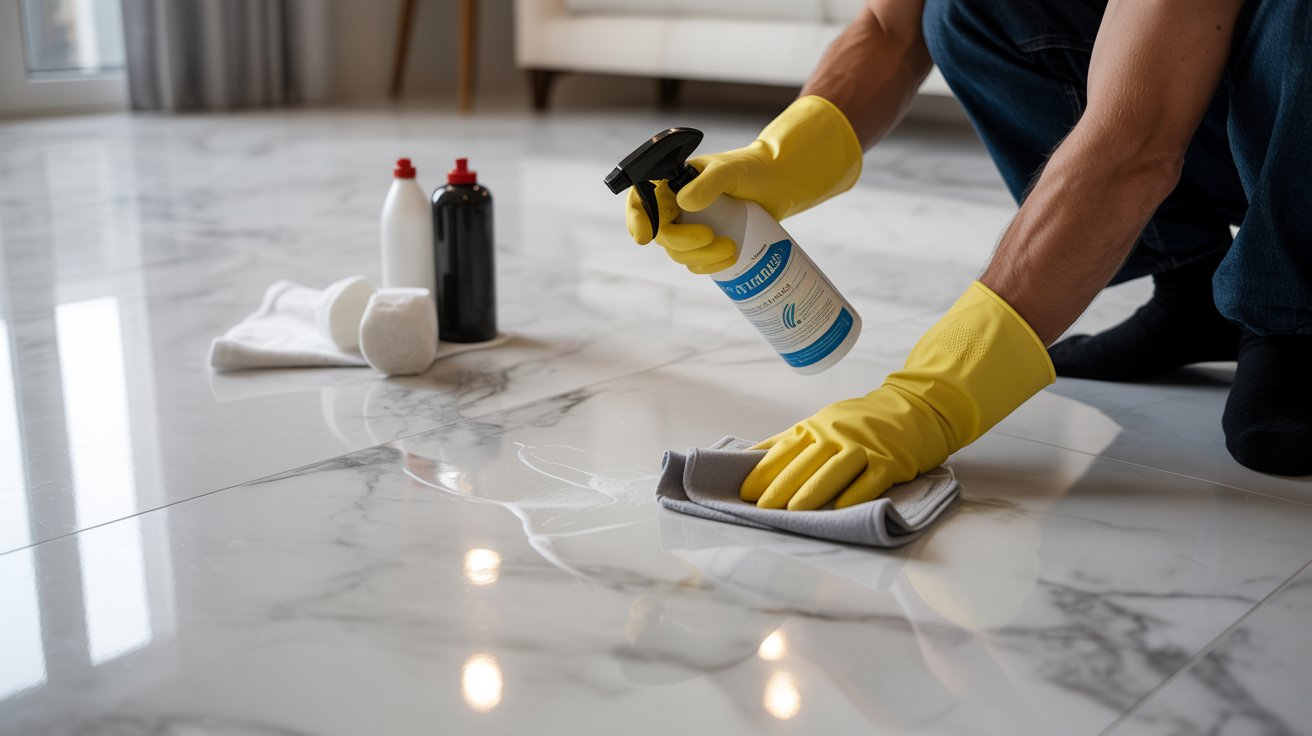
Benefits of Professional Marble Floor Polishing Services
Enhanced Appearance
One of the primary reasons to invest in professional marble floor polish is the enhanced appearance it brings to your home. Dull and lifeless marble surfaces can be revitalized through polishing, restoring their shine and luster.
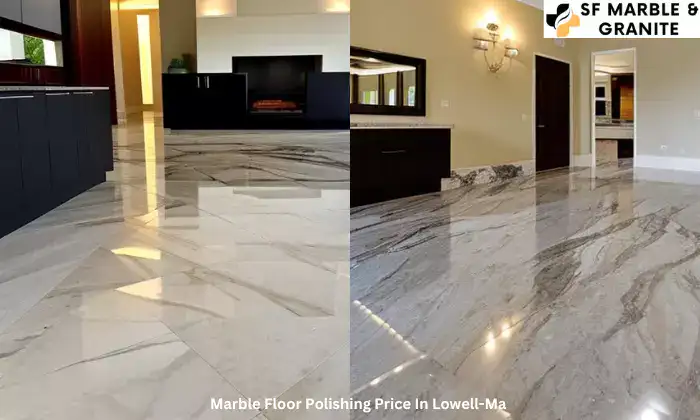
A polished marble floor reflects light beautifully, creating an inviting atmosphere in any room. Whether in bathrooms, kitchens, or living areas, polished marble floor tiles instantly elevate the overall aesthetic of your home.
Increased Durability
Marble is a natural stone that requires care to maintain its integrity. Polishing not only enhances its appearance but also increases its durability. A polished marble surface is better protected from scratches, stains, and everyday wear and tear.
By investing in regular polishing services, you can prolong the life of your marble floors, ensuring they remain in excellent condition for years to come.
Long-term Cost Savings
Many homeowners underestimate the long-term cost savings associated with floor polishing. By reducing the need for frequent repairs or replacements, regular polishing can save you money in the long run.
Instead of dealing with costly marble restoration services due to extensive damage, a simple polishing service can keep your marble surfaces looking pristine and prolong their lifespan.
Time and Effort Savings
Polishing marble floors is not a simple task. It requires the right tools, expertise, and techniques to achieve the best results. Professional marble polishing services save you time and effort, allowing you to focus on other important aspects of your home.
The professionals at SF Marble & Granite come equipped with state-of-the-art tools and products, ensuring a high-quality finish with minimal disruption to your daily routine.
Signs Your Marble Floor Needs Polishing
Your marble floor needs polishing when it looks dull instead of reflective, shows visible scratches or dull patches from foot traffic, or has cloudy spots where something acidic was spilled and left an etch mark. These are the three most common warning signs, and each one points to surface damage rather than a structural problem with the stone itself.
Dullness is the easiest one to miss because it happens slowly. You clean the floor every week, it still looks clean, but the shine it had on move-in day just isn’t there anymore. That’s wear, not dirt. No amount of mopping brings it back.
Scratches show up faster, especially near entryways, under kitchen chairs, or wherever grit gets tracked in on shoes. Etch marks are different. They come from acid, things like vinegar, citrus juice, or even some cleaning sprays, and they leave a dull gray ring that looks almost like a water stain. If you’ve tried scrubbing a spot and it won’t come off, that’s likely an etch, not a stain.
One quick way to check for yourself: get down low and look across the floor at a shallow angle in daylight, rather than straight down under overhead lights. Scratches and dull patches that are nearly invisible from standing height show up clearly from that angle, almost like headlights on a dusty windshield. It’s a simple test, and it tells you whether you’re dealing with light surface wear or something that needs a full grinding pass.
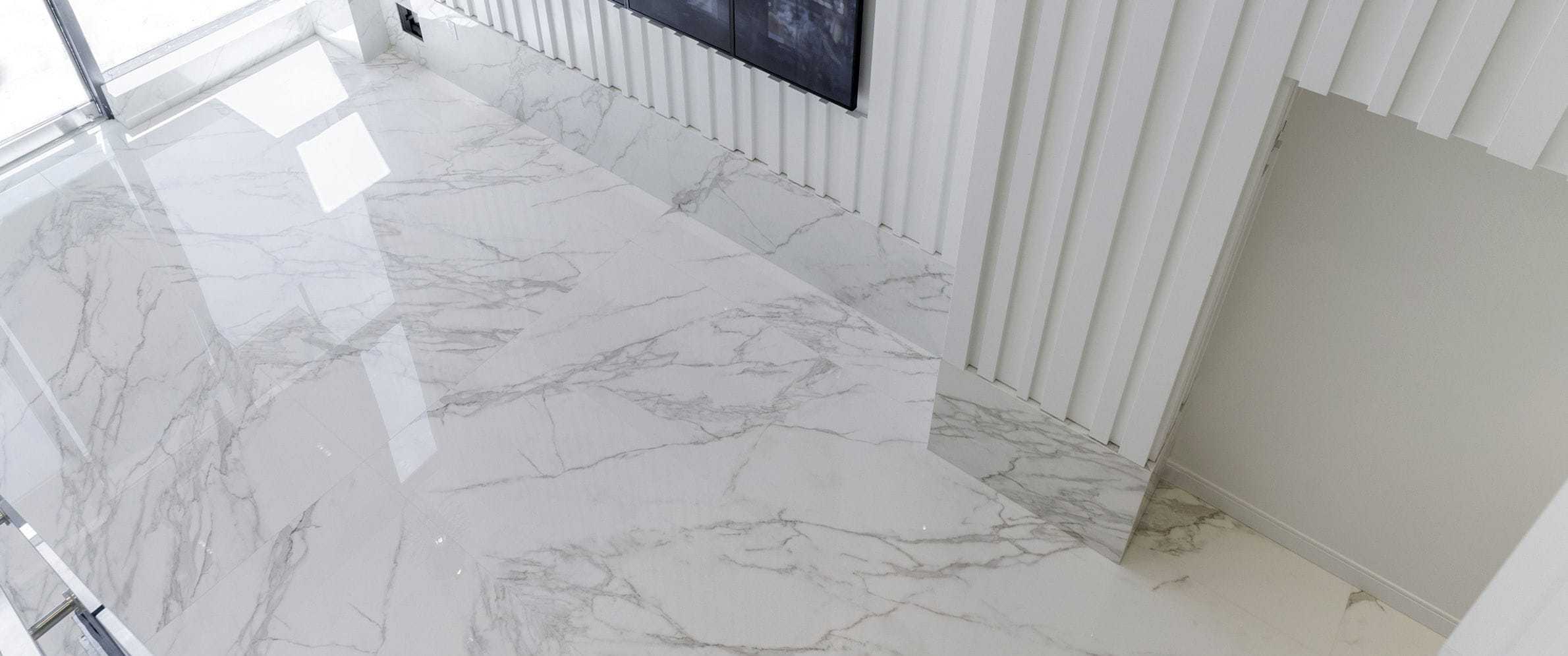
How to polish marble floors? Expert Process
Polishing marble floors properly means grinding down the damaged layer with diamond-impregnated pads, working through progressively finer grits, then sealing the surface once it’s completely dry. It’s a physical process, not a chemical one. Nothing about it is instant, and that’s actually a good sign, since shortcuts here tend to cause more damage.
Step 1: Inspect and test. Every floor is different. Someone experienced will check for lippage, which is when tile edges sit unevenly, along with scratch depth and any existing sealer. A small test patch shows what result is realistic before committing to the whole room.
Step 2: Deep clean first. Old wax, sealer, and embedded grime need to come out before grinding starts. Skip this step and that grime gets ground straight into the stone, leaving a cloudy finish no amount of polishing fixes afterward.
Step 3: Correct lippage if it’s there. Uneven tile edges create both a trip hazard and shadows that make a floor look patchy under light. Coarse diamond pads level the tiles so the whole floor reads as one smooth surface instead of individual pieces.
Step 4: Grind and hone through the grits. This is where diamond abrasive pads do the real work, starting coarse to remove deep scratches and moving through finer grits, often somewhere around 100 to 800, to smooth the surface out.
Step 5: Polish to the finish you want. Finer grits, sometimes up to 3000 or higher, bring out the reflection. A satin hone stops earlier in this range. A high-gloss mirror finish goes further.
Step 6: Let it dry, then seal. Sealing too soon traps moisture under the surface. Waiting roughly a day lets the stone fully dry before an impregnating sealer goes on to protect it from spills and staining.
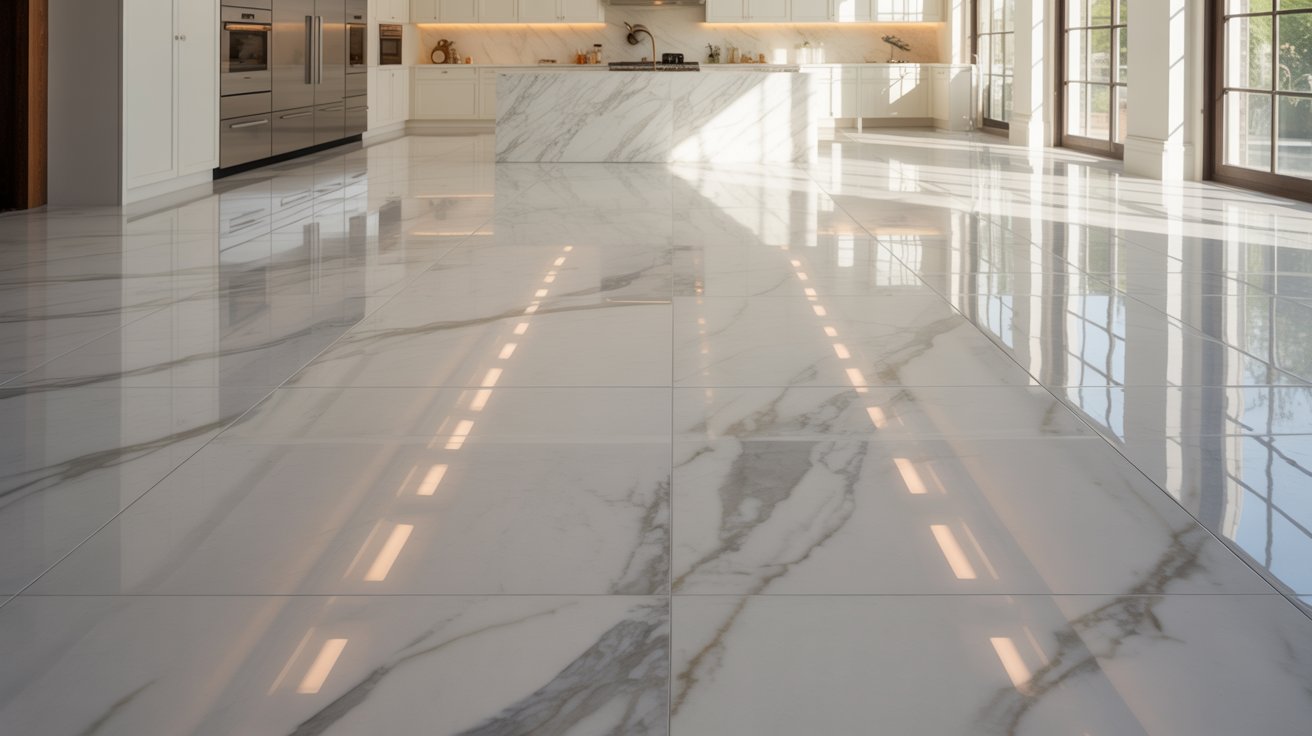
DIY Marble Floor Polishing vs. Hiring a Professional
DIY marble floor polishing might be okay for tiny areas that are only a little dull, but if you have deep scratches, uneven tiles, or the floor is an entire room, the cost of professional equipment and training is worth it. Both ways can lead to real outcomes. The right one depends on how much damage you’re actually doing.
A simple do-it-yourself kit costs between $30 and $80 and comes with a polishing compound and a buffing pad that you attach to a drill or hand tool. That is really plenty for a modest bathroom vanity area with light surface dulling. That’s not good enough for lippage or deep gouges or a floor that’s been untouched in a decade.
The danger with DIY on a floor that needs more is not wasted money, it’s making the problem harder to solve later. Incorrect grit sequences might cause swirl imprints. If you polish a soft spot too much, you can create an uneven sheen that will be evident in any light. If you do it yourself and it seems patchy or the shine won’t even out, that’s the point to call in someone with the correct grinding equipment rather than keep buffing.
What Marble Floor Polishing Costs
Cost depends on floor condition, square footage, and how much correction the stone needs before polishing even starts. A floor with heavy lippage or deep etching costs more to restore than one that just needs a light buff and reseal. Get a quote based on an in-person look at your specific floor, not a phone estimate, since two rooms of the same size can need very different amounts of work.
Watch for quotes that seem unusually low. A price that skips the deep-clean step or the drying period before sealing often means corners are getting cut, and that shows up within a year as a floor that dulls again faster than it should. A fair quote breaks the job into stages, assessment, cleaning, grinding or honing, polishing, and sealing, so you can see exactly what you’re paying for.
Marble Floor Polishing Service in Lowell
We pride ourselves on providing the best marble floor polishing service in Lowell. Our team of skilled professionals is dedicated to restoring the beauty of your marble surfaces. We use state-of-the-art equipment and high-quality products to ensure a stunning finish every time.
Whether you have marble tiles in your kitchen, bathroom, or living room, we have the expertise to handle all your marble polishing needs. We offer free estimates and are committed to delivering exceptional customer service. Trust SF Marble & Granite as a marble floor polisher to revitalize your marble floors and keep them looking their best.
Common Marble Floor Polishing Mistakes to Avoid
The most common mistake is treating marble like it can handle the same cleaning products as tile or laminate, when acidic cleaners, vinegar, and even some all-purpose sprays etch marble on contact. A few other mistakes come up just as often, and they’re easy to avoid once you know about them.
Skipping the deep clean before polishing is another one. So is choosing DIY polishing kits for a floor that actually needs lippage correction, since consumer kits aren’t built to grind down uneven tile edges. And sealing too soon, before the stone has fully dried, traps moisture that can cloud the finish later.
Conclusion
If your marble floors in the Lowell area need restoring, this is exactly the kind of job worth having assessed in person rather than guessed at over the phone. At SF Marble and Granite, our technicians walk your floor, test a small section, and give you a straight answer on what it’ll take to bring the shine back.
If you’re planning new stone instead of restoring what’s already down, our team also handles marble floor installation in Lowell, so you can go from bare subfloor to a finished, sealed surface with the same crew from start to finish.
FAQs
Can marble flooring be polished?
Yes, marble flooring can be polished to restore its shine and luster. Professional polishing services are recommended for the best results.
How to polish marble floor by hand?
To polish marble floors by hand, clean the surface thoroughly, then use a polishing powder or baking soda mixed with water. Apply the mixture to the floor and buff it using a soft cloth or sponge.
How to polish a marble floor without a machine?
You can polish marble floors without a machine by using polishing powders or a baking soda paste. Apply it to the surface and buff it by hand.
How to make a marble floor shine at home?
To make marble floors shine at home, clean them regularly with a pH-neutral cleaner, and consider using a polishing powder or a mixture of baking soda and water for added shine.
Incorporating professional marble floor polishing into your home maintenance routine ensures that your marble surfaces remain beautiful and inviting for years to come.