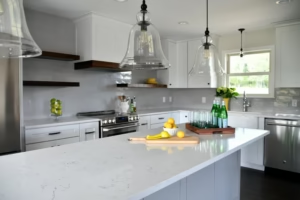
Quartz countertops are easy to keep clean, but the wrong cleaner or scrub pad can leave dull spots, residue, or surface damage. If you’re dealing with daily crumbs, grease, coffee, dried food, or water marks, the good news is that most messes need only warm water, mild dish soap, and a soft cloth.
How To Clean Quartz Countertops starts with a simple routine: remove loose debris, wipe the surface with warm soapy water, rinse away soap residue, and dry with a clean microfiber cloth. In this guide, I’ll cover the safest cleaning method, stain removal, products to avoid, cleaning frequency, and simple habits that help your quartz countertop stay in good condition.
How to Clean and Maintain Butcher Block Countertops?
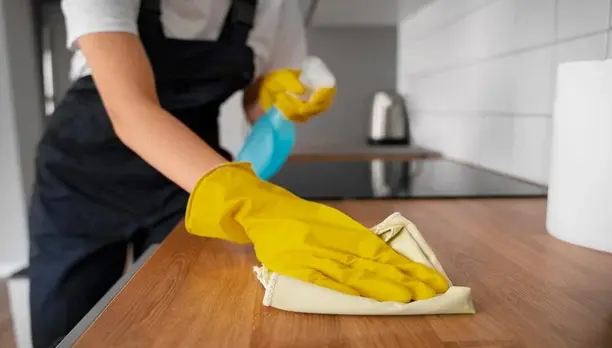
While this guide is primarily focused on quartz countertops, it’s worth briefly mentioning other popular countertop materials, such as butcher block, for comparison. Butcher block offers a warm, natural look that adds character to any kitchen, but it requires more maintenance than quartz. Unlike quartz, which is non-porous and resistant to staining, butcher block countertops can absorb liquids and may require periodic sealing to maintain their durability.
That said, if you’re here to learn how to clean quartz countertops, it’s important to know that quartz offers a simpler, low-maintenance option. Unlike butcher block, quartz doesn’t need sealing, and it resists stains, scratches, and heat much better. So, while butcher block may require oiling and careful cleaning, maintaining quartz is much easier with regular cleaning using mild soap and water, keeping your quartz surfaces looking fresh and clean with minimal effort.
Why Cleaning Quartz Countertops Is Important?
Regular cleaning preserves the protective resin layer of engineered quartz, preventing permanent dullness, surface etching, and stubborn discoloration. Quartz consists of roughly 90% ground natural quartz bound together with 10% polymer resins and pigments. While non-porous and resistant to bacteria, those resins break down when exposed to harsh chemicals, high heat, or buildup from daily food spills.
Keeping quartz surfaces clean on a regular schedule ensures:
Bacteria prevention: Food particles, grease, and moisture wiped away daily stop bacterial growth on preparation areas.
Resin protection: Removing acidic foods or oil residues prevents chemical degradation of the resin binder.
Streak-free shine: Preventing hard water deposits stops chalky mineral film from dulling the surface finish.
Dos and Don’ts of Cleaning Quartz Countertops?
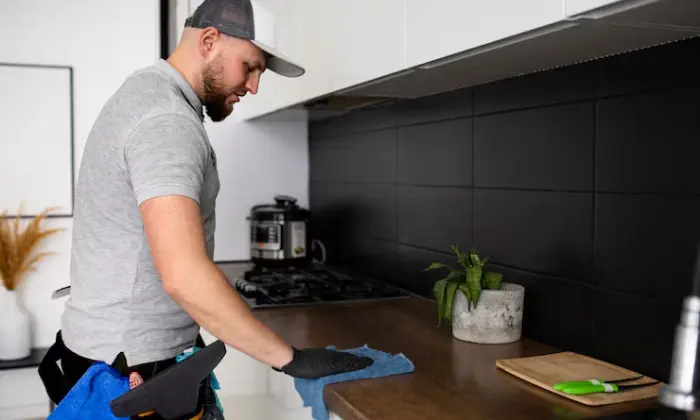
Protecting quartz surfaces comes down to choosing gentle materials and avoiding chemicals that harm synthetic resins.
Dos
Do use warm water and mild dish soap for everyday wipe-downs.
Do clean up spills immediately, especially dark liquids like red wine, coffee, tomato sauce, and berry juices.
Do use soft microfiber cloths or non-abrasive sponges to wipe surfaces gently.
Do dry surfaces with a clean towel after washing to eliminate hard water spots and water lines.
Do use trivets, hot pads, and silicone mats under appliances like slow cookers, hot pans, and air fryers.
Don’ts
Don’t use bleach, oven cleaners, or paint strippers, which permanently damage or discolor the resin binder.
Don’t use abrasive pads, steel wool, or scouring powders that scratch the polished surface.
Don’t use highly acidic cleaners like raw vinegar or concentrated lemon juice for daily cleaning.
Don’t place hot cookware straight from the stove onto the stone surface.
Don’t chop food directly on the surface; always use a cutting board to prevent scratches and dull knives.
How Often to Clean Quartz Countertops?
Quartz countertops need quick daily wipe-downs after meals, thorough weekly surface washings, and periodic deep cleaning every few months to remove corner grime. A consistent care routine prevents buildup and makes long-term surface care effortless.
| Cleaning Frequency | Primary Tasks | Best Materials to Use |
| Daily | Clear crumbs, wipe meal spills, dry surface | Microfiber cloth, warm water, drop of dish soap |
| Weekly | Wash entire surface, degrease around stove | Gentle stone-s |
Materials Needed
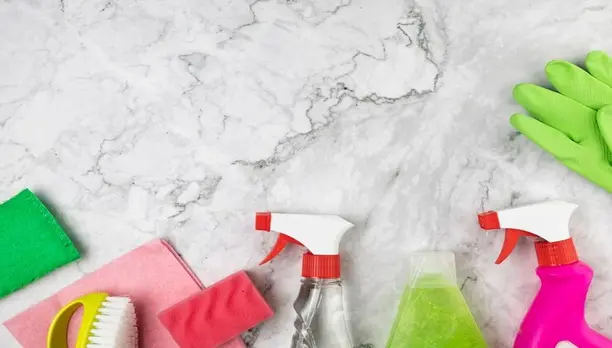
While cleaning your quartz countertops effectively, you don’t need much, just a few essential materials that make the process quick and easy. Here’s what you’ll need to ensure that how do to clean your quartz countertops without any hassle:
- Microfiber cloth(s): These soft, lint-free cloths are perfect for wiping down your quartz surfaces without scratching them. They also help to buff your countertops to a streak-free shine after cleaning.
- Dish soap: A gentle dish soap diluted in warm water is an excellent solution for everyday cleaning. It’s effective yet safe for your quartz countertops, leaving them fresh without causing any damage.
- Water: Plain water is an essential part of the cleaning process, helping to rinse away dirt, food, and residue.
- All-purpose cleaner: For tougher spots or smudges, an all-purpose cleaner (non-abrasive and safe for quartz) will help remove stubborn marks while maintaining the integrity of the surface.
- Hydrogen peroxide: In case of stains, a mixture of hydrogen peroxide and water can help lift discoloration. It’s a great tool for handling those occasional spills that may leave a mark behind.
With these simple materials, you’ll be well-equipped to clean your quartz countertops properly. Knowing how to clean quartz countertops effectively ensures that your surfaces stay looking as beautiful as the day they were installed!
How to Clean Quartz Countertops?
Follow this simple daily routine to keep counters clean, glossy, and streak-free.
Clear the Surface
Remove appliances, drying racks, and cutting boards from the counter so you can reach every edge easily.
Clear Away Loose Crumbs
Wipe dry crumbs, dust, and loose food debris into your hand or a trash bin using a dry microfiber cloth.
Mix Your Cleaning Solution
Fill a spray bottle or small basin with warm water and a few drops of mild dish soap. Swirl gently to combine.
Wipe Down the Surface
Mist the surface generously or dip your microfiber cloth into the soapy water, squeeze out excess liquid, and wipe the surface using smooth circular motions.
Rinse and Dry
Rinse your cloth with clean water and wipe down the counters once more to remove lingering soap film. Dry the area completely with a fresh microfiber towel to reveal a brilliant shine.
Knowing how to clean quartz properly is essential for keeping your countertops in top condition. Whether you’re cleaning up after a meal or simply maintaining your quartz surfaces, these steps will keep them looking beautiful and free from stains for years to come.
How to Remove Stains From Quartz Countertops?
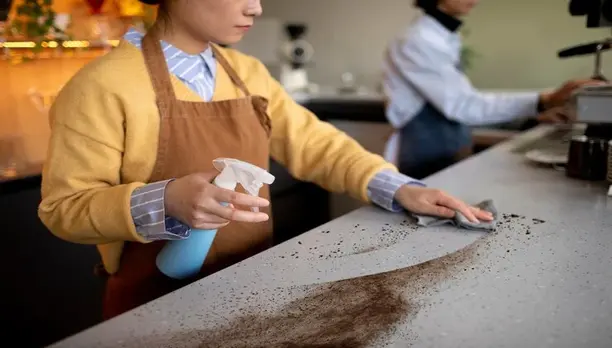
While quartz resists liquids better than natural granite or marble, dried-on messes or strong dyes can leave marks if ignored. Here is how to treat common problems safely.
1. Removing Dried-On Food and Sticky Residue
Never reach for a metal blade or scouring pad. Spritz the dried spot with warm, soapy water and let it soak for 5 minutes to soften. Take a plastic putty knife held at a low 45-degree angle and gently glide it underneath the softened residue to lift it off. Wipe clean with a damp towel.
2. Removing Coffee, Wine, and Juice Stains
Mix equal parts baking soda and warm water to create a smooth, spreadable paste. Dab the paste directly over the mark, let it rest for 5 minutes, and gently wipe it away using a soft damp cloth. Rinse thoroughly and dry.
3. Lifting Grease and Cooking Oil
Spritz the oily spot with a mixture of 1 part 70% isopropyl rubbing alcohol and 3 parts warm water, mixed with two drops of dish soap. Wipe thoroughly using a soft microfiber cloth to dissolve grease without leaving streaks behind.
4. Clearing Hard Water Deposits and Limescale
Hard water around kitchen sinks leaves cloudy mineral buildup over time. Dampen a cloth with rubbing alcohol or a mild stone-safe cleaner, lay it over the mineral spot for two minutes, then wipe clean. Avoid aggressive limescale removers containing concentrated acid.
Tips for Maintaining Quartz Countertops
Long-term care involves small daily habits that protect your investment against heat, scratches, and chemical wear.
Protect surfaces from direct heat: Quartz resin withstands temperatures up to ~300°F, but rapid thermal shock or hot pots can cause discoloration or cracking. Use trivets under hot pans and heat mats under appliances.
Avoid sunlight exposure: Prolonged direct sunlight through large windows can yellow or fade quartz resins over time. Use blinds or UV-filtering window films on sunny kitchen windows.
Avoid harsh DIY hacks: Popular internet hacks recommend vinegar, bleach, or hydrogen peroxide. These chemicals strip polish and dull quartz finishes over time. Stick to pH-balanced stone cleaners or mild soap.
Clean Quartz Countertops After Installation
Once your new quartz surfaces are expertly set in place, keeping them pristine is a breeze especially when you choose SF Marble & Granite’s Countertops Installation in Lowell. Simply wipe with a soft microfiber cloth dipped in warm water and a drop of gentle dish soap, then buff dry to restore that showroom shine. For tougher spots, mist a mild all-purpose cleaner, let it sit briefly, and gently rub with the same cloth, no harsh scrubbing needed. This routine not only preserves the crisp, non-porous finish of quartz but also extends the life of your investment, letting you enjoy breathtaking countertops without extra hassle. Contact us today!
Final Thoughts
Quartz countertops are a durable and beautiful choice for any home, but like all surfaces, they require proper care to maintain their charm. By knowing how to clean quartz countertops and following simple maintenance tips, such as cleaning immediately after use, buffing regularly with a microfiber cloth, and wiping dry after cleaning, you can ensure that your quartz surfaces remain spotless and stunning for years.
Whether you’re dealing with everyday spills or occasional stains, a little attention goes a long way. With the right cleaning techniques and regular upkeep, your quartz countertops will continue to enhance your home, providing both beauty and functionality for many years to come. At SF Marble & Granite, we’re here to guide you in keeping your quartz countertops in top condition, ensuring they always look as good as new
FAQs
Can you use Lysol or Clorox wipes on quartz?
Clorox and Lysol wipes are safe for occasional use if they are bleach-free, but they shouldn’t be used for daily cleaning. Many disinfectant wipes contain citric acid, alcohol derivatives, or astringents that can dull the resin finish over time. Safe daily alternatives include warm water and mild dish soap or a dedicated pH-balanced stone cleaner.
Can you use Magic Eraser on quartz countertops?
No, you should never use a Magic Eraser on quartz countertops. Melamine foam acts like extremely fine sandpaper. Rubbing a Magic Eraser across quartz removes the polished sheen, leaving behind an unsightly dull spot on the slab.
Does quartz need to be sealed like granite?
No, quartz countertops never require sealing. Engineered quartz is completely non-porous because the resin binders fill all micro-gaps during manufacturing. Applying stone sealers to quartz is unnecessary and creates an oily, smeared film on the surface.
How do you restore shine to dull quartz counters?
To restore shine to dull quartz, wash the surface with warm soapy water to lift film buildup, rinse, dry, and polish with a stone-safe quartz polish. If the dullness resulted from chemical damage or harsh acids, contact a professional stone technician to polish the surface safely.