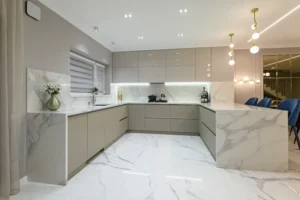
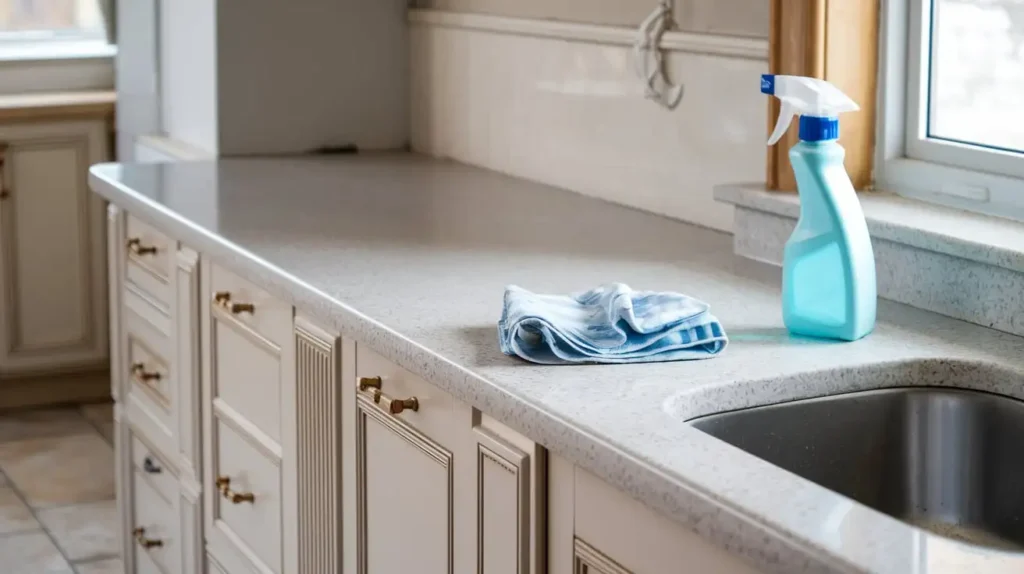
Quartz counters look right in the showroom and you want it to look that way all the time, not just on the first day. Spills happen, water marks pop up and your formerly gleaming counter looks flat. The good news is one of the easier duties in the house is keeping quartz clean once you know the appropriate methods.
This is what we’ll cover: How to extend the life of quartz with regular maintenance, the step-by-step approach for daily cleaning, how to remove tough stains, products to avoid, and how to restore shine if your counter is already dull. By the end you’ll have a routine you can do without a second thought.
Why Cleaning Quartz Countertops Is Important
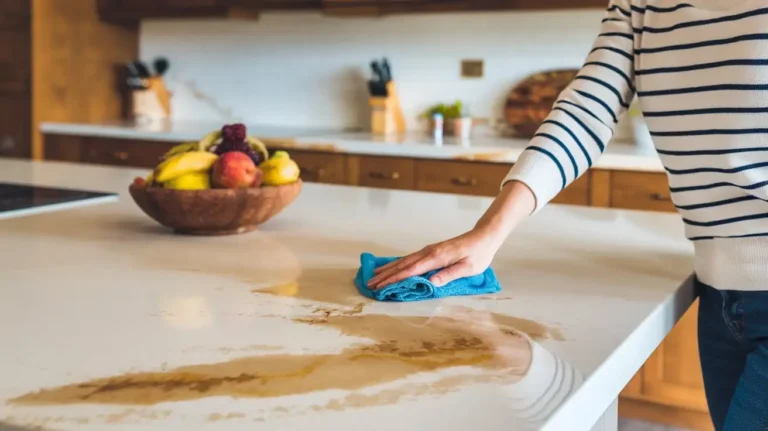
Quartz countertops need to be cleaned often as the surface becomes dull over time from remaining residue and hard water buildup. Since a kitchen counter is in contact with food daily, it needs to be kept sanitary. If you don’t wipe up spills, they can become set in as stains that are tougher to remove the longer they sit.
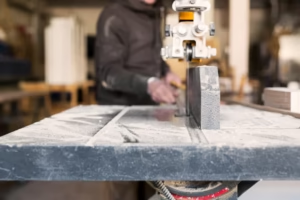
Quartz is a man-made stone formed from crushed quartz crystals held together by polymer resin. This resin is the reason for quartz’s glass-like appearance and stain-resistant nature. And it’s also the section that doesn’t respond well to the improper cleaners, which is why so many countertop queries are about what not to use.
Quartz is non-porous and does not need to be sealed like granite or marble. That’s a big plus. But non-porous doesn’t equal maintenance free. Grease film, soap scum and mineral deposits from the tap water still accumulate on the surface and have to be wiped off regularly.
You also chop vegetables, set grocery bags, and prepare raw meat on a kitchen counter top. Bacteria can sit on any surface, safe for food or not, if it is not cleaned often. Wipe off the surface after each usage for a quick five-minute clean to maintain it clean and sanitary.
To learn how professional services can assist in maintaining your kitchen’s aesthetic, explore Countertops Installation Services in Lowell for expert care and installation options. By investing time in cleaning and maintenance, you’ll keep your quartz countertops looking as flawless as the day they were installed.
How Do You Clean Quartz Countertops? Step-by-Step Process
The process for how do you clean quartz countertops comes down to five steps: clear loose debris, apply warm soapy water with a soft cloth, wipe gently in circles, rinse with clean water, and dry fully with a microfiber cloth. Each step takes under a minute per section of counter.
Follow this order every time and you won’t damage the finish:
- Clear the surface. Remove crumbs, dried food, or dust with a dry microfiber cloth first.
- Mix your cleaner. A few drops of mild dish soap in warm water works for almost every job.
- Wipe in gentle circles. Use a soft cloth or non-abrasive sponge, never a scouring pad.
- Rinse well. Go over the same area with a clean, damp cloth to lift soap residue.
- Dry immediately. A streak-free finish depends on this last step more than any product you use.
That five-step loop covers how do you clean quartz countertops on a normal day. No special tools, no long soak times, no waiting around for a cleaner to work.
For a deeper clean once a week, add an all-purpose cleaner rated safe for quartz or engineered stone, and go over the backsplash and edges where grime tends to collect unnoticed.
For expert quartz countertop services, including installation and repairs in Lowell, visit SF Marble & Granite. They specialize in high-quality countertop solutions to keep your kitchen and bathroom surfaces in pristine condition.
Read More: How to Care for Granite Countertops
How to Remove Stains From Quartz Countertops
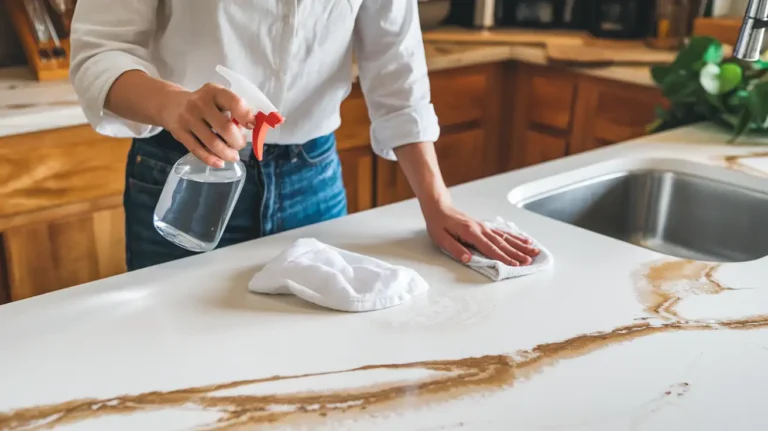
To remove stains from quartz countertops, mix equal parts hydrogen peroxide and water, apply it to the stain, let it sit for a few minutes, then wipe with a soft cloth. For grease, a small amount of dish soap breaks down the oil before it sets.
Different stains need slightly different handling.
Coffee, Wine, and Juice Stains
These pigmented spills stain fastest. Blot first, don’t wipe, so you don’t spread the color. Clean with warm soapy water next. If a faint mark remains, the hydrogen peroxide method above handles it.
Grease and Oil Stains
Dish soap is built for breaking down fat, so it’s the right tool here too. Apply a bit directly to the spot, let it sit for two minutes, then wipe with a soft cloth.
Hard Water and Mineral Deposits
White, chalky spots near the sink usually come from hard water. Clean with warm soapy water first. If spots remain, a cleaner made for quartz countertop haze removal cuts through mineral buildup without harming the resin.
Dried or Stuck-On Food
Soften it before you scrub. Lay a warm, damp cloth over the spot for a minute, then lift it off with a plastic scraper, never metal.
Act fast on anything acidic or heavily pigmented. The longer a stain sits, the more it settles into the surface, even on a stain-resistant material like quartz.
Read More: How to Remove Stain from Granite Stone
Dos and Don’ts of Cleaning Quartz Countertops
The main rule for quartz care is simple: use mild, pH-neutral cleaners and soft cloths, and avoid bleach, vinegar, ammonia, and anything abrasive. These products break down the resin over years of use, even when the damage isn’t visible right away.
Do
- Clean spills as soon as they happen.
- Use a soft cloth or non-abrasive sponge.
- Dry the counter after every clean to prevent streaks.
- Use a cutting board, trivet, or hot pad to protect the surface from scratches and heat.
Don’t
- Don’t use bleach. It can discolor the resin over time.
- Don’t use abrasive powders or scouring pads. They scratch the surface even when it looks fine at first.
- Don’t set hot pans directly on quartz. Sudden heat stresses the resin binding the stone together.
- Don’t skip drying. Air-drying alone often leaves a dull, streaky finish behind.
By following these dos and avoiding the don’ts, you can ensure your quartz countertops stay in top condition. So, how do you clean quartz countertops the right way? It’s all about using gentle techniques, the right products, and taking precautions to prevent damage. With proper care, your countertops will retain their beauty and durability for years to come.
Quick Comparison Table: Do’s vs. Don’ts for Quartz Countertop Cleaning
| Do’s | Don’ts |
| Use pH-balanced cleaners | Avoid acidic cleaners like vinegar |
| Wipe spills immediately | Don’t leave spills unattended |
| Use microfiber cloths | Avoid abrasive pads or steel wool |
By understanding these myths and following the proper care techniques, you’ll know exactly how do you clean quartz countertops without risking damage. Stick to safe cleaning practices, and your countertops will retain their beauty and durability for years to come.
Maintaining Tips for Quartz Countertops
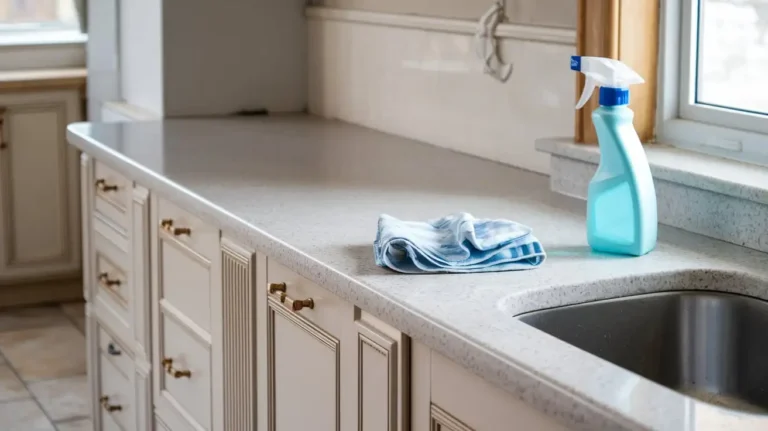
Proper maintenance is key to keeping quartz countertops looking beautiful and functional for years to come. While quartz is known for its durability and low-maintenance nature, following a few simple tips can make all the difference in preserving its shine and quality. So, how do you clean quartz countertops and maintain their elegance over time? Here’s what you need to know.
Regular Sealing: Is It Needed for Quartz?
Unlike natural stone countertops, quartz does not require sealing. Its non-porous surface is inherently resistant to stains and bacteria, eliminating the need for additional protective coatings. This feature makes quartz an excellent choice for those seeking a hassle-free countertop option.
Preventing Scratches with Cutting Boards
Although quartz is highly scratch-resistant, it’s not entirely scratch-proof. Avoid cutting directly on the surface, as sharp knives or heavy kitchen tools can leave marks over time. Always use a cutting board when preparing food to keep your countertops flawless.
Protect Against Heat Damage with Trivets or Mats
Quartz is heat-resistant but not heat-proof. Placing hot pans, pots, or appliances directly on the countertop can cause thermal shock, resulting in cracks or discoloration. Use trivets, heat-resistant mats, or coasters to shield your quartz from high temperatures.
Best Practices for Maintaining a Glossy Finish
For a glossy and polished look, clean your countertops regularly with a soft microfiber cloth and a pH-balanced cleaner. Avoid abrasive pads or acidic substances that can dull the surface over time. A simple routine of wiping down the surface after daily use can go a long way in keeping your quartz countertops gleaming.
By incorporating these tips into your routine, you can enjoy the beauty and durability of quartz countertops for years. Remember, knowing how do you clean quartz countertops and maintain them is essential for maximizing their lifespan and ensuring they remain the centerpiece of your kitchen or bathroom.
Common Myths About Cleaning Quartz Countertops
The most common quartz myth is that it needs sealing like granite. It doesn’t. Quartz is non-porous by design, so no sealant is ever needed. Other myths include the idea that quartz is scratch-proof or heat-proof, neither of which is accurate.
Myth 1: Quartz needs sealing. False. Sealing is a granite and marble requirement, not a quartz one, because quartz is engineered to be non-porous from the start.
Myth 2: Quartz can’t scratch or stain. Quartz has strong scratch resistance and stain resistance, but “resistant” isn’t the same as immune. A sharp knife or a hot pan set directly on the surface can still cause damage.
Myth 3: Any household cleaner is fine. Not true, as covered above. Bleach, vinegar, and ammonia-based products all carry some risk to the resin over time.
Myth 4: Quartz never needs deep cleaning. Daily wipe-downs handle most of the work, but buildup around edges and the sink still needs monthly attention.
Quartz vs. Granite vs. Marble: Cleaning Differences
Quartz needs no sealing and handles daily spills with just soap and water. Granite needs resealing every year or two to keep its stain resistance. Marble is the most sensitive of the three, since its surface reacts to acidic foods and drinks almost on contact.
Here’s how the three compare on the counter, side by side:
- Quartz: Non-porous, no sealing required, cleans with mild soap and water, sensitive to bleach and vinegar.
- Granite: Porous, needs sealing every 1 to 2 years, cleans with pH-neutral stone cleaner, more forgiving of heat than quartz.
- Marble: Porous and soft, needs frequent sealing, reacts to lemon juice, wine, and vinegar within minutes, best kept away from acidic spills entirely.
If you’re deciding between materials for a new kitchen or bathroom counter, cleaning effort is worth weighing alongside looks and cost. Quartz tends to suit busy households that want a low-maintenance kitchen countertop or bathroom counter without a yearly sealing chore.
Preserve the Pristine Beauty of Your Quartz Countertops
At SF Marble & Granite Inc., we specialize in expert quartz countertop installation, maintenance, and repairs that keep your surfaces shining. Our experienced team in Lowell ensures your countertops remain free from stains and scratches, protecting their natural elegance and durability. Contact us today for a free consultation and experience the lasting quality of professional care.
Final Thoughts
Proper cleaning and maintenance of quartz countertops are essential to keeping them looking as beautiful and functional as the day they were installed. With the right cleaning products and techniques, you can ensure your countertops remain free from stains, scratches, and dullness. Remember, how do you clean quartz countertops? It’s all about using gentle, pH-balanced cleaners and avoiding harsh chemicals or abrasive tools. Regular care will go a long way in preserving the surface’s shine and durability.
By following the tips we’ve shared wiping up spills promptly, using cutting boards to prevent scratches, and protecting against heat damage you can avoid the most common mistakes that lead to unnecessary wear and tear. Taking these steps ensures your quartz countertops retain their elegance and shine for years to come.
If you’re looking for high-quality quartz countertops or professional installation services in Lowell, look no further than SF Marble & Granite. Our team offers top-tier countertop solutions, from expert installation to repair services in Lowell. Follow these steps to keep your quartz countertops sparkling and elegant for years to come!
Contact Now
FAQs
Can I use a magic eraser on quartz countertops?
No. Magic erasers are mildly abrasive and can dull the finish with repeated use. Stick to a soft cloth or non-abrasive sponge instead.
How often should I clean my quartz countertops?
Wipe them after each use, and do a deeper clean weekly. Kitchens and bathrooms in daily use benefit from cleaning at least once a day.
Does quartz stain permanently?
Rarely. Its stain resistance handles most spills if cleaned within a reasonable time. Stains that sit for days, especially wine or oil, are harder to fully lift.
What’s the best cleaner for quartz countertops?
A mix of mild dish soap and warm water is the best cleaner for quartz countertops for daily use. For tougher jobs, a cleaner labeled safe for engineered stone works well.
Can hot pots damage quartz?
Yes, over time. Quartz has good heat resistance, but sustained direct heat from a hot pan or slow cooker can still stress the resin. Use a trivet or hot pad as a habit, not an exception.