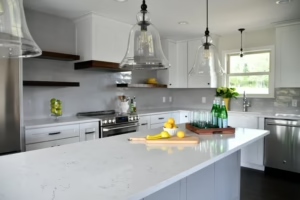
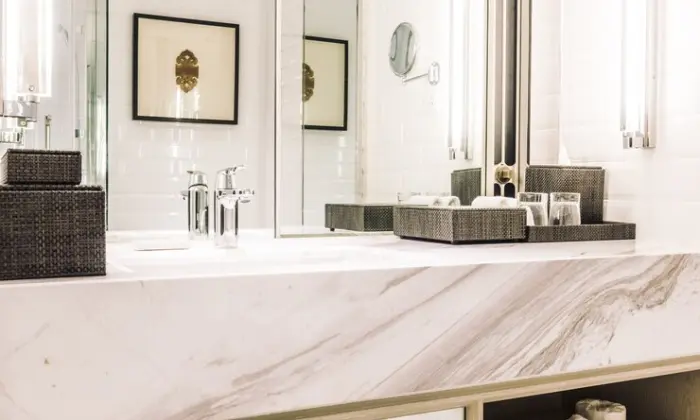
What is Honed Marble?
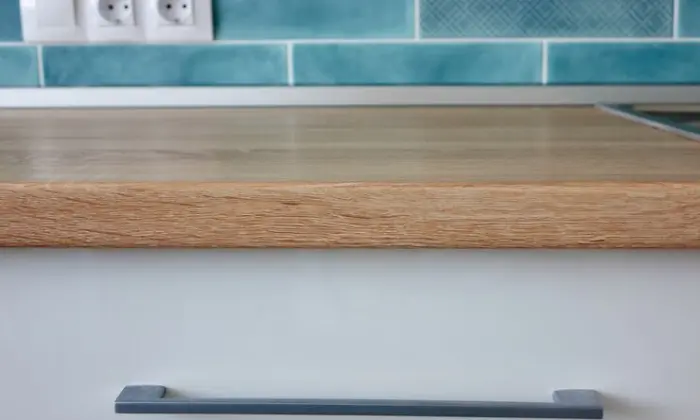
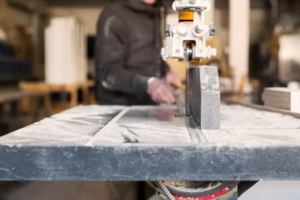
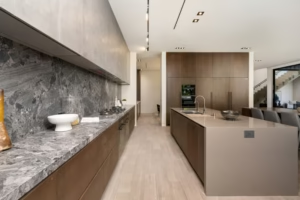
Honed marble is marble ground flat and smoothed but never buffed to a shine, which leaves a matte, low-reflective surface. The process uses progressively finer abrasive pads until the stone reaches a soft, satin texture. This finish hides scratches and light etching far better than a glossy one.
Think of honed marble as marble in its “quiet” state. The surface still has that classic veining and color depth, but it reads more like stone than glass. Runners and touring homeowners often describe it as looking closer to how marble appears in old European buildings, where centuries of foot traffic wore the shine off naturally.
Because the surface is more porous and slightly rougher, honed marble does need a sealer more often than its glossy cousin. That’s a fair trade for a look that doesn’t show every fingerprint or water spot. It’s a common pick for bathroom floors, farmhouse-style kitchens, and outdoor patios.
What Is a Polished Marble?
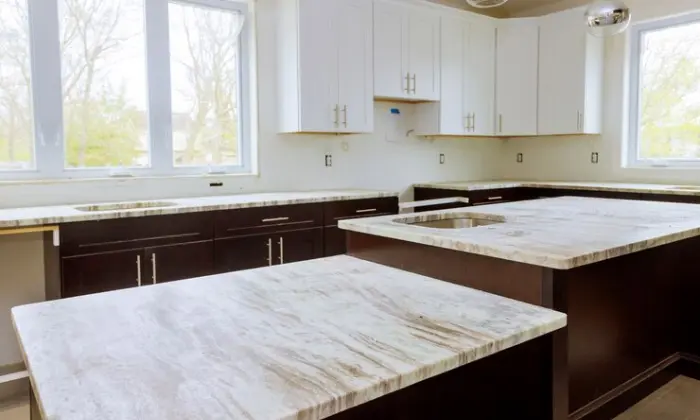
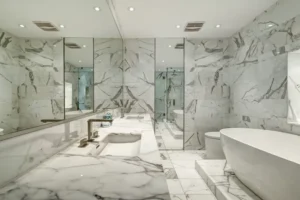
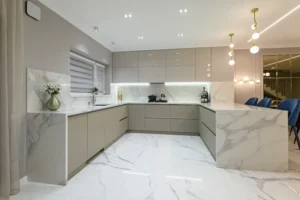
Polished marble is marble buffed with fine abrasives and polishing compounds until the surface becomes smooth, reflective, and glass-like. The polishing process closes the stone’s pores, which gives it a glossy sheen and deep color saturation. This finish shows veining and pattern more clearly than any other marble surface.
This is the marble most people picture when they hear the word “luxury.” Calacatta and Carrara varieties look especially dramatic once polished, since the shine pulls out the contrast between the white background and the gray or gold veining. It’s the finish you’ll see in hotel lobbies and formal dining rooms.
The catch is that shine comes at a price. A polished surface reflects every scratch, water spot, and acid mark, so it demands more care in busy kitchens. It’s stunning in low-traffic, low-spill areas, but it’s less forgiving where kids, pets, or daily cooking happen.
Quick Comparison: Surface Characteristics
| Feature | Honed Finish | Polished Finish |
| Surface Texture | Smooth, matte, satin-like | High-gloss, smooth, reflective |
| Slip Resistance | High (better traction when wet) | Low (can be slippery when wet) |
| Etching Visibility | Low (blends naturally with matte finish) | High (dull spots show clearly under light) |
| Scratch Visibility | Low (minor scratches blend in) | High (scratches interrupt high shine) |
| Stain Susceptibility | High (more porous, requires sealing) | Moderate (sealed micro-pores resist liquids) |
| Reflective Glare | None | High |
| Ideal Applications | Flooring, high-use kitchens, bathrooms | Accent walls, low-traffic areas, vanities |
Maintenance Requirements
Honed marble can be more vulnerable to staining because its surface is more open than a polished surface. A suitable impregnating sealer may help reduce staining, but sealing doesn’t make marble stain-proof. The Natural Stone Institute specifically notes that sealers make natural stone more stain-resistant rather than completely resistant to stains.
Polished marble is less porous at the surface and may require sealing less often in some applications. However, that doesn’t protect it from acid damage. Lemon, vinegar, wine, and other acidic materials can still cause etching.
Slip Resistance
Another factor to keep in mind is safety.
Honed marble is extremely slippery and a great choice for:
- Bathrooms
- Shower floors
- Pool surrounds
- Outdoor walkways
- Commercial flooring
When wet, polished marble is slippery, and thus is a more appropriate choice for a wall, fireplace, decorative use, or a less hazardous area for a floor.
Best uses for each finish
Matching the stone finish to the specific room environment prevents slip hazards and reduces maintenance frustration over time.
Where Honed Stone Excel
Bathroom Flooring: The extra surface texture provides vital foot traction when wet, significantly lowering slip and fall risks in showers or near tubs.
Kitchen Worktops: Frequent home cooks who work with citrus, vinegar, or oil benefit from a matte surface that hides light etching.
High-Traffic Entryways: Hallways and foyers exposed to outdoor dirt, sand, and heavy foot traffic retain their appearance longer without showing floor wear patterns.
Where Polished Stone Excels
Bathroom Vanities: Ideal for powder rooms where makeup, soaps, and water rest on the surface, as the low porosity resists liquid ring marks.
Fireplace Surrounds and Walls: High-shine vertical accents catch ambient room lighting, creating a warm, elegant centerpiece that requires minimal cleaning.
Low-Use Accent Tables: Side tables or dining tops protected by placemats showcase rich natural stone veining without facing daily heavy abrasion.
Natural vs Polished Marble: What’s the Difference?
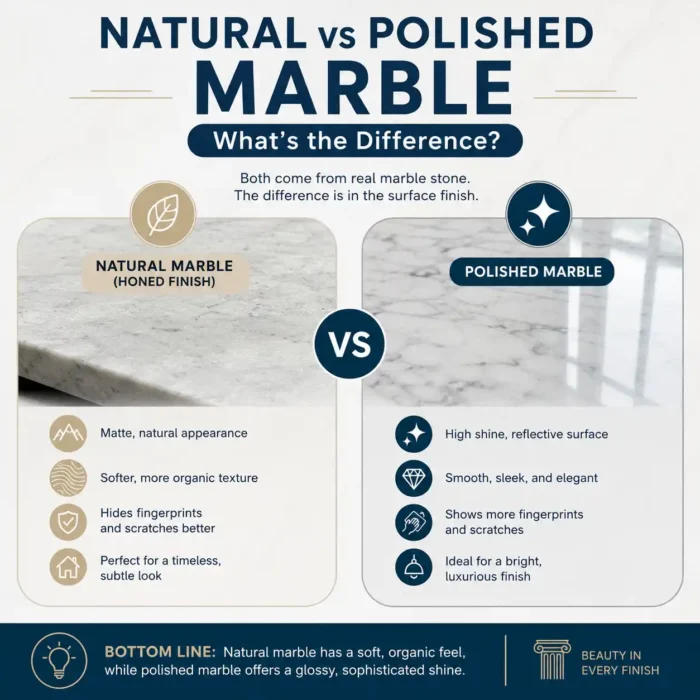
While polished marble undergoes intensive diamond-head buffing to produce a brilliant shine, unpolished or honed marble stops mid-process to retain a flat texture. The primary differences involve surface optics, porosity, tactile feel, and light reflection.
Light Reflection and Optics
Polished surfaces reflect up to 80% to 90% of direct light, creating bright visual accents. Honed surfaces diffuse light evenly across the room, eliminating reflective hotspots and harsh glare from direct sunlight or bright task lighting.
Porosity and Absorption Rates
Because polishing closes surface pores through friction and fine grinding, polished stone absorbs liquids more slowly than honed variants. Unpolished stone has open pores, making it more absorbent to oils, water, and acidic liquids if not regularly sealed.
Color Intensity
Polishing acts like a clear coat over wood, darkening the stone’s body color and making white, grey, or gold veining pop. Honed processing softens contrast, giving white marble a warm, subtle appearance that hides surface imperfections.
Read More: How to Clean Marble Floors?
Unpolished Marble vs. Polished Marble – which one is better?
The term “unpolished vs polished” marble is used in the context of honed/matte marble versus a polished marble finish.
When durability is more important for everyday use, unpolished (honed) marble may be better due to less scratching and etching.
For those who are most concerned with luxury designs, polished marble offers unmatched elegance.
As far as unpolished vs polished marble, it is generally a matter of personal lifestyle and not quality.
Polished Marble vs Honed Marble – Which is More Expensive?
The cost of polished vs honed marble is generally comparable as both finishes are custom made.
But, expenses can differ according to:
- Marble variety
- Slab thickness
- Color rarity
- Installation complexity
- Edge profiles
- Location
The higher the quality of the imported marble, the more expensive it will be, no matter what the finish is.
Honed vs Polished Marble Countertops: Which Should You Choose?
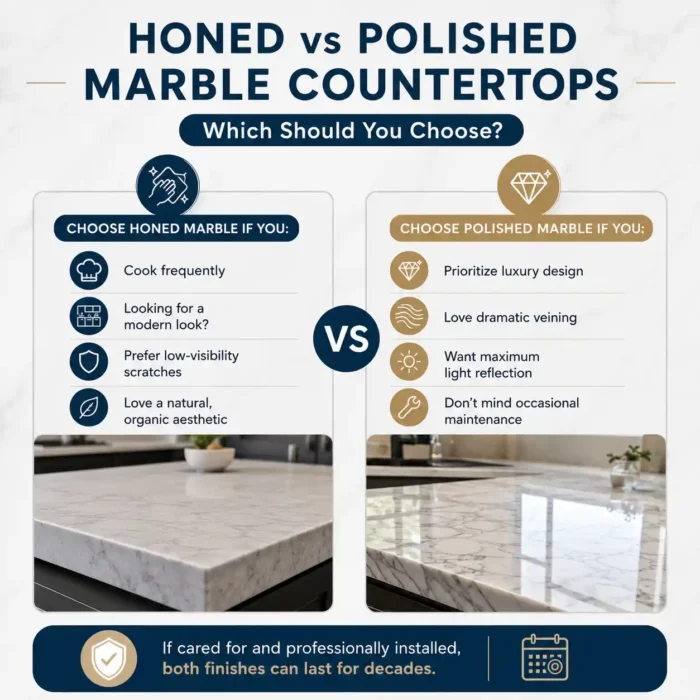
Choose honed marble countertops for busy kitchens with frequent cooking, baking, and acidic spills, since the matte surface hides wear. Choose polished marble countertops for kitchens used lightly or for bathroom vanities where shine matters more than durability. Your cooking habits should drive this decision more than personal style preference alone.
This is usually the final question homeowners land on after weighing everything else. Honed vs polished marble for countertops isn’t purely about aesthetics. It’s about whether you’re comfortable seeing faint etch marks build up on a glossy surface over months of cooking, or whether you’d rather they blend into a matte one from day one.
A good compromise some homeowners choose is a honed island for daily cooking paired with a polished perimeter countertop for visual contrast. That way you get the shine where guests see it most and the practicality where the real work happens.
Final Thoughts on Honed vs Polished Marble
Both marble honed vs polished have their own set of advantages and can enhance the beauty of your home in different ways. By understanding the characteristics, benefits, and maintenance requirements of each finish, you can make an informed decision that aligns with your aesthetic preferences and functional needs. Whether you choose the subtle elegance of honed marble or the striking shine of polished marble, both options are sure to add timeless beauty and value to your home.
Enhance Your Kitchen with Light Granite Countertops
At SF Marble & Granite Inc., we bring over a decade of experience to every project. Our premium light granite countertops offer a perfect blend of beauty, durability, and versatility designed to elevate any kitchen style, whether modern, traditional, or rustic. We stand by our commitment to quality craftsmanship and meticulous installation. Plus, explore our Marble Floor Installation in Lowell service to complete your home’s makeover with expert care. Trust our friendly team to transform your kitchen into a space you’ll love for years to come.
Conclusion
In the debate of honed vs polished marble, there is no definitive answer as to which is better. It ultimately depends on your personal preferences, the specific application, and how much maintenance you are willing to commit to. By weighing the pros and cons of marble honed vs polished and considering the overall look and feel you want to achieve, you can select the perfect marble finish that suits your home and lifestyle.
For more information or to get expert advice, you can visit us at 755 Dutton St. Lowell- 0185MA4 or contact us via email at sfmarbleangranite@gmail.com.
FAQs
Can you change a honed finish to a polished finish later?
Yes, professional stone restoration technicians can polish a matte surface using increasingly fine diamond abrasive pads. They can also convert a shiny surface to a matte finish using coarse grinding abrasives directly inside your home.
Does honed stone stain more easily than polished stone?
Yes, because the micro-pores remain open after grinding, unpolished surfaces absorb liquids faster than glossy stone. Applying a quality penetrating sealer every 6 to 12 months closes these pores and prevents deep discoloration.
Which finish is safer for bathroom floors?
A matte, unpolished finish is significantly safer for bathroom flooring. The subtle surface texture creates necessary traction under bare or wet feet, reducing slip hazards in showers, near soaking tubs, and across main bathroom floor areas.
How do you repair acid etch marks on natural stone?
For shiny surfaces, etch marks require polishing compounds or professional re-buffing to restore reflection. For matte surfaces, mild etching can often be blended out using a soft scouring pad and specialty stone rubbing compound.