If your kitchen countertop looks worn but replacing the entire surface feels like too much work or expense, epoxy can offer another option. The best epoxy countertops can give an old laminate, wood, tile, or concrete surface a new look without removing the entire base. But epoxy isn’t the same as granite or quartz, and knowing its limits matters before you start.
You may want a marble-style finish, a solid color, or a custom design with veins and metallic details. Epoxy can create these looks, but the final result depends heavily on surface preparation, the resin system, application technique, curing conditions, and daily care. This guide explains the practical side of epoxy countertops so you can decide whether they make sense for your kitchen.
Benefits of Epoxy Countertops
Epoxy resin surfaces provide a non-porous, highly customizable finish that resists moisture, stains, and daily wear. Unlike traditional laminate or tiled counters, solid resin pours create a continuous, hygienic workspace that wipes clean in seconds with plain soap and warm water.
When evaluating resin resurfacing for a busy home, the main perks come down to daily convenience and flexible design options:
-
Sanitary Surface: The continuous finish leaves zero grout lines or seams where bacteria, spills, or food debris can hide.
-
Stain Resistance: Liquid spills like tea, coffee, oil, and sauce wipe off easily without leaving deep discoloration behind.
-
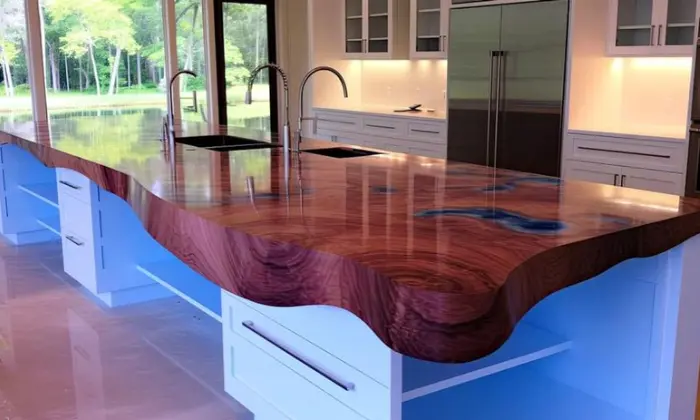
Versatile Aesthetics: Clear resins can be mixed with pigments to replicate natural marble veins, solid colors, or metallic patterns.
-
Direct Application: High-build coatings can often cover existing laminate, wood, or concrete substrates without tear-out labor.
For budget planning, home data suggests resurfacing kits cost between $3 and $8 per square foot in materials, whereas professional pouring averages $35 to $85 per square foot installed. By comparison, natural stone slabs regularly range from $60 to $150 per square foot before custom edge fabrication fees.
What are Marble Epoxy Countertop Advantages?
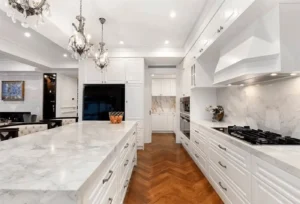
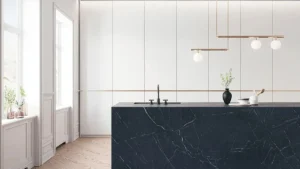
Marble epoxy coatings recreate the high-end appearance of natural marble slabs at a fraction of the weight, total cost, and upkeep. The poured resin cures into a smooth, glossy shell that mimics organic veining while removing the porous vulnerabilities of genuine calcium-based stone.
Traditional marble requires specialized pH-neutral cleaners and annual chemical sealing to prevent etching from acidic liquids like fruit juices or vinegar. Synthetic marble finishes eliminate this ongoing maintenance burden. You get the classic visual appeal of white and grey stone without worrying about permanent stains every time a glass tips over.
Furthermore, genuine stone slabs add immense weight to standard base cabinets, sometimes requiring extra structural bracing underneath. Resin systems apply a lightweight layer directly over your current counter core, reducing physical wear on underlying cabinet boxes.
Are Epoxy Countertops Durable?
Resin countertops are extremely durable against impact, moisture, and daily household spills, though they remain sensitive to extreme heat. Once fully cured over 7 to 30 days, high-grade epoxy forms a impact-resistant polymer shield that resists chipping, cracking, and water penetration.
While resin resists everyday impacts, it’s not completely indestructible. To keep your kitchen surfaces looking fresh for decades, keep these protective habits in mind:
-
Use Trivets and Hot Pads: Hot pans straight from the stovetop can soften or discolor the polymer coating.
-
Use Cutting Boards: Sharp knives will leave fine scratches on the clear coat over time.
-
Avoid Abrasive Scrubbers: Steel wool and harsh scouring powders will dull the glossy surface shine.
Pros and Cons of Epoxy Countertops
Epoxy counter finishes offer incredible value, complete customization, and water resistance, but require exact preparation and strict curing timeframes. Weighing these trade-offs helps determine if resurfacing matches your home maintenance abilities and lifestyle needs.
Key Advantages
-
Seamless Cleanup: No open seams or cracked grout lines to scrub out during regular house cleaning.
-
High Gloss Finish: The clear topcoat reflects ambient light, helping brighten up smaller kitchen layouts.
-
High Value: Delivers a modern stone appearance without the heavy price tag or structural requirements.
Potential Drawbacks
-
Challenging Application: Potting life is short (20 to 30 minutes), requiring quick, confident pouring to avoid air bubbles or uneven leveling.
-
Fumes During Cure: Liquid resins release strong volatile organic compounds (VOCs) that demand active ventilation until fully dry.
-
Cure Patience: While the surface dries hard within 24 hours, full chemical curing takes up to 30 days before heavy use.
How Long Do Resin Countertop Coatings Last?
A properly mixed and applied epoxy countertop coating lasts between 10 to 20 years with basic maintenance and care. Long-term longevity depends heavily on the chemical quality of the resin base, proper surface prep, and avoiding harsh UV light exposure.
Lower-tier craft resins lack UV-inhibiting additives and will yellow over time when exposed to direct sunlight from nearby windows. Choosing commercial-grade, clear counter coats ensures long-term clarity and color stability. If minor surface scratches gather over years of cooking, the topcoat can easily be buffed out and re-polished without replacing the entire counter.
DIY vs. Professional Countertop Resurfacing
DIY epoxy kits cost significantly less but require precise measuring, leveling, and bubble removal to achieve a smooth finish. Professional installers bring commercial tools, dust containment gear, and exact temperature management to guarantee flawless results.
If you choose the DIY route, remember that resin mixing is an exact science. An incorrect 1:1 or 2:1 ratio by volume prevents the liquid resin from fully hardening, leaving sticky spots that are difficult to strip and clean. Hiring experienced trade specialists eliminates these project risks and guarantees a clean finish from day one.
How to Get Started with SF Marble and Granite Inc?
SF Marble and Granite Inc. provides expert home surface consultations, custom fabrication, and professional installation services across the region. Working with a licensed installer ensures your kitchen update is handled safely, cleanly, and on schedule.
When you need a durable, hassle-free surface update, working with experienced craftsmen saves time and prevents costly mistakes. The team handles everything from structural prep and edge fabrication to clean final fittings. For homeowners comparing poured finishes with natural stone, expert advice ensures you pick the right balance of cost, strength, and visual appeal.
If you prefer the permanent strength and heat tolerance of solid stone over synthetic coatings, our team also specializes in premier Granite Countertop Installation in Lowell.
Final Thoughts
Updating your kitchen shouldn’t mean dealing with weeks of stressful demolition, dust, or high bills. Choosing the Best Epoxy Countertops offers a practical way to achieve a clean, modern look that fits your family’s budget and daily routine. Whether you choose direct resin resurfacing or prefer long-lasting solid stone surfaces, taking time to plan your project ensures great results.
Ready to discuss your kitchen options? Contact us at SF Marble and Granite today for friendly guidance and a free estimate on your project.
Frequently Asked Questions
Can you pour epoxy over existing laminate countertops?
Yes, epoxy resin can be poured directly over clean laminate counters after thorough sanding and priming. The key requirement is sanding off the smooth factory sheen so the liquid resin can form a strong mechanical bond with the underlying surface board.
Are epoxy countertops safe for food preparation?
Food-safe epoxy resins are non-toxic and completely safe for food contact once fully cured. Always verify that the manufacturer explicitly labels the resin formulation as FDA-compliant or non-toxic after its full cure cycle finishes.
How do you fix scratches in an epoxy countertop surface?
Minor surface scratches can be buffed out using a fine finishing polish and a soft microfiber cloth. Deep scratches or gouges require light sanding followed by a thin clear topcoat pour to restore the original seamless shine.