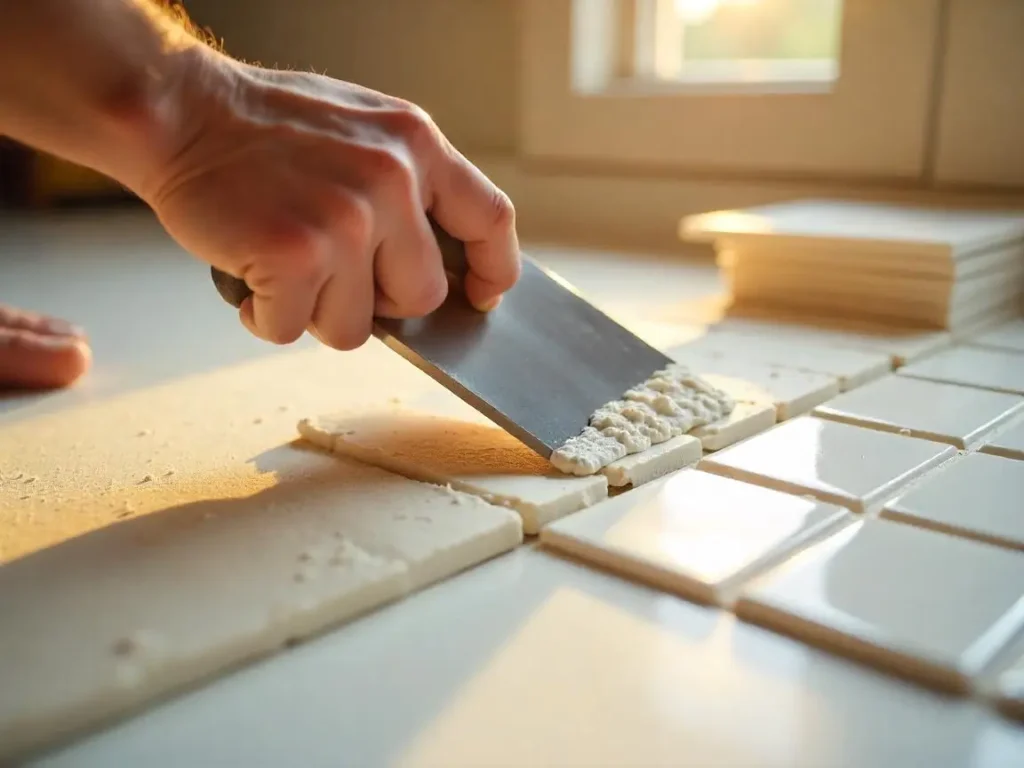
A backsplash serves a purpose beyond appearance within a kitchen setting. Protection comes in the form of resistance against moisture, oil buildup, spilled ingredients, along with routine damage – yet design remains part of its role. During preparation for tiling work, one inquiry often arises among those updating their homes: Is cement board necessary behind the backsplash area? Depending on multiple aspects – like wall state, tile variety, and moisture levels – the choice shifts. Although areas like showers commonly use cement board due to dampness, kitchens differ. Behind a backsplash, that material may not be required. What matters most lies beneath the surface, yet every setup follows its own logic.
Cement board becomes necessary under specific conditions, yet drywall may serve just as well in others. Where moisture exposure exists, one material clearly outperforms the alternative. Choosing incorrectly often leads to early failure, requiring costly corrections later. A proper selection depends on location, environment, and expected lifespan. Long-term performance follows directly from initial decisions made during planning stages.
What Is Cement Board?
Cement board consists of cement combined with fiber reinforcements. Built for stability, it supports tiles effectively while holding up against wet conditions. Where regular drywall weakens under dampness, this material remains firm and intact. Exposure to water brings no softening, warping, or breakdown in structure.
Despite regular splashing, cement board stays intact where moisture collects – bathrooms, showers, utility spaces rely on it. Where humidity lingers year after year, durability matters most; this material holds up without swelling or weakening. Its resistance to damp makes it a quiet choice beneath ceramic surfaces, often unseen yet essential.
A common choice among homeowners involves backsplash cement board, driven by the idea of improved defense compared to standard drywall. True, certain conditions benefit from this added shield; however, necessity varies across different installations. Though protection improves under specific circumstances, universal application overlooks practical alternatives. Every project differs – material selection should reflect actual need, not assumption. Situational demands shape whether this layer adds value or simply complicates execution.
Why Cement Board Is Commonly Used in Tile Installations
Water resistance belongs to the tile alone. Yet seepage occurs via grout or tiny openings now and then. Behind the surface, dampness uptake by underlying layers brings gradual deterioration. Over time, structural compromise follows, disrupting tile stability.
Cement board provides stability, reducing risks tied to weak surfaces. Because it withstands heavy loads, tile installations remain secure over time. Where moisture gathers, its resistance to mold stands out when compared to standard options. Should conditions shift, cement board holds its form without warping. Because of this behavior, tiles and grout stay intact longer under environmental stress.
Still, broad popularity fails to confirm the need across every case involving under-sink linings. Benefits may be present; however, fit shifts with the environment instead of fixed standards. Choices around fitting rest upon circumstances, not guesses. Yet outcomes follow setting more than habit.
Read More: How to Install Mosaic Tile Backsplash?
Deciding on Cement Board for Kitchen Backsplashes
Most times, the answer leans toward no. Direct application of standard kitchen backsplash materials takes place over drywall – once it has been cleaned and properly prepared. These areas avoid constant water contact, which sets them apart from bathrooms where tile surrounds are common. As a result, drywall frequently serves well in such spots. Installation methods shift when surroundings change, even if surfaces appear similar.
Should the drywall remain intact, securely fastened, while showing no signs of water exposure, then adherence of ceramic, porcelain, glass, or certain stone tiles becomes feasible. Installation by trained workers often proceeds straight onto drywall surfaces with successful outcomes observed routinely.
Still, certain conditions make a backer board useful behind backsplashes. When walls show damage, irregular surfaces, or evidence of moisture harm, substitution with a more durable base often supports better results. Then again, stability matters most in long-term function.
What matters most comes down to inspecting the wall’s state prior to starting work, instead of taking it for granted that cement board must be used. Each situation shifts depending on what exists already behind the surface.
You can read about: How to Install Vertical Shiplap Backsplash
When Should You Use Cement Board for a Backsplash?
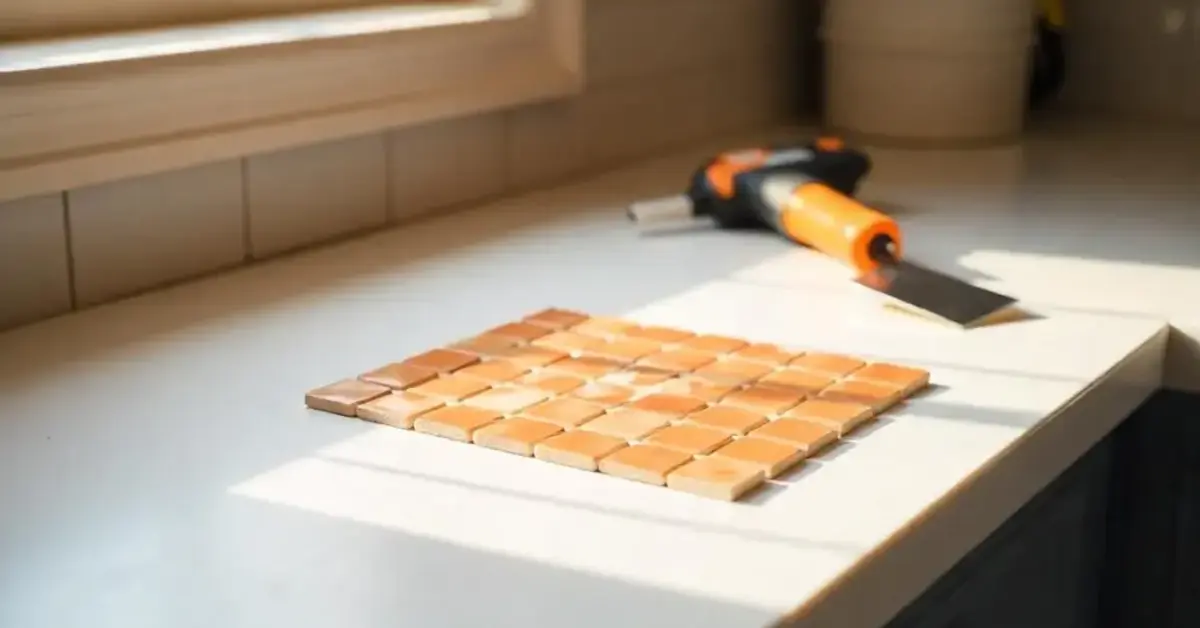
Though drywall suits numerous kitchen setups, specific conditions favor cement board instead.
Areas with High Moisture Exposure
Where water often sprays – like behind a sink – a cement board may help resist dampness more effectively than standard materials. Humid areas also benefit quietly from its resilient nature.
When moisture hits sealed drywall now, and then, damage rarely follows. Yet should dampness return, week after week, trouble may begin. Under such conditions, a sturdier surface brings quiet confidence.
Damaged or Weak Drywall
When cracks appear, the old drywall might fail under tile weight. Should moisture stains show up, adhesion risks rise sharply. A sagging patch often signals deeper instability beneath. If mildew marks are visible, long-term durability becomes uncertain. Where warping exists, even strong adhesive struggles to hold firm.
A fresh layer of cement board takes the place of worn wall sections, offering support that holds up over time. Where weakness existed before, rigidity follows – moisture damage becomes less likely through this shift in structure.
Heavy Natural Stone Tiles
Heavy natural stone varieties often exceed ceramic tile weights. When installed at larger sizes, these backsplash materials can increase the load upon vertical surfaces.
A different approach emerges when considering kitchen cement boards – these materials often strengthen overall framework integrity. With time, performance tends to remain consistent due to resistance against common wear factors.
Drywall vs. Cement Board for Backsplash Installations
Among those who own homes, a frequent topic involves comparing drywall with cement board. Which material performs more effectively tends to draw attention. Differences in durability often shape opinions. Some prefer one; others support the alternative. Opinions shift depending on location, usage, and environment. This contrast continues without a clear consensus.
Although inexpensive and simple to handle, drywall appears frequently on job sites due to its wide distribution networks. Where kitchens remain mostly dry, performance tends to stay reliable over time. Most tile or panel installations find sufficient support behind the surface layer.
Certain materials hold up better when wet, cement board being one example. When dampness rises, its structure remains stable over time. With exposure to harsh settings, performance does not decline sharply. Instead of warping or swelling, it maintains shape under pressure.
Depending on surroundings and wall state, decisions shift. Should drywall remain intact and moisture be minimal behind countertops, the added effort plus expense of cement board might bring little gain.
Installing a backsplash with cement board
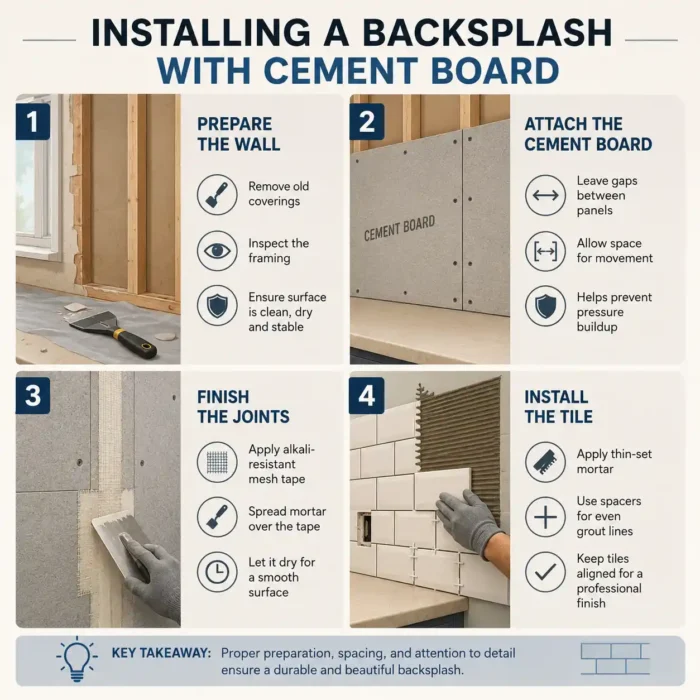
If cement board suits your needs, correct placement becomes necessary. When selecting this material, attention to setup matters greatly. Should it fit your plan, execution must be precise. For those choosing this option, careful fitting holds importance. Where this product applies, accurate mounting plays a role.
Wall surface ready
Starting with bare walls, take down old coverings first. After that, examine the frame closely. Only when moisture levels are low and dirt is gone should work continue. A solid base matters most – check stability thoroughly before adding cement board.
Attach the Cement Board
Spaces must remain between panels for joints to function correctly. This accounts for material movement over time. Gaps help avoid pressure buildup later. Proper spacing supports long-term stability. Each section needs room to adjust naturally.
Finish the Joints
Beginning at each seam, place mesh tape designed to resist alkaline reactions. A layer of mortar follows, spread evenly across the taped areas. Where joints occur, reinforcement takes effect beneath the coating. Surface uniformity emerges once the mixture dries completely.
Install the Tile
A smooth coat of thin-set mortar covers the surface before laying tiles. One at a time, each unit finds its place according to the predetermined layout. Spacers inserted during alignment keep intervals steady across adjacent pieces. Precision in setting keeps seams straight, avoiding shifts from the intended line. From edge to edge, the outcome reflects strict attention to detail throughout.
Conclusion
For homeowners, the answers to Do I Need Cement Board for Backsplash is no. Standard kitchen backsplashes can commonly be hooked up without delay over well organized drywall. However, regions with moisture concerns, broken walls, or heavy herbal stone substances may also advantage from cement board or different backer board solutions. Choosing the proper substrate enables make certain a durable, appealing backsplash that plays nicely for years to come.
Ready to improve your kitchen with a stunning custom backsplash installation in Lowell? Contact SF Marble and Granite these days for professional guidance, top class stone selections, and expert set up offerings designed to convey lasting splendor in your home.
Frequently Asked Questions
Do I Need Cement Board for Backsplash?
In most kitchen applications, no. Tile can generally be hooked up without delay over drywall if the wall is in right situation and unfastened from moisture damage.
Do you want cement board for backsplash at the back of a kitchen sink?
Not always. However, cement board may also offer extra moisture safety in regions that enjoy common water exposure.
Do I want backer board for kitchen backsplash projects?
Most kitchen backsplashes do now no longer require backer board if the drywall is strong and well organized.
What is the excellent backer board for kitchen backsplash installations?
If extra assist is needed, cement board is one of the maximum normally used and moisture-resistant options.
Can natural stone backsplashes be hooked up over drywall?
Yes, many herbal stone backsplashes may be hooked up over drywall, aleven though heavier substances may also require assessment and further assist.