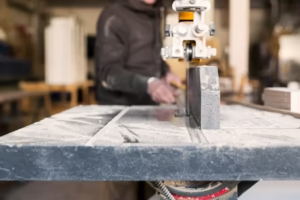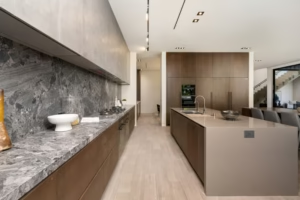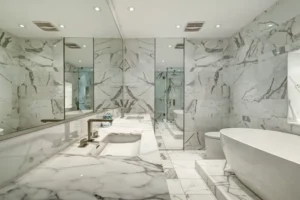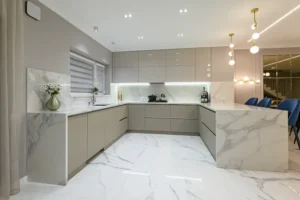
Edges look like a small detail until a toddler hits a sharp corner or a quote adds hundreds of dollars for a fancy profile. I’ve seen both surprises, and you can avoid both. This guide covers how to select countertop edges that look right, hold up, and fit your budget.
Here’s the quick answer. Choose an eased or half bullnose edge for busy family kitchens, a beveled edge for a clean modern look, and an ogee or Dupont edge for traditional design. Below, I’ll cover function versus style, common profiles, material limits, costs, and mistakes to skip.
Choosing between Functional vs. Decorative Edge Profiles

Start with how you use the counter. Function and looks pull in different directions, and the best edge balances both.
A functional edge protects people and stone. Rounded corners spread impact, so they resist chips and soften bumps. Smooth shapes also wipe clean fast, which matters around sinks and cooktops.
A decorative edge adds character. Ogee, Dupont, and chiseled profiles create shadow lines and layers that catch the eye. The tradeoff is more grooves for grease and crumbs, plus a higher price.
Think of it like shoes. A sneaker survives a long day, and a dress shoe looks sharp but pinches. Pick the one that matches how you live.
Slab thickness matters too. Most slabs come in 2 cm or 3 cm. Thicker stone carries deep profiles well, while thinner stone can look flat or lose detail.
Types of Countertop Edges
Here are the profiles you’ll see on most fabricator samples.
Eased Edge
An eased edge has a flat top and a slightly softened corner. Many fabricators treat it as the standard option. It suits modern and transitional kitchens, resists chips better than a sharp square corner, and wipes clean in seconds. If you want a safe starting point, begin here.
Beveled Edge
A beveled edge has an angled cut along the top corner, usually around 45 degrees. It gives you a crisp line without heavy detail. It reads sharper than an eased edge, so it fits contemporary and industrial spaces. Hard hits can still chip the angled corner on softer stone.
Full Bullnose Edge
A full bullnose rounds the entire edge into a half circle. It’s soft, safe, and forgiving. Families with young kids love it. On very thick slabs, though, it can look heavy.
Half Bullnose Edge
A half bullnose rounds the top corner and leaves the bottom square. You get softness without the bulky look. It works well on kitchen islands and bathroom vanities.
Ogee Edge
An ogee edge has an S-shaped curve, concave first and then convex. It brings a formal, classic feel. It needs a thicker slab to show its shape properly. The curves also collect dust, so expect extra wiping.
Dupont Edge
A Dupont edge builds on the ogee with a deeper, more layered cut. It adds more shadow and detail. It suits traditional kitchens with ornate cabinetry. It also takes more labor to cut and polish, which raises the price.
Mitered Edge
A mitered edge joins two pieces of stone at an angle, or stacks them, to make the slab look thicker. A 2 cm slab can look like 4 or 6 cm. It gives modern kitchens a bold, chunky look. The seam should match the stone’s pattern, so ask to see it on a sample.
Waterfall Edge
A waterfall edge runs the slab straight down the side of an island to the floor. It’s a statement piece. It looks best with veined marble, quartzite, or quartz. It uses more material and needs precise seams, so it costs more.
Chiseled Edge
A chiseled edge has a rough, hand-chipped look. It fits rustic and old-world designs. It hides everyday wear well. The rough surface takes more effort to clean.
Does Your Countertop Material Change Which Edge Works?
Yes. Material decides which edges are safe to cut. Granite and quartzite handle detailed profiles well, quartz allows clean, uniform shapes, and marble chips more easily on thin, sharp details. Softer or thinner stone does better with simple, rounded edges, while thick, dense slabs can carry deeper profiles.
Granite is dense and holds ogee and Dupont profiles with sharp detail. Quartzite behaves much the same way. Quartz gives a very even finish, but sharp square corners can still nick under a heavy pot.
Marble is softer and shows chips and etching more easily. A rounded edge protects it better than a thin, pointed one. Ask your fabricator which profiles they cut often on your chosen stone, because experience matters here.
How Much Do Different Countertop Edges Cost?
Standard edges like eased and beveled usually cost little or nothing extra, while detailed profiles like ogee, Dupont, and mitered edges add cost per linear foot because they take more labor and polishing time. Prices vary by fabricator, material, and region, so ask for edge pricing in writing.
Fabricators price edges by the linear foot, which is the total length of exposed edge. A large island with a waterfall side adds up fast. Ask the shop to list the edge cost as its own line on your quote.
Simple edges also tend to cost less over time. Fewer grooves mean easier cleaning, and rounded corners mean fewer chip repairs.
Perfect Profiles for Every Style
Choosing the right countertop edges can transform your kitchen or bathroom by balancing beauty and practicality. From simple eased or pencil edges that are safe and easy to maintain, to bold waterfall or live edge profiles that make a statement, each option brings its own personality and upkeep needs. At SF Marble & Granite Inc., we guide you through every choice helping you pick the ideal edge that complements your décor and daily routine, and ensure a flawless finish with our expert Countertops Installation in Lowell.
Conclusion
Choosing the right countertop edges is important for balancing looks and function in your kitchen or bathroom. Whether you like the simple style of an eased edge or the dramatic look of a waterfall edge, knowing the benefits and drawbacks of each will help you pick the best one for your space.
At SF Marble Granite, we’re here to assist you in choosing the countertop edges that perfectly match your style and needs. With our expert advice, your countertops will not only look stunning but also serve you well for years to come. Contact us today!
FAQs
What’s the easiest edge profile to clean?
Functional profiles like the eased edge and bullnose edge have smooth curves with no sharp corners, making them the simplest to wipe down and keep sanitary.
Which edge adds the most visual impact?
Decorative profiles such as the waterfall edge or live edge stand out instantly, waterfall edges wrap the material over the cabinet sides, while live edges showcase the stone’s natural contours.
Are decorative edges harder to install?
Yes, intricate profiles like ogee and mitered edges involve more complex fabrication and precise seams, so they often take longer and require skilled installers.
How do I choose between functional and decorative edges?
Consider your lifestyle and maintenance preferences: functional edges suit busy households or families, while decorative edges elevate formal or designer-inspired spaces.