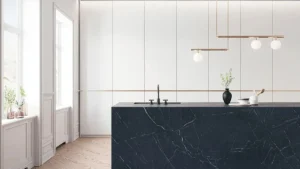

You’ve stood in a stone yard before right? You stroke your palm over a dark slab, half in love with it, partly scared it may stain the first time someone puts down a glass of wine. That’s a reasonable reaction, and it’s the same emotion most people have before they commit to black marble in their kitchen or bath.
Here’s the promise: After you finish reading this, you’ll know exactly what black marble is, which kind is best for your area, how much it costs, and how to keep it looking sharp for years to come. No fluffy sales-pitch, simply the facts you need before you sign off on a lot. Black marble countertops are natural stone surfaces admired for their rich color and veining. There are genuine trade-offs to these worktops that are worth understanding before installation day.
What Is Black Marble?
Black marble is a metamorphic rock formed from limestone that’s been exposed to intense heat and pressure over millions of years, giving it a crystalline structure and a dark, dense base color. Its calcium carbonate composition is what gives it that smooth, cool-to-the-touch feel, and it’s also why the stone reacts to acidic substances. Mineral impurities trapped during formation create the white, gold, or grey veining that makes every slab one of a kind.
That veining isn’t decoration painted on top. It’s a mineral veining pattern formed by quartz or dolomite that got squeezed into the limestone as it transformed. No two slabs share the same natural veining, which is part of why designers treat black marble as a focal point rather than a background material.
Porosity is the other detail worth knowing early on. Marble has a more open pore structure than granite or quartz, and that’s exactly why sealing matters so much once a slab goes in. It’s not a flaw so much as a trait you plan around, the same way you’d plan around a cast-iron pan needing to be seasoned before use.
Types of Black Marble
Not all black marble looks or performs the same way. Four varieties show up most often in kitchens and baths across the US.
Nero Marquina
comes from Spain and is probably the most recognized black marble slab on the market. It has a true black background with crisp white veining, ranging from thin hairlines to bold streaks.
Sahara Noir
carries a richer, warmer black tone with veining that moves in soft waves rather than sharp lines. It’s often used for bookmatched islands, where two slabs are mirrored to create a continuous pattern.
Nero Splendor
leans into grey-black tones with organic, cloud-like veining. It works well in spaces where you want drama without stark contrast.
Black and Gold marble
pairs a black field with gold or bronze veining, and it’s the choice for anyone wanting a bathroom vanity or fireplace surround that reads as a statement piece rather than a supporting surface.
Benefits of Black Marble Countertops
Choosing black marble for your countertops comes with numerous advantages. Here are some key benefits:
Aesthetic Appeal and Luxury
Black marble countertops are synonymous with elegance and luxury, enhancing any space with their deep, rich color and distinctive veining. Their striking appearance can transform a kitchen from ordinary to extraordinary, making them a versatile choice for both modern and classic designs.
The unique patterns in each slab contribute to a sophisticated aesthetic, allowing homeowners to create a statement piece that stands out. Whether used in a sleek contemporary setting or a traditional environment, black marble elevates the overall design, offering an exquisite blend of beauty and timeless appeal that complements a wide range of styles.
Versatility in Design
Black marble is highly versatile in design, making it a favorite choice for homeowners. It seamlessly pairs with a wide range of cabinet colors and materials, enhancing various aesthetics. Whether in traditional white kitchens or modern spaces, black marble adds a touch of elegance and sophistication.
Its rich, dark tones create a striking contrast against lighter elements, while its unique veining adds character and depth. This adaptability allows for creative expression, enabling homeowners to achieve their desired look, whether they prefer a classic, contemporary, or eclectic style, making black marble an excellent choice for any interior design project.
Durability and Longevity
Natural stone, such as black marble, is renowned for its durability and longevity. With proper maintenance, black marble countertops can endure for decades, making them a practical investment for any home. Unlike synthetic materials, marble is resilient against heat and everyday wear and tear, ensuring it retains its beauty and functionality over time.
This inherent strength not only enhances its aesthetic appeal but also adds value to your space. Choosing black marble means opting for a timeless, enduring material that can withstand the rigors of daily use while maintaining its elegance for years to come.
Heat Resistance
Black marble countertops are known for their impressive heat resistance, making them ideal for kitchen environments. They can withstand the heat from cookware, which is crucial for preventing damage during cooking. Although black marble is resilient, it’s still advisable to use trivets or heat pads for hot pots and pans to ensure the longevity of the surface.
This protective measure helps maintain the marble’s appearance and integrity over time. Overall, black marble combines both beauty and practicality, offering a stylish yet functional choice for any kitchen.
Value Addition to Property
Installing black marble countertops can significantly enhance your property’s value. These natural stone surfaces are considered a premium feature, attracting potential buyers who appreciate quality and aesthetics.
The rich, elegant appearance of black marble adds a touch of luxury, making your home stand out in the competitive real estate market. Furthermore, well-maintained marble countertops signal quality craftsmanship, which can justify higher selling prices.
Black Marble vs. Granite vs. Quartz vs. Quartzite
Black marble differs from granite, quartz, and quartzite mainly in porosity and acid resistance, since marble is a calcium carbonate stone prone to etching while the others resist acid and stains more consistently. Here’s how they actually compare side by side.
| Material | Composition | Acid/Etch Resistance | Heat Resistance | Maintenance |
| Marble | Calcium carbonate | Low, etches easily | Good | Sealing every 1–2 years |
| Granite | Igneous, quartz-rich | High | Excellent | Sealing every 1–2 years |
| Quartz | Engineered, resin-bound | High | Moderate, avoid direct heat | Low, no sealing needed |
| Quartzite | Metamorphic, quartz-based | High | Excellent | Sealing every 1–2 years |
Granite gives you the closest natural-stone alternative with far less worry about lemon juice or wine. Quartz is engineered, so it skips sealing altogether, though it can’t take direct heat the way stone can. Quartzite often gets mistaken for marble because of similar veining, but it behaves more like granite in daily use.
None of these materials is objectively “better.” It comes down to whether you want the specific look of marble enough to accept its care routine, or whether a look-alike with fewer rules suits your household better.
Cost of Black Marble Countertops
Black marble countertops typically run between $75 and $250 per square foot installed, depending on the variety, slab thickness, and fabrication complexity. Nero Marquina tends to sit on the lower end of that range, while Black and Gold or bookmatched Sahara Noir can push past $200 per square foot once you factor in waste and matching.
A few things move the price beyond the base rate. A waterfall edge on an island, where the slab wraps down the sides, uses significantly more stone and labor. Edge profiles like ogee or bullnose add fabrication time. Thickness matters too, with 3cm slabs costing more than 2cm but requiring less structural support underneath.
Installation itself typically adds $10 to $40 per square foot on top of material cost, covering templating, cutting, and setting the slab. Getting quotes from at least two or three fabricators in your area is the most reliable way to know what a specific project will actually cost, since regional labor rates vary more than people expect.
How to Clean and Maintain Black Marble
Daily care is simpler than most people assume once it becomes a habit. Wipe the surface with a damp microfiber cloth to clear dust and light residue. For a deeper clean, use a pH-neutral stone cleaner once a week rather than whatever’s under the sink, since regular dish soap can dull the finish over time.
Sealing is where staining resistance actually comes from. An impregnating sealer soaks into the stone’s porosity and slows down how quickly liquids penetrate. It doesn’t stop acid etching, and no sealer does, but it buys you time to wipe up a spill before it leaves a mark. Most black marble surfaces need resealing every one to two years, though a quick water bead test tells you when it’s due. If water soaks in within a minute instead of beading up, it’s time.
Avoid vinegar, lemon juice, and other acidic cleaners entirely. They react with the calcium carbonate in the stone and leave a dull, etched spot that no amount of scrubbing will fix. If etching does happen, a professional can re-hone the surface and bring back the original finish, though this isn’t a DIY weekend project.
Cutting boards and trivets aren’t optional extras here. They’re the two habits that do the most to keep a black marble kitchen looking the way it did on installation day.
Design Pairings That Work With Black Marble
Cabinet color is the first decision that shapes how a black marble slab reads in a room. White or cream cabinets create the sharpest contrast, and it’s the pairing most people picture when they think of a black marble kitchen. The stone reads clean and almost graphic against that backdrop.
Wood cabinetry tells a different story. Light oak softens the whole look and makes a black marble island feel less formal, more like a lived-in family kitchen. Walnut or dark stained wood pushes in the opposite direction, leaning into a moodier, layered feel that works well in a dining space meant for evening use.
Hardware and lighting matter more than people expect. Brass or gold fixtures pick up on any warm veining in the stone and tie the whole room together. Brushed nickel or matte black hardware keeps things cooler and more contemporary, which suits Nero Marquina’s crisp white veining especially well.
Common Mistakes to Avoid When Buying Black Marble
Skipping the sample test is the most common regret. A small showroom sample doesn’t tell you how a full black marble slab will look under your kitchen’s actual lighting, so ask to bring a sample home for a day before committing to full sheets.
Choosing a finish based on photos alone is another mistake. Polished finishes photograph beautifully but show every fingerprint and etch mark. Honed and leathered finishes hide daily wear far better in a real household, even if they look slightly less dramatic online.
Finally, underestimating installation logistics causes real headaches. Black marble countertops are heavy, and a slab this size often needs two or three people just to move it safely. Confirm your fabricator handles both templating and structural support for the cabinets underneath before signing a contract.
Where Black Marble Fits Best in Your Home
A black marble island tends to work best in kitchens where it can act as the centerpiece rather than competing with other bold finishes. If your cabinets and backsplash are already busy, a black marble slab can tip a room from striking into cluttered.
Bathrooms are a strong match too. A black marble bathroom vanity in a powder room takes less daily abuse than a kitchen island, since you’re not chopping vegetables or pouring wine next to it. Shower walls and tub surrounds also work, provided the surface stays sealed and drainage prevents standing water.
Fireplace surrounds are another spot where marble’s low-maintenance side shows up. There’s no food prep, no acidic spills, just dusting now and then. The stone’s visual weight pairs naturally with a fire’s warmth, which is part of why it’s remained a classic choice for decades.
Final Thoughts
Black marble isn’t a low-maintenance material, and it was never meant to be. It’s a trade-off, and once you understand where that trade-off sits, it becomes a lot easier to decide if it belongs in your home. The veining, the depth of color, and the way it ages with a bit of patina are the reasons people choose it over a material that never changes at all.
If you’re weighing black marble against a tougher alternative, granite is worth a closer look, and SF Marble and Granite handles both natural stone selection and installation for homeowners across the region, including Granite Countertop Installation in Lowell for anyone comparing options before making a final call. Contact us if you’d like to see slabs in person or get a quote based on your kitchen’s actual layout.
Common Questions About Black Marble Countertops
Is black marble a good choice for a busy family kitchen?
Black marble works in a busy kitchen if the household is willing to wipe spills quickly and use cutting boards consistently, since the stone’s main weakness is acid etching rather than everyday wear. Families that already treat their counters carefully tend to have the best experience with it. Households that pour wine, squeeze citrus, or cook without much cleanup as they go may notice more etching over time.
Does black marble scratch easily?
Black marble resists scratching reasonably well thanks to its crystalline structure, though marks show up more visibly on a dark surface than on lighter stone. Most scratches are shallow and buff out with a soft pad. Knives dragged directly on the surface, rather than on a cutting board, are the most common cause.
Can black marble go outdoors?
Black marble isn’t recommended for outdoor installations because prolonged UV exposure and freeze-thaw cycles can affect its surface and stability over time. Porcelain or quartzite handle outdoor conditions better if you want a similar dark, veined look on a patio or outdoor kitchen.
How long does a black marble countertop last?
A properly sealed and maintained black marble countertop can last 20 years or longer, since the stone itself doesn’t degrade, only its surface finish needs periodic attention. The slab’s structural life typically outlasts the kitchen design around it.
Is black marble more expensive than granite?
Black marble typically costs a bit more than mid-range granite because rare varieties like Sahara Noir and Black and Gold require more careful quarrying and produce more waste during fabrication. Standard black granite options can actually come in cheaper than premium black marble slabs, so it’s worth comparing specific varieties rather than assuming one material always costs more than the other.