Granite takes a battering in a bathroom. Steam, puddles of water, hairsprays, makeup stains, and a curling iron on the floor. This is exactly why so many homeowners look for a professional bathroom granite countertop, rather than just grabbing any slab and hoping it holds up.
Here’s the quick answer: Granite is a good choice for bathrooms since it’s more resistant to heat, scratches and water damage than most alternatives, but the effect only lasts if the fabrication and installation are done well. We’ll look at why granite is a wonderful bathroom choice, what the installation really includes, the faults that can damage a good slab and how to keep it looking good for years to come. Whether you’re comparing granite versus quartz or marble, or attempting to figure out what a proper installation should cost, this has you covered.
Why Choose Granite for Your Bathroom Countertop?
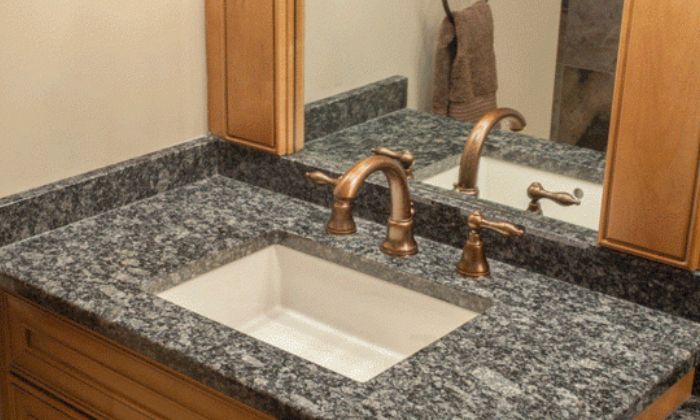
Granite is among the toughest natural stone choices for bathrooms since it is more resistant to heat, moisture and ordinary scratching than laminate, tile or cultured marble. When properly sealed, it will resist humidity and steam without warping, cracking or staining, and is a suitable long-term alternative for busy bathrooms.
Each slab of granite has formed over thousands of years of extreme heat and pressure. That’s not a sales pitch, that’s just geology, and it’s why granite shrugs off a hot flat iron or a dab of nail polish remover that would damage a lesser surface. Bathrooms are constantly exposed to humidity, and granite doesn’t collect moisture like wood-look laminate or some engineered surfaces do once the seal begins to wear.
And then there’s the visual aspect. No two slabs are exactly alike, so instead of something chosen from a catalogue of a thousand identical sheets, you get a vanity top that is a one-of-a-kind item. In a small bathroom, that sort of natural diversity usually does more to make the space look finished than any amount of added tiling or lighting.
Granite vs. Quartz vs. Marble: Which Fits a Bathroom Best?
Granite, quartz, and marble get compared constantly, and each one has a real trade-off. Quartz is engineered, so it’s non-porous out of the box and needs no sealing, but it can’t take direct heat the way granite can. Marble looks stunning next to a soaking tub, but it’s soft and porous, so it stains easily from soap scum, perfume, and acidic skincare products.
Granite sits in the middle. It needs sealing once a year or so, but beyond that it tolerates heat, humidity, and daily wear better than marble, and it costs less per square foot than most premium quartz lines. If your household leans toward hot styling tools, perfume bottles, and frequent guests, granite tends to outlast the alternatives without demanding constant babying.
Popular Granite Colors and Patterns for Bathrooms
Bathroom vanities normally look best with lighter or mid-tone granite. The area is smaller, and darker slabs can feel closed in. Darker choices like Black Galaxy or Uba Tuba are more striking and contrast with light vanities, reading as more official.
Pattern is as important as colour. A crowded, high-movement pattern might swallow a small bath room, while a calmer, more uniform look can let fixtures and hardware shine. Most fabricators will also help you look at remnant parts. You rarely need a full slab for a bathroom vanity, which usually cuts the price down.
Tools and Materials You’ll Need for Installation
A proper granite installation isn’t a weekend project with a hand saw and a tube of caulk. Fabricators use a wet saw with a diamond blade to cut the slab without cracking it, since dry-cutting granite creates dust and heat that weaken the stone. You’ll also need a template (usually made from thin plywood or cardboard) to match the exact shape of the vanity base and sink cutout before a single cut is made.
Beyond the cutting tools, expect these on a proper job:
- Diamond-tipped core bits for the sink and faucet holes
- A level and shims to correct any unevenness in the base cabinet
- 100% silicone adhesive or epoxy for seams and edges
- Impregnating penetrating sealer rated for stone
- Suction cup handles to lift and position the slab safely
Granite slabs for a single vanity typically weigh 100 to 200 pounds depending on thickness, so this isn’t something to attempt without at least one other set of hands and the right lifting equipment.
Bathroom Granite Countertop Installation Process
Measuring and Preparing the Space
Proper measurement is crucial to ensure your bathroom granite countertop fits perfectly. Begin by using a measuring tape to measure the length, width, and depth of your bathroom vanity, making sure to leave room for any overhangs. If you’re installing an undermount sink, determine its position and mark it for cutting out the space in the granite slab.
Next, check the vanity surface for leveling by using a level tool; if it’s uneven, adjust it with shims. Finally, if you’re replacing an existing countertop, carefully remove it without damaging the vanity.
Preparing the Granite Slab
Once your space is measured and prepped, the next step is to prepare the granite slab for installation. If necessary, use a circular saw with a diamond blade to make any cuts to the granite, ensuring you wear protective gear throughout the process.
If the slab doesn’t come with pre-cut spaces for the sink and faucet, carefully measure and cut these openings, making sure everything fits properly. After completing the cuts, smooth the edges using a polishing tool to achieve a polished, finished look that enhances the overall appearance of the granite.
Placing and Securing the Granite Countertop
Now that your granite slab is prepped, it’s time to secure it onto the vanity. Begin by applying a layer of adhesive specifically designed for natural stone onto the top of the vanity. Carefully lower the granite slab onto the surface, ensuring it aligns perfectly with the sink and faucet cutouts.
Once positioned, check for leveling using a level tool, making any necessary adjustments to ensure the countertop is even. Finally, let the adhesive set and dry completely to form a strong bond between the vanity and the granite slab.
Installing the Sink
Whether you’re installing an undermount or drop-in sink, start by attaching the sink. For undermount sinks, apply silicone adhesive around the edges and carefully position it beneath the countertop, while for drop-in sinks, simply lower the sink into the cutout.
Once the sink is positioned, ensure it is securely attached to the granite, using clamps or brackets for additional support if needed while the adhesive dries. After securing the sink, apply caulk around its edges to seal it, preventing water from seeping underneath and causing potential damage.
Sealing the Granite
Sealing your bathroom granite countertop is essential for maintaining its longevity. Granite is a porous natural stone, which means it can absorb water and stains if not properly sealed. Applying a sealant helps protect the surface from damage, preserving its beauty and functionality.
To apply granite sealant, first clean the surface thoroughly and then apply the sealant in even strokes. Allow it to sit for the recommended time before wiping off any excess. To ensure continued protection, reseal the countertop every one to two years, depending on its usage and wear.
Common Mistakes to Avoid During Installation
Rushing the template is the mistake that causes the most callbacks. If the cabinet base isn’t perfectly level or the wall has even a slight bow, skipping a careful template means the finished slab won’t sit flush, and there’s no fixing that after the fact without a new cut.
Another frequent problem is skipping the sealer, or applying it unevenly. Granite is porous at a microscopic level, and an unsealed section will absorb hair dye, mouthwash, or standing water within the first year, leaving a dull ring that won’t buff out. Choosing an edge profile that’s too heavy for a small vanity is a smaller but common issue too, since ornate edges can make a compact bathroom counter look bulky instead of refined.
Homeowners also underestimate weight and support. A granite top needs full cabinet support or corbels under any overhang, because unsupported granite can crack under its own weight over time, especially near a sink cutout where the stone is already thinner.
Final Touches
After the granite countertop and sink are securely in place, it’s time to complete the final steps, which include installing the faucet and plumbing fixtures, ensuring everything is secure and leak-free. Then, apply caulk around the edges of the countertop to create a waterproof seal between the vanity and the wall.
Finally, clean the granite by wiping down the countertop with a soft cloth to remove any dust, adhesive residue, or fingerprints, leaving the surface spotless and ready for use.
How to Maintain and Clean Your Bathroom Granite Countertop
Clean granite daily with a soft cloth and a pH-neutral stone cleaner, avoiding vinegar, bleach, or ammonia-based products that break down the sealer over time. Reseal the surface once a year, or sooner if water stops beading on the surface, to keep it resistant to stains and bacteria.
A quick test tells you when it’s time to reseal: pour a small amount of water on the counter and watch it. If it beads up, the seal is still doing its job. If it soaks in within a minute or two, it’s time to reapply.
Day to day, wipe up standing water, toothpaste, and makeup promptly rather than letting them sit. Use a cutting board or trivet for anything you set down that’s hot, even though granite can handle brief heat exposure, since repeated direct contact can eventually dull the sealer around that spot.
Cost To Install Granite Countertops In Bathroom
The cost to install granite countertops in a bathroom can vary significantly based on several factors, including the size of the countertop, the type of granite chosen, the complexity of the installation, and the region where you live. Here’s a breakdown of the costs associated with installing granite countertops in a bathroom:
Material Costs
Granite Slabs: The cost of granite slabs typically ranges from $40 to $100 per square foot. Exotic or rare granite colors can go higher, up to $200 per square foot.
Granite Tiles: If you opt for granite tiles instead, the price can be around $5 to $15 per square foot, making it a more budget-friendly option.
Labor Costs
Labor costs for installing granite countertops can range from $30 to $100 per hour, depending on the complexity of the job and the contractor’s experience. The average installation cost is often $50 to $75 per square foot for labor.
Additional Costs
Fabrication: If the granite needs to be cut or shaped, fabrication costs can add another $15 to $40 per square foot.
Sink Installation: Installing a sink (especially an undermount sink) can add $200 to $500 to the overall cost.
Sealing: Granite should be sealed after installation, which may incur an additional cost of around $0.50 to $2 per square foot.
Backsplash: Adding a backsplash can increase the total cost by $10 to $50 per square foot, depending on the material and complexity of the installation.
Total Estimated Costs
Small Bathroom (40 sq. ft.): $2,000 to $4,500 (including material and labor).
Medium Bathroom (60 sq. ft.): $3,000 to $7,000.
Large Bathroom (100 sq. ft.): $5,000 to $12,000.
Why SF Marble & Granite Is the Best Choice for Bathroom Countertop Installation
SF Marble & Granite in Lowell is the best choice for bathroom countertop installation due to their expert craftsmanship, extensive selection of colors, and use of high-quality natural granite materials. Their team ensures precise cutting and seamless installation, delivering long-lasting and durable countertops that enhance both the beauty and functionality of your bathroom.
With a focus on customer satisfaction, they professionally seal and install each countertop, providing a polished finish that meets your design needs. Choosing SF Marble & Granite guarantees a top-tier service that will elevate the look of your bathroom in Lowell.
Conclusion
Installing a bathroom granite countertop is a rewarding project that can significantly enhance the look and functionality of your bathroom. Granite offers a durable, heat-resistant, and low-maintenance surface that complements any design style.
By following this step-by-step guide, you can ensure a successful installation and enjoy the beauty of natural granite for years to come. Don’t forget to reseal your countertop periodically to keep it protected, and consider working with experts like SF Marble & Granite for a flawless installation.
FAQS
Is granite a good choice for a small bathroom?
Yes, granite works well in small bathrooms, especially in lighter colors that keep the space feeling open. A calmer pattern and a simple edge profile usually look better in a compact vanity than a bold slab with an ornate edge.
Lighter granite reflects more light around a small room, which matters more in a powder room than in a spacious master bath.
Do I need to seal granite in a bathroom more often than in a kitchen?
Bathroom granite generally needs sealing about as often as kitchen granite, roughly once a year, though heavier humidity from showers can wear down the seal faster in some bathrooms. Running the water-bead test every few months tells you exactly when it’s due.
Bathrooms with poor ventilation or frequent hot showers close to the vanity are the ones that usually need resealing a bit sooner.
Can granite crack around the sink cutout?
Granite can crack near a sink cutout if the stone isn’t thick enough or the cabinet doesn’t fully support the slab at that point. Choosing at least a 2 cm thickness for vanities, with proper support underneath, largely prevents this.
This is one more reason a rushed or DIY installation carries more risk in a bathroom than in other rooms, since sink cutouts remove material right where the slab needs strength.
How long does a granite bathroom countertop last?
A properly sealed and maintained granite bathroom countertop typically lasts 20 to 30 years or longer without needing replacement. The stone itself doesn’t wear out, so its lifespan mostly depends on how consistently it gets resealed and cared for.
Most of the granite tops that fail early do so because of a poor initial installation, not the material itself.
Is granite countertop installation something I can do myself?
Granite installation isn’t a practical DIY project for most homeowners, since it requires a wet saw, diamond core bits, and precise templating to avoid cracking the slab. The weight of the stone alone, often 100 pounds or more for a single vanity top, makes safe handling difficult without the right equipment.