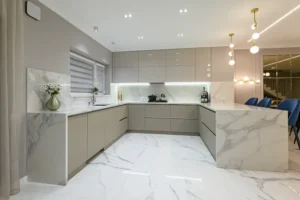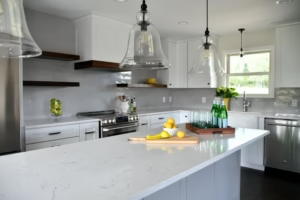

Sea Pearl Quartzite Countertops are natural stone surfaces known for soft white, gray, and green tones, flowing movement, and strong everyday performance. They suit homeowners who want a marble-like appearance but prefer a harder stone, although the exact look, price, porosity, and maintenance needs can vary from slab to slab.
Choosing a countertop can feel confusing when photos, samples, and showroom slabs all look different. The good news is that Sea Pearl gives you a natural surface with a calm appearance and strong performance for a working kitchen. This guide explains what the stone is, how it compares with Taj Mahal, what it costs, how to care for it, and what to check before buying.
What is Sea Pearl Quartzite?
Sea Pearl Quartzite is a natural metamorphic stone quarried primarily in Brazil, formed when quartz-rich sandstone undergoes extreme heat and pressure. This intense geological process fuses silica grains together, creating a dense surface featuring cool gray, off-white, and subtle sage green undertones.
Unlike synthetic surfaces, every slab extracted from the quarry carries distinct mineral patterns. The stone gets its name from its luminous, pearl-like background that catches natural light. Because it’s a natural quartzite, it contains zero synthetic resins, allowing it to withstand direct contact with hot cookware without scorching.
The Appeal of Sea Pearl Quartzite in Kitchen Design
he first thing most people notice is movement.
Sea Pearl often has a light background with broad, flowing bands of gray and deeper mineral lines. Some slabs show soft green or blue-gray tones. Others look mostly white and silver.
That variation creates a natural focal point without making the kitchen feel busy.
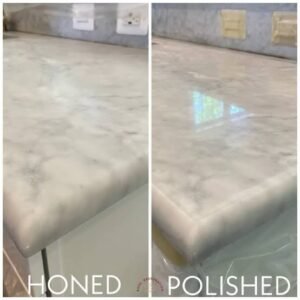
A polished slab can look smooth and reflective. A leathered or brushed finish can create more texture, depending on slab availability and the fabricator’s options.
This stone also works across several design styles:
- Modern kitchens with flat-panel cabinets
- Transitional kitchens with painted cabinetry
- Coastal-inspired spaces with soft natural colors
- Contemporary rooms with dark fixtures
- Kitchens with white oak or light wood cabinets
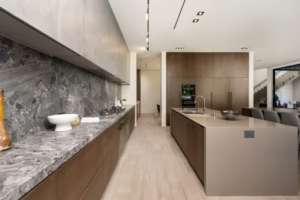
- Large islands where a bold natural pattern can act as the center of the room
Sea Pearl often looks strongest when the rest of the room stays simple.
Think of the slab as a landscape painting. If every other surface demands attention, the room can feel crowded.
Benefits of Sea Pearl Quartzite Countertops

Sea Pearl quartzite offers the benefits of natural stone beauty, strong scratch resistance, good heat tolerance, and one-of-a-kind slab variation. Its main tradeoffs are a higher project cost than some materials, periodic sealing, and the need for careful slab selection and skilled fabrication.
The biggest benefit is balance. You get a soft, marble-like visual style from a stone that can handle active kitchen use when properly selected and cared for.
1. Strong Natural Surface
Quartzite is known for its hardness because of its quartz-rich structure. That makes true quartzite a strong option for kitchen work areas.
Still, “hard” does not mean indestructible.
A dropped heavy pan can chip an edge. Poor installation can create stress. A hard surface can also make knives dull, so a cutting board remains the better choice.
2. Natural Heat Resistance
Quartzite generally handles heat well, but countertop care is not a game of testing limits.
A trivet is still a smart habit. Sudden temperature changes can create stress in stone, seams, or nearby materials.
The simple rule is this: heat resistance is a benefit, not a reason to ignore basic care.
3. A Unique Appearance
No two natural slabs are identical.
That gives the kitchen an individual look that printed or manufactured surfaces cannot exactly repeat. For many homeowners, this is the main reason to choose natural stone.
4. Good Performance in Active Kitchens
When sealed correctly and cleaned properly, quartzite can work well for everyday meal preparation.
It also offers an advantage for busy homes because the surface does not need complicated daily care. Mild cleaning, quick spill removal, and periodic checks of the sealer can usually cover the basics.
5. Better Long-Term Design Flexibility
Sea Pearl works with both warm and cool design elements.
A future cabinet repaint, new backsplash, or fixture change does not automatically make the stone look out of place. Its mixed gray and white base gives it room to work with changing finishes.
Difference between Sea Pearl Quartzite vs. Taj Mahal Quartzite
The main difference between Sea Pearl Quartzite and Taj Mahal Quartzite lies in their color undertones and visual warmth. Sea Pearl features cool gray, white, and soft green notes, whereas Taj Mahal presents warm cream, gold, and beige tones.
| Feature | Sea Pearl Quartzite | Taj Mahal Quartzite |
| Primary Color | Soft gray, creamy white, sage green | Warm cream, tan, subtle gold streaks |
| Visual Tone | Cool, oceanic, serene | Warm, earthy, traditional |
| Hardness (Mohs) | ~7 | ~7 |
| Etch Resistance | Excellent (when pure) | Excellent (when pure) |
| Best Cabinet Match | White, navy, dark charcoal, light oak | Warm wood tones, off-white, espresso |
Integrating Sea Pearl Quartzite in Your Kitchen
Integrating it into your kitchen design can elevate the space’s overall look and feel. Here are some design ideas to inspire you:
Countertops
The most common application of Sea Pearl is for kitchen countertops. Its neutral colors provide a versatile backdrop that pairs well with various cabinet finishes and hardware choices. Consider a polished finish for a sleek, modern look or a honed finish for a more matte, rustic appearance.
Backsplashes
Extend the beauty of Sea Pearl Quartzite to your backsplash. A matching or complementary quartzite backsplash creates a cohesive design and adds visual continuity to your kitchen.
Kitchen Islands
Make a statement with a Sea Pearl Quartzite kitchen island. The expansive surface area of an island allows the stone’s natural veining and patterns to shine, creating a stunning focal point.
Accent Walls
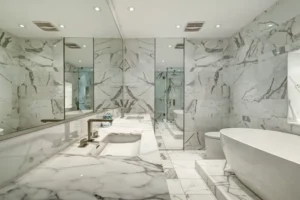
For a bold design choice, consider using Sea Pearl for an accent wall in your kitchen. This can add texture and visual interest, transforming a plain wall into a work of art.
How to Pair it with Other Materials
It pairs beautifully with a variety of other materials, allowing for creative and harmonious design combinations. Here are some pairing suggestions:
Cabinets
White or light-colored cabinets can enhance the soft, pearlescent tones of Sea Pearl Quartzite, creating a bright and airy kitchen. Darker cabinets, on the other hand, provide a striking contrast that highlights the stone’s natural beauty.
Metals
Incorporate stainless steel or brushed nickel hardware and fixtures for a modern look. For a more traditional or eclectic style, consider brass or copper accents.
Wood
Wooden elements, such as butcher block countertops or open shelving, can add warmth and texture to your kitchen, complementing the natural stone’s earthy appeal.
What is Sea Pearl Quartzite Cost?
The cost of Sea Pearl countertops can vary based on several factors:
Slab Size and Thickness
Larger and thicker slabs tend to be more expensive due to the increased material and labor required for extraction and fabrication.
Origin and Availability
Quartzite sourced from distant or hard-to-access locations may come with higher transportation costs, impacting the overall price.
Fabrication and Installation
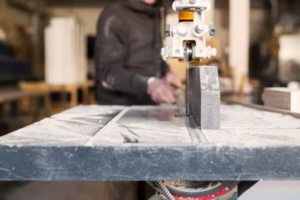
The complexity of your kitchen layout, edge profiles, and any custom features will affect the fabrication and installation costs. Intricate designs and detailed craftsmanship may increase the price.
Supplier and Region
Prices can vary depending on the supplier and the region you are in. It’s important to obtain quotes from multiple suppliers to compare prices and services.
How to Budget for Your Sea Pearl Quartzite Countertops?
To budget effectively for such countertops, consider the following steps:
Measure Your Kitchen
Obtain accurate measurements of your kitchen countertops to determine the amount of quartzite needed. This will help you get precise quotes from suppliers.
Get Multiple Quotes
Contact reputable suppliers like SF Marble Granite to get detailed quotes for the quartzite slabs, fabrication, and installation. Comparing quotes will help you find the best deal.
Factor in Additional Costs
Don’t forget to include costs for edge profiles, sink cutouts, and any custom features you may want. Additionally, consider the cost of periodic sealing and maintenance to keep your countertops in top condition.
Plan for Contingencies
Set aside a contingency budget to account for any unexpected expenses during the project. This ensures you are prepared for any surprises that may arise.
Conclusion
In conclusion, Quartzite offers timeless beauty and durability, making it an excellent choice for countertops. Whether you prefer a honed or polished finish, this versatile stone countertops enhances any space with its unique charm.
For personalized assistance and a premium selection of Sea Pearl Quartzite, contact us at sfmarbleangranite@gmail.com or visit us at 755 Dutton St., Lowell, MA. Let us help you create a stunning and enduring design for your home.
Frequently Asked Questions
Is sea pearl quartzite high maintenance?
No, it is not high maintenance compared to marble or limestone. It requires routine cleaning with mild soap and water alongside periodic sealing once every 12 to 18 months.
Can quartzite sea pearl stain easily?
Pure quartzite sea pearl resists water-based stains effectively. However, oil spills can penetrate the surface if left standing on an unsealed slab for extended periods.
Is sea pearl granite the same as quartzite?
No, calling it sea pearl granite is a common misnomer in the stone industry. Granite is an igneous stone with a speckled structure, while quartzite is a metamorphic stone formed from sandstone.