Choosing the right surface for your kitchen or bathroom isn’t just about looks; it’s about lifestyle, maintenance, and long-term value. When homeowners search for marble countertops pros and cons, they’re usually trying to answer one important question: Is marble truly worth it?
At SF Marble & Granite Inc, we’ve worked with homeowners across Massachusetts who love the elegance of marble but also want honest guidance before making a major investment. In this guide, you’ll find a clear, practical breakdown based on real-world installation experience, not marketing hype.
What Are Marble Countertops?
Marble countertops are surfaces made from natural stone that is quarried from the earth, cut into slabs, polished, and fabricated for kitchens and bathrooms. At SF Marble & Granite Inc, we often explain to homeowners that marble’s natural origin is what makes it both beautiful and unique.
Unlike engineered materials, marble forms naturally under heat and pressure. This natural formation is what gives every slab its distinctive veining and movement.
How Marble Slabs Are Made
- Large marble blocks are extracted from quarries.
- Blocks are cut into slabs.
- Slabs are polished and finished.
- Fabricators shape and install them as a marble counter top.
Because marble is natural, no two pieces are identical, which is exactly why many homeowners fall in love with it.
Why Homeowners Choose Marble Countertops
There’s a reason marble has been used for centuries in architecture and design.
1. Luxury Appearance
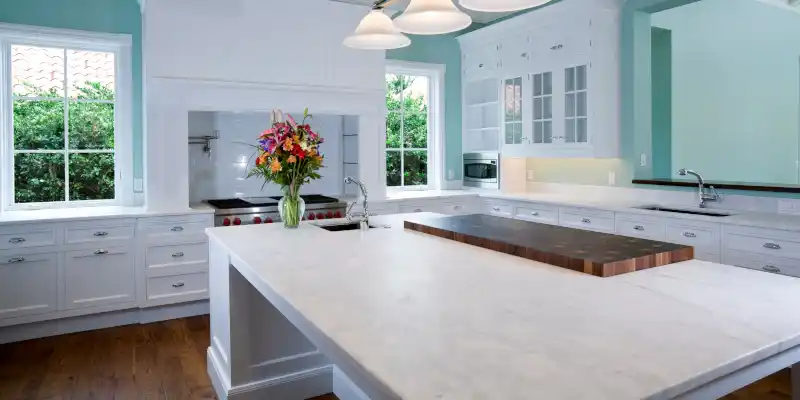
A white marble counter instantly elevates a kitchen. The soft veining creates depth and elegance that manufactured materials often try to imitate but rarely match.
2. Timeless Appeal
Trends change, marble doesn’t. A well-designed kitchen layout with white marble countertopsrarely feels outdated.
3. High-End Feel
Marble is commonly used in upscale homes, boutique hotels, and luxury bathrooms. It signals craftsmanship and refined taste.
Pros of Marble Countertops
Let’s look at the practical advantages behind the beauty.
Natural Beauty & Unique Patterns
Every slab of marble has one-of-a-kind veining. If you value originality in your home, this matters. No two white marble countertops kitchen installations ever look the same.
Heat Resistance
Marble handles heat better than many synthetic options. Hot pans won’t instantly damage it (though trivets are still recommended). Bakers especially appreciate the naturally cool surface.
Smooth & Cool Surface
For pastry work, dough rolling, and chocolate tempering, marble performs beautifully. Professional chefs often prefer a natural marble counter top for this reason.
Adds Property Value
Natural stone surfaces are considered premium upgrades. In many cases, installing a white marble counter can enhance perceived home value and buyer appeal.
You may also read: Bathroom Tile Grout
Cons of Marble Countertops
Honesty builds trust. Marble isn’t perfect, and it’s important to understand the trade-offs.
Porous Nature (Staining Risk)
Marble is porous. That means:
- Wine can stain.
- Oil can darken spots.
- Lemon juice can leave marks.
If you’re asking, is marble good for countertops in busy kitchens? This is where you need to pause and think carefully.
Scratches & Etching
Acidic substances like vinegar or tomato sauce can cause etching, dull spots that change the finish. Over time, a marble counter top may develop a “patina” from daily use.
Some homeowners love this aged look. Others don’t.
High Maintenance
Marble requires:
- Regular sealing
- Gentle cleaning products
- Immediate spill cleanup
Compared to synthetic marble kitchen countertops or quartz countertops, it requires more attention.
Cost Consideration
Marble typically costs more than basic granite options. Installation complexity can also increase labor expenses.
When reviewing the full marble countertop pros and cons, maintenance is often the deciding factor.
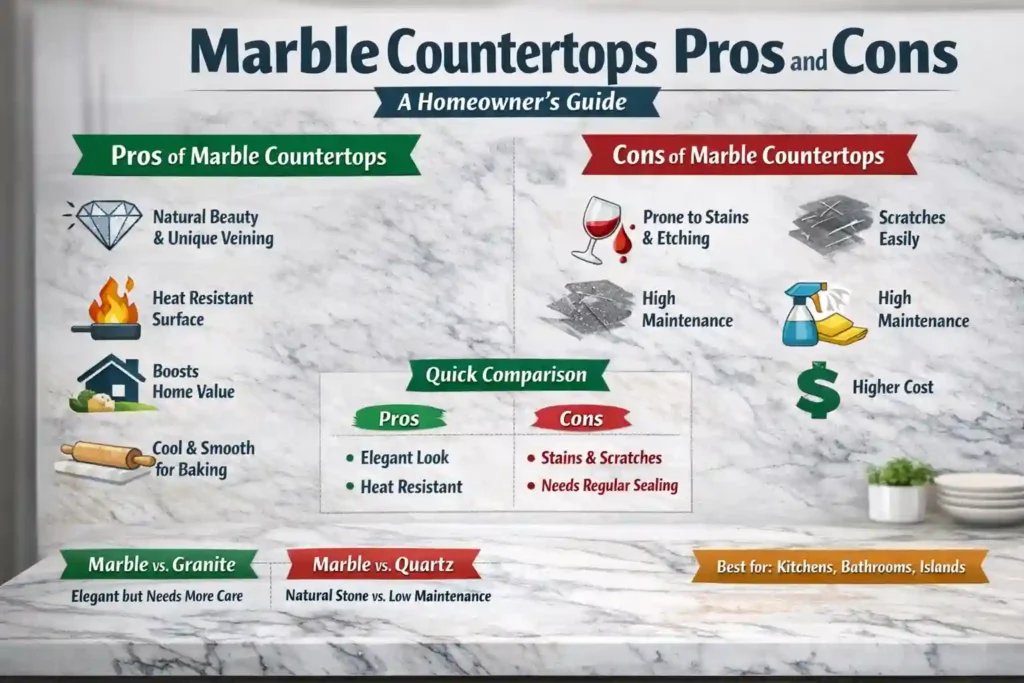
Marble Countertops Pros and Cons | Quick Comparison
| Advantages | Disadvantages |
| Elegant, natural veining | Can stain easily |
| Heat resistant | Prone to etching |
| Cool surface for baking | Requires sealing |
| Adds resale appeal | Higher maintenance |
This simple table helps homeowners quickly evaluate the pros and cons to marble countertops before committing.
Marble vs Granite Countertops
Many homeowners comparing marble countertop pros and cons also ask about granite.
Durability
Granite is harder and more resistant to scratches.
Maintenance
Granite still needs sealing, but less frequently than marble.
Daily Kitchen Use
For heavy cooking households, granite may be more forgiving.
That said, granite doesn’t replicate the soft elegance of a white marble counter.
Marble vs Quartz Countertops
Quartz is engineered. Marble is natural.
Stain Resistance
Quartz and synthetic marble kitchen countertops are far more stain-resistant.
Maintenance
Quartz requires minimal upkeep compared to marble.
Long-Term Care
Marble develops character. Quartz stays consistent.
If you prefer low maintenance over natural authenticity, synthetic marble kitchen countertops may be worth exploring.
Best Places to Use Marble Countertops
Marble isn’t always ideal for every kitchen layout. Here’s where it performs best:
- Bathroom vanities
- Kitchen islands used for prep
- Fireplace surrounds
- Low-traffic kitchens
In these areas, a white marble countertops kitchen design can shine without excessive wear.
Is Marble a Good Choice for Kitchens?
So, is marble good for countertops in real kitchens?
It depends on:
- How often do you cook
- Whether you clean spills immediately
- Your tolerance for natural aging
Busy families who cook daily may prefer granite or quartz. Design-focused homeowners who value appearance often accept the maintenance trade-offs.
Maintenance Tips for Marble Countertops
If you choose marble, proper care makes all the difference.
Seal Regularly
Reseal every 6–12 months, depending on usage.
Daily Cleaning
Use mild soap and water. Avoid acidic cleaners.
Avoid Direct Cutting
Always use cutting boards.
Protect from Acids
Wipe spills immediately, especially citrus, wine, and vinegar.
Good habits extend the life of your marble counter top significantly.
Common Marble Countertop Mistakes to Avoid
Here’s where many homeowners go wrong:
- Skipping sealing
- Using vinegar-based cleaners
- Leaving oil spills overnight
- Cutting directly on the surface
Understanding these risks upfront makes the pros and cons to marble countertops easier to manage.
When Marble Countertops Are Worth the Investment
Marble makes sense when:
- You’re designing a luxury home
- You prioritize aesthetics over durability
- You’re comfortable with maintenance
It may not be ideal if you want a completely worry-free kitchen surface.
Professional Marble Countertop Installation Matters
Even the highest-quality marble can fail if installed poorly.
Proper fabrication ensures:
- Accurate measurements
- Seam alignment
- Correct edge finishing
- Proper sealing
If you’re considering Countertop Installation Lowell, MA, working with experienced professionals is critical. Proper fabrication, accurate measurements, and careful handling help protect the stone’s integrity and ensure long-term durability and performance.
A professionally installed white marble counter not only looks better, but it also performs better long term.
Final Thoughts
When evaluating marble countertops pros and cons, the real question isn’t whether marble is good or bad; it’s whether it fits your lifestyle. A white marble countertops kitchen delivers unmatched elegance. A white marble counter brings timeless appeal. But marble demands care and understanding.
At SF Marble & Granite Inc, we believe homeowners deserve honest guidance, not sales pressure. If you’re considering marble, granite, or synthetic marble kitchen countertops, the right advice starts with a conversation. Contact us today to discuss your project and explore expert Countertop Installation Lowell, MA services tailored to your home.
FAQs
Do marble countertops stain easily?
Yes, because marble is porous. Regular sealing reduces the risk, but spills should always be cleaned quickly.
Is marble good for countertops in busy kitchens?
It can work, but high-traffic kitchens may experience more etching and staining over time.
Are synthetic marble kitchen countertops better?
They offer better stain resistance and lower maintenance, but they don’t provide the same natural veining as real marble.
How long does a marble counter top last?
With proper care and maintenance, marble countertops can last decades.
What are the biggest marble countertops pros and cons?
The biggest advantage is natural beauty. The biggest drawback is maintenance and susceptibility to stains.