You’re standing in your kitchen, looking at that worn, chipped, or just plain outdated floor, and you’re wondering if there’s a better way. There is. Kitchen floor tiles solve the exact problem you’re staring at: a surface that takes daily abuse from spills, grease, foot traffic, and the occasional dropped pan, and still needs to look good doing it.
I’ve spent years helping homeowners pick flooring that holds up in real kitchens, not showroom kitchens. In this article, I’ll walk you through the tile types that actually work, what they cost, which ones won’t send you sliding across the room in socks, and how to avoid the mistakes I see people make over and over. No fluff, no filler. Just what you need to make a smart choice.
Types of Kitchen Floor Tiles
Not all tile is built the same, and picking the wrong type for a kitchen is one of the most common regrets I hear about. Each material has a different personality when it comes to water, weight, and wear.
Porcelain tile is the workhorse of kitchen flooring. It’s dense, low in porosity, and handles moisture better than almost any other option on the market. If you’ve got kids, pets, or a habit of leaving the sink running while you answer the phone, porcelain forgives that.
Ceramic tile is the budget-friendly cousin of porcelain. It’s softer and slightly more porous, which means it’s a bit more prone to chipping, but it’s easier to cut and install. For a secondary kitchen or a lower-traffic space, ceramic still holds up fine.
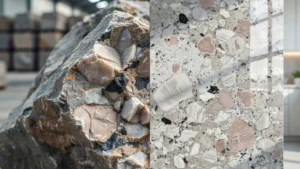
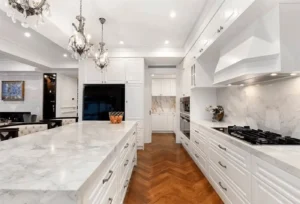
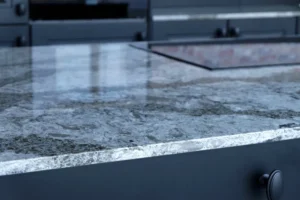
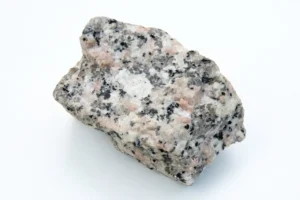
Natural stone tile, including granite, marble, travertine, and slate, brings a look that manufactured tile struggles to match. Every slab has its own veining and color variation, so no two floors look identical. The trade-off is that stone needs sealing and a bit more upkeep to resist stains from wine, oil, or acidic foods.
Vinyl and luxury vinyl tile (LVT) aren’t true tile in the ceramic sense, but they’ve earned a place in this conversation. They’re softer underfoot, warmer in winter, and forgiving if you drop a glass. Many newer LVT products mimic stone or wood convincingly enough that guests won’t know the difference until they touch it.
Glass tile shows up more often as an accent than a full kitchen tile flooring choice, since it can scratch and shows footprints easily. It works well near a window or as a border, paired with a tougher material for the main walking surface.
Kitchen Floor Tiles Design
Kitchen Floor Tiles Design
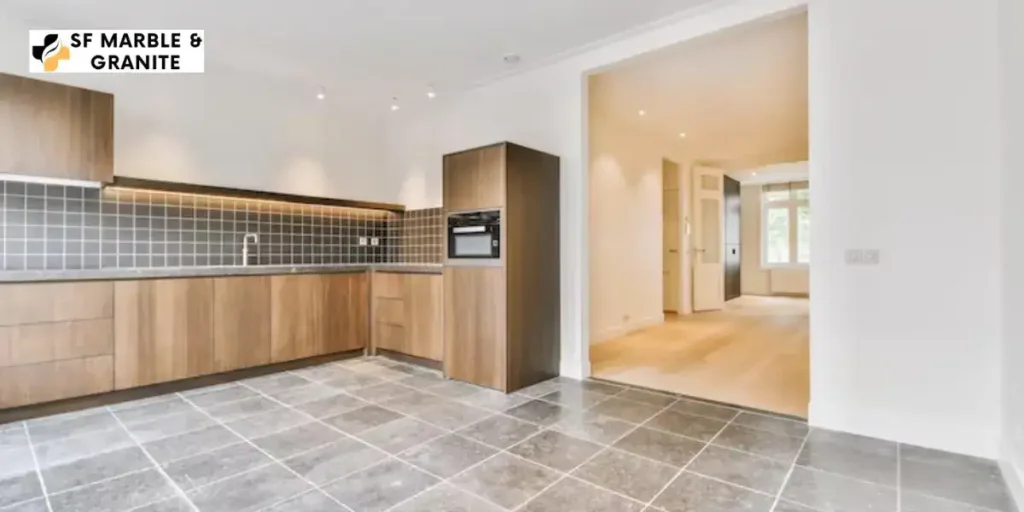
Design is individuality getting in the room. Your tile sets the tone for everything from your cabinets to your countertops, so it’s worth taking your time here, instead of purchasing the first sample that strikes your eye.
Large format tiles (12×24 in. or more) are all the rage right now since they have less grout lines, less cleaning and lend a more open sense to smaller kitchens. Smaller mosaic tiles offer texture and are a good choice for kitchens that already have lots of clean, flat surfaces.
Herringbone and chevron patterns bring a sense of movement to a kitchen without replacing a single cupboard. A basic subway-style arrangement, even in tile form, nonetheless reads as timeless since it’s straightforward and doesn’t clash with bold backsplashes or countertops.
Color is more important than people realize. Smaller kitchens will feel larger with lighter tones and will help to bounce natural light around. Darker tones can cover everyday dirt easier, but they might make a windowless kitchen feel locked off. If you’re not sure which direction to choose, warm grays and greige colors provide a secure middle ground.
If your kitchen opens into a living room or dining room, matching the kitchen tile flooring to the adjoining flooring, or choosing out a similar tone, maintains the whole downstairs feeling connected, rather than sliced into different spaces.
Non-Slip Kitchen Floor Tiles
The safest non-slip kitchen floor tile has a slip resistance value of R10 or higher on the German DIN 51130 scale or a dynamic coefficient of friction (DCOF) of 0.42 or higher under the American ANSI A137.1 standard. These scores indicate you how a tile will perform when wet, and that’s the most important thing in a room where water and grease end up on the floor every day.
Of the few areas in the house that gets a regular soaking, a kitchen is one, whether from a boiling pot, a rinsed vegetable or a toddler who missed the cup. Slip resistance is not a plus here. It’s a genuine safety element, especially in homes with elderly or young children.
Usually, textured porcelain and matte finish tiles perform better than polished or shiny ones. Stone and glass tiles seem great in pictures, but when water lands on them, they become quite slippery. If you like the shiny finish, use it for a backsplash, not the floor.
Typically manufacturers will provide the DCOF or slip rating on the product spec sheet, so it’s best asking your tile supplier directly, rather than guessing from a photo. For any kitchen floor, the safer bet is a textured or matte tile with a rating at or above the values above.
Kitchen Floor Tiles Price
Kitchen floor tile prices generally range from $2 to $10 per square foot for ceramic and porcelain, $5 to $20 per square foot for natural stone, and $2 to $7 per square foot for vinyl tile, not including installation. Labor typically adds another $4 to $12 per square foot depending on your region and the complexity of the layout.
For a standard 200-square-foot kitchen, that means materials alone could run anywhere from $400 for basic ceramic to $4,000 for higher-end natural stone. Add installation, and a mid-range porcelain project often lands somewhere between $1,800 and $3,500 total.
A few things push the price up: intricate patterns like herringbone, oversized tile that requires more precise cutting, uneven subfloors that need leveling first, and natural stone that requires sealing before and after grouting. Straightforward layouts with standard-size tile keep labor costs down.
If you’re working with a contractor, ask for a breakdown of material cost versus labor cost separately. It’s easier to compare quotes and spot where you can save without cutting corners on the parts that actually affect durability.
Best Tiles for Kitchen Floor
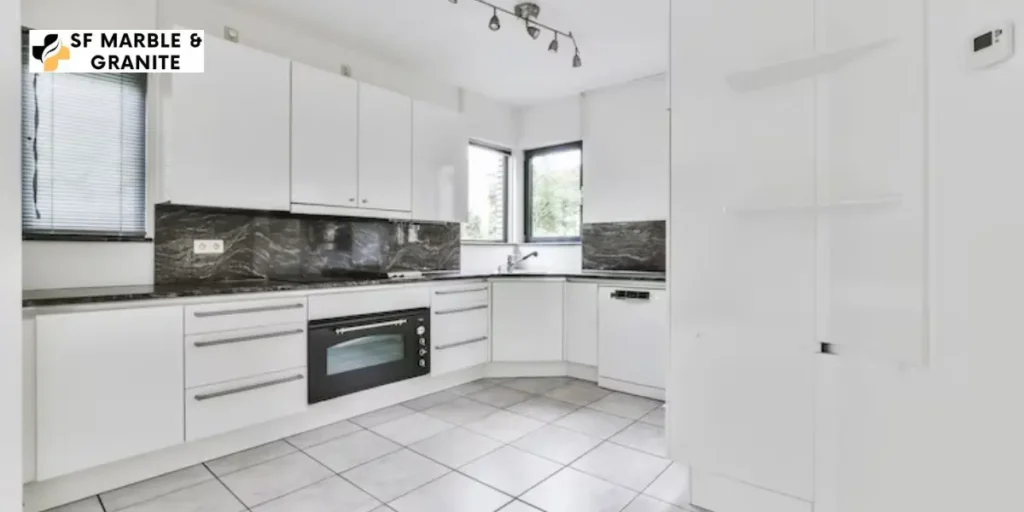
There’s no one-size-fits-all kitchen floor tile, but a porcelain tile with a matte or textured finish checks the most boxes for most kitchens. It’s weather resistant, can take the abuse of everyday traffic and comes in enough styles to suit practically any design direction.
A mid-size format ceramic tile is a good mix of cost and durability for those on a limited budget. If you have a gathering room in your kitchen and you want a softer feel underfoot, then LVT is worth a serious look, especially in families with young kids or anyone who spends long hours on their feet at the counter.
If you’re after a one-of-a-kind look, and your home is ready to commit to the annual or biannual sealing, natural stone earns its spot. If low maintenance is the goal, Stone probably isn’t the answer, no matter how wonderful it looks in the showroom.
The right tile for your kitchen is the tile that works for how your home really utilizes the area, not how it looks under showroom illumination.
Kitchen Floor Tile Ideas
If you’re stuck on direction, here are a few starting points that tend to work well in real homes rather than just in photos.
A classic look pairs light gray or warm beige porcelain in a large format with white or cream cabinets, keeping the whole space bright and easy to sell later if you ever move. A bolder route uses black and white checkerboard tile, either in classic squares or a modern hexagon shape, for a kitchen that wants some personality without a full renovation.
Wood-look porcelain planks give you the warmth of hardwood with none of the water anxiety, which works especially well in open-concept homes where the kitchen flows into a living room with real wood floors. Terracotta and warm clay tones bring a Mediterranean or Southwestern feel and pair naturally with wood cabinetry and brass fixtures.
For a more textured approach, encaustic-style patterned tile, often used just in front of the sink or stove as a rug-like accent, adds visual interest without overwhelming the whole floor. This is a popular way to bring in bold kitchen floor tile designs without full commitment.
Maintenance and Upkeep
Tile is only as good as the care behind it, and this is the part a lot of buying guides skip over. Porcelain and ceramic need little beyond regular sweeping and occasional mopping with a pH-neutral cleaner. Harsh acidic or ammonia-based cleaners can wear down grout lines faster than normal foot traffic.
Natural stone needs a sealant reapplied roughly once a year, sometimes more in a busy kitchen, to keep oil and wine from soaking into the surface. Grout, regardless of tile type, benefits from a sealant too, since unsealed grout stains faster than the tile itself.
Vinyl tile is the lowest-maintenance option on this list. A damp mop and a mild cleaner handle almost everything, and there’s no sealing required. If low upkeep is high on your list, that’s worth factoring in alongside looks and price.
Common Mistakes to Avoid
A few patterns show up again and again with kitchen tile projects, and most are avoidable with a little planning ahead of time.
Skipping the slip-resistance check is the biggest one. People fall in love with a glossy tile in a showroom and forget that same tile turns into a hazard the moment water hits it at home. Another common mistake is underestimating grout line width. Thin lines look sleek in photos but show wear faster and are harder to keep clean over time.
Choosing tile before finalizing cabinet and countertop colors also causes headaches, since it’s much easier to match tile to a countertop than the other way around. Lastly, skipping professional installation to save money on an uneven subfloor often costs more later, once cracked grout or loose tiles need to be redone.
Conclusion
In summary, your kitchen’s transformation journey begins with the right floor tiles, and our exploration has unveiled a myriad of options catering to both style and substance. Whether you opt for the timeless charm of porcelain or the innovative designs pushing boundaries, each tile choice contributes to a kitchen that reflects your unique taste and lifestyle.
For further assistance or to dive deeper into our tile offerings, contact us at SF Marble and Granite Inc:
- Email: sfmarbleangranite@gmail.com
- Address: 755 Dutton St. Lowell, MA 01851
- Phone: 978-459-582
Transform your kitchen, elevate your home, with SF Marble and Granite Inc.
FAQs
What are the best materials for kitchen floor tiles?
Porcelain and ceramic tiles are popular for their durability, while natural stone options like marble and granite offer timeless elegance. Vinyl tiles are a budget-friendly choice, and wood-look tiles combine warmth with practicality.
How do I choose the right tile size for my kitchen?
Consider the size of your kitchen; larger tiles can create a sense of spaciousness, while smaller tiles work well in cozy spaces. Balance is key, and the size should complement the overall design.
Are non-slip tiles necessary for kitchen floors?
Yes, especially in areas prone to spills. Textured surfaces, rubber tiles, and porcelain with a matte finish provide excellent non-slip solutions for a safe kitchen environment.
Can I install kitchen floor tiles myself?
Many tiles, especially peel-and-stick or interlocking options, are DIY-friendly. However, for a professional finish, it’s advisable to consult with a professional installer.
How do I maintain and clean my kitchen floor tiles?
Regular sweeping and mopping with a mild cleaner are generally sufficient. Avoid abrasive materials to prevent scratches, and follow specific care instructions for the type of tile you choose.