You want a kitchen that appears like it is worth showing off. Granite countertops are one of the easiest methods to get there. If you’ve been wondering how to install granite countertops, here’s the short version: Measure your cabinets, get a slab cut to size, dry-fit the pieces, lay them in adhesive, level the seams, then seal the stone before you use it. It’s a job that pays for patience and doing it fast is going to cost you more than doing it well the first time.
I know where people get stopped, I’ve been around stone counters long enough and I’m going to walk you through the whole granite installation process from planning to the final polish. By the end you’ll know which tools to gather, how to prep your kitchen or bath, and where most DIYers waste time or money. If you’re doing-it-yourself on granite countertops or trying to decide whether it’s smarter to call a fabricator, you’ll leave with a clear plan.
How to Install Granite?
Granite countertop installation is a satisfying project that can improve your kitchen or bathroom’s appearance and usability. For a successful installation, adhere to these detailed instructions:
Prepare the Workspace
- Clear the area where the countertops will be installed, removing any appliances, furniture, or debris.
- Ensure that the cabinets and base are sturdy and level to provide adequate support for the granite.
Gather Materials and Tools
- Gather all necessary materials, including the granite slab, adhesive, shims, and support brackets.
- Ensure you have the appropriate tools on hand, such as a level, tape measure, drill, and caulking gun.
Measure and Cut the Granite
- Measure the dimensions of the countertop space accurately, allowing for any overhang or edge details.
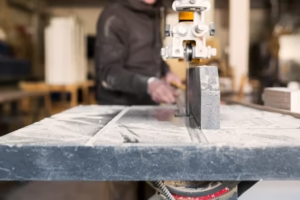
- Use a diamond blade wet saw to cut the granite slab to size, following your measurements precisely.
Install the Granite
- Apply a thin layer of adhesive to the top of the cabinets, then carefully lower the granite slab into place.
- Use shims to adjust the slab as needed to ensure it is level and properly aligned with the cabinets.
- Secure the granite in place using support brackets attached to the underside of the countertop.
Seal and Finish
- Once the granite is securely in place, apply a penetrating sealer to protect the surface from stains and moisture.
- Caulk the seams between the granite and walls or backsplash to create a seamless finish.
With careful planning and attention to detail, you can achieve professional-looking results when installing granite countertops in your home. If you’re unsure about tackling this project yourself, consider hiring a professional installer for peace of mind.
Planning Your Granite Countertop Installation
Good planning saves you from an expensive mistake later. Before you touch a tool, decide on slab thickness. Most kitchen counters use 3cm granite because it’s sturdy enough to skip extra plywood support, while 2cm slabs need a backing layer.
Next, pick your edge profile. A simple eased edge is the easiest to install and the cheapest to fabricate, while bullnose or ogee edges need more precise cutting. Also decide where sink and cooktop cutouts go, and mark them on paper before you order anything.
Seam placement matters more than people expect. Granite comes in limited slab sizes, so long counter runs usually need at least one seam. Ask your fabricator to place it somewhere low-visibility, like next to the sink, rather than in the middle of an open run.
Gathering Materials and Tools
Granite is heavy and unforgiving, so half the battle is having the right gear before you start. Skipping a tool mid-job usually means a trip to the store with wet adhesive drying on your counter.
Here’s what you’ll need for mounting granite countertops:
- A circular saw fitted with a diamond blade, or access to a wet saw for cutting the slab
- Suction cups rated for stone, ideally two per person lifting
- Plastic shims for leveling
- 100% silicone adhesive (not construction glue, which can stain the stone)
- Epoxy seam filler that matches your granite color
- A 4-foot level and a laser level if you have one
- Safety glasses and an N95 or better respirator mask for cutting
- Granite sealer and a lint-free applicator cloth
- 3/4-inch plywood if your slab is 2cm thick
If you’re installing granite slab countertops solo, rent an appliance dolly. A single slab section can weigh well over 100 pounds, and moving it wrong risks a crack you won’t be able to hide.
Preparing Your Kitchen or Bathroom
Cabinet preparation is one of the most important parts of the job. Granite follows the surface below it. If the cabinets are uneven, twisted, or poorly supported, the stone may not sit correctly.
First, remove the old countertop and inspect the cabinets. Check for loose screws, water damage, weak joints, and gaps between cabinets.
Check for a Level Surface
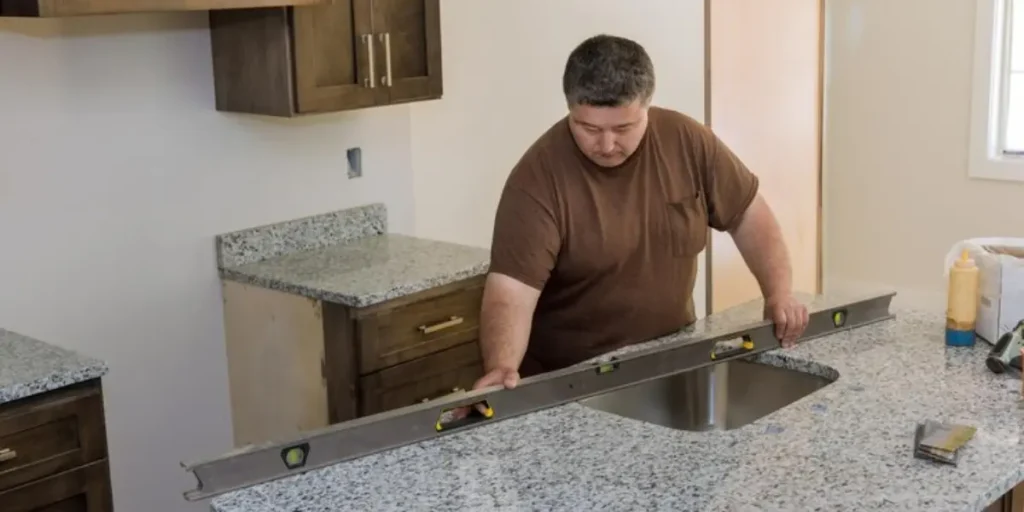
Place a long level or straightedge across the cabinets. Check from front to back and from one cabinet to another.
Look for:
- High spots
- Low spots
- Cabinets that sit out of square
- Uneven cabinet rails
- Gaps between cabinet units
Correct problems before the slab arrives. Shims may help level cabinets, but they should be secure and used properly.
A countertop is not a magic cover for poor cabinet work. If a cabinet moves after installation, the stone above it can be placed under stress.
Installing Your Granite Countertops: A Step-by-Step Guide
Once you understand how to install granite countertops step by step, the actual labor moves fast. Here’s the order that works.
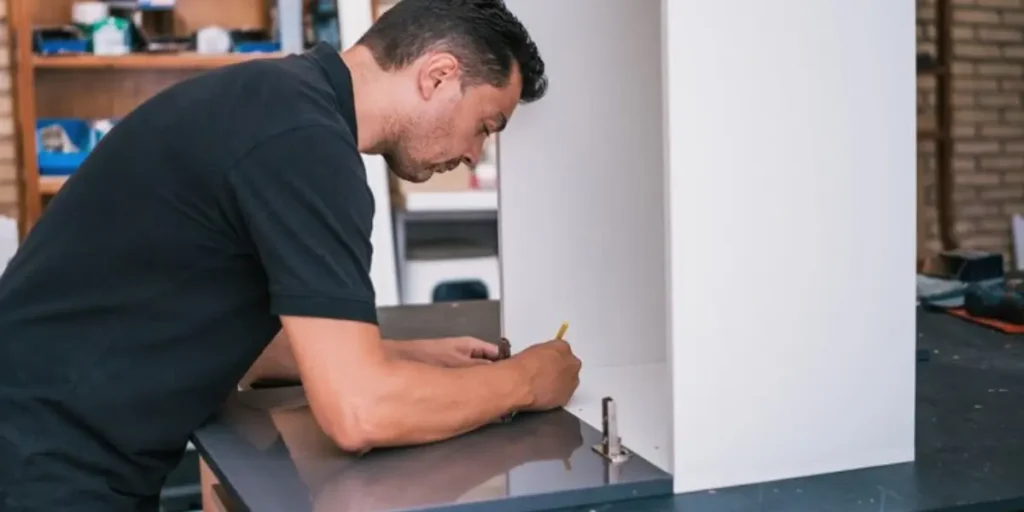
1. Template the space. Use thin strips of wood or a template kit to trace your exact cabinet layout, including sink and appliance cutouts. Measure corners and wall angles carefully, since kitchen walls are rarely perfectly square, and a template that ignores this will leave gaps once the slab is set. Send this template to your fabricator or use it to mark your own slab.
2. Cut or receive the slab. Most people have granite cut by a fabricator with a wet saw, since dry-cutting stone at home creates dangerous silica dust that’s harmful to breathe in over time. If you’re set on cutting it yourself, work outside, keep the blade wet at all times, and wear a properly rated respirator mask, not just a dust mask. A cracked slab at this stage usually means starting over with a new piece.
3. Dry-fit every piece. Before any adhesive touches the counter, set each granite section in place to check the fit. Look for gaps at the wall, uneven seams, and overhang consistency. Fix problems now, not after the glue sets.
4. Apply adhesive to the cabinet tops. Run a bead of silicone adhesive along the cabinet perimeter and any support braces. Don’t skip this step even if the slab feels stable on its own weight.
5. Set the granite. With help from at least one other person, lower the slab straight down onto the adhesive. Avoid sliding it into place, since that can smear the adhesive unevenly or scratch the cabinet surface.
6. Level and seam. Use shims under low spots and check with a level across the full run. Fill seams with color-matched epoxy, working it in with a putty knife, then wipe excess before it cures.
7. Seal the stone. Once everything’s set and the epoxy has cured, usually 24 hours, apply a penetrating sealer. This step protects the porous granite from stains, especially near the sink.
8. Reconnect fixtures. Reinstall the sink, faucet, and any appliances, then run water to check for leaks around the new seals.
Conclusion
In conclusion, installing granite countertops is a rewarding project that can enhance the beauty and functionality of your kitchen or bathroom. By following the step-by-step guide outlined in this blog post, you can confidently tackle this DIY project and achieve professional-quality results. Remember to take your time, pay attention to detail, and seek guidance from a professional if needed. With proper planning and execution, you’ll be enjoying your stunning granite countertops in no time.
Ready to transform your space with beautiful granite countertops? Contact us today for expert installation services. Email us at sfmarbleangranite@gmail.com or visit our showroom at 755 Dutton St. Lowell, MA 0185MA4. You can also reach us by phone at 978-459-582. Let us help you bring your vision to life!
FAQs
What tools do I need for DIY granite countertop installation?
Some essential tools for DIY granite countertop installation include a tape measure, level, wet saw with a diamond blade, drill, caulking gun, and trowel. It’s also crucial to have safety gear such as gloves and goggles.
How long does it take to install granite countertops?
The duration of granite countertop installation can vary depending on factors such as the size of the space, complexity of the project, and whether it’s being done professionally or DIY. On average, installation can take anywhere from a few hours to a couple of days.
How much does it cost to install granite countertops?
The cost of installing granite countertops can vary depending on factors such as the size of the space, type and quality of granite chosen, additional materials needed, and labor costs. On average, expect to pay between $50 to $200 per square foot for installation.