
Safe marble floor cleaning: Use a pH-neutral cleaner with soft pads or a mop. Clean: Dry-dust mop the floor first to remove dirt and grit, then mop the floor with warm water mixed with a few drops of a stone-safe, mild detergent. Use a soft trowel to immediately dry the surface while cleaning to prevent streak marks or water marks.
Wear Properly Clean Your Marble Floors – Protect Your Investment. A clean floor is the best way to keep your stone looking bright and polished for a longer period of time. Because marble is a fairly soft and porous material, it can be etched by contact with acidic materials or abrasive chemicals. Here’s a plain and simple guide on how to care for your marble floors like a professional.
Table of Contents
ToggleWhy Proper Marble Floor Cleaning Matters

Because marble consists of calcium carbonate, it has a negative reaction with acids such as vinegar, lemon juice, or some forms of cleaner for drains. Etching is the result of these agents biting into(burning) the surface of the stone and can cause dull areas known as etching.
Additionally, it’s a porous stone, so it can be penetrated by liquids, and you can have permanent stains if you don’t take care of it properly. Understand how to safely wash marble floors so you don’t have to deal with any of these:
- Permanent stains
- Dust and grit scratches
- Dulling
- Chemical surface damage
How Often to Clean Marble Floors
The cleaning schedule is different for every one of us depending on how much we use it and the traffic our floors get. Here is a simple guide:
- Daily: Remove grit and debris with a dry dust mop. Grit is the major cause of scratching.
- Weekly: Mop with a damp with pH neutral stone cleaner. Clean right after.
- Monthly: Test the sealer with the water bead test. Deep clean grout lines if necessary.
- 6-12 months: Re-seal the floor. Traffic-heavy areas might require this twice yearly. Every 2–3 years: Have the floor professionally honed and polished if it is looking dull.
Keeping up with the schedule is a lot easier and a lot less expensive than cleaning up messes.
How do you clean marble floors the best way?
Marble floor cleaning is very simple if you take advantage of soft materials and neutral pH products, and use water sparingly. Avoid acid/base chemicals; if you must apply them on marble, use them on leather, not polishing!
You will need the following to clean marble floors:
- Microfiber dust mop, Soft microfiber mop, pH-neutral stone cleaner, two buckets (solution + clean water), Soft towels for drying. Things not to do:
- Cleaners containing vinegar or lemons
- Follow us on? Bleach or ammonia: yes and no
- Steam mops
- Hard brushes or steel wool
Step-by-Step Guide: How to Clean Marble Floors
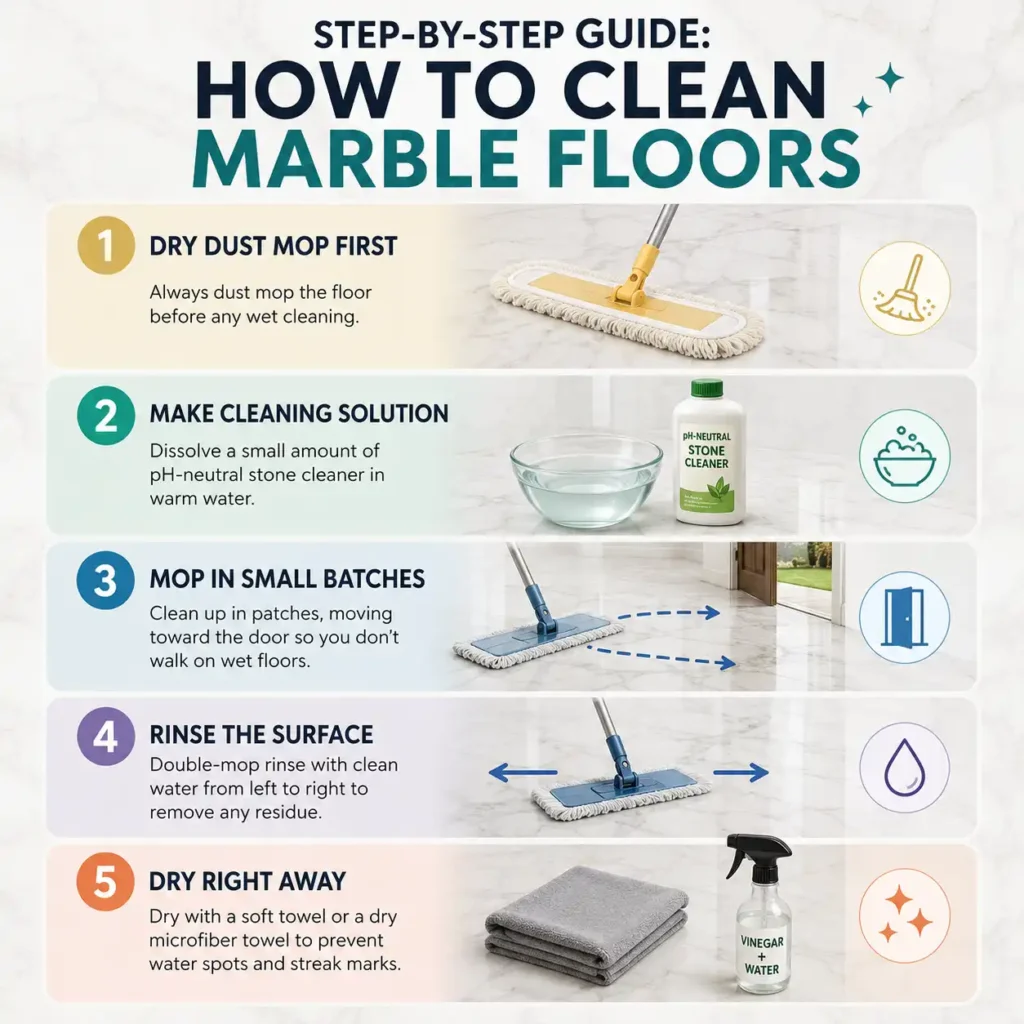
1:Dry Dust Mop First
Always dust mop the floor before any wet cleaning. This eliminates dirt and sand, which can scratch when mopped.
2:Make Cleaning Solution
Dissolve a small amount of pH-neutral stone cleaner in warm water. Avoid using an excessive amount of product, as it could cause a film.
3:Mop in small batches.
Clean up in patches, moving toward the door so you don’t walk on wet floors.
4:Rinse the Surface
Double-mop rinse with clean water from left to right to remove any residue of the cleaner.
5:Dry Right Away
Spray some water with equal amounts of vinegar and water, and then dry with a soft towel or a dry microfiber towel. This also aids in the prevention of water spots and streak marks.
Read More: How to Polish Marble Floors?
How to Wash Marble Floors
1:Dust and Dirt Have to Be Removed First
Before you begin mopping your marble floor, you need to dust-mop or broom using your soft microfiber dust mop to collect dust, dirt, sand, and any other small particles. Dust and water scratched the marble, so I only dry cleaned first.
2:Make up a Safe Cleaning Solution for Your Marble.
Use warm water and a few drops of a pH-neutral marble cleaner or mild soap made for stone. Do not use acids such as vinegar, lemon juice, or harsh chemicals, as they will etch the marble and strip away the natural luster.
3:Make Use of a Soft Microfiber Mop.
Dip a microfiber mop in the cleaning solution and wring out the excess. The mop should be wet, not dry. Water can go too deep into the pores of marble, causing stains or water marks.
4:Clean the floor little by little.
Wash the floor in little sections. Let the soft cleaning pads and the nonabrasive cleaner do the work; don’t scrub. Concentrate on the dirtier and stained areas.
5:Rinse with clean water.
After washing the hands, dry them using a clean, moist sponge if there is still some soap or detergent left on the hands.
That stops a new layer of dust from settling, which, like chalk, would dull the surface of the marble.
6:Dry the Marble Floor At Once.
To keep water spots and streaks from forming, dry the area with a soft towel or a dry microfiber cloth.
Removing Stains from Marble Floors
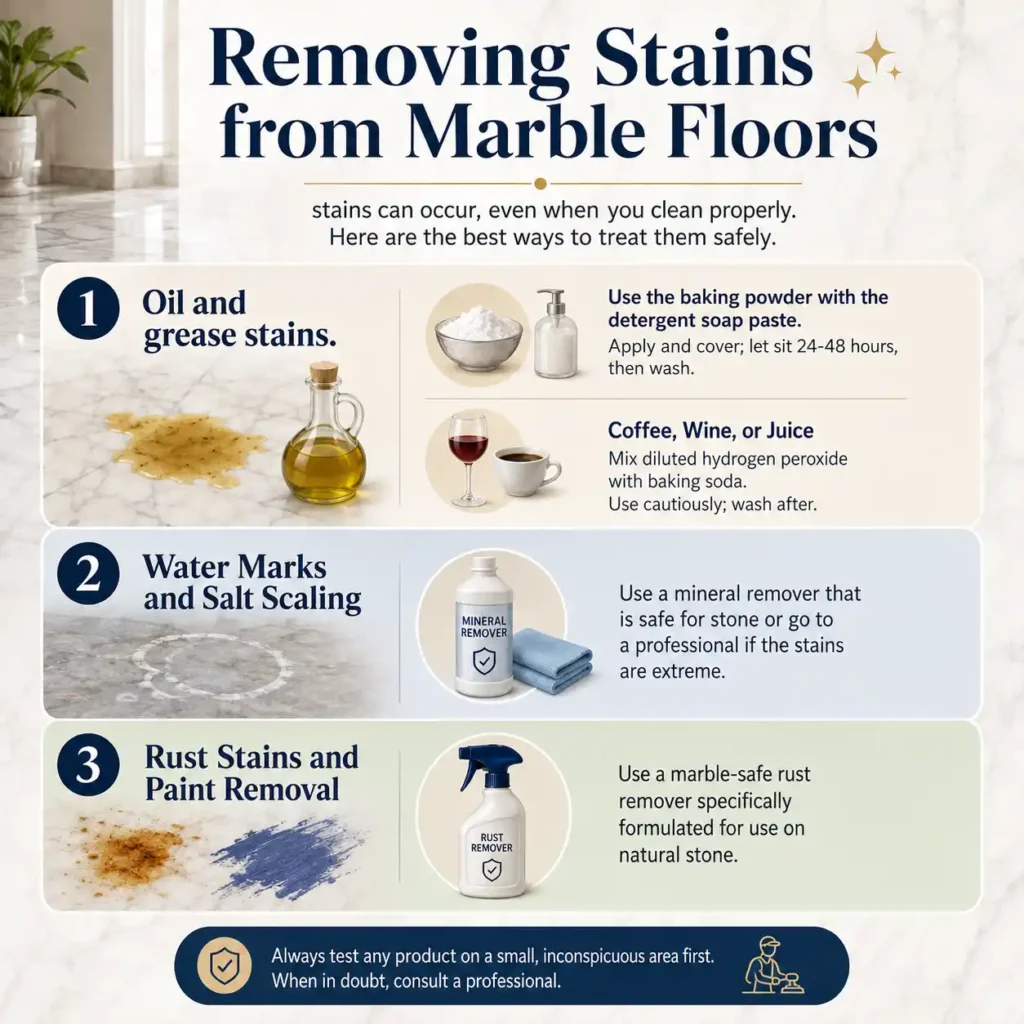
stains can occur, even when you clean properly. Here are the best ways to treat them safely.
1:Oil and grease stains.
Use the baking powder with the detergent soap paste. Apply and cover; let sit 24-48 hours, then wash. Coffee, Wine, or Juice
Mix diluted hydrogen peroxide with baking soda. Use cautiously; wash after.
2:Water Marks and Salt Scaling
Use a mineral remover that is safe for stone or go to a professional if the stains are extreme.
3:Rust Stains and Paint Removal
Use a marble-safe rust remover specifically formulated for use on natural stone.
DIY Natural Marble Cleaning Solutions
Many people want natural options for marble cleaning. Here is what is actually safe and what is not.
Safe natural options:
- Warm water alone: Works well for light daily cleaning on sealed marble.
- Castile soap diluted heavily in water: Safe in very small amounts but rinse thoroughly. Residue dulls the surface.
Unsafe “natural” options that people commonly use by mistake:
- Vinegar: Highly acidic. Causes immediate etching.
- Lemon juice or citrus sprays: Same problem as vinegar.
- Baking soda as a scrub: Too abrasive for polished marble. Use only as a poultice mixed into a paste, never scrubbed dry.
- Club soda: Slightly acidic. Not safe for regular marble cleaning.
The safest DIY solution is still just warm water and a proper pH-neutral stone cleaner from a trusted brand. Natural does not always mean safe for natural stone.
Common Mistakes to Avoid
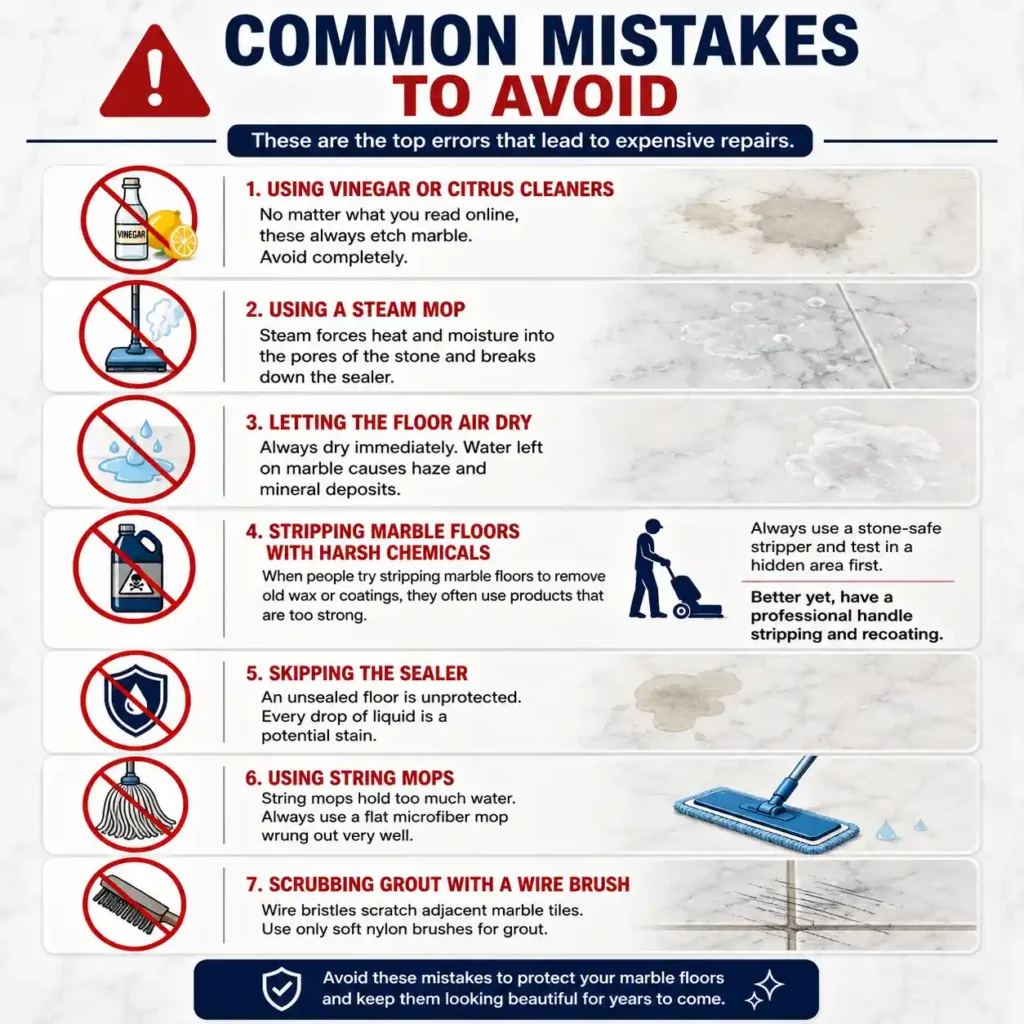
These are the top errors that lead to expensive repairs.
Using vinegar or citrus cleaners. No matter what you read online, these always etch marble. Avoid completely.
Using a steam mop. Steam forces heat and moisture into the pores of the stone and breaks down the sealer.
Letting the floor air dry. Always dry immediately. Water left on marble causes haze and mineral deposits.
Stripping marble floors with harsh chemicals. When people try stripping marble floors to remove old wax or coatings, they often use products that are too strong. Always use a stone-safe stripper and test in a hidden area first. Better yet, have a professional handle stripping and recoating.
Skipping the sealer. An unsealed floor is unprotected. Every drop of liquid is a potential stain.
Using string mops. String mops hold too much water. Always use a flat microfiber mop wrung out very well.
Scrubbing grout with a wire brush. Wire bristles scratch adjacent marble tiles. Use only soft nylon brushes for grout.
Professional vs. DIY Marble Care
Knowing when to call a professional saves you money in the long run.
Do it yourself:
- Weekly damp mopping
- Daily dust mopping
- Sealing every 6 to 12 months
- Treating fresh stains with poultice
Call a professional for:
- Deep etching or widespread dull spots
- Cracked or chipped tiles
- Stripping old coatings or wax buildup
- Annual or biannual polishing and honing
- Lippage (tiles not sitting flush with each other)
Professional marble floor cleaning and restoration costs between $2 and $6 per square foot depending on the condition and service needed. That is far less than replacement costs, which can run $15 to $30 per square foot installed.
Marble Floor Care for Different Areas
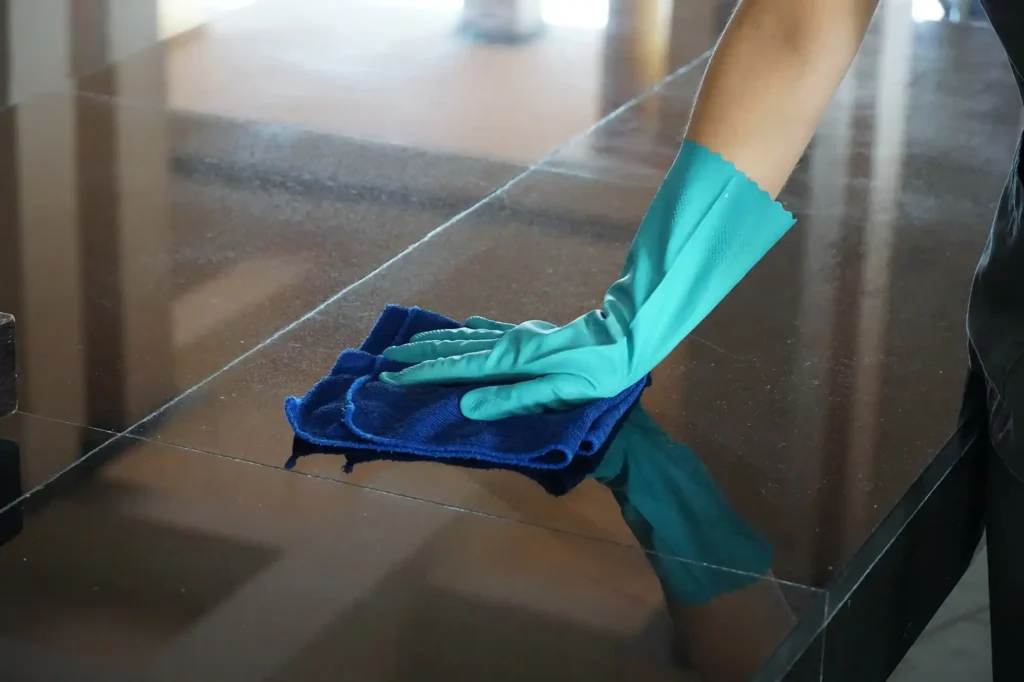
Marble behaves differently depending on where it is installed. Each area has its own challenges.
Kitchen marble floors: Food spills and acidic liquids are constant risks. Clean up every spill immediately. Seal more frequently. Consider a matte or honed finish in kitchens. It hides light etching better than a polished finish.
Bathroom marble floors: Humidity is the main issue here. Moisture from showers and baths keeps the floor damp. Use a bath mat (non-rubber backed) and ventilate well. Check sealer more often in bathrooms.
Entryway and hallway marble floors: High grit and foot traffic. Dust mop daily. Use walk-off mats at entry points. These areas may need resealing more frequently.
Outdoor marble: Not recommended for most climates. If you have it, use only products made for outdoor natural stone. Freeze-thaw cycles damage unsealed marble.
Cost-Effective Marble Maintenance Tips
You do not need to spend a lot to keep marble in great shape. Here is how to stretch your budget.
Buy a good pH-neutral cleaner in concentrate form. A single bottle diluted properly can last six to twelve months. Brands like Aqua Mix, Miracle Sealants, and Black Diamond are trusted and widely available.
Seal it yourself. Professional sealing is not complicated. A quality penetrating sealer and a clean cloth is all you need. Do it yourself and you save $150 to $300 per service.
Treat stains early. A $10 poultice kit fixes most fresh stains. Waiting turns a $10 fix into a $300 professional restoration job.
Use microfiber everywhere. Microfiber mops and cloths cost very little and last years with proper washing. They clean better than traditional materials and are much safer on marble.
Inspect quarterly. Walk your floors every three months and look for new etch marks, stains, or areas where the sealer is wearing. Catching problems early is always cheaper.
Expert Marble Floor Installation for Lasting Beauty
Proper installation matters as much as proper care. A poorly installed marble floor is much harder to maintain. Tiles that are not level trap water in grout lines. Thin-set applied incorrectly causes cracking. Poor spacing leaves grout lines that crack and allow water infiltration.
If you are planning a new floor or replacing an existing one, work with a team that specializes in natural stone. SF Marble & Granite has extensive experience in Marble Floor Installation in Lowell, MA, delivering precision installation that holds up to daily use and makes ongoing maintenance far easier. A professionally installed floor seals better, stays cleaner, and lasts significantly longer.
Final Thought
Marble is one of the most beautiful flooring materials available. It is also one of the most misunderstood when it comes to cleaning. The rules are simple: keep it dry, avoid acids, seal it regularly, and use only pH-neutral marble cleaning products.
How to clean marble floors is not complicated once you have the right system. Daily dust mopping, weekly damp mopping with the correct cleaner, immediate spill cleanup, and regular sealing are the four habits that make the biggest difference.
Whether you are maintaining an existing floor or starting fresh, SF Marble & Granite is ready to help with both installation and care guidance. Clean marble is beautiful marble, and with the right routine, yours can stay that way for decades.
FAQs
Q: What is the best cleaner for marble floors?
A pH-neutral stone cleaner labeled safe for marble is always the best choice. Good brands include Aqua Mix Stone & Tile Cleaner, Miracle Sealants Daily Cleaner, and Black Diamond Marble & Tile Floor Cleaner.
Q: Can I use vinegar to clean marble floors?
No. Vinegar is acidic and causes permanent etching on marble. It creates dull spots that require professional polishing to fix. Never use it on marble.
Q: How often should I seal marble floors?
Test the sealer every six months using the water bead test. If water soaks in within 60 seconds, reseal. High-traffic areas often need sealing every six months. Low-traffic areas may last 12 to 18 months.
Q: How do I remove stains from marble floors?
It depends on the stain type. Use a baking soda poultice for oil stains. Use diluted hydrogen peroxide paste for organic stains like coffee or wine. Always test in a hidden spot before treating the full stain.
Q: What causes dull spots on marble floors?
Dull spots are almost always etch marks caused by acid contact. Common culprits include vinegar, citrus juice, wine, and acidic cleaners. Light etching can be polished with marble polishing powder. Heavy etching needs professional diamond polishing.