You spent good money on travertine floors. They looked stunning on installation day warm, natural, and full of character. But a few months later, they look dull, streaky, or stained, and you’re not sure what went wrong.Here’s the hard truth: how do you clean travertine floors is one of the most misunderstood topics in stone care. Most homeowners reach for the wrong products, follow generic “stone cleaning” advice, or use methods that work perfectly fine on ceramic tile and slowly destroy travertine in the process.
At SF Marble and Granite, we work with natural stone every day. We’ve seen gorgeous travertine floors ruined by vinegar, steam mops, and “natural” cleaning hacks that had no business going near porous limestone. This guide is built on real experience not manufacturer marketing to help you clean travertine floors correctly, safely, and without costly mistakes.
What Is Travertine Flooring?
Before getting into cleaning methods, you need to understand what you’re actually working with. Travertine is a form of limestone a sedimentary rock formed from calcium carbonate deposits around natural hot springs and rivers. That origin matters because it defines every cleaning decision you’ll make.
Travertine is:
- Porous — It absorbs liquids readily, which means spills penetrate the surface quickly and cleaning solutions soak in whether you want them to or not
- Acid-sensitive — Calcium carbonate reacts chemically with acids, including common household cleaners like vinegar, lemon juice, and many commercial bathroom cleaners
- Naturally soft — Compared to granite, travertine scratches more easily and shows wear faster without proper care
- Filled or unfilled — Many travertine floors have their natural voids filled with grout or resin; unfilled travertine has open pores that trap dirt and debris more aggressively
Understanding these four properties explains why travertine floor cleaning requires a completely different approach than cleaning ceramic tile, vinyl, or even granite.
Why Proper Cleaning Matters — and What Goes Wrong
The most common travertine cleaning problems we hear about fall into three categories.
Etching — This is the number one issue. Etching looks like dull, hazy patches or water rings on an otherwise polished surface. It’s not a stain it’s chemical erosion of the calcium carbonate surface caused by acidic contact. Orange juice, wine, coffee, tomato sauce, and almost every commercial bathroom cleaner cause etching. Once etched, the surface needs professional honing or polishing to restore you can’t clean your way out of it.
Grout haze and residue buildup — Using the wrong mop or too much water pushes dirty water into grout lines and surface pores. Over time this creates a film that makes floors look permanently gray and tired even after mopping.
Surface scratching — Gritty dirt tracked in from outside acts like sandpaper underfoot. Without regular dry sweeping, every footstep grinds fine particles into the surface. On softer travertine this shows up as widespread micro-scratching that dulls the finish gradually.
Getting your travertine cleaning routine right from the start prevents all three of these problems entirely.
Step-by-Step: How Do You Clean Travertine Floors?
Here’s a practical, field-tested routine broken into daily, weekly, and monthly tasks.
Daily Cleaning
Dry sweep or dust mop first — always.
Before any water touches your travertine, remove loose dirt, grit, and debris with a microfiber dust mop or soft-bristle broom. This single habit prevents the majority of micro-scratching damage that dulls travertine over time.
Use a microfiber pad rather than a traditional string mop. Microfiber picks up fine particles rather than pushing them around. Shake it out or vacuum it after each use so you’re not redistributing the same grit next time.
Wipe spills immediately.
Because travertine is porous, any liquid water included should be blotted up promptly. Don’t wipe or spread the spill; blot straight down with a clean, dry cloth. The faster you respond, the less liquid penetrates the surface.
Weekly Cleaning
Damp mop with a pH-neutral stone cleaner.
This is the core of how to wash travertine floors correctly. Fill a bucket with warm water and add a small amount of pH-neutral stone cleaner specifically formulated for natural stone. Products labeled for marble are generally safe for travertine since both are calcium carbonate-based stones.
The mop should be damp, not wet. Wring it out thoroughly before it touches the floor. Excess water sits in pores and grout lines, carrying dirt deeper into the stone rather than removing it.
Work in sections across the room. Rinse the mop pad frequently in clean water to avoid spreading dirty water back across the floor.
Do not rinse with a second round of plain water. If you’ve used the correct dilution of a quality stone cleaner, no rinsing is needed. Over-wetting travertine is itself a form of damage.
Dry the floor after mopping.
Use a clean, dry microfiber cloth or allow air drying in a well-ventilated space. Standing moisture on travertine even clean water contributes to mineral deposits and grout staining over time.
Monthly Deep Clean
Once a month, give your floors a more thorough clean travertine floors treatment:
- Inspect grout lines for discoloration or mold growth, particularly in bathrooms and kitchens
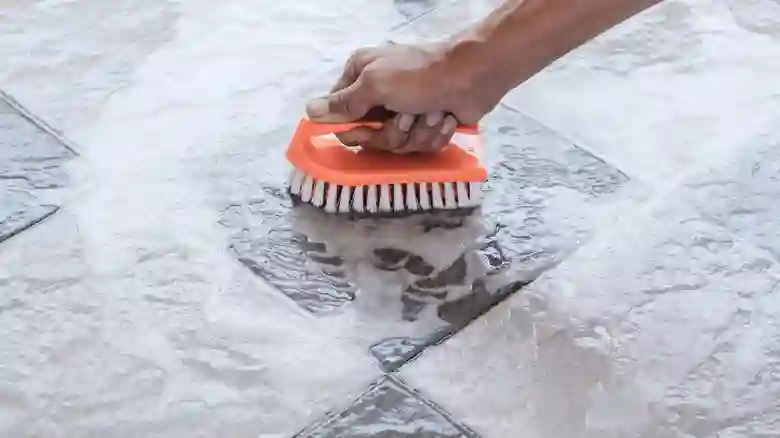
- Use a soft-bristle brush (never metal or stiff nylon) with your pH-neutral cleaner to scrub grout lines gently
- Check for new etching, chips, or scratches and document their location catching damage early makes professional restoration less extensive and less expensive
- Apply a penetrating stone sealer if water no longer beads on the surface (more on this below)
You can read about: How to Clean Pebble Shower Floor
Best Cleaner for Travertine Floors
The right cleaner for travertine cleaning is non-negotiable. There is one requirement above all others: pH neutral, specifically formulated for natural stone.
Look for products that explicitly state they are safe for travertine, marble, or limestone. The pH should be between 7 and 9 neutral to very mildly alkaline. Reputable options include:
- Lithofin MN Easy-Care — widely used in professional stone care
- Black Diamond Marble and Tile Floor Cleaner — pH-neutral, widely available, safe for travertine
- Miracle Sealants Stone Soap — gentle, low-foam formula designed for porous natural stone
- StoneTech Professional Stone Cleaner — dilutable concentrate, good value for larger floors
All of these are available at tile supply stores, home improvement centers, or online. Avoid grocery store floor cleaners, multi-surface sprays, and anything labeled “heavy-duty” or “grease-cutting” these are almost universally acidic or alkaline beyond safe ranges for travertine.
What NOT to Use on Travertine
This section may be the most important in the entire guide. The following products and methods cause permanent or serious damage to travertine and should never be used:
Vinegar and lemon juice — Both are acidic. They etch calcium carbonate immediately on contact. “Natural cleaning” advice promoting vinegar on stone floors will cost you a professional restoration bill.
Bleach and ammonia-based cleaners — Both are chemically incompatible with natural stone sealers and can discolor or degrade travertine’s surface over time.
Hydrogen peroxide — Sometimes recommended for grout cleaning. On travertine, it can cause lightening or uneven discoloration, particularly on darker varieties.
Steam mops — High-temperature steam penetrates travertine pores and can break down sealer rapidly. It also drives moisture deep into the stone where it can cause spalling or surface delamination over time.
Abrasive scrub pads — Steel wool, stiff-bristle brushes, and abrasive scouring pads scratch travertine’s relatively soft surface permanently.
Generic tile cleaners — Products designed for ceramic or porcelain tile are often acidic or high-alkaline. They’re formulated for non-porous, acid-resistant surfaces and are incompatible with travertine.
Professional Tips from Stone Experts
Beyond the basics of how clean travertine floors should be maintained, these field insights make a meaningful difference in long-term results.Seal your travertine on a proper schedule.
Travertine must be sealed to reduce its porosity and protect against staining. A penetrating impregnating sealer not a topical coating is the correct product. The simple water bead test tells you when to reseal: drop a tablespoon of water on the floor. If it beads up and sits on the surface, the sealer is working. If it absorbs within a minute or two, reseal immediately.
Most travertine floors in high-traffic areas need resealing every one to two years. Lower-traffic areas may go three years between applications.
Use entrance mats and area rugs strategically.
The most effective travertine floor cleaning strategy is reducing what gets onto the floor in the first place. Place absorbent mats at every exterior entrance to capture grit before it reaches the stone. Use felt pads under furniture legs to prevent scratching during movement.
Address etching promptly.
Minor etching caught early can sometimes be addressed with a marble polishing powder a fine abite compound that mechanically restores the surface sheen. Deeper etching requires professional honing. The longer etching is left untreated, the more extensive the restoration work required.
Know when to call a professional.
Deep stains, widespread etching, scratches visible in raking light, or grout that won’t come clean with routine maintenance are all signals that professional stone restoration is the right next step. Attempting to DIY deep restoration with inappropriate products often makes the problem worse and more expensive to fix.
Travertine vs. Granite vs. Marble Cleaning
Since many homes mix natural stone surfaces, it’s worth knowing how travertine floor cleaning compares to caring for other stones.
Travertine vs. Granite Granite is significantly harder and denser than travertine. It’s more acid-resistant and less porous, though it still benefits from regular sealing. You can be somewhat less cautious with granite surfaces than with travertine but the same pH-neutral cleaner rule applies. Never use acidic cleaners on any natural stone.
Travertine vs. Marble Marble and travertine are both calcium carbonate-based and share almost identical cleaning requirements. Both etch from acid contact, both need pH-neutral cleaners, and both require regular sealing. The key difference is that marble is denser and slightly harder travertine’s open pores make it more vulnerable to staining if unsealed or under-sealed.
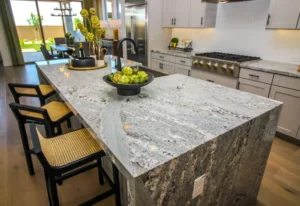
If your home has a mix of stone surfaces travertine floors, marble counters, granite islands one quality pH-neutral stone cleaner works safely across all of them. Keeping it simple reduces the chance of reaching for the wrong product.
For professional stone care, maintenance guidance, or restoration services, our team of SF Marble and Granite handle Marble & Granite Services in Lowell, MA to ensure all natural stone surfaces and can assess your floors in person.
Final Thoughts
How do you clean travertine floors the right way? You sweep daily, damp mop weekly with a pH-neutral stone cleaner, seal on schedule, and never let acid-based products anywhere near the surface. It sounds simple because it is once you know the rules.
The damage we see most often on travertine isn’t from neglect. It’s from well-intentioned homeowners using the wrong products with the best intentions. Vinegar, steam, and off-the-shelf tile cleaners have ended more beautiful travertine floors than years of foot traffic ever could.
Protecting your investment comes down to the right routine, the right products, and knowing when to call in a professional before a minor issue becomes a full restoration project.
SF Marble and Granite is here to help whether you need expert guidance on travertine cleaning products, professional sealing, or full stone restoration for floors that have already been damaged. Contact us today to schedule a consultation and give your travertine the care it deserves.
Frequently Asked Questions
Q: How do you clean travertine floors that have gone dull and lifeless?
Dullness on travertine is usually caused by etching, sealer breakdown, or residue buildup from incorrect cleaners not dirt. Start by switching to a pH-neutral stone cleaner and doing a thorough damp mop. If the dullness is etching, a marble polishing powder may help with minor cases, but significant etching requires professional honing to restore the surface properly.
Q: How often should travertine floor cleaning be done?
Dry sweeping or dust mopping should happen daily in high-traffic areas and every two to three days in lower-traffic spaces. Damp mopping with a pH-neutral cleaner is sufficient once a week for most households. Deep cleaning of grout lines and sealer inspection should happen monthly.
Q: Can I use a steam mop on travertine floors?
No steam mops are not safe for travertine. The high-temperature steam penetrates the stone’s pores, degrades the sealer, and can cause surface damage over time. Stick to a well-wrung damp mop with a pH-neutral stone cleaner for all routine travertine cleaning.
Q: How do I know when to reseal travertine floors?
The water bead test is the simplest method. Pour a small amount of water on the travertine surface and watch what happens. If water beads up and stays on the surface, the sealer is intact. If the water absorbs into the stone within 60 to 90 seconds, it’s time to reseal. Most travertine floors need resealing every one to three years depending on traffic levels.
Q: What is the safest way to clean travertine floors in a bathroom?
Bathroom travertine requires extra attention because of soap scum, humidity, and the acidic personal care products that regularly contact the surface. Use a pH-neutral stone cleaner weekly and ensure the bathroom is well-ventilated to reduce moisture exposure. Never use standard bathroom tile cleaners, grout sprays, or mildew removers on travertine most contain acids or bleach that will etch or discolor the stone.