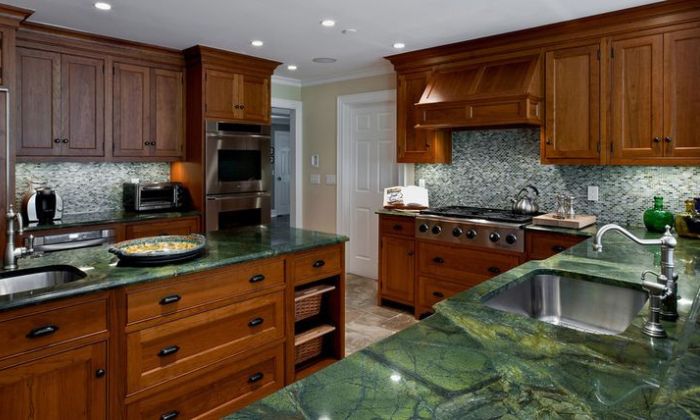
Picking out a kitchen countertop is like staring at a hundred paint chips at once, except each one will run you a few thousand dollars to screw up. If you’re considering green stone over all the other options out there, here’s the short version: green granite countertops are natural stone slabs that are appreciated for their color variety, hardness, and the fact that no two slabs appear precisely alike. Most homeowners settle on green granite because it complements warm wood cabinets and white shaker cabinets, and even bold, dark kitchens without feeling out of place.
Let’s not kid ourselves that buying stone is easy because it’s not. But when you’re done reading this, you’ll have an idea of which green tones wear well in everyday usage, what pulls the price up and down, and where to get a slab that fits into your budget, rather than blowing past it. We’ll discuss installation options, affordable maintenance and how green granite kitchen countertops measure up against quartz and marble.
What Makes Green Granite Unique?
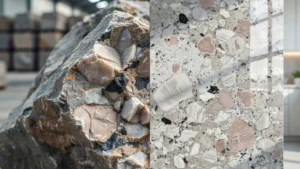
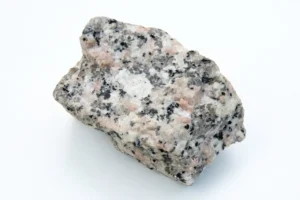
Green granite gets its color from minerals such as chlorite, epidote, and amphibole trapped inside quartz and feldspar during formation. That mineral mix creates natural veining and shades ranging from soft sage to deep forest, along with the same heat resistance and scratch resistance found in any granite slab.
Most stone counters are gray, beige, or white, so green stands out the moment you walk into a kitchen. It reads as earthy without feeling dated, which is part of why designers keep bringing it back into new builds. A single green granite slab can shift from mossy green near one edge to near-black at the other, and that variation is the whole point of buying natural stone instead of an engineered look-alike.
Granite also formed under extreme heat and pressure millions of years ago, so a hot pan set down by accident won’t leave a mark. That’s not true of laminate, and it’s not fully true of some quartz brands either, since resin in quartz can scorch under high heat.
Best Green Granite Countertop Color Options
Green granite countertop colors span wider than most people expect, and choosing the wrong one is the most common regret we hear about after installation. Costa Esmeralda is a soft green with touches of gold and white, a great choice for bright, breezy kitchens. Ubatuba is a dark, almost black-green with gold speckling and hides fingerprints better than lighter stones.
Verde Butterfly has pronounced white veining on a rich green background, and is more of a statement than a background material. Tropical Green is somewhere in the middle ground, with a mid-tone green and a subtle gray movement that looks good with both wood and white cabinets. If your kitchen is already busy with pattern, from tile backsplash to patterned flooring, a more subdued choice such as Tropical Green tends to wear better over time than a busier slab.
Polished vs. Honed: Choosing the Right Finish
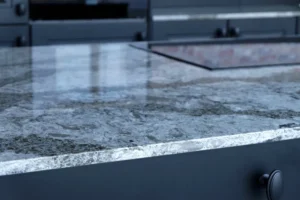
Most people get hung up on color and skip the finish question altogether only to discover too late that the finish affects how the stone looks and behaves from day to day. A polished finish is shiny and reflects light which will bring out the green tone and make the veining sparkle. The smooth surface also makes it easy to clean, since it won’t hold oil or fingerprints like a matte surface can.
A polished finish is shiny and reflective, much like soapstone or limestone. It conceals water spots and small scratches better than a polished surface, making it a popular choice for busy family kitchens. The tradeoff is that honed granite shows oil stains more easily and needs sealing slightly more often, as the open pores sit closer to the surface after the polishing step is skipped.
Neither ending is better than the other one. Polished stone works well in a bright light-filled kitchen as it reflects light around the room. Generally a kitchen with a softer, more rustic feel will go with honed instead. Ask your fabricator for a sample of both finishes on the same green slab you’re contemplating, since the difference is much easier to judge in person than in a photo.
Affordable Green Granite Varieties
Not every green granite slab costs a premium. Tropical Green and Rain Forest Green tend to sit at the lower end of the price range because they’re quarried in larger volumes and shipped from fewer ports, which keeps freight costs down. Uba Tuba, despite being popular, is also relatively affordable since it’s one of the most widely quarried granites in Brazil.
Rarer stones like Verde Butterfly or Amazonas cost more because supply is limited and the veining pattern is harder to match across slabs. If budget matters more than getting an exact showroom sample, ask your fabricator which green slabs are currently overstocked. Suppliers often discount remnants and closeout slabs by 20 to 40 percent just to clear warehouse space.
Factors Affecting the Cost of Green Granite Countertops
Slab rarity is the biggest cost driver, followed closely by thickness. A standard 3-centimeter slab costs less per square foot than a 2-centimeter slab with a built-up edge, because the thicker option uses less labor to fabricate a finished-looking edge. Edge style matters too. A basic eased edge costs less than an ogee or bullnose, since those require extra cutting and polishing time.
Where the stone is quarried also affects price. Brazilian and Indian quarries tend to price lower than Italian or specialty South American sources, mainly due to shipping distance and import duties. Fabrication and installation labor make up roughly 30 to 40 percent of the total project cost in most regions, so getting quotes from more than one fabricator is worth the extra phone calls.
This section would benefit from a current average cost-per-square-foot range for green granite, sourced from a stone industry association or a recent survey of fabricators in your service area, so readers see real numbers instead of vague pricing language.
How to Find Affordable Green Granite Countertops
The most reliable way to find affordable green granite countertops is to buy remnant slabs directly from a local fabricator’s yard rather than ordering a full slab through a showroom. Remnants cost 30 to 50 percent less and work well for kitchens under 40 square feet or for islands and bathroom vanities.
Visiting a stone yard in person, rather than shopping only online, also helps. You can see the actual slab you’d be buying instead of a photo that may not match once it’s cut and polished. Ask fabricators about off-season pricing too. Many stone yards slow down in late fall and winter, and some offer discounts to keep crews busy during that stretch.
Buying during a kitchen remodel that bundles cabinets, countertops, and installation with one contractor can also reduce cost, since some fabricators offer package pricing when they’re doing multiple parts of the same job.
Comparing Green Granite to Other Countertop Materials
Granite and quartz get compared constantly, and the honest answer is that both are solid choices for different reasons. Granite is a natural stone that needs sealing every one to three years, while quartz is engineered and needs no sealing at all. Granite handles direct heat better, since quartz’s resin binder can discolor near a hot pan.
Marble, by comparison, is softer and stains more easily, which makes it a poor match for a busy kitchen island even though it looks striking. Butcher block costs less upfront but scratches, stains, and needs regular oiling to avoid warping near the sink. Laminate is the cheapest option by far, but it can’t match the depth or resale value that natural stone brings to a kitchen.
For anyone deciding between green granite kitchen countertops and quartz specifically, the choice usually comes down to whether you want a completely natural material with visible variation, or a more uniform, low-maintenance surface that costs slightly more per square foot in many markets.
Resale value is worth a mention too. Real estate agents commonly point to granite and quartz as safer bets for buyer appeal than laminate, while butcher block and concrete tend to be more polarizing, since some buyers love the look and others rule it out immediately.
How to Maintain Green Granite Countertops on a Budget
Green granite countertops need resealing every one to three years, cleaning with a pH-neutral stone cleaner, and prompt wipe-up of acidic spills like wine or citrus juice. A basic granite sealer costs under $30 and takes less than an hour to apply, making upkeep one of the cheapest parts of owning stone counters.
You can test whether your counter needs sealing with a simple trick: place a few drops of water on the surface and watch how long it takes to soak in. If it beads up for 15 to 20 minutes before absorbing, the seal is still doing its job. If it darkens the stone within a minute or two, it’s time to reseal.
Daily cleaning doesn’t require anything fancy. Warm water, a soft cloth, and a mild dish soap handle most messes just fine. Save the granite-specific cleaner for a deeper weekly wipe-down, and skip vinegar, bleach, or abrasive powders, since those can wear down the sealer faster than normal use.
Eco-Friendly and Sustainable Aspects of Green Granite
Granite is quarried, not manufactured, which means it skips the resin and chemical binders used in engineered stone production. It also lasts for decades without needing replacement, so a well-maintained countertop rarely ends up in a landfill the way lower-quality laminate often does. Many fabricators now recycle offcuts into smaller products like coasters, cutting boards, or vanity tops instead of discarding them.
Buying remnant or overstock green granite slabs, mentioned earlier as a cost-saving move, is also the more sustainable choice, since it uses material that would otherwise sit unused in a warehouse. Some quarries have also started publishing environmental product declarations that detail water use and energy consumption during extraction, giving buyers a clearer picture of a slab’s footprint before purchase.
A short data callout here, citing water usage or carbon output figures from a granite industry sustainability report, would add real weight to this section instead of general claims about stone being a natural material.
How Green Granite Countertops Hold Up Over Time
This stone typically lasts 25 to 40 years or more with basic sealing and cleaning, outlasting laminate, butcher block, and most engineered surfaces in normal kitchen use. Scratches and heat marks are rare, and any dulling in the finish can usually be restored with a professional polish rather than a full replacement.
We’ve seen kitchens where the original granite outlived two rounds of cabinet replacements. The stone doesn’t fade from sunlight the way some laminates do, and it doesn’t develop the hairline cracks that thinner engineered slabs sometimes show near a sink cutout after several years. The main wear point tends to be the sealer, not the stone itself, which is why resealing on schedule matters more than any other maintenance step.
Why Choose Us?
We are committed to offering high-quality and affordable green granite countertops for your home. With a wide selection of green granite countertop colors, from deep green to light green, we have something to match every kitchen style. Our team of experts will help you choose the perfect stone and provide professional installation to ensure lasting beauty.
We pride ourselves on sourcing granite from sustainable quarries and offering competitive pricing to make luxury affordable. Ready to transform your kitchen with stunning green granite countertops? Contact Us today to get a free consultation and discover our affordable granite options!
Conclusion
Green granite countertops provide a perfect blend of beauty, durability, and eco-friendliness. Whether you’re looking for dark green granite countertops or lighter shades of green, there’s an option for every home. With a variety of affordable green granite varieties like Ubatuba, Verde Butterfly, and Emerald Pearl, you don’t have to break the bank to add elegance to your kitchen. Visit SF Marble & Granite today to explore our wide selection of green granite countertops and find the perfect fit for your home.
Is green granite still in style for 2026 kitchens?
Yes. Green stone has moved from a niche choice to a common request among designers working on both traditional and modern kitchens, partly because it pairs well with the natural wood tones currently popular in cabinetry.
How much does a green granite slab cost per square foot?
Pricing generally ranges from budget-friendly varieties like Tropical Green to premium options like Verde Butterfly, with labor and edge style adding to the base material cost.
Can this stone go outdoors?
Yes, granite handles UV exposure and temperature swings well, making it a common choice for outdoor kitchens, though sealing needs may be more frequent in direct sun and rain.
Does green granite pair well with white cabinets?
Yes, lighter greens like Costa Esmeralda create contrast against white cabinetry, while darker greens like Ubatuba add depth without overwhelming a bright kitchen.
Is green granite harder to match than other granite colors?
Not necessarily, but because green slabs vary more in tone from quarry batch to batch, seeing the actual slab in person before buying matters more than it does with more uniform colors like black or gray granite.
Should I choose polished or honed green granite for a kitchen island?
Polished usually works better for an island, since it’s the surface people touch and lean on most, and the glossy finish resists fingerprints and light staining better than a honed one over years of daily use.