So you’re standing in a kitchen showroom, staring at slab after slab, and one keeps pulling your eye back. It’s dark, it’s glossy, and it looks like it belongs in a home far nicer than the one you’re picturing right now. That reaction is normal, and it’s exactly why so many homeowners end up asking the same question every week.
Quick answer: black granite is a natural stone countertop material prized for its deep color, high durability, and resistance to heat and scratches. It costs more than laminate but less than most marble, and it holds up for decades with basic care. Here’s what you actually need to know before you sign a contract, pick a slab, or call an installer.
Why Choose Black Granite Countertops?

Black granite countertops are a popular choice for kitchens due to their unparalleled blend of durability and aesthetics. Here are a few compelling reasons why you should consider black granite for your kitchen upgrade:
Timeless Elegance
Black granite exudes a timeless elegance that can instantly elevate the look and feel of any kitchen. Its rich, deep color adds sophistication and depth to the space, creating a luxurious ambiance that never goes out of style.
Durability
Renowned for its strength and resilience, black granite is highly durable and resistant to scratches, heat, and stains. This makes it an ideal choice for busy kitchens where daily wear and tear are inevitable.
Versatility
Black granite countertops complement a wide range of design styles, from traditional to modern. Whether you prefer a classic, monochromatic look or a sleek, contemporary aesthetic can effortlessly adapt to your vision.
Value Addition
Installing black countertops can significantly enhance the resale value of your home. Its luxurious appearance and durability are highly sought after by homebuyers, making it a wise investment for the long term.
What Are Black Granite Countertops?
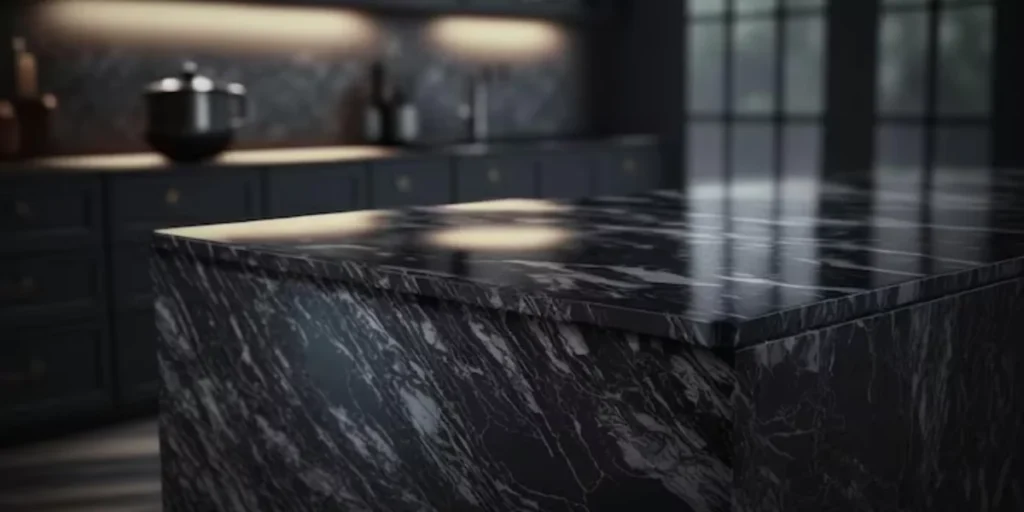
Black granite countertops are slabs carved from natural granite stone that has a dark, almost black, base colour. Often, the stone is flecked with mineral deposits such as mica, quartz or feldspar. Under heat and pressure over thousands of years, they form deep underground, making the finished slab strong and resistant to daily wear.
No two slabs are exactly the same, unlike manufactured stone. One piece might have silver flecks scattered across its surface, while the next might have absolutely none. This variety is part of the appeal to folks who want a kitchen that doesn’t appear like it came out of a catalogue.
Common variations include Absolute Black, Black Galaxy and Black Pearl, and they each respond a little differently under light. I’ll cover those varieties in more length lower down, as picking the wrong one for your lighting setup is one of the most common regrets I hear about.
How Much Do Black Granite Countertops Cost Per Square Foot?
Price is usually the first real question, and it deserves a straight answer instead of a vague range. Most homeowners pay between $50 and $200 per square foot installed, depending on the granite grade, slab thickness, and how much cutting the layout demands. A standard kitchen with roughly 30 square feet of counter space typically lands somewhere between $1,500 and $6,000 total.
Factors That Affect the Price
A few variables move the number up or down more than people expect:
- Slab grade. Entry-level granite costs less than rare, high-figure slabs like Black Galaxy.
- Edge profile. A simple eased edge costs less than an ogee or bullnose cut.
- Thickness. Standard is 3 centimeters, but 2 centimeter slabs run cheaper with less overhang strength.
- Cutouts. Sink holes, cooktop openings, and outlet cutouts add labor time.
- Local labor rates. Installation cost swings by region, sometimes by 20 percent or more.
Installation Cost Breakdown
Installation typically runs $10 to $40 per square foot on top of the material cost, and that figure covers templating, cutting, edge finishing, and setting the slab. Sealing usually gets bundled into the install price, though some fabricators charge it separately. Ask for that line item in writing before you sign anything, because it’s an easy spot for surprise fees to hide.
Removal of an old countertop is another cost that catches people off guard. Most fabricators charge a separate fee to haul away the old material, especially if it’s tile or a heavy stone slab that needs two people to lift. Ask about this upfront rather than assuming it’s folded into the quote, because it rarely is unless you specifically request it.
Get at least three quotes before you commit to a fabricator. Prices for the same slab can vary more than people expect, partly because labor rates differ and partly because some shops mark up material more than others. A quote that comes in noticeably lower than the rest is worth a second look, since it sometimes means thinner slabs, a lower sealing quality, or a rushed install schedule.
Popular Types of Black Granite
Not every black granite slab reads the same way once it’s under kitchen lighting. Here are the varieties homeowners ask about most.
Absolute Black is the closest thing to true solid black, with almost no visible pattern. It reads modern and clean, which is why it shows up so often in minimalist kitchens.
Black Galaxy carries small gold or copper flecks scattered across the surface, almost like a night sky. It costs more than Absolute Black because the mineral deposits that create that shimmer are harder to source consistently.
Black Pearl sits somewhere in between, with silver-grey specks and a bit more visible movement across the slab. It pairs well with stainless steel appliances and cooler-toned cabinetry.
Steel Grey leans more charcoal than true black, and it works well in kitchens that want the drama of dark stone without going fully black.
Black Granite vs. Marble and Quartz
This is where most of the real decision-making happens, so let’s break it down plainly.
Black granite vs. marble. Marble countertops cost more on average, and marble flooring cost tends to sit in a similar higher bracket compared to granite flooring. If you’ve already checked the price of marble on a supplier’s site, you’ve probably noticed it varies widely by veining and origin, which is why a marble price calculator or marble cost calculator can be a useful first step before you commit to a material. Granite wins on scratch and heat resistance, while marble wins on that soft, classic look buyers associate with luxury kitchens. Marble countertops cost aside, marble also stains more easily and needs more frequent sealing, which matters if your household cooks often.
Black granite vs. quartz. Quartz is engineered, not natural, so the pattern repeats and the color stays perfectly consistent. It resists staining slightly better than granite out of the box, but it can’t handle direct heat the way stone can, so hot pans still need a trivet. If consistency matters more to you than natural variation, quartz might fit better, but if you want a slab that looks like it was pulled straight from the earth, black granite countertops still hold the edge on character.
Pros and Cons of Black Granite Countertops
Here’s the honest list, not the sales pitch version.
Pros:
- Handles hot pots and pans without scorching
- Resists scratches from knives and daily kitchen use
- Adds resale value in most markets
- Comes in genuinely unique patterns, since no two slabs match
Cons:
- Costs more upfront than laminate or basic tile
- Needs occasional resealing to prevent staining
- Heavy enough that cabinets need proper support during install
- Dark color shows dust, fingerprints, and water spots more than lighter stone
None of these cons are dealbreakers on their own. They’re just things worth knowing before the slab is sitting in your kitchen and it’s too late to change your mind.
Maintenance and Care Tips
Granite is tough, but it’s not maintenance-free, and treating it that way shortens its life. Wipe spills quickly, especially acidic ones like wine, coffee, or citrus juice, since they can dull the sealant over time. A mild dish soap and warm water handle daily cleaning fine, and you don’t need specialty stone cleaner for routine wiping.
Reseal the surface roughly once a year, or do the water-drop test: splash a few drops on the counter, and if it beads up within 15 to 20 minutes, the seal is still doing its job. If the water soaks in and darkens the stone, it’s time to reseal. Avoid bleach, ammonia, and abrasive scrub pads, since they wear down the sealant faster than normal use would.
I’ve seen homeowners skip sealing for two or three years and get away with it, mostly because dark stone hides light staining better than white or beige granite does. That’s not a reason to skip it altogether. A missed stain you can’t see is still soaking into the pores of the stone, and it tends to show up eventually as a dull patch that no amount of scrubbing fixes.
Design Tips: Pairing Black Granite With Your Kitchen
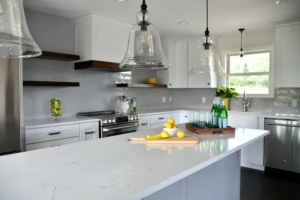
Dark countertops change a room more than most people expect before installation. Pair black granite with light or white cabinetry, and the contrast makes the counters the focal point of the whole kitchen. Pair it with dark cabinets instead, and the room leans moody and dramatic, which works well in kitchens with strong natural light.
Metal fixtures matter more than people think. Brushed nickel and matte black hardware both read well against black granite, while polished brass tends to fight with the stone’s cool undertone rather than complementing it. If you’re unsure, bring a hardware sample to the slab viewing instead of guessing from a catalog photo.
Lighting under the cabinets makes a bigger difference with dark stone than with light stone. Black granite can look flat under dim, warm lighting, but a strip of LED lighting underneath the upper cabinets brings out the natural flecks and movement in the slab. It’s a small add-on that a lot of homeowners skip, then wish they hadn’t once the kitchen is finished.
Is Black Granite Worth the Investment?
Black granite is worth the investment for most homeowners who plan to stay in their home for several years, because it holds up to daily wear, adds real resale value, and rarely needs replacement. The upfront cost is higher than laminate, but the lifespan and durability usually balance that out over time.
Think of it like buying a good pair of boots instead of a cheap pair you’ll replace every winter. The upfront number stings a little more, but you’re not back at the store in two years. If you’re planning to sell within the next year or two, a mid-grade slab often makes more financial sense than the rarest one on the showroom floor.
How to Choose the Right Slab
Pictures online only tell half the story, because lighting completely changes how black granite reads in a room. A slab that looks jet black under warm showroom lights can shift toward dark grey under natural daylight. Always ask to see a sample piece near a window before you commit.
Visiting a fabricator in person also lets you check the slab for consistency across its full surface, not just the edge piece on display. Some showrooms are set up so the finished-slab room sits a short walk from the entrance, sometimes as little as 28 meters from where you park, so it’s worth the extra few minutes to see the full inventory rather than settling for the first piece near the door. Bring a photo of your cabinets and flooring, since color-matching in person beats guessing from memory later.
Conclusion
In conclusion, black granite countertops offer a perfect blend of elegance, durability, and versatility for any kitchen design. From classic white cabinets to modern gray tones, the options for complementing your granite countertops are endless. Whether you’re aiming for a timeless aesthetic or a contemporary look, black granite serves as a stunning focal point that enhances the overall ambiance of your kitchen.
By considering factors such as maintenance requirements, pricing considerations, and design ideas, you can make an informed decision to transform your kitchen into a space you’ll love for years to come.
Ready to elevate your kitchen with stunning black granite countertops? Contact SF Marble And Granite Inc today for expert guidance and installation services. Our team of professionals is dedicated to helping you bring your vision to life. Reach out to us via email at sfmarbleangranite@gmail.com or visit our showroom at 755 Dutton St. Lowell, MA 01851. You can also contact us at 978-459-5825 to schedule a consultation.
FAQs
What are the maintenance requirements for black countertops?
It require regular sealing to prevent staining and maintain their luster. It’s recommended to reseal them every 1-2 years to ensure optimal protection.
Can I use harsh chemicals to clean granite countertops?
It’s best to avoid harsh chemicals and abrasive cleaners when cleaning granite countertops. Instead, use mild dish soap and warm water or a pH-neutral stone cleaner to preserve their finish.
How often should black countertops be sealed?
The frequency of sealing granite countertops depends on factors such as usage and exposure to moisture. As a general rule, resealing every 1-2 years is recommended to maintain their protective seal.
Are black granite countertops suitable for high traffic areas?
Yes, they are highly durable and resistant to scratches, heat, and stains, making them ideal for high-traffic areas such as kitchens and bathrooms.
Can black granite countertops be used in both kitchens and bathrooms?
Absolutely! it can enhance the aesthetics of both kitchens and bathrooms, adding elegance and sophistication to any space.